

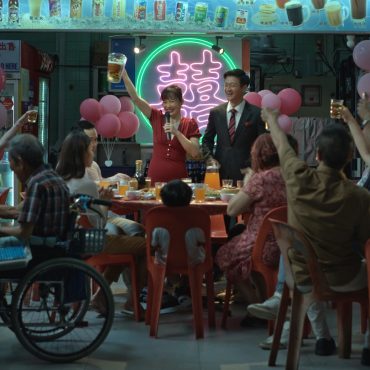
“We Are All Strangers”, interview with director Anthony Chen
"We Are All Strangers" by Anthony Chen, in the 76th Berlinale competition marks the end of his Singapore life trilogy.
Listeners:
Top listeners:
 play_arrow
ENGLISH Channel 01 If English is your language, or a language you understand, THIS IS YOUR CHANNEL !
 play_arrow
ITALIAN Channel 02 Se l’italiano è la tua lingua, o una lingua che conosci, QUESTO È IL TUO CANALE!
 play_arrow
EXTRA Channel 03 FRED Film Radio channel used to broadcast press conferences, seminars, workshops, master classes, etc.
 play_arrow
GERMAN Channel 04 Wenn Ihre Sprache Deutsch ist, oder Sie diese Sprache verstehen, dann ist das IHR KANAL !
 play_arrow
POLISH Channel 05
 play_arrow
SPANISH Channel 06 Si tu idioma es el español, o es un idioma que conoces, ¡ESTE ES TU CANAL!
 play_arrow
FRENCH Channel 07 Si votre langue maternelle est le français, ou si vous le comprenez, VOICI VOTRE CHAINE !
 play_arrow
PORTUGUESE Channel 08
 play_arrow
ROMANIAN Channel 09 Dacă vorbiţi sau înţelegeţi limba română, ACESTA ESTE CANALUL DUMNEAVOASTRĂ!
 play_arrow
SLOVENIAN Channel 10
 play_arrow
ENTERTAINMENT Channel 11 FRED Film Radio Channel used to broadcast music and live shows from Film Festivals.
 play_arrow
BULGARIAN Channel 16 Ако българският е вашият роден език, или го разбирате, ТОВА Е ВАШИЯТ КАНАЛ !
 play_arrow
CROATIAN Channel 17 Ako je hrvatski tvoj jezik, ili ga jednostavno razumiješ, OVO JE TVOJ KANAL!
 play_arrow
LATVIAN Channel 18
 play_arrow
DANISH Channel 19
 play_arrow
HUNGARIAN Channel 20
 play_arrow
DUTCH Channel 21
 play_arrow
GREEK Channel 22
 play_arrow
CZECH Channel 23
 play_arrow
LITHUANIAN Channel 24
 play_arrow
SLOVAK Channel 25
 play_arrow
ICELANDIC Channel 26 Ef þú talar, eða skilur íslensku, er ÞETTA RÁSIN ÞÍN !
 play_arrow
INDUSTRY Channel 27 FRED Film Radio channel completely dedicated to industry professionals.
 play_arrow
EDUCATION Channel 28 FRED Film Radio channel completely dedicated to film literacy.
 play_arrow
SARDU Channel 29 Si su sardu est sa limba tua, custu est su canale chi ti deghet!
 play_arrow
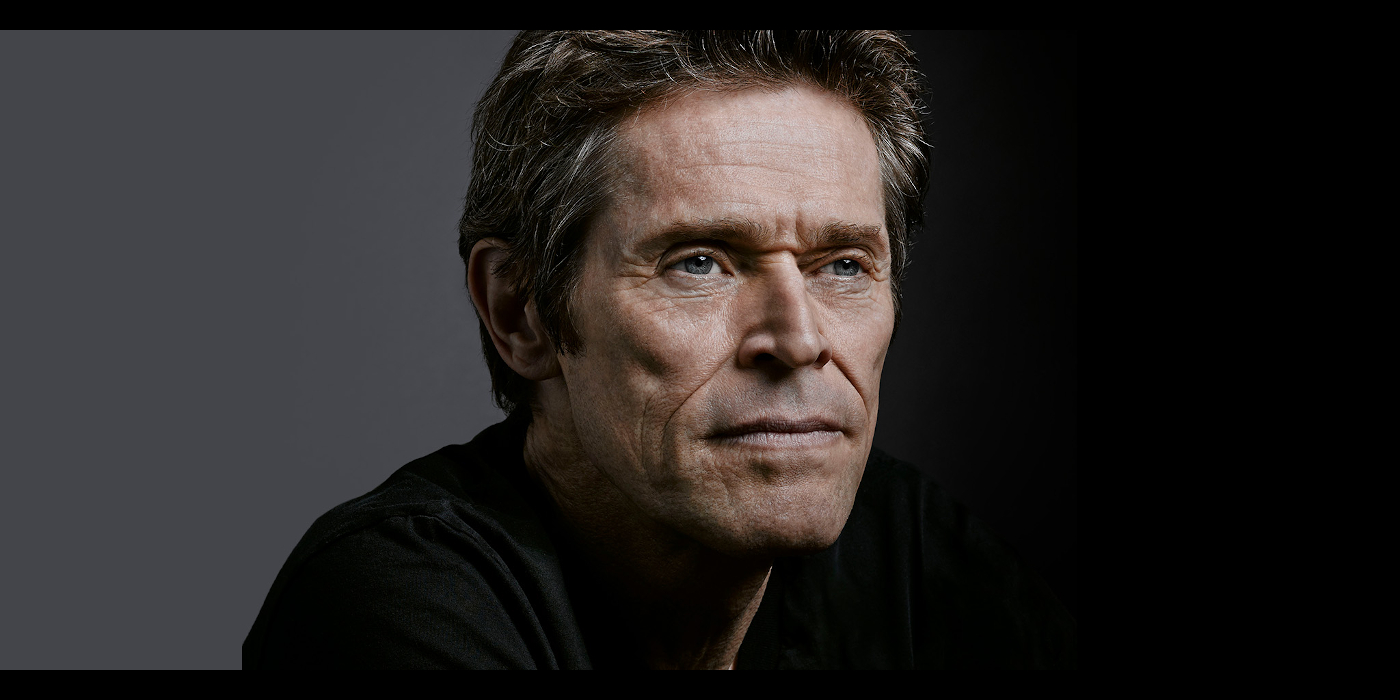
“Conversation with” at the 20th Marrakech IFF, interview with actor Willem Dafoe Bénédicte Prot
 play_arrow
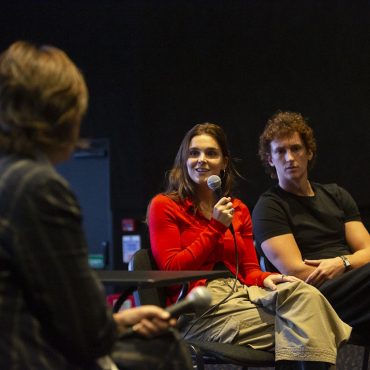
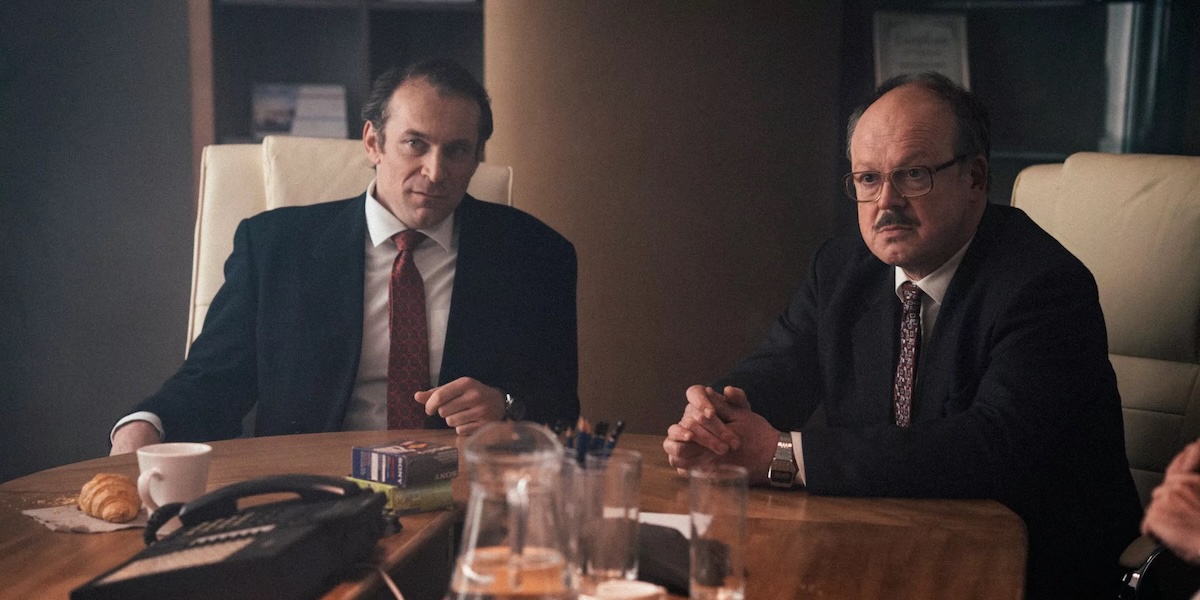
"Dust", interview with actors Arieh Worthalter and Jan Hammenecker Federica Scarpa
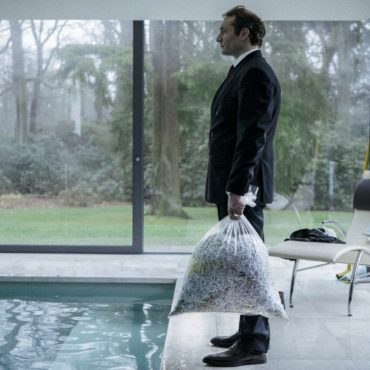
In “Dust”, directed by Anke Blondé and written by Angelo Tijssens, the fall happens before the film even begins. Set over the course of one suspended, storm-soaked day in 1999, the story follows two Belgian entrepreneurs as they learn that their fraudulent empire is about to be exposed. The police will arrive by morning. There is no escape plan that can truly work.
In Competition at the 76th Berlin International Film Festival, the film resists the mechanics of a thriller. Instead of asking what will happen, it asks how it feels when everything you have built financially, socially, and psychologically disintegrates.
For the two men at its centre, Luc and Geert, that disintegration is embodied by Arieh Worthalter and Jan Hammenecker, whose performances hinge less on action than on internal fracture.
Because the outcome is known from the start, the actors approached their roles not through suspense but through sensation.
Jan Hammenecker, who plays Luc, describes his character’s emotional state through a physical metaphor: falling off a bicycle. “When you fall, it feels as if time slows down,” he explains. “You think you can control it, but you can’t.” In that suspended instant, perception intensifies. Details become sharper. Awareness expands.
Luc experiences his collapse in a similar, slow-motion way. He becomes acutely conscious of how others see him, of friendships that may have been illusions, of the fragility of his constructed identity. Yet awareness does not equal acceptance. “It’s denial,” Jan Hammenecker notes. “The outcome is not accepted.”
Arieh Worthalter sees Geert caught in the same liminal state. Even as the scandal becomes inevitable, he continues to hide money, manoeuvre, and negotiate internally. Jail remains abstract; the system still feels negotiable. “They don’t accept it,” he says simply.
What frightens these men more: prison or public exposure?
“The real punishment,” Jan Hammenecker reflects of Luc, “is that people will see you as human and not as special as they thought.” For individuals who have internalised an image of near-divine control, the loss of status is existential. Prison may confine the body; shame dismantles identity.
Arieh Worthalter emphasises that Geert initially frames the scandal as a failure rather than wrongdoing. He deflects responsibility, diluting guilt into collective language. The deeper moral dimension, the harm done to others, remains emotionally inaccessible.
Only when confronted with the inevitability of consequences does something begin to shift. Shame, Arieh Worthalter suggests, may become the first step toward reconnecting with empathy. But in “Dust”, that process is only just beginning.
Silence dominates the film as much as dialogue. Jan Hammenecker notes that part of that restraint reflects a regional culture in Flanders, where speaking is often measured, even avoided. “Is it really worth it to speak?” he asks, describing a reflex to remain quiet rather than risk disruption.
Arieh Worthalter draws a distinction between silence and muteness. For Geert, silence is internal first: emotions surface but are immediately suppressed. To preserve the image of strength, the inner voice must be silenced. If asked directly about pain, he suggests, these men would freeze. They lack the vocabulary for vulnerability.
Silence becomes armour, a way to protect the façade of control. But it also traps them, isolating them from genuine connection.
The dynamic between Luc and Geert carries the intimacy and dependency of a long-standing partnership, almost marital in its intensity. Before shooting, the actors rehearsed and built trust, allowing a natural rhythm to develop.
On screen, their relationship often unfolds through glances rather than words. In a film where speech is dangerous, looks carry accusation, loyalty, and resignation.
In “Dust”, the spectacle of corporate scandal remains largely off-screen. What lingers instead is the interior echo of collapse, the moment when power evaporates, and what remains is a man confronted with himself.
In the spring of 1999, Belgian entrepreneurs Luc and Geert learn that their network of shell companies is about to be exposed in the international press. An emergency board meeting is called. Evidence must be destroyed; and discretion enforced. By tomorrow morning, the police will be at the door. After this final meeting, the two men go their separate ways, entering their last day as free, rich and powerful men. Luc, the technical genius, retreats to his villa, where he gets the impression that his wife Alma has known all along what has been going on. Repeatedly unable to reach Geert, his trusted partner, Luc grows increasingly uneasy. Meanwhile Geert, the charismatic salesman, seeks refuge in the arms of his driver and lover inside his bunker-like villa. Having insider knowledge, Geert is tempted to act – but doing so would mean betraying those closest to him. Luc heads back to the company HQ but, in the middle of a violent storm, his car gets stuck in the mud. When Geert discovers the abandoned vehicle, panic sets in. Slowly, they realise that they are not actually on the run but on a journey towards something they can no longer avoid: responsibility. And each other.
"We Are All Strangers" by Anthony Chen, in the 76th Berlinale competition marks the end of his Singapore life trilogy.
Anke Blondé and Angelo Tijssens present "Dust" in Competition at the 76th Berlinale, a drama on masculinity and corporate collapse.
With "Wolfram", presented at the 76th Berlinale, Thornton goes back to the Western genre, this time filled with hope overcoming a tough world.
Markus Schleinzer discusses "Rose" in Competition at the 76th Berlinale, exploring identity, power and historical research.
Edinburgh Spanish Film Festival
Marian Arechega, director of the vibrant Edinburgh Spanish Film Festival, discusses the 2026 edition programme, showcasing recent and diverse cinema from Spain.
Nicolas Winding Refn on Her Private Hell, his first feature in ten years, in Italian cinemas from October 1.
Discover how EWIP - European Work in Progress connects European and African films with top buyers, boosting distribution and festival success.
Rome is once again expanding the scope of its Film Fest: thirteen days of cinema, international premieres, renowned auteurs, emerging talent, series, documentaries, and cinematic heritage—with Javier Bardem, Paolo Genovese, and Monica Vitti at the heart of an edition that …