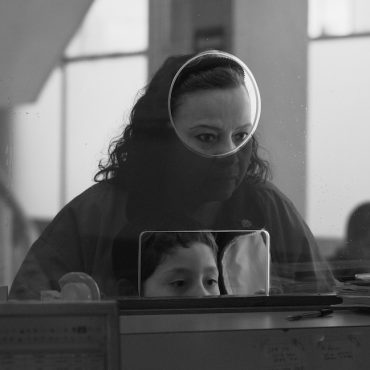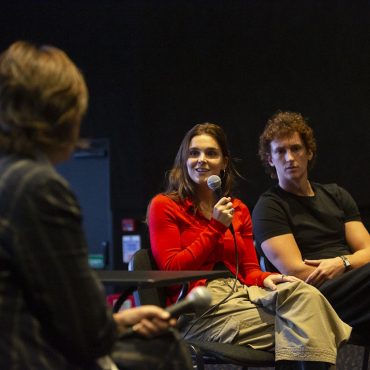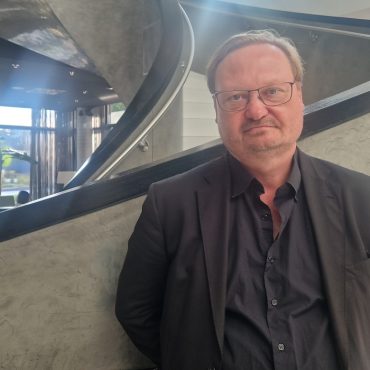


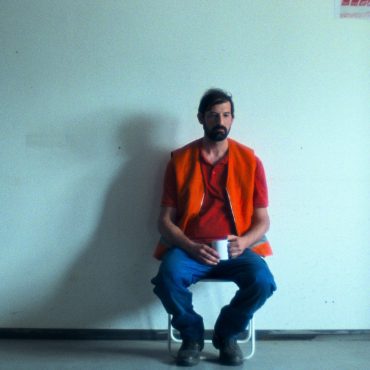
“My Wife Cries”, interview with actors Vladimir Vulević and Agathe Bonitzer
"My Wife Cries" marks Angela Schanelec’s return to Berlinale competition stars Vladimir Vulević and Agathe Bonitzer
Listeners:
Top listeners:
 play_arrow
ENGLISH Channel 01 If English is your language, or a language you understand, THIS IS YOUR CHANNEL !
 play_arrow
ITALIAN Channel 02 Se l’italiano è la tua lingua, o una lingua che conosci, QUESTO È IL TUO CANALE!
 play_arrow
EXTRA Channel 03 FRED Film Radio channel used to broadcast press conferences, seminars, workshops, master classes, etc.
 play_arrow
GERMAN Channel 04 Wenn Ihre Sprache Deutsch ist, oder Sie diese Sprache verstehen, dann ist das IHR KANAL !
 play_arrow
POLISH Channel 05
 play_arrow
SPANISH Channel 06 Si tu idioma es el español, o es un idioma que conoces, ¡ESTE ES TU CANAL!
 play_arrow
FRENCH Channel 07 Si votre langue maternelle est le français, ou si vous le comprenez, VOICI VOTRE CHAINE !
 play_arrow
PORTUGUESE Channel 08
 play_arrow
ROMANIAN Channel 09 Dacă vorbiţi sau înţelegeţi limba română, ACESTA ESTE CANALUL DUMNEAVOASTRĂ!
 play_arrow
SLOVENIAN Channel 10
 play_arrow
ENTERTAINMENT Channel 11 FRED Film Radio Channel used to broadcast music and live shows from Film Festivals.
 play_arrow
BULGARIAN Channel 16 Ако българският е вашият роден език, или го разбирате, ТОВА Е ВАШИЯТ КАНАЛ !
 play_arrow
CROATIAN Channel 17 Ako je hrvatski tvoj jezik, ili ga jednostavno razumiješ, OVO JE TVOJ KANAL!
 play_arrow
LATVIAN Channel 18
 play_arrow
DANISH Channel 19
 play_arrow
HUNGARIAN Channel 20
 play_arrow
DUTCH Channel 21
 play_arrow
GREEK Channel 22
 play_arrow
CZECH Channel 23
 play_arrow
LITHUANIAN Channel 24
 play_arrow
SLOVAK Channel 25
 play_arrow
ICELANDIC Channel 26 Ef þú talar, eða skilur íslensku, er ÞETTA RÁSIN ÞÍN !
 play_arrow
INDUSTRY Channel 27 FRED Film Radio channel completely dedicated to industry professionals.
 play_arrow
EDUCATION Channel 28 FRED Film Radio channel completely dedicated to film literacy.
 play_arrow
SARDU Channel 29 Si su sardu est sa limba tua, custu est su canale chi ti deghet!
 play_arrow
“Conversation with” at the 20th Marrakech IFF, interview with actor Willem Dafoe Bénédicte Prot
 play_arrow
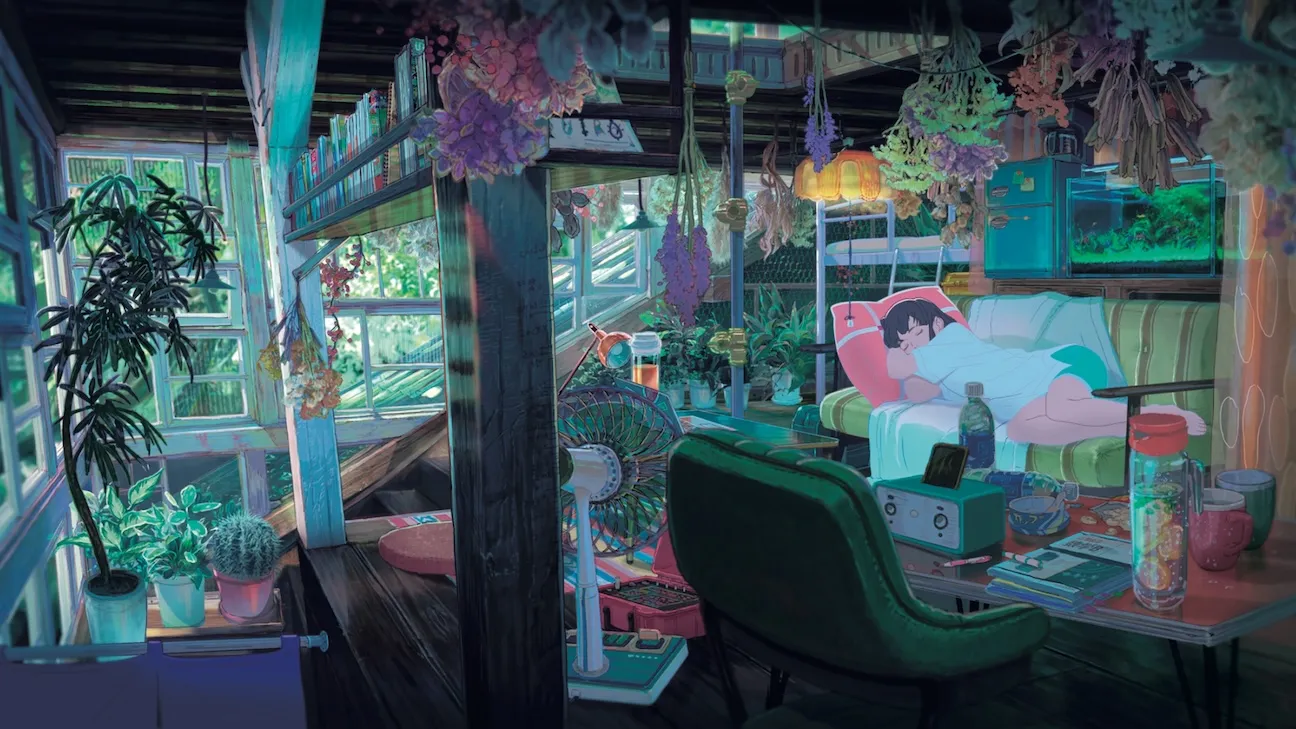
"A New Dawn", interview with director Yoshitoshi Shinomiya Federica Scarpa
At the 76th edition of the Berlin International Film Festival, “A New Dawn” stands out as the only animated feature competing for the Golden Bear. Directed by Yoshitoshi Shinomiya, the film marks his feature debut. It signals a personal turning point for an artist who has long been associated with some of the most influential Japanese animated works of the past decade.
With a background in traditional Japanese painting and animation credits on titles such as “Your Name” by Makoto Shinkai and “In This Corner of the World” by Sunao Katabuchi, Yoshitoshi Shinomiya arrives in Berlin with a project that synthesises decades of artistic inquiry into place, memory and visual expression.
“I don’t see a strong difference between drawing a traditional Japanese painting and creating animation,” Yoshitoshi Shinomiya explains. “For me, it is the same act of drawing. The concept has always been about the relationship with a place and what art can express through it.”
Trained in nihonga, a genre deeply rooted in Japanese tradition, Yoshitoshi Shinomiya has spent over twenty years navigating how to engage with inherited forms without being confined by them. While animation has been a lifelong passion, “I loved anime since I was a child,” he recalls, it took time to feel ready to merge technical mastery with personal vision.
“I believed that with the techniques of Japanese painting, there was something only I could create now,” he says. Presenting A New Dawn in competition brings, in his words, “a sense of relief.”
The film translates painterly sensitivity into movement, transforming landscapes into emotional territories. Once surrounded by lush forests, the Obinata firework factory is now threatened by urban expansion. A road extension will cut through the premises; the factory is set to undergo an administrative shutdown. Inside, Keitaro has isolated himself for four years, obsessively crafting fireworks while seeking to complete the mythical “Shuhari” firework envisioned by his vanished father.
Fireworks in “A New Dawn” are not mere spectacle. They function as ritual objects, as vessels of collective memory, and as fragile bursts of light against darkness. Yoshitoshi Shinomiya draws a parallel between fireworks and cinema, both ephemeral illuminations that gather communities in shared contemplation.
“In Japan, fireworks are closely connected to August festivals, to welcoming the souls of ancestors, and to the memory of the end of the Second World War,” he explains. “They carry religious and political meanings. For many Japanese people, seeing fireworks is connected to mourning and remembrance.”
In this context, fireworks become a gesture of peace rather than destruction. “In a time when there are so many wars,” he adds, “how we use something like gunpowder is important. Fireworks can be a way of praying for peace and remembering what has been lost.”
Animation, like fireworks, becomes a handmade light, an artisanal act resisting oblivion.
The concept of “shuhari,” rooted in martial arts and traditional disciplines, structures both the narrative and the director’s own artistic trajectory. The term describes three stages of learning: preserving the rules, breaking them, and ultimately transcending them.
In the film, the young protagonists must confront inherited traditions while forging new paths. The abandoned factory, the disappearing village, and the tension between preservation and transformation reflect a broader generational condition.
When asked whether “A New Dawn” represents his own shuhari moment, Yoshitoshi Shinomiya smiles. “I didn’t think about it that way,” he admits. “But maybe you are right.” After two decades of engaging with traditional painting, the question resonates. “It makes me reflect.”
At its core, “A New Dawn” is also a portrait of contemporary Japan. Through its three young characters, the film addresses environmental anxiety and urban sprawl, themes acutely felt by younger generations.
“For the younger generation, environmental issues are more pressing than they were for us,” Yoshitoshi Shinomiya observes. “I wanted to think carefully about what I, as an adult, can create for them.”
The village threatened by development is not framed as a nostalgic lament but as a site of negotiation between continuity and change. The film does not offer easy resolutions. Instead, it dwells in the fragile interval between inheritance and reinvention.
As the only animated film in competition in Berlin this year, “A New Dawn” asserts animation’s capacity to engage with philosophical, political and ecological questions without relinquishing its artisanal roots. Like the fireworks it portrays, it illuminates briefly yet precisely, an act of drawing light against the encroaching dark.
Once located in a forest of lush greenery, the Obinata firework factory is set for an administrative shutdown tomorrow and a major road is planned to be extended directly through the premises. For the past four years, Keitaro has locked himself inside the shuttered factory and has been making fireworks on his own. He is determined to unravel the mystery of the Shuhari, a mythical firework that represents the universe, and that was envisioned by his father before he disappeared without a trace. A New Dawn is a story about the legacy of family, the bonds of childhood friendship, and the impact of climate change and urban sprawl on a picturesque village.
"My Wife Cries" marks Angela Schanelec’s return to Berlinale competition stars Vladimir Vulević and Agathe Bonitzer
Fernando Eimbcke presents "Moscas" in Competition at the 76th Berlinale, a quiet drama about solitude and unexpected connection.
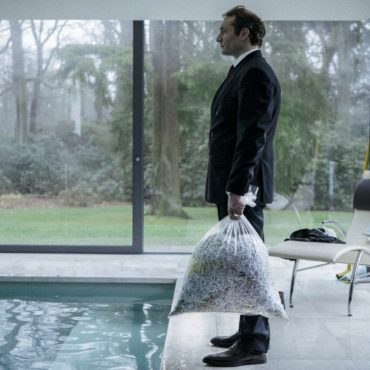
Anke Blondé and Angelo Tijssens present "Dust" in Competition at the 76th Berlinale, a drama on masculinity and corporate collapse.
The Berlin International Film Festival (Berlinale) is a festival showcasing bold, artist-driven films that challenge norms, inspire dialogue, and reflect today’s urgent political and cultural issues.
Edinburgh Spanish Film Festival
Marian Arechega, director of the vibrant Edinburgh Spanish Film Festival, discusses the 2026 edition programme, showcasing recent and diverse cinema from Spain.
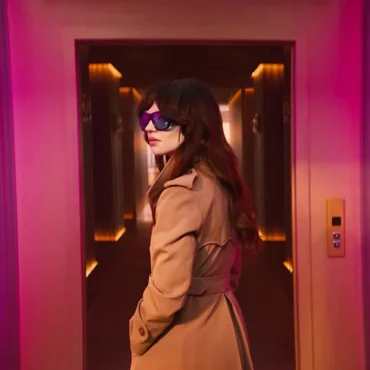
Nicolas Winding Refn on Her Private Hell, his first feature in ten years, in Italian cinemas from October 1.
Discover how EWIP - European Work in Progress connects European and African films with top buyers, boosting distribution and festival success.
Rome is once again expanding the scope of its Film Fest: thirteen days of cinema, international premieres, renowned auteurs, emerging talent, series, documentaries, and cinematic heritage—with Javier Bardem, Paolo Genovese, and Monica Vitti at the heart of an edition that …