

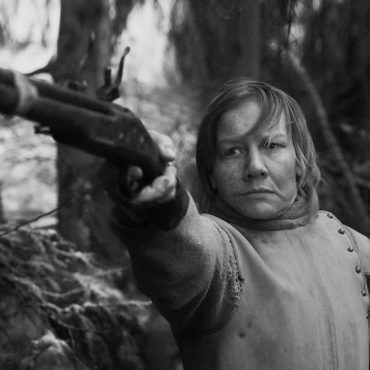
“Rose”, interview with director Markus Schleinzer
Markus Schleinzer discusses "Rose" in Competition at the 76th Berlinale, exploring identity, power and historical research.
Listeners:
Top listeners:
 play_arrow
ENGLISH Channel 01 If English is your language, or a language you understand, THIS IS YOUR CHANNEL !
 play_arrow
ITALIAN Channel 02 Se l’italiano è la tua lingua, o una lingua che conosci, QUESTO È IL TUO CANALE!
 play_arrow
EXTRA Channel 03 FRED Film Radio channel used to broadcast press conferences, seminars, workshops, master classes, etc.
 play_arrow
GERMAN Channel 04 Wenn Ihre Sprache Deutsch ist, oder Sie diese Sprache verstehen, dann ist das IHR KANAL !
 play_arrow
POLISH Channel 05
 play_arrow
SPANISH Channel 06 Si tu idioma es el español, o es un idioma que conoces, ¡ESTE ES TU CANAL!
 play_arrow
FRENCH Channel 07 Si votre langue maternelle est le français, ou si vous le comprenez, VOICI VOTRE CHAINE !
 play_arrow
PORTUGUESE Channel 08
 play_arrow
ROMANIAN Channel 09 Dacă vorbiţi sau înţelegeţi limba română, ACESTA ESTE CANALUL DUMNEAVOASTRĂ!
 play_arrow
SLOVENIAN Channel 10
 play_arrow
ENTERTAINMENT Channel 11 FRED Film Radio Channel used to broadcast music and live shows from Film Festivals.
 play_arrow
BULGARIAN Channel 16 Ако българският е вашият роден език, или го разбирате, ТОВА Е ВАШИЯТ КАНАЛ !
 play_arrow
CROATIAN Channel 17 Ako je hrvatski tvoj jezik, ili ga jednostavno razumiješ, OVO JE TVOJ KANAL!
 play_arrow
LATVIAN Channel 18
 play_arrow
DANISH Channel 19
 play_arrow
HUNGARIAN Channel 20
 play_arrow
DUTCH Channel 21
 play_arrow
GREEK Channel 22
 play_arrow
CZECH Channel 23
 play_arrow
LITHUANIAN Channel 24
 play_arrow
SLOVAK Channel 25
 play_arrow
ICELANDIC Channel 26 Ef þú talar, eða skilur íslensku, er ÞETTA RÁSIN ÞÍN !
 play_arrow
INDUSTRY Channel 27 FRED Film Radio channel completely dedicated to industry professionals.
 play_arrow
EDUCATION Channel 28 FRED Film Radio channel completely dedicated to film literacy.
 play_arrow
SARDU Channel 29 Si su sardu est sa limba tua, custu est su canale chi ti deghet!
 play_arrow
“Conversation with” at the 20th Marrakech IFF, interview with actor Willem Dafoe Bénédicte Prot
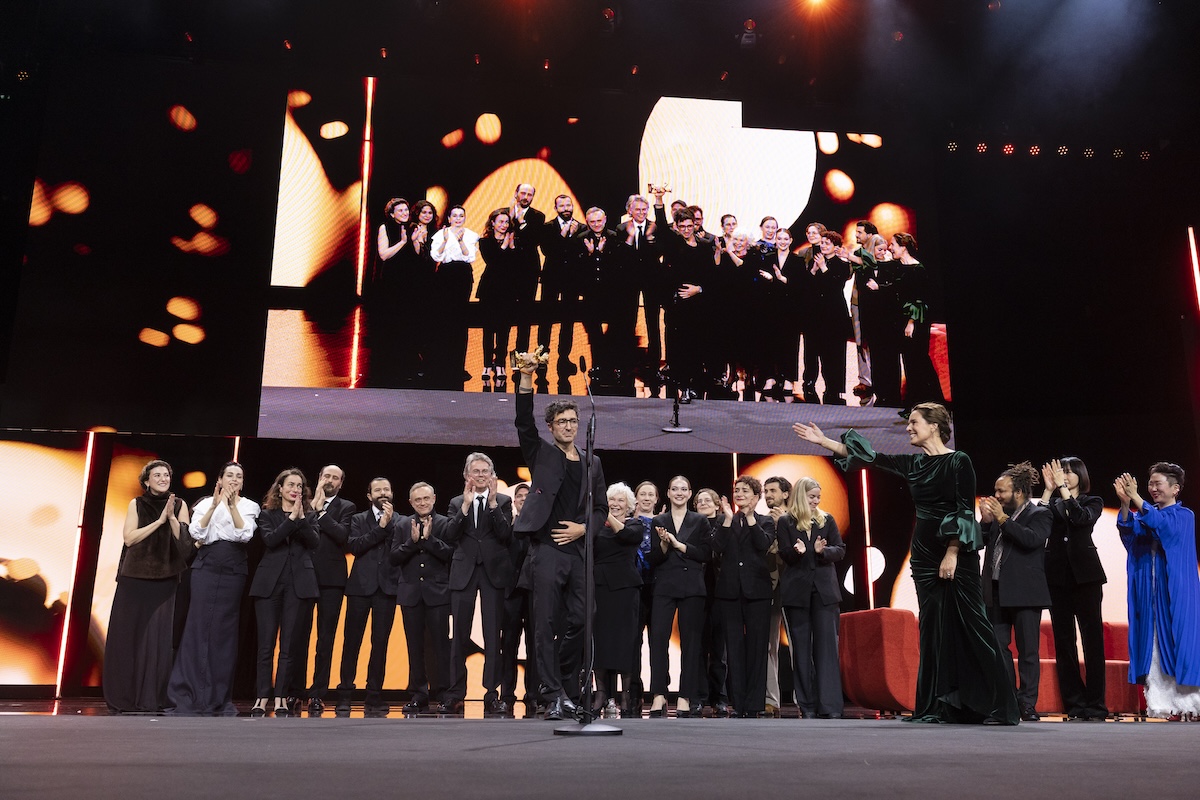
The 76th edition of the Berlinale closed in an atmosphere shaped as much by cinema as by public discourse. Before the awards were handed out, Festival Director Tricia Tuttle addressed the tensions that marked the ten-day event. “This Berlinale has taken place in a world that feels raw and fractured,” she said, acknowledging grief, anger and urgency carried into the cinemas. “If this Berlinale has been emotionally charged, that’s not a failure of cinema. That is the Berlinale doing its job.”
With 278 films from 80 countries, the festival reaffirmed its founding premise: a public space where different voices coexist, even when contradictory. That plurality was reflected in the jury decisions.
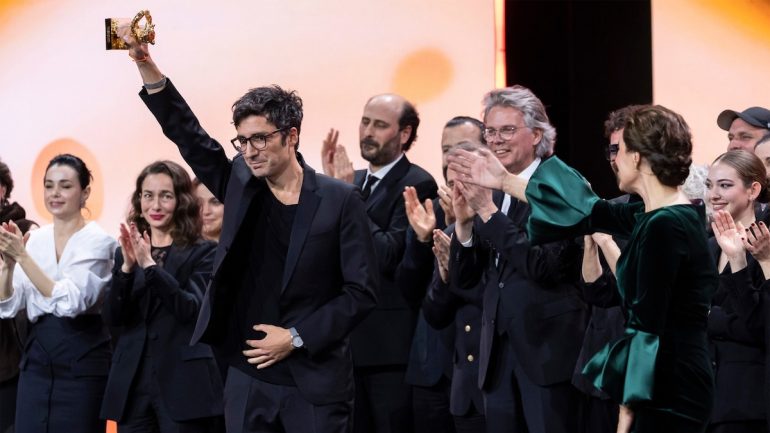
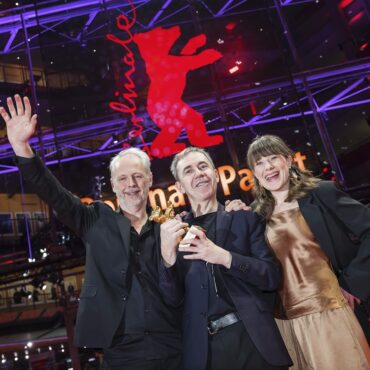
The International Jury, chaired by Wim Wenders and including Min Bahadur Bham, Bae Doona, Shivendra Singh Dungarpur, Reinaldo Marcus Green, HIKARI and Ewa Puszczyńska, awarded the Golden Bear to Gelbe Briefe (Yellow Letters) by İlker Çatak, produced by Ingo Fliess.
Set in Turkey but filmed entirely in Germany, with German cities explicitly credited as Turkish locations, the film follows a married playwright and actress persecuted for their protest theatre. Presenting the award, Wenders praised the film for “[speaking] up very clearly about the political language of totalitarianism as opposed to the empathetic language of cinema,” calling it “a terrifying vision into the future.”
Çatak, already known internationally for The Teachers’ Lounge, becomes the first German filmmaker in over two decades to win Berlin’s top prize. In his speech, he refrained from delivering a prepared political statement: “I think the film speaks for itself in its political message, or questions rather.”
The Silver Bear Grand Jury Prize went to Emin Alper for Kurtuluş (Salvation), a rural drama set in Turkey’s Kurdish region that the director framed as globally resonant. Alper dedicated his speech to “Palestinians in Gaza” and others facing oppression worldwide.
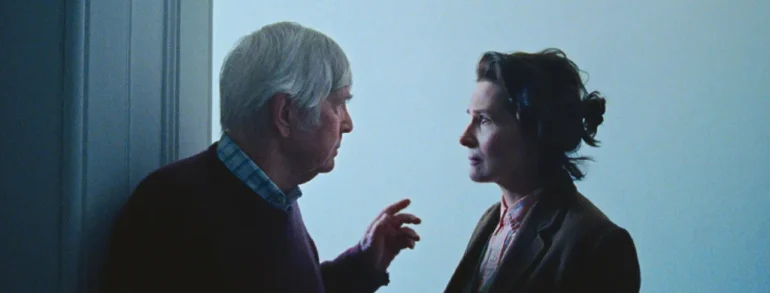
The Silver Bear Jury Prize was awarded to Lance Hammer’s Queen at Sea, a portrait of an elderly London couple confronting dementia. The film also earned Best Supporting Performance for Anna Calder-Marshall and Tom Courtenay.
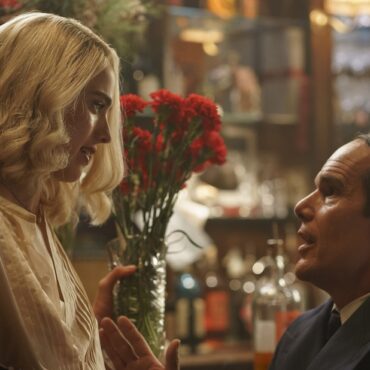
Sandra Hüller won Best Leading Performance for her role in Markus Schleinzer’s historical drama Rose, marking her second Berlinale acting award. Best Director went to Grant Gee for Everybody Digs Bill Evans, while Geneviève Dulude-de Celles received Best Screenplay for Nina Roza. Outstanding Artistic Contribution was awarded to Anna Fitch and Banker White for the documentary Yo (Love is a Rebellious Bird).
In the Perspectives section, the GWFF Best First Feature Award (€50,000) went to Abdallah Alkhatib’s Chronicles From the Siege. At the same time, the Berlinale Documentary Award was presented to If Pigeons Turned to Gold by Pepa Lubojacki.
The Golden Bear for Best Short Film was awarded to Yawman ma walad (Someday a Child) by Marie-Rose Osta.
Beyond the main Competition, the political dimension of the 76th Berlinale extended decisively into Generation, Panorama and Forum, where juries repeatedly favoured films that engaged with contemporary conflicts, identity struggles and systemic injustice.
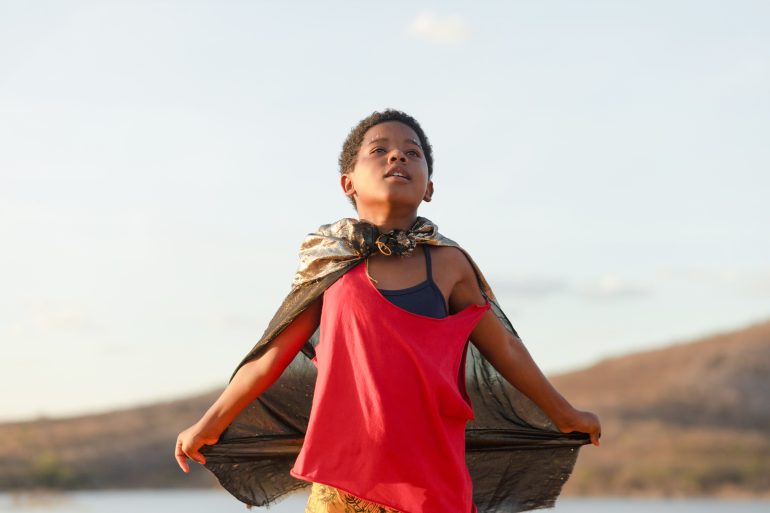
In Generation Kplus, Allan Deberton’s Feito Pipa (Gugu’s World) received both the Crystal Bear from the Children’s Jury and the Grand Prix of the International Jury, signalling a rare consensus between young audiences and professionals. While centred on childhood, the film addresses questions of social belonging and vulnerability through a distinctly political lens. Similarly, the 14plus section crowned Fernanda Tovar’s Chicas Tristes (Sad Girlz), a coming-of-age narrative that situates adolescent experience within broader structures of gendered and social constraint.
The Panorama section, traditionally attentive to urgent contemporary themes, awarded its Audience Prize to Faraz Shariat’s Staatsschutz (Prosecution), which also received the CICAE Art Cinema Award and the Heiner Carow Prize. The film’s focus on state power and civic freedoms echoed wider debates surrounding the festival, underscoring how political discourse permeated both the screen and the ceremony.
In the Forum strand, long associated with formally adventurous and politically challenging cinema, Kristina Mikhailova’s River Dreams was honoured by the Ecumenical Jury. At the same time, Tudor Cristian Jurgiu’s De capul nostru (On Our Own) received the CICAE Award. These selections reinforced the Forum’s role as a space for rigorous reflection on marginality, memory and structural violence.
If this 76th edition of the Berlinale will be remembered for controversy, it will also be remembered for coherence. The awards did not dilute the tensions surrounding the festival; they absorbed them. From Yellow Letters to Salvation, from Chronicles From the Siege to Staatsschutz (Prosecution), the jury decisions formed a constellation of works preoccupied with power, exile, memory and civic responsibility.
In his carefully calibrated remarks, Wim Wenders returned to the idea of cinema as a counterweight to politics, not a retreat from reality, but a different language for engaging with it. “The language of cinema is empathetic,” he said, suggesting that artistic practice and activism need not cancel each other out.
Tricia Tuttle framed the broader picture with equal clarity: “A festival does not resolve the world’s conflicts. But it can make space for complexity.” That space, sometimes calm, sometimes confrontational, defined this Berlinale, not as a neutral territory, but as a public forum where disagreement, grief and imagination coexist.
All the awards here.
Markus Schleinzer discusses "Rose" in Competition at the 76th Berlinale, exploring identity, power and historical research.
The 75th Berlinale concluded with Dreams (Sex Love) winning the Golden Bear, while Silver Bear awards honored The Blue Trail, The Message, and standout performances by Rose Byrne and Andrew Scott.
The 75th Berlinale shines with Tom Tykwer’s opening, Tilda Swinton’s Golden Bear, and films from Richard Linklater, Bong Joon Ho, James Mangold, Todd Haynes, Marion Cotillard, and more!
Tom Tykwer’s "The Light" starring Lars Eidinger and Nicolette Krebitz, will open the 75th Berlinale on February 13, 2025.
At Alice nella Città 2026 with Big Girls Don't Cry, Paloma Schneidman on adolescence, desire and the blurry space between child and adult
Eva Sangiorgi, director of the Viennale 2026, on a city festival with over 100 features, no competition and a Robert Aldrich retrospective.
Ruth Beckermann on Wax & Gold, her documentary on Ethiopia seen through a hotel in Addis Ababa, at the Rome Film Fest 2026.
A dark fairy tale about growing up, belonging and the fear of being replaced. Bàrbara Farré and Diego Betancor discuss the personal origins of Mala Bèstia, its unsettling vision of adolescence and the decision to make a debut feature without …