Kristina Grozeva and Petar Valchanov bring their fifth feature film to the main competition of the Karlovy Vary Film Festival 2026, where they won the Crystal Globe for The Father in 2019. With Black Money for White Nights, the Bulgarian directing duo, also known for their ‘newspaper clippings’ trilogy, which started with their internationally acclaimed debut 2014 The Lesson (followed by Glory in 2016 and completed with “Triumph” in 2024), they offer the type of cruel social satire they have become known for – paired with a moral tale where money plays a major role, and a breathless race from one hurdle to the next, all the while running with scissors.
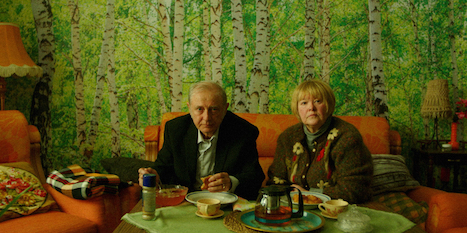
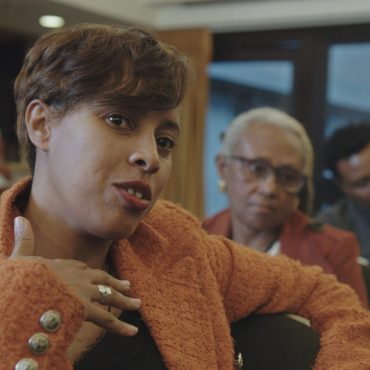
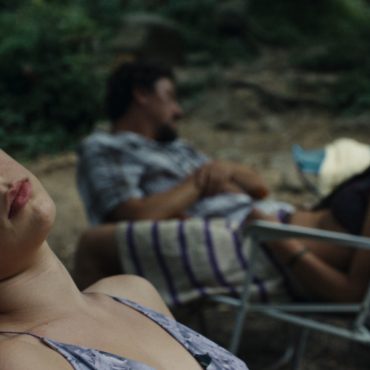
At the centre of the film is the plight of a nearly retired married couple (played by Tanya Shahova and Ivan Savov), who have become infected by a lifetime spent living in a corrupt society where deceit is part of daily life, and keep carrying outdated values inherited from the communist era into an indifferent capitalist world where they still get crushed by the old mechanisms they help perpetuate (by continuously scratching their backs, so to speak).
Building contradiction into the title
On the strange sense of balance suggested by the title of the film, “it was very important for us to build this contradiction in the title,” says Grozeva, “because we hoped that this would reflect the mood of the whole movie. I think this contradiction contains both the tragedy and the comedy, the low and the sublime.” “The creative process behind the title was very important” and a key foundation on which to build the film, adds Valchanov, who points out that it is a distortion of the Bulgarian version of the phrase “saving money for a rainy day”, which talks about “saving money for a black day.”
On deceit and retribution
On deceit and retribution, Kristina Grozeva explains: “They live in lies all the time and they pretend that everything is OK, but this way of living has a price, somehow, and they have to pay it.” As her partner-in-crime reveals, the way they balance the diverse set of values from which they operate was inspired by many people in real life. The film, he says, “is about this generation who has made it a part of their life during the communist period and then, after it, in the democratic period.”
Victims of themselves
“This system doesn’t allow you to have a dignity,” Grozeva points out, prompting Valchanov to also underline the fact that the couple at the centre of their film “are also victims of themselves.” “They mostly suffer because of their own decisions,” adds Grozeva. “We wanted to dig into the topic of corruption, but not only the corruption in the political or social sense – [we also wanted to talk about] this kind of inner corruption that puts black spots in our souls. Somehow, it felt very important to capture this moment when you corrupt your intimate world: your dreams, your marriage, even your relationship with God, everything.”
No clichés, no superficiality
On the well-roundedness and the many nuances of the characters, the directing duo insists that they “did not want to build clichés, or characters who are superficial. We wanted to build deep human beings with contradictions, and that is why we wanted to create this couple, so that they would be capable of love and tenderness, and at the same time of manipulation and deception.”
A breathless rhythm
On the relentless succession of catastrophic events depicted in the film: “It was very important for us to create this rhythm and build this sense of tension. We wanted the audience to feel their feelings.”
Plot
Marina (65), a maternity nurse, and her husband Gosha (68), a railway dispatcher, have spent years collecting small bribes to afford their dream trip to St. Petersburg and witness the White Nights. When Russia invades Ukraine and the travel agency vanishes with their savings, their dream — and the illusion of control — collapses. As Gosha ends up in hospital, beaten while trying to recover the money, long-buried betrayals surface, forcing the couple to confront the lies their life was built on and to search, among the ruins, for a trace of dignity and grace.