

“Nobody Barks”, interview with director Júlia Coldwell Serra
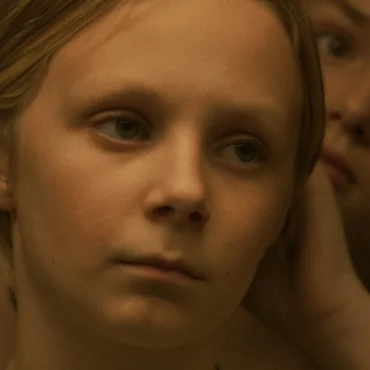
Nobody Barks director Júlia Coldwell Serra at Future Frames 2026. A dark comedy about guilt, family bonds and the comforting stories people invent to avoid painful truths.
Listeners:
Top listeners:
 play_arrow
ENGLISH Channel 01 If English is your language, or a language you understand, THIS IS YOUR CHANNEL !
 play_arrow
ITALIAN Channel 02 Se l’italiano è la tua lingua, o una lingua che conosci, QUESTO È IL TUO CANALE!
 play_arrow
EXTRA Channel 03 FRED Film Radio channel used to broadcast press conferences, seminars, workshops, master classes, etc.
 play_arrow
GERMAN Channel 04 Wenn Ihre Sprache Deutsch ist, oder Sie diese Sprache verstehen, dann ist das IHR KANAL !
 play_arrow
POLISH Channel 05
 play_arrow
SPANISH Channel 06 Si tu idioma es el español, o es un idioma que conoces, ¡ESTE ES TU CANAL!
 play_arrow
FRENCH Channel 07 Si votre langue maternelle est le français, ou si vous le comprenez, VOICI VOTRE CHAINE !
 play_arrow
PORTUGUESE Channel 08
 play_arrow
ROMANIAN Channel 09 Dacă vorbiţi sau înţelegeţi limba română, ACESTA ESTE CANALUL DUMNEAVOASTRĂ!
 play_arrow
SLOVENIAN Channel 10
 play_arrow
ENTERTAINMENT Channel 11 FRED Film Radio Channel used to broadcast music and live shows from Film Festivals.
 play_arrow
BULGARIAN Channel 16 Ако българският е вашият роден език, или го разбирате, ТОВА Е ВАШИЯТ КАНАЛ !
 play_arrow
CROATIAN Channel 17 Ako je hrvatski tvoj jezik, ili ga jednostavno razumiješ, OVO JE TVOJ KANAL!
 play_arrow
LATVIAN Channel 18
 play_arrow
DANISH Channel 19
 play_arrow
HUNGARIAN Channel 20
 play_arrow
DUTCH Channel 21
 play_arrow
GREEK Channel 22
 play_arrow
CZECH Channel 23
 play_arrow
LITHUANIAN Channel 24
 play_arrow
SLOVAK Channel 25
 play_arrow
ICELANDIC Channel 26 Ef þú talar, eða skilur íslensku, er ÞETTA RÁSIN ÞÍN !
 play_arrow
INDUSTRY Channel 27 FRED Film Radio channel completely dedicated to industry professionals.
 play_arrow
EDUCATION Channel 28 FRED Film Radio channel completely dedicated to film literacy.
 play_arrow
SARDU Channel 29 Si su sardu est sa limba tua, custu est su canale chi ti deghet!
 play_arrow
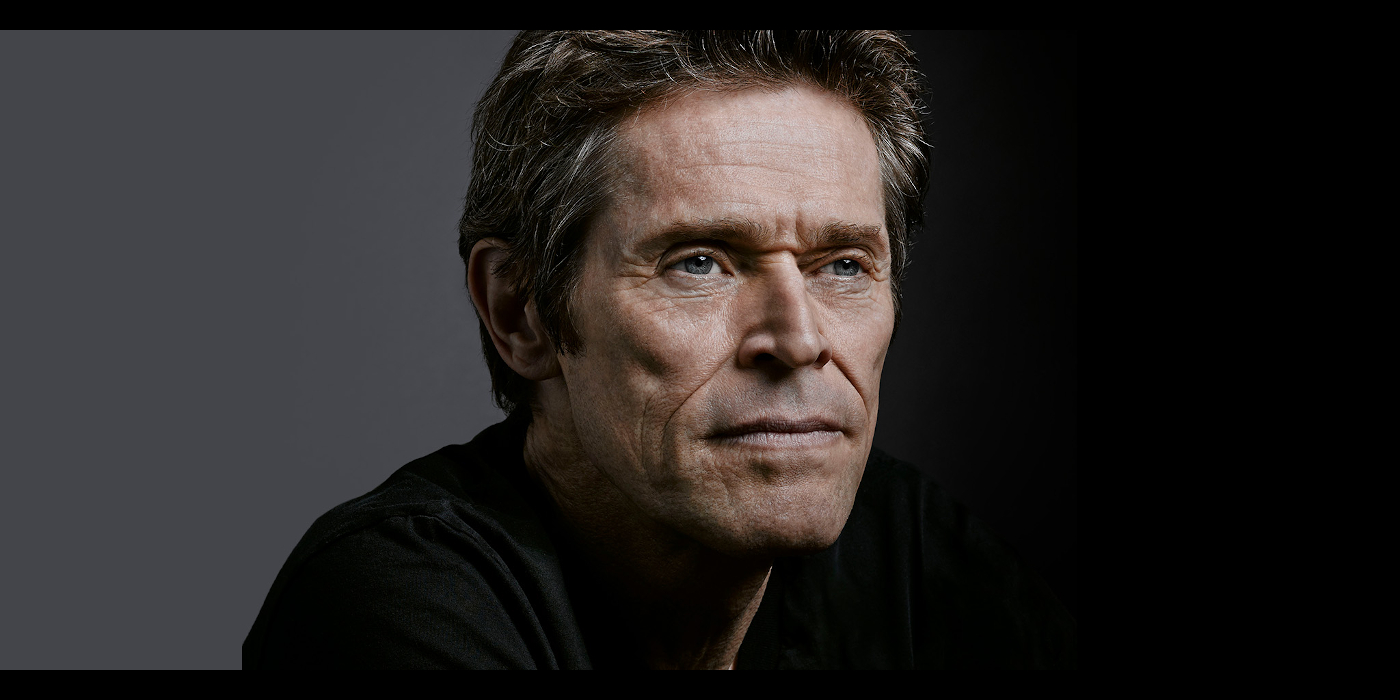
“Conversation with” at the 20th Marrakech IFF, interview with actor Willem Dafoe Bénédicte Prot
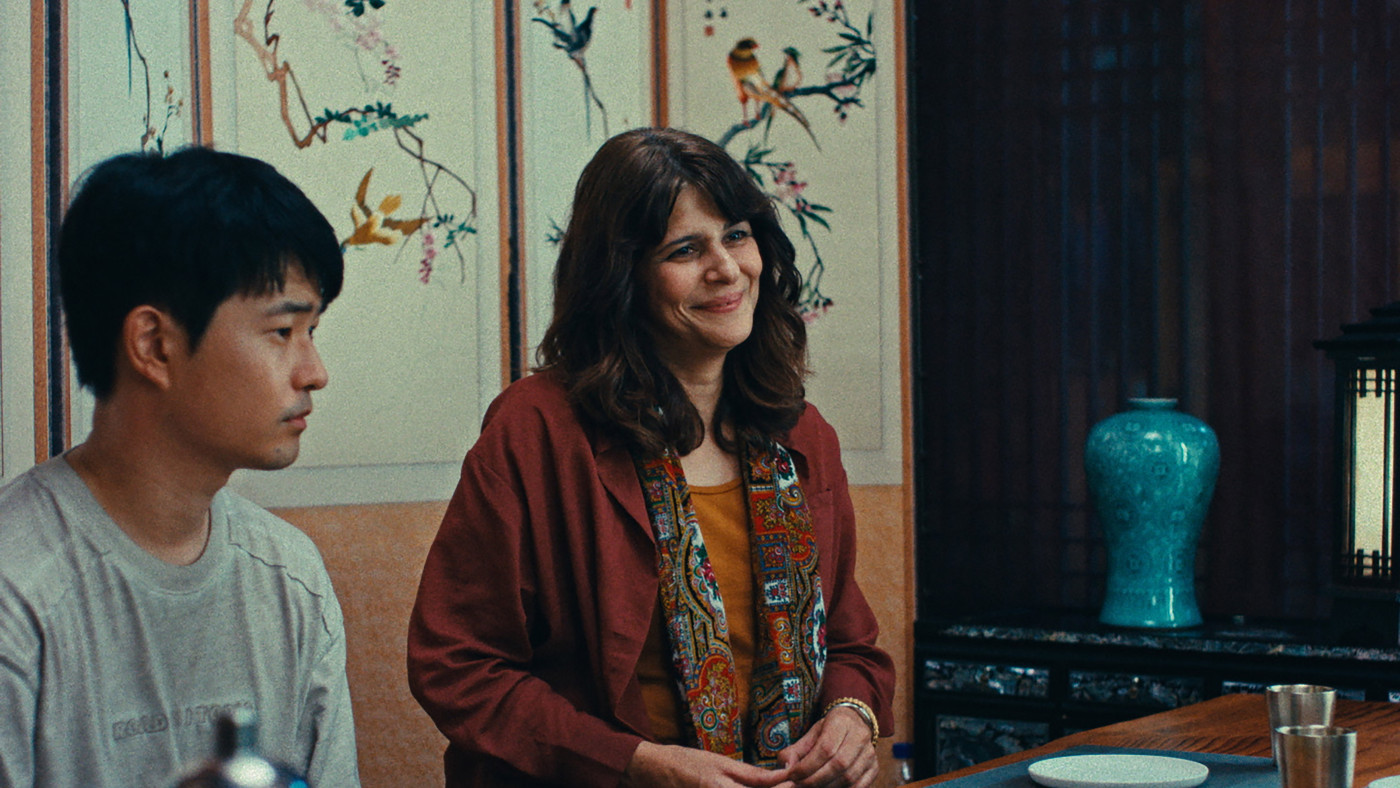
For Hae-Sup Sin, Half-moon is not simply a story about reunion. It is about everything that remains unresolved once that reunion finally happens. Presented at the Karlovy Vary International Film Festival 2026 within Future Frames, the European Film Promotion initiative showcasing emerging European filmmakers, the short film follows a Swiss adoptive mother and her son as they travel to South Korea to meet his biological mother for the first time. Set almost entirely within a traditional Korean restaurant, Half-moon explores identity, belonging, and motherhood through restrained performances, quiet observation, and the emotions that emerge when words are no longer enough.
The film was inspired by a brief Swiss television documentary about a young Korean girl adopted in Switzerland whose biological mother unexpectedly managed to find her. What fascinated Sin was not the reunion itself, but the adoptive mother’s emotional position. “Usually adoptees search for their biological parents,” he explains. “In this case, the biological mother found the child. I became curious about how the Swiss mother would feel, understanding that another woman could also say, ‘She is my daughter.'” Rather than adapting that true story, Sin used it as the starting point for an original screenplay exploring the emotional space shared by two women connected by the same child.
Almost the entire film unfolds inside a traditional Korean restaurant, a deliberate choice that carries both dramatic and symbolic meaning. In Korean culture, these restaurants are often where couples introduce their parents before marriage. Sin found it an appropriate setting for two mothers meeting for the first time instead. “I thought it was quite ironic,” he says. “The two mothers face each other there for the first time.” The confined setting also reflects his interest in chamber pieces, in which emotional tension builds through small gestures rather than dramatic action. Food itself becomes another language. “Eating behaviour tells you so much about people and culture,” he explains. “That was another reason I chose the restaurant.”
Language barriers shape every interaction in Half-moon. Characters speak different languages, rely on translation and frequently struggle to express what they truly feel. Rather than treating this as an obstacle, Sin embraced silence as one of the film’s central narrative tools. “Silence is one of the most universal languages,” he says. Throughout the film, glances, pauses, and body language communicate emotions that dialogue cannot fully translate. The director also credits his cast for bringing those moments to life. “I relied on the actresses’ instincts,” he explains. “The screenplay was there, but how we interpreted it remained completely open.”
Sin also appears in Half-moon as Joel, marking his first experience as an actor. The decision presented unexpected challenges. Unable to judge his own performance objectively, he relied heavily on his cinematographer and producer, both of whom watched the monitor throughout filming and offered constant feedback. The experience has already influenced the way he approaches directing. “Before, I was very controlling,” he admits. “Being in front of the camera made me realise that sometimes it’s better to give simple directions and trust what happens inside the actors.” It is a lesson he intends to carry into future projects.
The original Korean title, Ban Dal, comes from a children’s song heard after the end credits, where a half moon becomes a boat travelling westward. Only later did Sin realise how deeply the title reflected the film itself. For him, the half moon represents Joel’s incomplete search for identity, as well as the acceptance that motherhood does not have to belong to one person alone.
After Half-moon, Hae-Sup Sin is developing his first feature film, Some Korean Summer, a romance between a young Swiss woman and a Korean man set in the rural South Korean countryside. The project is currently in development with a Swiss production company. Far from feeling intimidated by the transition to feature filmmaking, the director says his greatest concern is securing financing. “I’m more excited than scared,” he says. “I love the process of making films, working with actors and seeing something you’ve written come to life.”
His experience at Future Frames has only reinforced that enthusiasm. Beyond presenting his work to international audiences, the programme allowed him to build lasting relationships with fellow emerging filmmakers from across Europe. “We immediately became really good friends,” he says. “Seeing so many different perspectives was inspiring, but leaving with new friends is probably what I’ll remember most.”
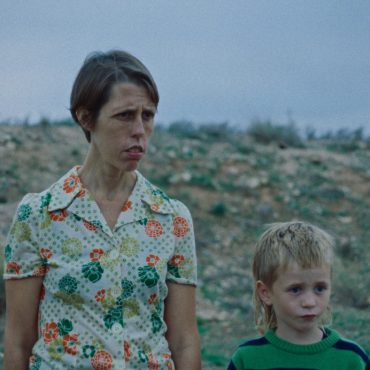
Annette and her adoptive son Joel travel to South Korea to meet his biological mother. But the long-anticipated meeting is complicated by the language barrier and repressed emotions. The atmosphere of uncertainty is amplified by the clinking of cutlery in the traditional restaurant and by a Korean version of “Clair de Lune.” Ban Dal (Half Moon) is a delicate exploration of the fragmented identity of the adopted Joel, but also a sensitive portrait of two women who, despite their different cultural backgrounds, share similar insecurities and a sense of motherly love.
Nobody Barks director Júlia Coldwell Serra at Future Frames 2026. A dark comedy about guilt, family bonds and the comforting stories people invent to avoid painful truths.
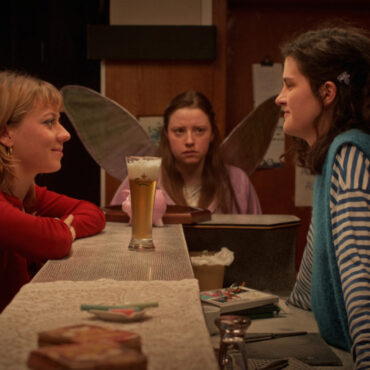
Sister of Mine director André Vaara at Future Frames 2026. A quiet short story about siblings, identity, and childhood perception.
In Karaokiss, Mila Ryngaert blends music, fantasy, and emotion to explore fear, love, and self-expression.
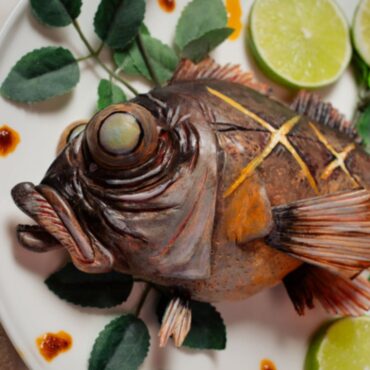
In Fish River Anthology, Veera Lamminpää blends humor, melancholy, and stop-motion animation to explore the inner lives of dead fish in a supermarket. A surreal musical elegy that questions existence, value, and the overlooked beauty of everyday life.
Edinburgh Spanish Film Festival
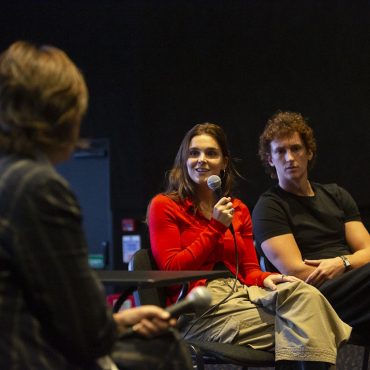
Marian Arechega, director of the vibrant Edinburgh Spanish Film Festival, discusses the 2026 edition programme, showcasing recent and diverse cinema from Spain.
Nicolas Winding Refn on Her Private Hell, his first feature in ten years, in Italian cinemas from October 1.
Discover how EWIP - European Work in Progress connects European and African films with top buyers, boosting distribution and festival success.
Rome is once again expanding the scope of its Film Fest: thirteen days of cinema, international premieres, renowned auteurs, emerging talent, series, documentaries, and cinematic heritage—with Javier Bardem, Paolo Genovese, and Monica Vitti at the heart of an edition that …