

“Half-moon”, interview with director Hae-Sup Sin
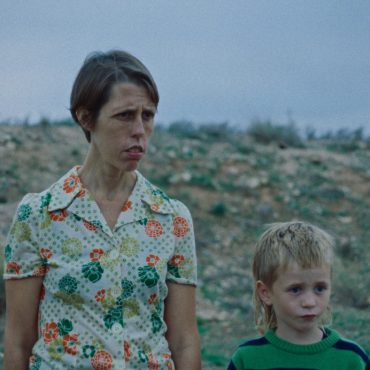
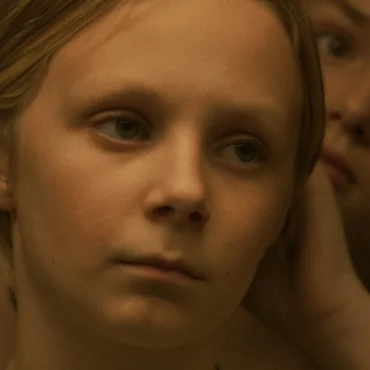
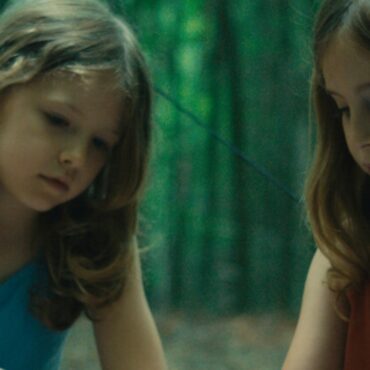
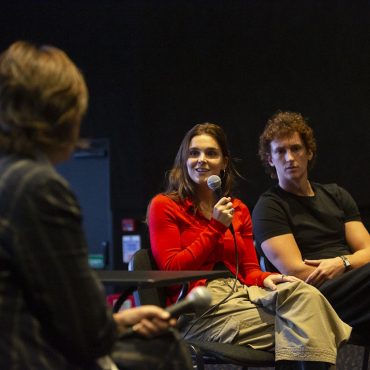
Half-moon director Hae-Sup Sin at Future Frames 2026. A short film about adoption, cultural identity and two mothers discovering that love can be shared rather than divided.
Listeners:
Top listeners:
 play_arrow
ENGLISH Channel 01 If English is your language, or a language you understand, THIS IS YOUR CHANNEL !
 play_arrow
ITALIAN Channel 02 Se l’italiano è la tua lingua, o una lingua che conosci, QUESTO È IL TUO CANALE!
 play_arrow
EXTRA Channel 03 FRED Film Radio channel used to broadcast press conferences, seminars, workshops, master classes, etc.
 play_arrow
GERMAN Channel 04 Wenn Ihre Sprache Deutsch ist, oder Sie diese Sprache verstehen, dann ist das IHR KANAL !
 play_arrow
POLISH Channel 05
 play_arrow
SPANISH Channel 06 Si tu idioma es el español, o es un idioma que conoces, ¡ESTE ES TU CANAL!
 play_arrow
FRENCH Channel 07 Si votre langue maternelle est le français, ou si vous le comprenez, VOICI VOTRE CHAINE !
 play_arrow
PORTUGUESE Channel 08
 play_arrow
ROMANIAN Channel 09 Dacă vorbiţi sau înţelegeţi limba română, ACESTA ESTE CANALUL DUMNEAVOASTRĂ!
 play_arrow
SLOVENIAN Channel 10
 play_arrow
ENTERTAINMENT Channel 11 FRED Film Radio Channel used to broadcast music and live shows from Film Festivals.
 play_arrow
BULGARIAN Channel 16 Ако българският е вашият роден език, или го разбирате, ТОВА Е ВАШИЯТ КАНАЛ !
 play_arrow
CROATIAN Channel 17 Ako je hrvatski tvoj jezik, ili ga jednostavno razumiješ, OVO JE TVOJ KANAL!
 play_arrow
LATVIAN Channel 18
 play_arrow
DANISH Channel 19
 play_arrow
HUNGARIAN Channel 20
 play_arrow
DUTCH Channel 21
 play_arrow
GREEK Channel 22
 play_arrow
CZECH Channel 23
 play_arrow
LITHUANIAN Channel 24
 play_arrow
SLOVAK Channel 25
 play_arrow
ICELANDIC Channel 26 Ef þú talar, eða skilur íslensku, er ÞETTA RÁSIN ÞÍN !
 play_arrow
INDUSTRY Channel 27 FRED Film Radio channel completely dedicated to industry professionals.
 play_arrow
EDUCATION Channel 28 FRED Film Radio channel completely dedicated to film literacy.
 play_arrow
SARDU Channel 29 Si su sardu est sa limba tua, custu est su canale chi ti deghet!
 play_arrow
“Conversation with” at the 20th Marrakech IFF, interview with actor Willem Dafoe Bénédicte Prot
 play_arrow
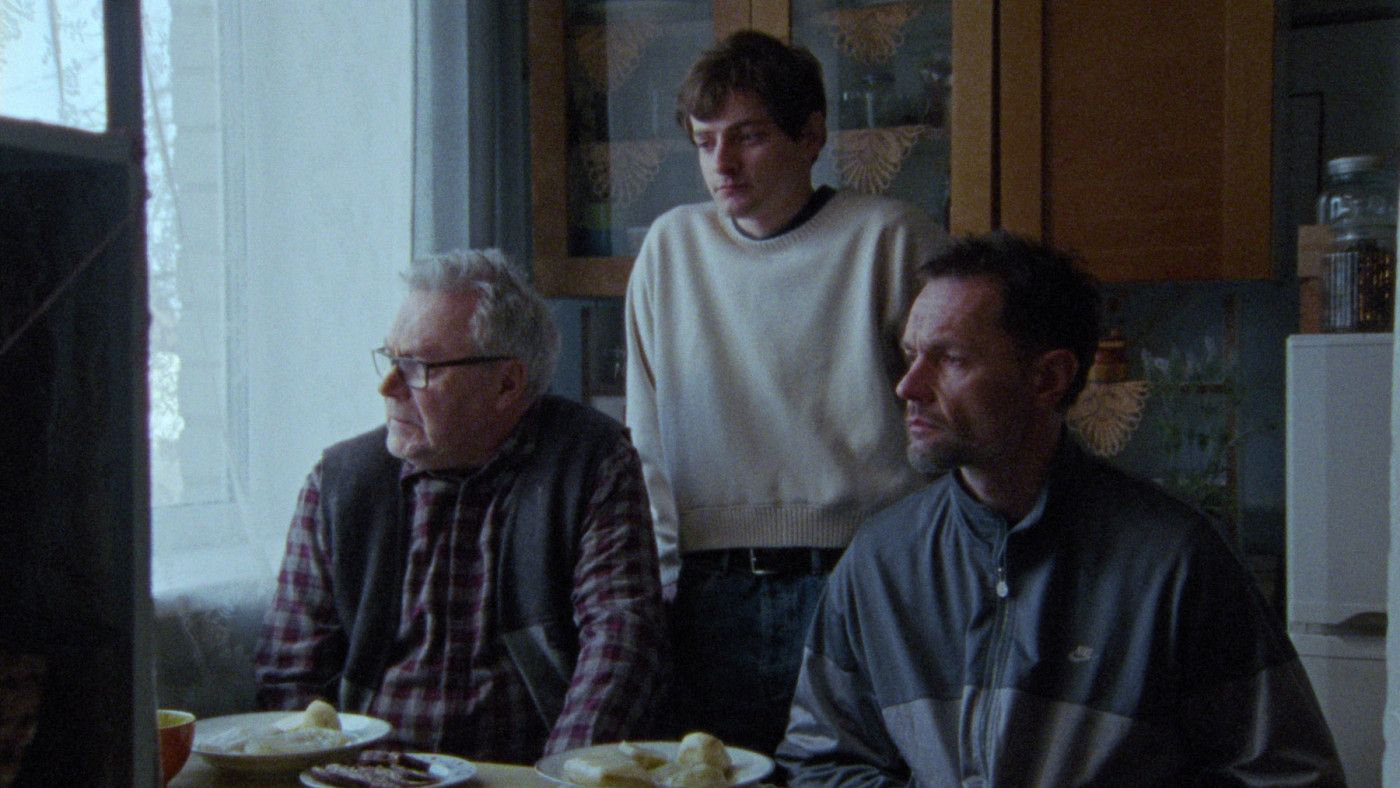
"Past the Hill of Napoleon's Hat", interview with director Arnas Balčiūnas Federica Scarpa
Lithuanian filmmaker Arnas Balčiūnas arrives at the Karlovy Vary International Film Festival 2026 with Past the Hill of Napoleon’s Hat, one of the ten short films showcased in Future Frames, the European Film Promotion initiative that introduces Europe’s most promising young directors to the international film industry through screenings, masterclasses and networking opportunities. Rather than offering a conventional family drama, Balčiūnas builds an intimate and restrained portrait of emotional distance, where silence speaks louder than confrontation.
Set on a single early spring day, the short film follows Martynas as he picks up his father from a psychiatric hospital and drives him to visit his grandparents in rural Lithuania. Along the journey, familiar landscapes awaken memories that neither father nor son can fully articulate, exposing wounds that have remained buried across generations.
The emotional core of the film originated in a conversation with the director’s own father, who once reflected on his difficult relationship with his abusive parent and the discomfort of seeing his father’s physical features reflected in himself. That confession became the foundation for a story about inherited trauma and the invisible threads connecting different generations. “There’s a lineage here of what I would see as generational trauma.” Rather than recreating his own family’s history, Balčiūnas transformed those emotions into fiction, exploring how unresolved pain can quietly shape relationships long after the original events have passed.
One of the film’s most striking qualities is its refusal to divide its characters into victims and villains. The father is fragile, emotionally distant and difficult to understand, yet the film consistently resists judging him. For Balčiūnas, the real tragedy lies elsewhere. “The saddest thing is the inability to talk about these things.” Instead of explaining every detail of the family’s past, he focuses on the present moment, observing people who continue trying, however imperfectly, to repair broken relationships. That choice allows empathy to emerge naturally, without relying on melodrama or easy resolutions.
The Lithuanian countryside becomes an extension of the characters’ emotional state. The familiar post-Soviet houses and quiet rural spaces are not simply realistic settings, but subtle reminders that personal trauma is often inseparable from broader historical experiences. Balčiūnas explains that the emotional patterns portrayed in the film can be found in many Lithuanian families and across the post-Soviet region, where political history has left deep marks on private lives. Rather than making this connection explicit, he allows the environment itself to suggest the weight of a collective past.
Being part of Future Frames has also allowed the young director to encounter fellow emerging filmmakers at a crucial stage of their careers. He describes the programme less as an immediate professional breakthrough than as the beginning of relationships that may shape future collaborations while offering a broader perspective beyond the national context of film school. Reflecting on today’s film landscape, Balčiūnas acknowledges that young directors face increasing pressure to define a recognisable artistic identity early in their careers. With an overwhelming number of films constantly available, he believes the greatest challenge is not finding a visual style but discovering themes that genuinely belong to one’s own life and cultural background, rather than following existing trends.
Although he recently premiered another short film at the Cannes Film Festival and is already developing his next project, Balčiūnas continues to embrace the short format as the space where his storytelling feels most natural. “I also like the impressionistic nature of short films. It’s something that suits my storytelling style.” He sees short films as works that can be almost entirely imagined before production begins, allowing filmmakers to refine every choice while preserving ambiguity. Rather than offering definitive answers, they invite audiences to continue thinking after the final frame, completing the emotional journey themselves.
On a misty early-spring morning, Martynas picks up his father from a psychiatric hospital. As they travel to visit his grandparents in a small town in Lithuania, they pass a familiar strangely-shaped hill. It feels like eternity since they all played there together. The poetically titled Past the Hill of Napoleon’s Hat is an oppressive portrait of one fleeting day in the life of an estranged family forced to confront something they have ignored for many years. The coming of spring and the long-anticipated reunion, however, awaken within the father the hope that, this time around, something might change in their fragile relationship.
Half-moon director Hae-Sup Sin at Future Frames 2026. A short film about adoption, cultural identity and two mothers discovering that love can be shared rather than divided.
Nobody Barks director Júlia Coldwell Serra at Future Frames 2026. A dark comedy about guilt, family bonds and the comforting stories people invent to avoid painful truths.
Sister of Mine director André Vaara at Future Frames 2026. A quiet short story about siblings, identity, and childhood perception.
Dissection of an incoherence in crisis, a Catalan but universal story world premiering at the 8th Future Frames at the KVIFF
Edinburgh Spanish Film Festival
Marian Arechega, director of the vibrant Edinburgh Spanish Film Festival, discusses the 2026 edition programme, showcasing recent and diverse cinema from Spain.
Nicolas Winding Refn on Her Private Hell, his first feature in ten years, in Italian cinemas from October 1.
Discover how EWIP - European Work in Progress connects European and African films with top buyers, boosting distribution and festival success.
Rome is once again expanding the scope of its Film Fest: thirteen days of cinema, international premieres, renowned auteurs, emerging talent, series, documentaries, and cinematic heritage—with Javier Bardem, Paolo Genovese, and Monica Vitti at the heart of an edition that …