
Béla Tarr (1955–2026): Tempo, cinema ed etica dell’attenzione
Béla Tarr è morto il 6 gennaio 2026. In nove film, ha trasformato il tempo in una posizione etica e il cinema in un atto di resistenza.
Listeners:
Top listeners:
 play_arrow
ENGLISH Channel 01 If English is your language, or a language you understand, THIS IS YOUR CHANNEL !
 play_arrow
ITALIAN Channel 02 Se l’italiano è la tua lingua, o una lingua che conosci, QUESTO È IL TUO CANALE!
 play_arrow
EXTRA Channel 03 FRED Film Radio channel used to broadcast press conferences, seminars, workshops, master classes, etc.
 play_arrow
GERMAN Channel 04 Wenn Ihre Sprache Deutsch ist, oder Sie diese Sprache verstehen, dann ist das IHR KANAL !
 play_arrow
POLISH Channel 05
 play_arrow
SPANISH Channel 06 Si tu idioma es el español, o es un idioma que conoces, ¡ESTE ES TU CANAL!
 play_arrow
FRENCH Channel 07 Si votre langue maternelle est le français, ou si vous le comprenez, VOICI VOTRE CHAINE !
 play_arrow
PORTUGUESE Channel 08
 play_arrow
ROMANIAN Channel 09 Dacă vorbiţi sau înţelegeţi limba română, ACESTA ESTE CANALUL DUMNEAVOASTRĂ!
 play_arrow
SLOVENIAN Channel 10
 play_arrow
ENTERTAINMENT Channel 11 FRED Film Radio Channel used to broadcast music and live shows from Film Festivals.
 play_arrow
BULGARIAN Channel 16 Ако българският е вашият роден език, или го разбирате, ТОВА Е ВАШИЯТ КАНАЛ !
 play_arrow
CROATIAN Channel 17 Ako je hrvatski tvoj jezik, ili ga jednostavno razumiješ, OVO JE TVOJ KANAL!
 play_arrow
LATVIAN Channel 18
 play_arrow
DANISH Channel 19
 play_arrow
HUNGARIAN Channel 20
 play_arrow
DUTCH Channel 21
 play_arrow
GREEK Channel 22
 play_arrow
CZECH Channel 23
 play_arrow
LITHUANIAN Channel 24
 play_arrow
SLOVAK Channel 25
 play_arrow
ICELANDIC Channel 26 Ef þú talar, eða skilur íslensku, er ÞETTA RÁSIN ÞÍN !
 play_arrow
INDUSTRY Channel 27 FRED Film Radio channel completely dedicated to industry professionals.
 play_arrow
EDUCATION Channel 28 FRED Film Radio channel completely dedicated to film literacy.
 play_arrow
SARDU Channel 29 Si su sardu est sa limba tua, custu est su canale chi ti deghet!
 play_arrow
“Conversation with” at the 20th Marrakech IFF, interview with actor Willem Dafoe Bénédicte Prot
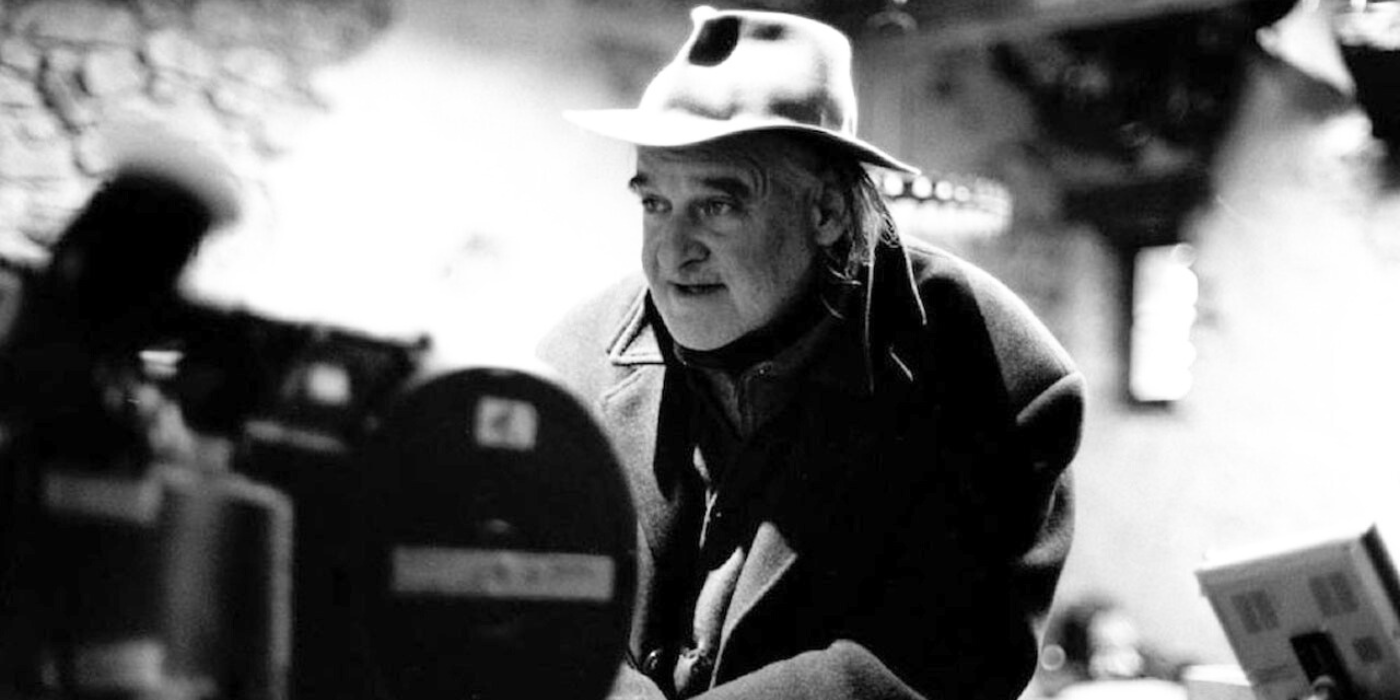
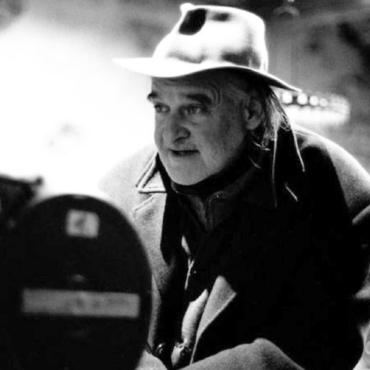
Béla Tarr passed away in Budapest on 6 January 2026, at the age of 70. His career produced only nine feature films, from Family Nest (1979) to The Turin Horse (2011), yet few filmmakers of the past half-century have left a comparable mark on the language of cinema.
Born in Pécs in 1955, Tarr began making films as a teenager, working within the Balázs Béla Stúdió, the central laboratory of Hungarian experimental cinema. His debut Family Nest won the Grand Prix at the Mannheim Film Festival and secured his entry into the Academy of Theatre and Film in Budapest. Even at this early stage, his interest was not style but reality, observed without mediation.
Speaking to FRED Film Radio at Berlinale 2019, Tarr dismissed the idea of external “influences” in the conventional sense. “Mostly the life,” he said. “What I see. What is serious and important for me.” Cinema, in his view, was not an abstract construction but a transformation of lived experience into a personal vision shared with others.
Across his films, Tarr developed a radical formal approach based on long, carefully choreographed single takes, often lasting several minutes. Editing is reduced to a minimum, narrative progression is diluted, and meaning emerges through duration rather than plot.
In the same FRED interview, Tarr argued that mainstream cinema ignores the fundamental conditions of existence. “Our life is happening in the space and in the time,” he said, criticising films that rely on linear dramaturgy and constant explanation. For him, cinema should train the viewer to “listen for the details,” to remain present, active, and exposed to what unfolds on screen.
This insistence on duration is not provocation. It is a way of restoring gravity to experience, allowing gestures, fatigue, weather and silence to carry meaning without manipulation.
Béla Tarr’s films are inseparable from their environments. Rain, wind, mud, and decaying interiors are not atmospheric elements but active forces shaping the characters’ lives. His recurring post-communist Hungarian settings operate as systems of pressure, where social and moral exhaustion becomes visible through repetition and stasis.
Works such as Damnation (1988) and Werckmeister Harmonies (2000) portray communities on the verge of collapse, governed more by conditions than by events. Tarr’s camera does not judge these worlds. It stays with them.
This ethical stance extends to his view of authorship. At Berlinale 2019, he rejected the romantic notion of the filmmaker as “artist,” describing filmmaking instead as physical labour, performed in the cold, in the rain, before dawn. What matters, he insisted, is creating a human situation between people, not producing an object to be consumed.
Sátántangó (1994), the 450-minute adaptation of the novel by László Krasznahorkai, remains Tarr’s most influential work. Often cited as a founding film of contemporary slow cinema, it does not merely depict social disintegration. It makes the viewer inhabit it, step by step, cycle by cycle.
When asked by FRED about audiences watching the film in fragments, Tarr reacted with characteristic bluntness. Duration, he argued, is not optional. Opera audiences accept hours of Wagner, theatre audiences sit through uncut Shakespeare, yet cinema is expected to obey arbitrary limits. His objection was not nostalgic, but political: time should not be dictated by industry convenience.
Tarr’s films were never commercially successful, but their impact on arthouse cinema has been profound. Filmmakers such as Gus Van Sant have openly cited him as a key influence, particularly on the “Death Trilogy” (Gerry, Elephant, Last Days), where pacing and camera movement echo Tarr’s commitment to presence. Jim Jarmusch’s cinema shares a similar trust in duration and observation.
What Tarr offered was not a model to copy, but permission. Cinema could slow down without becoming inert. It could reject narrative urgency without losing intensity.
Following The Turin Horse, which won the Grand Jury Prize at the Berlin International Film Festival in 2011, Tarr declared his feature-film work complete. He later explained that repetition would be dishonest.
The final phase of his career focused on education and expanded forms. In 2012 he founded film.factory in Sarajevo, an international school built on an open, non-hierarchical model. As he told FRED, it was “no education, just liberation.” His goal was to protect young filmmakers from market expectations and help them find the courage to be honest.
Béla Tarr leaves behind films that refuse speed, comfort and simplification. They demand time because they believe time is where dignity begins.
Béla Tarr è morto il 6 gennaio 2026. In nove film, ha trasformato il tempo in una posizione etica e il cinema in un atto di resistenza.
Mascha Schilinski’s Sound of Falling (Die Sonne schauen) debuts in Competition at the 78th Festival de Cannes. A poetic, female-led meditation on generational trauma and memory.
From Ari Aster’s Eddington to Wes Anderson’s The Phoenician Scheme, the 2025 Cannes Film Festival lineup is rich with cinematic giants and rising voices.
David Lynch, the visionary behind Blue Velvet, Twin Peaks, and Mulholland Drive, passes away at 78. His films redefined storytelling, blending dreams and darkness into cinematic art.
At the 76th Berlinale, İlker Çatak’s Yellow Letters wins the Golden Bear in an edition defined by political debate and a strong slate of socially engaged films.
"Only Rebels Win" by Danielle Arbid opens the 76th Berlinale’s Panorama with Hiam Abbass in the leading role.
Home stories by Eva Trobisch, sees the participation of Frida Hornemann and Max Riemelt as father and daughter
In Forest High, Manon Coubia returns to a French Alpine refuge she knows firsthand, observing three female guardians and a way of life shaped by solitude and disappearance.