

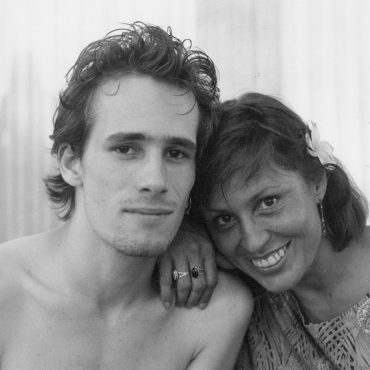
“It’s never over: Jeff Buckley”, interview with director Amy Berg
"It’s never over: Jeff Buckley" by Amy Berg is finally coming out in Italy thanks to Nexo
Listeners:
Top listeners:
 play_arrow
ENGLISH Channel 01 If English is your language, or a language you understand, THIS IS YOUR CHANNEL !
 play_arrow
ITALIAN Channel 02 Se l’italiano è la tua lingua, o una lingua che conosci, QUESTO È IL TUO CANALE!
 play_arrow
EXTRA Channel 03 FRED Film Radio channel used to broadcast press conferences, seminars, workshops, master classes, etc.
 play_arrow
GERMAN Channel 04 Wenn Ihre Sprache Deutsch ist, oder Sie diese Sprache verstehen, dann ist das IHR KANAL !
 play_arrow
POLISH Channel 05
 play_arrow
SPANISH Channel 06 Si tu idioma es el español, o es un idioma que conoces, ¡ESTE ES TU CANAL!
 play_arrow
FRENCH Channel 07 Si votre langue maternelle est le français, ou si vous le comprenez, VOICI VOTRE CHAINE !
 play_arrow
PORTUGUESE Channel 08
 play_arrow
ROMANIAN Channel 09 Dacă vorbiţi sau înţelegeţi limba română, ACESTA ESTE CANALUL DUMNEAVOASTRĂ!
 play_arrow
SLOVENIAN Channel 10
 play_arrow
ENTERTAINMENT Channel 11 FRED Film Radio Channel used to broadcast music and live shows from Film Festivals.
 play_arrow
BULGARIAN Channel 16 Ако българският е вашият роден език, или го разбирате, ТОВА Е ВАШИЯТ КАНАЛ !
 play_arrow
CROATIAN Channel 17 Ako je hrvatski tvoj jezik, ili ga jednostavno razumiješ, OVO JE TVOJ KANAL!
 play_arrow
LATVIAN Channel 18
 play_arrow
DANISH Channel 19
 play_arrow
HUNGARIAN Channel 20
 play_arrow
DUTCH Channel 21
 play_arrow
GREEK Channel 22
 play_arrow
CZECH Channel 23
 play_arrow
LITHUANIAN Channel 24
 play_arrow
SLOVAK Channel 25
 play_arrow
ICELANDIC Channel 26 Ef þú talar, eða skilur íslensku, er ÞETTA RÁSIN ÞÍN !
 play_arrow
INDUSTRY Channel 27 FRED Film Radio channel completely dedicated to industry professionals.
 play_arrow
EDUCATION Channel 28 FRED Film Radio channel completely dedicated to film literacy.
 play_arrow
SARDU Channel 29 Si su sardu est sa limba tua, custu est su canale chi ti deghet!
 play_arrow
“Conversation with” at the 20th Marrakech IFF, interview with actor Willem Dafoe Bénédicte Prot
 play_arrow
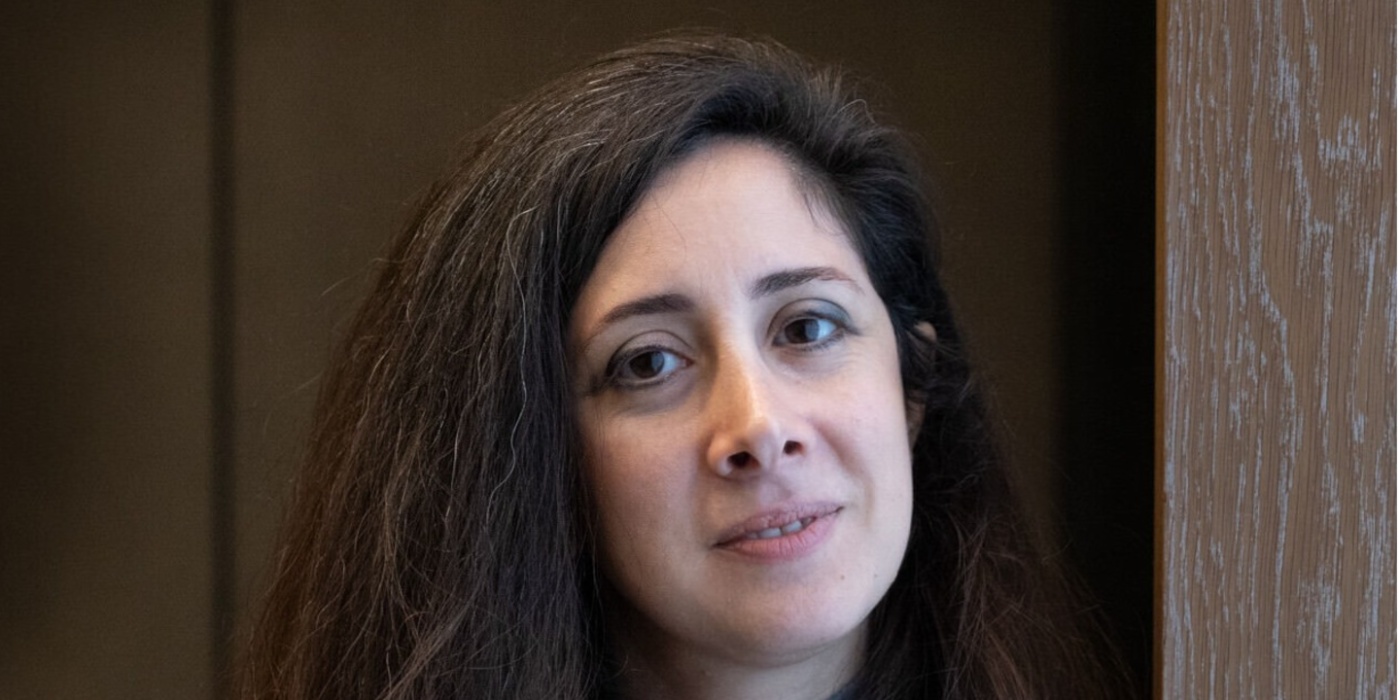
“Diaries from Lebanon”, Interview with director Myriam El Hajj Laura Della Corte
In this heartfelt interview, we speak with Myriam El Hajj, the director of “Diaries from Lebanon”, during the 15th edition of the Middle East Now festival in Florence. Myriam openly shares her emotions regarding Lebanon’s current situation, expressing deep anger and grief over the ongoing struggles faced by her country. With personal ties to the Lebanese Civil War—her family was heavily involved—Myriam’s storytelling is deeply rooted in her intimate experiences, depicting a society still grappling with the consequences of decades of conflict. She remarks, “This film is a continuation of my journey to understand the past,” underscoring how the trauma of war continues to haunt the everyday lives of individuals and families across Lebanon.
The documentary serves as a powerful reflection on a nation where the echoes of historical violence remain ever-present. Myriam elaborates on the enduring political turmoil, sharing her belief that former warlords still hold sway, further complicating the lives of the Lebanese people. In “Diaries from Lebanon”, she uses striking visual metaphors, such as balloons soaring above scenes of destruction. This artistic choice allows her to convey complex emotions and themes without resorting to graphic portrayals of violence. “I wanted to focus on feelings rather than just the destruction,” Myriam explains, emphasizing her intent to capture the emotional depth of her characters and the richness of their stories.
As she delves into this deeply personal narrative, Myriam El Hajj also aims to challenge the conventional portrayals often presented by international media. By drawing on her own experiences and family history, she highlights the importance of understanding Lebanon’s reality from an insider’s perspective. In her film, she invites the audience to look beyond the sensationalized images of violence commonly shown in the news, offering instead an intimate view of the lives affected by these events. This approach is essential not only for documenting pain but also for fostering empathy and a deeper connection with viewers who may be unfamiliar with the complexities of Lebanon’s historical and ongoing struggles.
Furthermore, Myriam El Hajj discusses the dual role of filmmakers as both storytellers and activists. The film is not merely a documentation of past events; it actively seeks to educate and inform audiences about Lebanon’s social and political realities. “Our role as filmmakers is to challenge dominant narratives and present our version of the story,” she asserts, acknowledging that many misconceptions, especially in Western media, persist. Her work aims to bridge this gap, offering a nuanced perspective that highlights the resilience of her people amid adversity.
Despite the difficulties of screening the film in Lebanon due to the unpredictable political climate, Myriam El Hajj remains committed to ensuring that these stories reach their intended audience. She expresses hope for local screenings, emphasizing the significance of sharing the film within Lebanon itself, where it reflects four to five years of intense lived experiences. The characters in the film represent the stories of countless individuals whose lives have been shaped by Lebanon’s turbulent history, and it is essential for them to see their experiences represented on screen.
In her mission to share “Diaries from Lebanon”, Myriam El Hajj demonstrates a profound dedication to amplifying voices that are often silenced. The documentary stands as a testament to the power of film in fostering understanding and sparking dialogue on critical social issues. Learn more about her journey and the impact of “Diaries from Lebanon”, and don’t miss the opportunity to witness this compelling cinematic work.
In 2018, a fiery feminist writer, poet and activist named Joumana stands for election to the Lebanese parliament. In doing so, she is defying a political system that has been suffocating her country for 40 years. Joumana is voted in, only to be fraudulently ousted the very next day, leaving her supporters furious. In 2019, the people’s rage turns into a revolution and the streets swell with thousands of voices. One of them belongs to Perla Joe, a fearless woman who rapidly becomes a symbol of this uprising. Her unyielding voice echoes the frustration of a youth struggling to find its place in society. But the past looms like a shadow over their aspirations for progress and change. Georges is the guardian of that mysterious and violent past. A veteran of the Lebanese Civil War which lasted from 1975 to 1990, he lost a leg in the conflict but still clings on to his delusions of “glory”.
In the form of diaries, the film captures four tumultuous years of a nation in turmoil battling to break free from its own chains. As Lebanon is shaken by disruption, personal quests for meaning and survival unfold. How is it possible to continue to dream when everything around is falling apart?
"It’s never over: Jeff Buckley" by Amy Berg is finally coming out in Italy thanks to Nexo
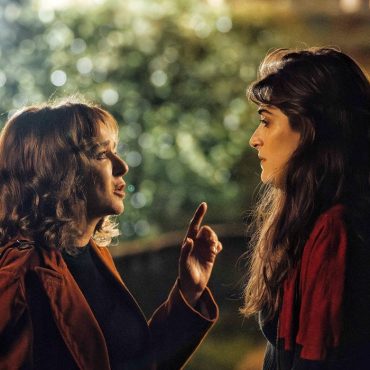
"A Brief Affair" actress Valeria Golino reflects on challenging roles, artistic freedom and bringing writer Goliarda Sapienza to life in "Fuori".
"A Brief Affair": Ludovica Rampoldi on turning a love triangle into a seductive psychological thriller at Cinema Made in Italy.
“Primavera”: Damiano Michieletto discusses Vivaldi, freedom and the power of music in his Venice-set historical debut.