

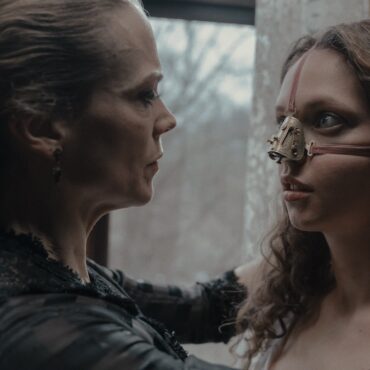
“The Ugly Stepsister”, Interview with Director Emilie Blichfeldt
Emilie Blichfeldt The Ugly Stepsister is a bold debut feature film that showcases the power of feminist narratives and unique takes on fairy tales.
Listeners:
Top listeners:
 play_arrow
ENGLISH Channel 01 If English is your language, or a language you understand, THIS IS YOUR CHANNEL !
 play_arrow
ITALIAN Channel 02 Se l’italiano è la tua lingua, o una lingua che conosci, QUESTO È IL TUO CANALE!
 play_arrow
EXTRA Channel 03 FRED Film Radio channel used to broadcast press conferences, seminars, workshops, master classes, etc.
 play_arrow
GERMAN Channel 04 Wenn Ihre Sprache Deutsch ist, oder Sie diese Sprache verstehen, dann ist das IHR KANAL !
 play_arrow
POLISH Channel 05
 play_arrow
SPANISH Channel 06 Si tu idioma es el español, o es un idioma que conoces, ¡ESTE ES TU CANAL!
 play_arrow
FRENCH Channel 07 Si votre langue maternelle est le français, ou si vous le comprenez, VOICI VOTRE CHAINE !
 play_arrow
PORTUGUESE Channel 08
 play_arrow
ROMANIAN Channel 09 Dacă vorbiţi sau înţelegeţi limba română, ACESTA ESTE CANALUL DUMNEAVOASTRĂ!
 play_arrow
SLOVENIAN Channel 10
 play_arrow
ENTERTAINMENT Channel 11 FRED Film Radio Channel used to broadcast music and live shows from Film Festivals.
 play_arrow
BULGARIAN Channel 16 Ако българският е вашият роден език, или го разбирате, ТОВА Е ВАШИЯТ КАНАЛ !
 play_arrow
CROATIAN Channel 17 Ako je hrvatski tvoj jezik, ili ga jednostavno razumiješ, OVO JE TVOJ KANAL!
 play_arrow
LATVIAN Channel 18
 play_arrow
DANISH Channel 19
 play_arrow
HUNGARIAN Channel 20
 play_arrow
DUTCH Channel 21
 play_arrow
GREEK Channel 22
 play_arrow
CZECH Channel 23
 play_arrow
LITHUANIAN Channel 24
 play_arrow
SLOVAK Channel 25
 play_arrow
ICELANDIC Channel 26 Ef þú talar, eða skilur íslensku, er ÞETTA RÁSIN ÞÍN !
 play_arrow
INDUSTRY Channel 27 FRED Film Radio channel completely dedicated to industry professionals.
 play_arrow
EDUCATION Channel 28 FRED Film Radio channel completely dedicated to film literacy.
 play_arrow
SARDU Channel 29 Si su sardu est sa limba tua, custu est su canale chi ti deghet!
 play_arrow
“Conversation with” at the 20th Marrakech IFF, interview with actor Willem Dafoe Bénédicte Prot
 play_arrow
"Dust", interview with director Anke Blondé and screenwriter Angelo Tijssens Federica Scarpa
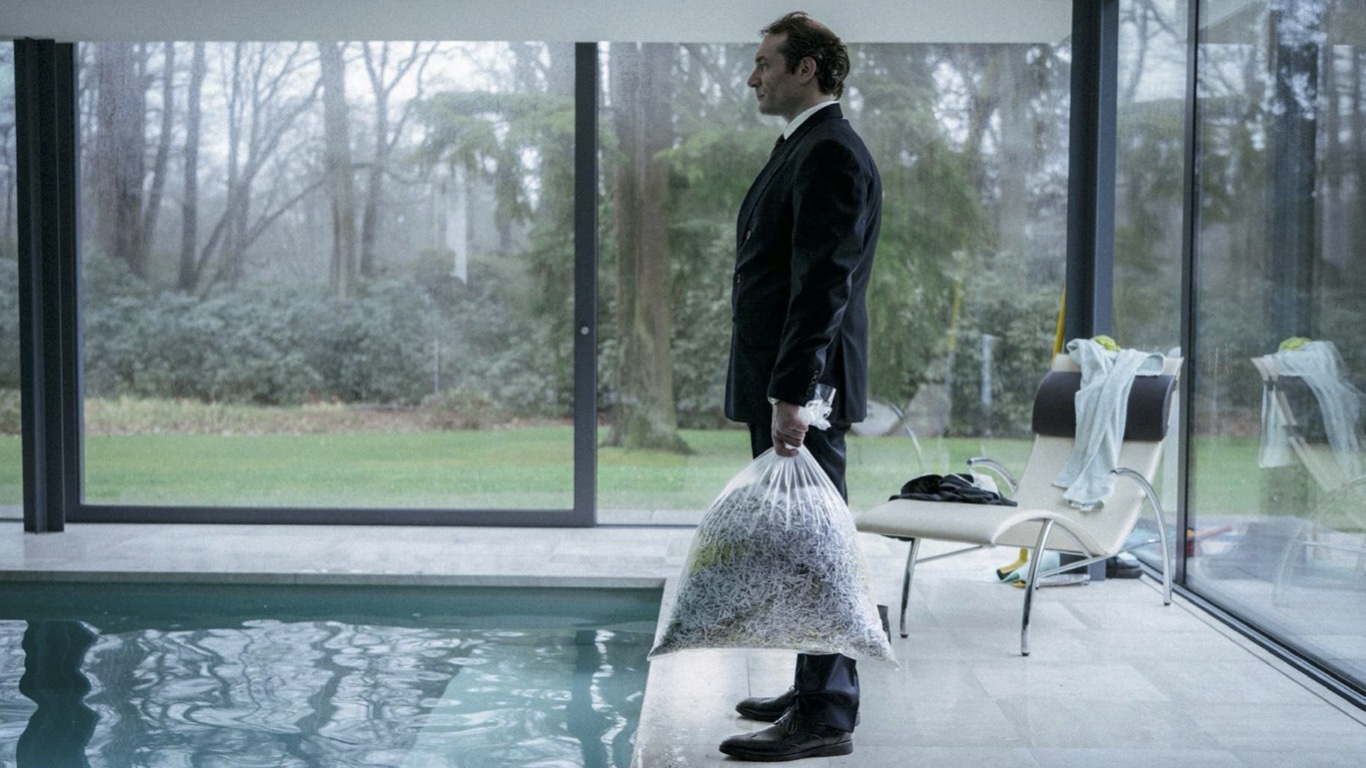
With “Dust”, Belgian director Anke Blondé and screenwriter Angelo Tijssens bring to the 76th Berlinale Competition a story that begins in corporate fraud and ends in something far more intimate.
Set in the spring of 1999, the film follows Luc and Geert, two wealthy entrepreneurs, as their network of shell companies is about to be exposed by the international press. An emergency board meeting is called. Evidence must be destroyed. By morning, the police will arrive. What unfolds is not a thriller about escape, but a slow, suspended descent into accountability.
Tijssens traces the project’s origins to a real-life Belgian fraud case. “Every country has a story like that,” he observes. Local businessmen celebrated as self-made visionaries until the system collapsed under the weight of deception. Yet what interested him was not the mechanics of the scam. “What happens when you take away everything they’ve built, not just the money, but the identity?”
For men who have come to see themselves as powerful and untouchable, the loss of status becomes existential. The fall is less financial than psychological.
For Blondé, whose previous work often centred on female protagonists, “Dust” represented a deliberate shift. “I was amused when I first read Angelo’s script,” she recalls. “There’s a lot of irony in it.” That irony coexists with a probing look at male identity.
The film dissects a form of masculinity shaped by social expectations: to provide, to succeed, to dominate. When work becomes identity, its collapse leaves a void. “Many men are suffering,” Blondé notes, “from the societal expectation of being successful.” Without the armour of power, Luc and Geert are forced to confront a fragile sense of self.
There is no conventional suspense. The scandal has already happened; the exposure is inevitable. Instead, the tension lies in proximity: the camera and edit remain close to their disintegrating mindsets. The narrative, unfolding over roughly 36 hours, loops and fractures time, mirroring their psychological confusion. Daylight never fully arrives. The film hovers in a perpetual dawn.
The Flemish landscape is not a mere backdrop. Rain, mud and empty roads shape the emotional terrain. Tijssens, who grew up in West Flanders, wrote the script with a reproduction of Pieter Bruegel’s Landscape with the Fall of Icarus on his desktop, a painting in which the mythic fall occupies only a small corner of the canvas, almost unnoticed.
That perspective informs “Dust”. The spectacular collapse of powerful men becomes, visually and narratively, unspectacular. The world continues. Ships sail. Fields remain muddy. “It takes away easy judgment,” Tijssens explains. Rather than constructing a morality tale, the film lingers in discomfort, asking viewers to sit with loss rather than cheer downfall.
Blondé describes the protagonists as “two cowboys” roaming their territory in iron horses, their reputations trailing behind them. Redemption, if it exists, is uncertain and interior.
Though set at the end of the 1990s, “Dust” resonates unmistakably with the present. The blind faith in tech entrepreneurs, the promise that innovation will bring connection and prosperity, feels familiar in an era shaped by AI and platform capitalism.
“Yes, there are parallels,” Tijssens acknowledges. The belief that technology will unite humanity has proven fragile. Today’s failures are less mechanical than moral. “Technology is failing us,” he says, pointing to a society saturated with connection yet starved of dialogue.
The film opens with the phrase: “Nothing is entirely true. And not even that.” While it gestures toward our so-called post-truth age, the quote dates back to the late 19th century. For Tijssens, that detail matters. Periods of disillusionment are cyclical. What ultimately restores balance, he argues, is not innovation but conversation, people speaking and listening to one another.
In “Dust”, silence carries more weight than speech. On a narrative level, the protagonists avoid conversation because words would implicate others. Culturally, Blondé adds, silence reflects a tendency to bury emotional complexity “under the rug, or in the mud.”
There is bitter irony in the fact that these men built a speech-technology company yet cannot communicate, not with each other, not with their partners, not even with themselves. Words are dangerous because they expose vulnerability. Silence, however, traps them in isolation.
In the spring of 1999, Belgian entrepreneurs Luc and Geert learn that their network of shell companies is about to be exposed in the international press. An emergency board meeting is called. Evidence must be destroyed; and discretion enforced. By tomorrow morning, the police will be at the door. After this final meeting, the two men go their separate ways, entering their last day as free, rich and powerful men. Luc, the technical genius, retreats to his villa, where he gets the impression that his wife Alma has known all along what has been going on. Repeatedly unable to reach Geert, his trusted partner, Luc grows increasingly uneasy. Meanwhile Geert, the charismatic salesman, seeks refuge in the arms of his driver and lover inside his bunker-like villa. Having insider knowledge, Geert is tempted to act – but doing so would mean betraying those closest to him. Luc heads back to the company HQ but, in the middle of a violent storm, his car gets stuck in the mud. When Geert discovers the abandoned vehicle, panic sets in. Slowly, they realise that they are not actually on the run but on a journey towards something they can no longer avoid: responsibility. And each other.
Emilie Blichfeldt The Ugly Stepsister is a bold debut feature film that showcases the power of feminist narratives and unique takes on fairy tales.
At the 75.Berlinale, "Olmo" by Fernando Eimbcke, a coming-of-age story rooted in family.
Fwends, by director Sophie Sommerville, delves into the transitional phase from adolescence to adulthood through the reunion of two friends.
When Lightning Flashes Over the Sea by director Eva Neymann is a tribute to the resilience of Odesa's residents amidst war.
Discover the Hallucination Collective Film Festival in this interview with programmer Éric Peretti: unveiling underground vampire flicks and Mexican exploitation gems in Lyon’s most daring cinematic showcase.
Maciej Sobieszczański on "Brother": from a real-life prison encounter to crafting a quiet, intimate drama about absence, family and fragile hope.
Agnieszka Holland reflects on a bold, kaleidoscopic take on Kafka with "Franz", exploring the man behind the myth and his unexpected modern-day legacy.
Discover the story of BFI Flare’s history through the eyes of Joss Morfitt, researcher and writer, revealing how queer cinema and London's LGBTQ+ culture have evolved over 40 years.