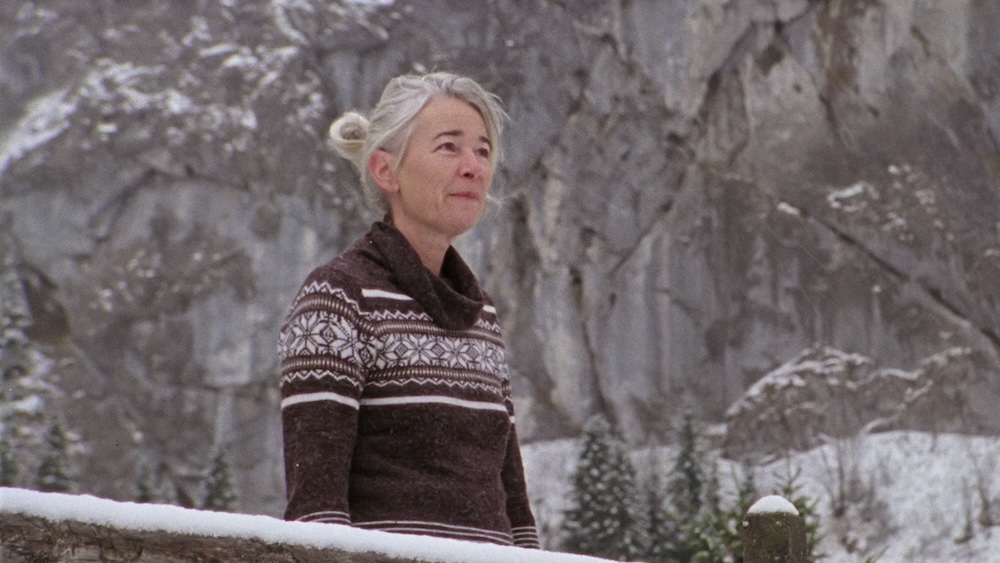
At the 76th Berlinale, Manon Coubia arrives in the Perspectives section with “Forest High“, her first feature film, shot high in the French Alps, in a mountain hut that remains a functional refuge even as cinema enters the space. Speaking with FRED Film Radio, Manon Coubia frames the project as both a return and a record: she once worked as a guardian herself, and the film is rooted in that familiarity.
The film follows three women who guard the refuge—figures defined by routines, gestures and the constant negotiation between hospitality and isolation. For Manon Coubia, the location is inseparable from the story: the refuge is a place where people pass through, bring fragments of their lives, and leave again.
Three Women, Many Forms of Solitude
The film’s starting point is accumulation. Over roughly a decade of summers, Manon Coubia wrote down stories inspired by visitors she encountered while working in the refuge. The spark, she explains, was the moment she understood those episodes could be connected, stitched into a portrait of a place and the women who keep it alive.
The decision to focus on female guardians is not presented as an emblem or thesis, but rather as an observation that carries social weight. “Often, we are women. And women who decide to come alone,” she notes, before adding that the film speaks about different kinds of solitude. In the mountains, solitude is often romanticised when embodied by men, an image of the lone wanderer. With women, the gaze shifts.
A line in the film crystallises that imbalance: “Are you afraid of being here alone?” Manon Coubia points out how the question itself reveals a cultural reflex. If a man lives or hikes alone, it is considered normal; when a woman does, it triggers suspicion, concern, and even a demand for explanation. What struck her further is that the question in the film comes from a woman to another woman, evidence, she suggests, that expectations are internalised as much as imposed.
A Porous Shoot: Fiction Inside Real Life
Manon Coubia’s process sits deliberately between documentary observation and staged construction. She did not write a traditional script; she worked from a short set of intention notes and developed the characters with the performers. Only the last part, which she describes as the most fictional, relied on written dialogue.
The aim was to preserve real habits: how each guardian keeps the refuge, how she eats, how she watches the fire, how she receives strangers. The visitors, crucial to the film’s rhythm, could not be fully predicted. Manon Coubia expected certain types based on her years of experience, but the reality of who arrived often forced adjustments, requiring the performers to re-tune their characters in response to the new encounters.
The shoot itself was an experiment in coexistence. The team was small, living in the refuge like guests. During part of filming, Manon Coubia served as both director and guardian, keeping the refuge running while making the film—an overlap that made the set “porous,” as she describes it.
A Film About Time, and Disappearance
Though “Forest High“is her first feature, Manon Coubia insists she approached it “like my short films,” with few resources and a “very confidential” production model. “During the shooting, I never think it’s my first feature,” she says. “I just continue to make my work.”
Arriving at the Berlinale with the same small team who lived together in the refuge feels almost surreal. “We were in this refuge, and now we’re in Berlin,” she smiles. “We don’t stop to say, it’s amazing.”
Viewers have been curious about the film’s hybrid nature, “which is documentary, which is fiction?”, but many responses have been more personal. “A lot of women say to me, ‘Thank you for showing a woman like this,’” she notes, referring to her solitary, self-sufficient protagonists.
More than a message, Manon Coubia hopes to leave a sensation. “I hope something persists,” she says, “an experience of time different than the whole life.” The refuge suggests that “another time is possible,” slower and more attentive. Still, she is clear: “It’s also a film about disappearance.” The final image is not metaphorical excess, but a simple reminder that “a lot of things are disappearing now.”
Plot
In the northern Alps, Anne, Hélène and Suzanne take turns looking after a mountain hut. Through the seasons, hikers come and go; stories bloom and fade, leaving each of them facing the silence. Forêt Ivre tells the story of three women who have made the choice to withdraw from the world down in the valley. Each of them harbours a secret; and each of them is put to the test by their chosen solitude.