
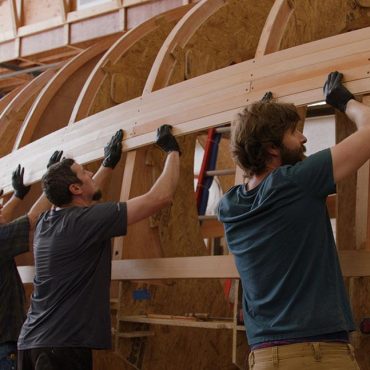
“Boatbuilders”, interview with director Luke Lorentzen
In the Open section at Venice 83, Luke Lorentzen on falling back in love with filmmaking in Boatbuilders
Listeners:
Top listeners:
 play_arrow
ENGLISH Channel 01 If English is your language, or a language you understand, THIS IS YOUR CHANNEL !
 play_arrow
ITALIAN Channel 02 Se l’italiano è la tua lingua, o una lingua che conosci, QUESTO È IL TUO CANALE!
 play_arrow
EXTRA Channel 03 FRED Film Radio channel used to broadcast press conferences, seminars, workshops, master classes, etc.
 play_arrow
GERMAN Channel 04 Wenn Ihre Sprache Deutsch ist, oder Sie diese Sprache verstehen, dann ist das IHR KANAL !
 play_arrow
POLISH Channel 05
 play_arrow
SPANISH Channel 06 Si tu idioma es el español, o es un idioma que conoces, ¡ESTE ES TU CANAL!
 play_arrow
FRENCH Channel 07 Si votre langue maternelle est le français, ou si vous le comprenez, VOICI VOTRE CHAINE !
 play_arrow
PORTUGUESE Channel 08
 play_arrow
ROMANIAN Channel 09 Dacă vorbiţi sau înţelegeţi limba română, ACESTA ESTE CANALUL DUMNEAVOASTRĂ!
 play_arrow
SLOVENIAN Channel 10
 play_arrow
ENTERTAINMENT Channel 11 FRED Film Radio Channel used to broadcast music and live shows from Film Festivals.
 play_arrow
BULGARIAN Channel 16 Ако българският е вашият роден език, или го разбирате, ТОВА Е ВАШИЯТ КАНАЛ !
 play_arrow
CROATIAN Channel 17 Ako je hrvatski tvoj jezik, ili ga jednostavno razumiješ, OVO JE TVOJ KANAL!
 play_arrow
LATVIAN Channel 18
 play_arrow
DANISH Channel 19
 play_arrow
HUNGARIAN Channel 20
 play_arrow
DUTCH Channel 21
 play_arrow
GREEK Channel 22
 play_arrow
CZECH Channel 23
 play_arrow
LITHUANIAN Channel 24
 play_arrow
SLOVAK Channel 25
 play_arrow
ICELANDIC Channel 26 Ef þú talar, eða skilur íslensku, er ÞETTA RÁSIN ÞÍN !
 play_arrow
INDUSTRY Channel 27 FRED Film Radio channel completely dedicated to industry professionals.
 play_arrow
EDUCATION Channel 28 FRED Film Radio channel completely dedicated to film literacy.
 play_arrow
SARDU Channel 29 Si su sardu est sa limba tua, custu est su canale chi ti deghet!
 play_arrow
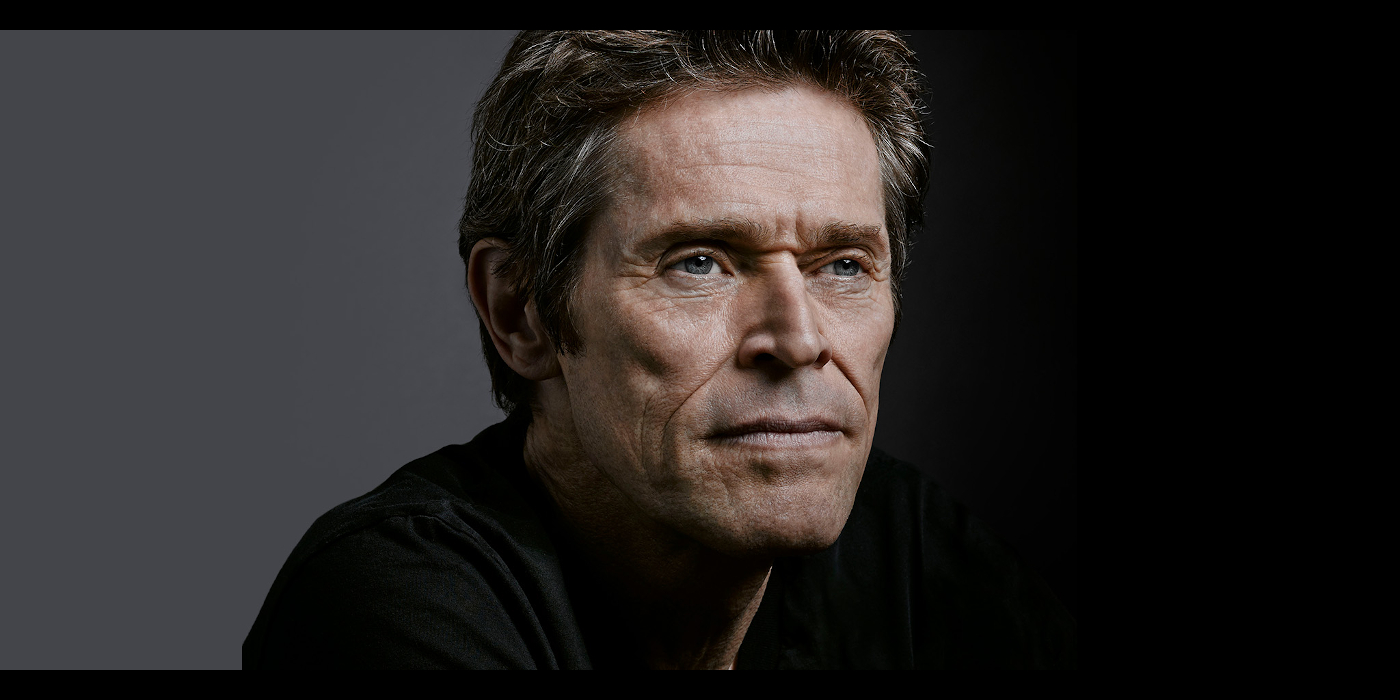
“Conversation with” at the 20th Marrakech IFF, interview with actor Willem Dafoe Bénédicte Prot
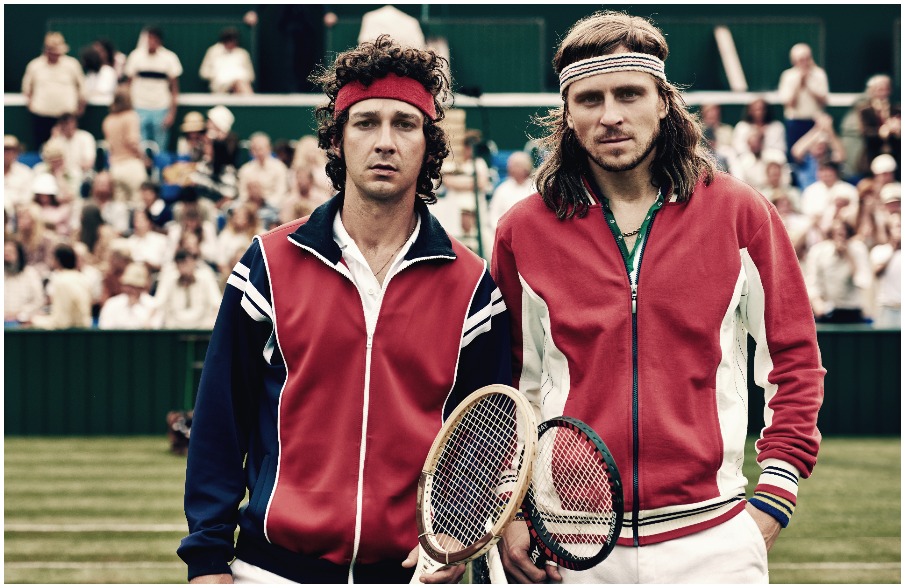
PODCAST| Chiara Nicoletti interviews Janus Metz Pedersen, director of the film Borg McEnroe.
When we think about tennis rockstars and important matches, the first names that still come into our mind, even before Sampras/Agassi or Federer/Nadal are Borg/McEnroe and their legendary duel back in Wimbledon finals of 1980. With Borg McEnroe director Janus Metz Pedersen decided not only to bring this final match to the big screen but to get deeper into the childhood and psychology of these two great champions to show the world and the audience how great athletes and sportsmen think alike, struggling to excel and reach something extraordinary. Borg McEnroe just won the Audience Award at the 12th Rome Film Fest and it might be because it focuses as much on the characters as it does on the geometry of the game and its esthetics. Janus Metz Pedersen also comments on the big efforts and great work of the protagonists Sverrir Gudnason (Borg) and Shia Lebeouf (McEnroe) and how Bjorn Borg’s son played the part of his father when he was 14 years old. Leo Borg is also a professional tennis players, among the best in his category.
Borg McEnroe is a film about one of the world’s greatest icons Björn Borg and his biggest rival, the young and talented John McEnroe and their legendary duel during the 1980’s Wimbledon tournament. It’s a story about two men that became legends and the price they had to pay.
For the official website of the film, click here.
In the Open section at Venice 83, Luke Lorentzen on falling back in love with filmmaking in Boatbuilders
Javier Bardem will be one of the major guests of the Rome Film Fest 2026, receiving the Lifetime Achievement Award and presenting Rodrigo Sorogoyen’s El ser querido.
Liryc Dela Cruz, director of A Brief Encounter, at the International Critics Week, Venice Film Festival 2026.
Paul Schrader on The Basics of Philosophy, guilt and forgiveness, at the Venice Film Festival 2026.