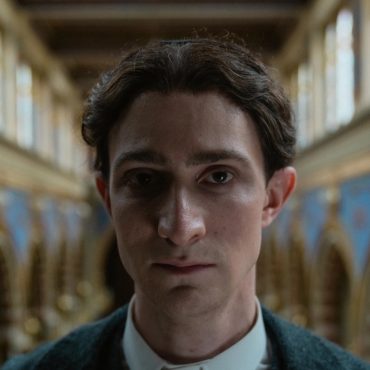


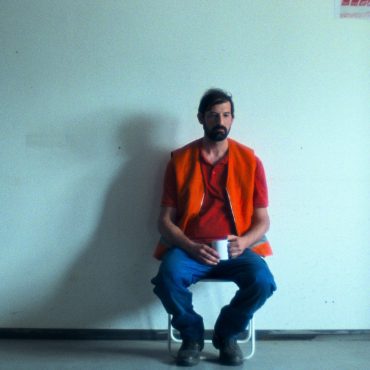
“My Wife Cries”, interview with actors Vladimir Vulević and Agathe Bonitzer
"My Wife Cries" marks Angela Schanelec’s return to Berlinale competition stars Vladimir Vulević and Agathe Bonitzer
Listeners:
Top listeners:
 play_arrow
ENGLISH Channel 01 If English is your language, or a language you understand, THIS IS YOUR CHANNEL !
 play_arrow
ITALIAN Channel 02 Se l’italiano è la tua lingua, o una lingua che conosci, QUESTO È IL TUO CANALE!
 play_arrow
EXTRA Channel 03 FRED Film Radio channel used to broadcast press conferences, seminars, workshops, master classes, etc.
 play_arrow
GERMAN Channel 04 Wenn Ihre Sprache Deutsch ist, oder Sie diese Sprache verstehen, dann ist das IHR KANAL !
 play_arrow
POLISH Channel 05
 play_arrow
SPANISH Channel 06 Si tu idioma es el español, o es un idioma que conoces, ¡ESTE ES TU CANAL!
 play_arrow
FRENCH Channel 07 Si votre langue maternelle est le français, ou si vous le comprenez, VOICI VOTRE CHAINE !
 play_arrow
PORTUGUESE Channel 08
 play_arrow
ROMANIAN Channel 09 Dacă vorbiţi sau înţelegeţi limba română, ACESTA ESTE CANALUL DUMNEAVOASTRĂ!
 play_arrow
SLOVENIAN Channel 10
 play_arrow
ENTERTAINMENT Channel 11 FRED Film Radio Channel used to broadcast music and live shows from Film Festivals.
 play_arrow
BULGARIAN Channel 16 Ако българският е вашият роден език, или го разбирате, ТОВА Е ВАШИЯТ КАНАЛ !
 play_arrow
CROATIAN Channel 17 Ako je hrvatski tvoj jezik, ili ga jednostavno razumiješ, OVO JE TVOJ KANAL!
 play_arrow
LATVIAN Channel 18
 play_arrow
DANISH Channel 19
 play_arrow
HUNGARIAN Channel 20
 play_arrow
DUTCH Channel 21
 play_arrow
GREEK Channel 22
 play_arrow
CZECH Channel 23
 play_arrow
LITHUANIAN Channel 24
 play_arrow
SLOVAK Channel 25
 play_arrow
ICELANDIC Channel 26 Ef þú talar, eða skilur íslensku, er ÞETTA RÁSIN ÞÍN !
 play_arrow
INDUSTRY Channel 27 FRED Film Radio channel completely dedicated to industry professionals.
 play_arrow
EDUCATION Channel 28 FRED Film Radio channel completely dedicated to film literacy.
 play_arrow
SARDU Channel 29 Si su sardu est sa limba tua, custu est su canale chi ti deghet!
 play_arrow
“Conversation with” at the 20th Marrakech IFF, interview with actor Willem Dafoe Bénédicte Prot
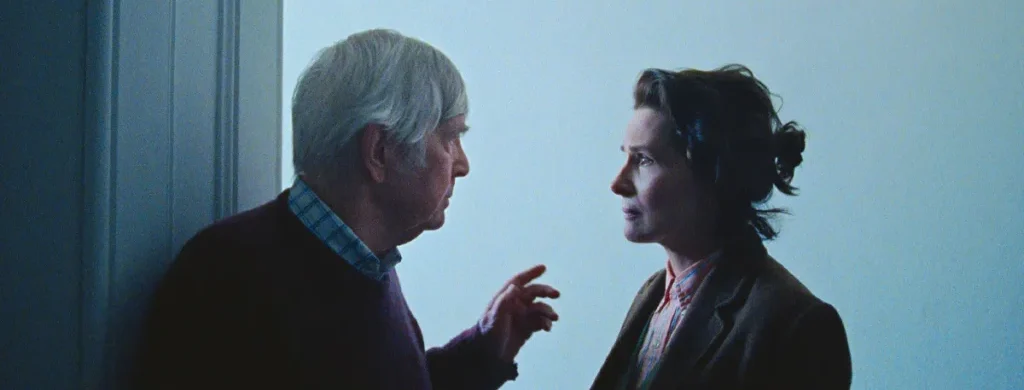
Presented in competition at the 76th Berlinale, “Queen at Sea” by Lance Hammer delves into the emotional landscape of dementia through the caregivers’ perspective, offering a fresh and compelling take on a often explored theme. Through the eyes of Juliette Binoche‘s character we have a new perspective on the matter.
“Queen at Sea” uniquely centers on the experiences of those caring for loved ones with dementia, shifting the usual focus from the patients themselves. The film emphasizes the clarity and reliability of the caregivers’ voices, highlighting the emotional suffering and complexities they face. This approach provides viewers with a raw, authentic understanding of the caregiving journey, emphasizing the opacity of the dementia patient and the emotional toll on those surrounding them. The film’s emphasis reflects the tumultuous and often confusing world caregivers navigate. By portraying their perspective, the film vividly captures the sense of helplessness and the search for meaning amid uncertainty. It’s a poignant reminder of the resilience required to care for loved ones through the decline of memory and identity.
Maintaining a delicate balance between realism and sentimentality was central to create the authentic emotional experience of “Queen at Sea”. Lance Hammer employed extensive workshopping and improvisation with actors to develop truthful, relatable characters, ensuring that performances conveyed genuine emotion without tipping into overly sentimental territory. This meticulous process aimed to keep the film grounded, allowing audiences to connect deeply with the characters’ inner worlds. The editing phase was critical in refining the tone, with the director rigorously removing scenes that risked veering into sentimentality. The goal was to evoke deep human emotion while preserving authenticity. Subtle, truthful portrayals are essential, and the film carefully navigates this line to avoid emotional manipulation, ensuring that the audience feels moved without feeling overwhelmed by sentimentality.
“Queen at Sea” also examines how memory resides within the body, especially in dementia, illustrating how bodily memories and instincts can persist even when cognitive functions fade. A notable example is the portrayal of a character engaging in sexual activity, highlighting the disinhibition that can occur with cognitive decline. The film raises questions about agency, consent, and the nature of memory, emphasizing the complexity of human experience near the end of life. Furthermore, the film weaves a parallel storyline involving a niece discovering her own sexual identity, symbolizing the cyclical nature of life, desire, and family trauma. This second plot underscores the interconnectedness of familial experiences across generations, suggesting that life’s themes—such as sexuality—are part of a shared family psyche. By exploring these intertwined narratives, “Queen at Sea” offers an overarching view of life, loss, and renewal, emphasizing that even in the midst of decline, there is hope, beauty, and the possibility of new beginnings.
Amanda and her stepfather, Martin, struggle with a moral issue that divides them. Has Amanda’s mother, Leslie, who is suffering from advanced dementia, lost the ability to make critical decisions in her own best interests? And, if so, who is responsible – a spouse, a child, an institution – for making such a determination? As Amanda and Martin are forced to make increasingly difficult choices, the repercussions spiral out of their control.
"My Wife Cries" marks Angela Schanelec’s return to Berlinale competition stars Vladimir Vulević and Agathe Bonitzer
Fernando Eimbcke presents "Moscas" in Competition at the 76th Berlinale, a quiet drama about solitude and unexpected connection.
Arieh Worthalter and Jan Hammenecker discuss "Dust" in Competition at the 76th Berlinale, reflecting on shame and male identity.
The Berlin International Film Festival (Berlinale) is a festival showcasing bold, artist-driven films that challenge norms, inspire dialogue, and reflect today’s urgent political and cultural issues.
Discover the Hallucination Collective Film Festival in this interview with programmer Éric Peretti: unveiling underground vampire flicks and Mexican exploitation gems in Lyon’s most daring cinematic showcase.
Maciej Sobieszczański on "Brother": from a real-life prison encounter to crafting a quiet, intimate drama about absence, family and fragile hope.
Agnieszka Holland reflects on a bold, kaleidoscopic take on Kafka with "Franz", exploring the man behind the myth and his unexpected modern-day legacy.
Discover the story of BFI Flare’s history through the eyes of Joss Morfitt, researcher and writer, revealing how queer cinema and London's LGBTQ+ culture have evolved over 40 years.