Remembering Terence Davies: A Cinematic Pioneer Whose Films Will Echo Through Time
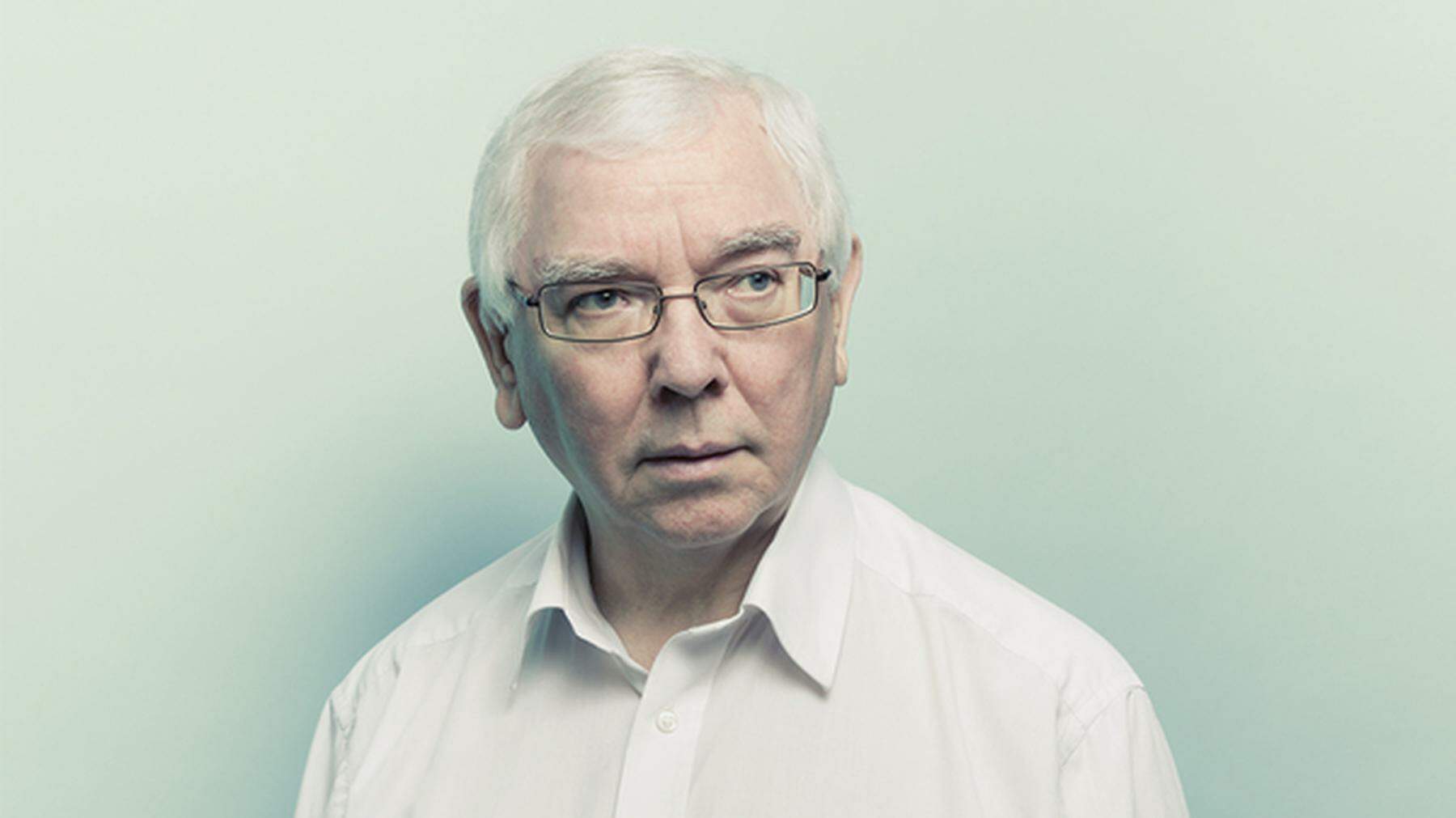
Terence Davies, the visionary director celebrated for his evocative films reflecting his tumultuous working-class upbringing in Liverpool, sadly passed away last Saturday at the age of 77 after a brief illness. His works, marked by moments of transcendent beauty interwoven with lacerating pain, left an indelible mark on the world of cinema.
Terence Davies: A Life in Film
Terence Davies was a cinematic poet, a master of melancholy, and a creator of films that resonated with the deepest recesses of the human soul. His journey in the world of cinema began with “The Terence Davies Trilogy”, a collection of short films that followed the character Robert Tucker through various stages of life. These films explored themes of identity, sexuality, and familial struggles, drawing heavily from Davies’s own experiences.
Children (1976) depicted a bullied, tentatively gay schoolboy, mirroring Davies’s own life, and concluded with the death of his “psychotic” father. It was a raw and unflinching exploration of his painful upbringing.
Madonna and Child (1980) followed Robert as an adult navigating the demands of Catholicism and his own gay desires. It delved into the complex interplay between religion and personal desires, a theme that would recur throughout Davies’s career.
Death and Transfiguration (1983) imagined Robert as an older man on his deathbed, reflecting on the passage of time and the transience of life.
These films, along with Davies’s accompanying novel “Hallelujah Now” (1984), established him as a formidable cinematic talent, unafraid to explore the depths of his own psyche and upbringing.
Davies’s magnum opus, “Distant Voices, Still Lives” (1988), was a hauntingly beautiful exploration of his 1950s childhood. It portrayed a family held hostage by a volatile patriarch and was characterized by poignant, symmetrical tableaux. Davies’s use of music and voices, often disconnected from the action, added to the film’s melancholy power. It was a deeply personal work that resonated with audiences on a profound emotional level.
The Long Day Closes (1992) was another gem in his filmography. It explored the happiest childhood years and his deep love for cinema. Davies’s mastery of ceremonial tracking shots and his ability to evoke a sense of nostalgia and longing reached new heights in this film. It was a poignant meditation on the passage of time and the fleeting nature of happiness.
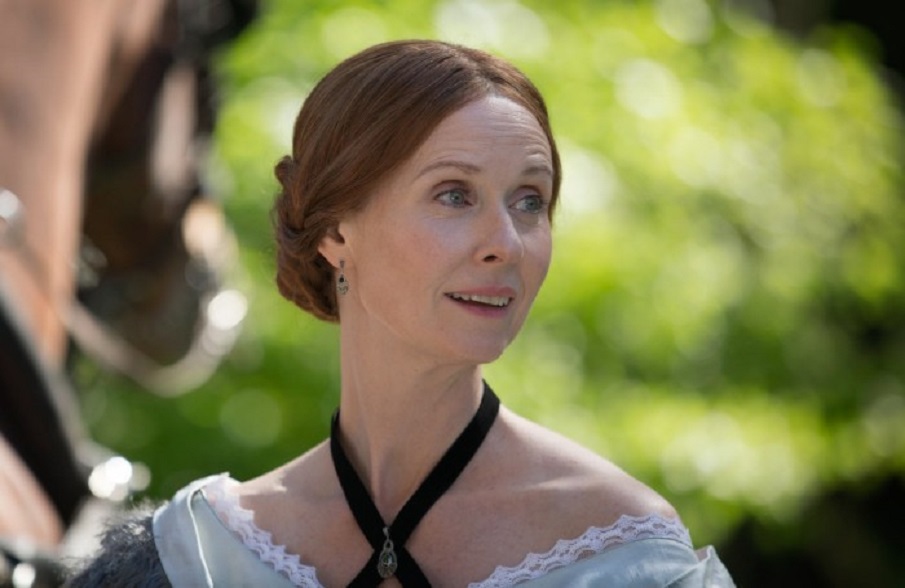
“A Quiet Passion” by Terence Davies (UK/Belgium)
After exhaustively mining his past, Davies shifted his focus to literary adaptations, such as Edith Wharton’s “The House of Mirth” (1999) and dramatizations of the lives of literary figures, including Emily Dickinson in “A Quiet Passion” (2016) starringCynthia Nixon, and Siegfried Sassoon in his final film, “Benediction” (2021) with Jack Lowden and Peter Capaldi. Whether delving into his own life or others, Davies maintained his formalist rigour, visual grandeur, and thematic explorations of religion, repression, and the sublimity of art.
A Life Marked by Resilience and Passion
Terence Davies‘ life was a testament to resilience and passion. Born in Liverpool, he grew up in a difficult environment, feeling out of place at school, at home and in the Catholic church. Despite the hardships he endured, he channelled his experiences into his art. His journey took him from work as a shipping clerk and accountant to study at Coventry Drama School in 1973. Here he wrote his first film “Children”, funded by the BFI Production Board. Although it was not easy directing his first film, he often recalled how traumatic the experience was – he was openly disdained by his crew – the film became a triumph, and included Davies in the wave of British talent of the period along with Bill Douglas, Peter Greenaway and Derek Jarman. Davies’ career has not been without challenges; despite the successes of his films, after “The House of Mirth”, he had to face many difficulties in securing financing for his projects, especially “Sunset Song”, the adaptation of Lewis Grassic Gibbon’s novel of the same name (which he only managed to make in 2015 with Peter Mullan and model Agyness Deyn). He openly criticized the UK Film Council and returned behind the camera eight years later with his personal documentary “Of Time and the City” (2008), a reflection on his beloved Liverpool, which marked a creative rebirth.
A Legacy of Personal Filmmaking
Terence Davies‘s films were deeply personal, reflecting his complex feelings and experiences. Despite grappling with self-loathing and societal prejudice, he continued to create art that resonated with audiences. His cinema is, and will always remain, a place where past and present converge, where pain and beauty coexist and where music and memory form the heart of a great narrative that will continue to enchant.
Javier Bardem will be one of the major guests of the Rome Film Fest 2026, receiving the Lifetime Achievement Award and presenting Rodrigo Sorogoyen’s El ser querido.
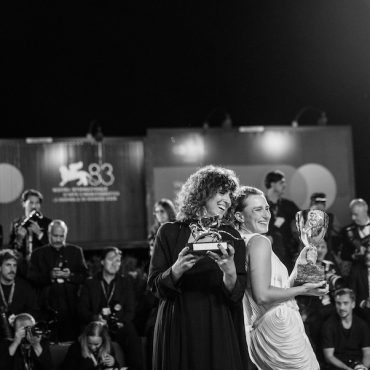
A double victory for Woman Unknown, major prizes for established auteurs and a strong showing for political cinema, new talent and Italian performers. The complete verdict of the Venice Film Festival 2026.