


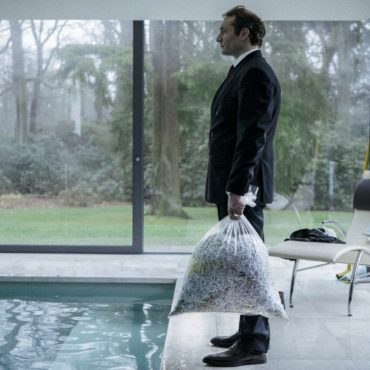
“Dust”, interview with director Anke Blondé and screenwriter Angelo Tijssens
Anke Blondé and Angelo Tijssens present "Dust" in Competition at the 76th Berlinale, a drama on masculinity and corporate collapse.
Listeners:
Top listeners:
 play_arrow
ENGLISH Channel 01 If English is your language, or a language you understand, THIS IS YOUR CHANNEL !
 play_arrow
ITALIAN Channel 02 Se l’italiano è la tua lingua, o una lingua che conosci, QUESTO È IL TUO CANALE!
 play_arrow
EXTRA Channel 03 FRED Film Radio channel used to broadcast press conferences, seminars, workshops, master classes, etc.
 play_arrow
GERMAN Channel 04 Wenn Ihre Sprache Deutsch ist, oder Sie diese Sprache verstehen, dann ist das IHR KANAL !
 play_arrow
POLISH Channel 05
 play_arrow
SPANISH Channel 06 Si tu idioma es el español, o es un idioma que conoces, ¡ESTE ES TU CANAL!
 play_arrow
FRENCH Channel 07 Si votre langue maternelle est le français, ou si vous le comprenez, VOICI VOTRE CHAINE !
 play_arrow
PORTUGUESE Channel 08
 play_arrow
ROMANIAN Channel 09 Dacă vorbiţi sau înţelegeţi limba română, ACESTA ESTE CANALUL DUMNEAVOASTRĂ!
 play_arrow
SLOVENIAN Channel 10
 play_arrow
ENTERTAINMENT Channel 11 FRED Film Radio Channel used to broadcast music and live shows from Film Festivals.
 play_arrow
BULGARIAN Channel 16 Ако българският е вашият роден език, или го разбирате, ТОВА Е ВАШИЯТ КАНАЛ !
 play_arrow
CROATIAN Channel 17 Ako je hrvatski tvoj jezik, ili ga jednostavno razumiješ, OVO JE TVOJ KANAL!
 play_arrow
LATVIAN Channel 18
 play_arrow
DANISH Channel 19
 play_arrow
HUNGARIAN Channel 20
 play_arrow
DUTCH Channel 21
 play_arrow
GREEK Channel 22
 play_arrow
CZECH Channel 23
 play_arrow
LITHUANIAN Channel 24
 play_arrow
SLOVAK Channel 25
 play_arrow
ICELANDIC Channel 26 Ef þú talar, eða skilur íslensku, er ÞETTA RÁSIN ÞÍN !
 play_arrow
INDUSTRY Channel 27 FRED Film Radio channel completely dedicated to industry professionals.
 play_arrow
EDUCATION Channel 28 FRED Film Radio channel completely dedicated to film literacy.
 play_arrow
SARDU Channel 29 Si su sardu est sa limba tua, custu est su canale chi ti deghet!
 play_arrow
“Conversation with” at the 20th Marrakech IFF, interview with actor Willem Dafoe Bénédicte Prot
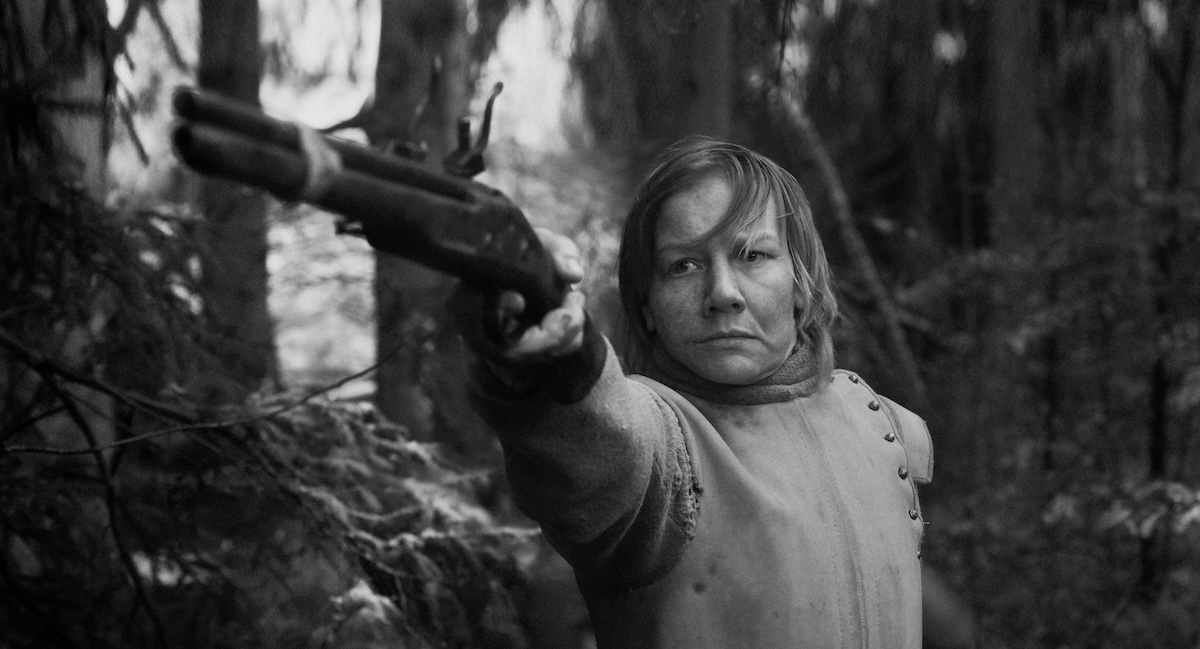
At the 76th Berlinale, Austrian filmmaker Markus Schleinzer presents his new film “Rose” in Competition. Starring a stunning Sandra Huller, “Rose” is a period drama rooted in a centuries-old court record and shaped by meticulous historical excavation.
In the interview, Markus Schleinzer traces the project’s origins to an unexpected moment. “It was my birthday,” he recalls, “and a friend called to congratulate me. She’s a historian, and by coincidence she was reading a crime file about a woman who had been executed on that exact day 250 years earlier.”
The charge was “sodomy. “Female homosexuality had not been invented then”, Markus Schleinzer notes, underlining the absurdity and violence of legal language. The case sparked his curiosity. What followed was an extended research journey into women across centuries who dressed as men for survival, for work, to avoid forced marriages, to follow loved ones into war, or to claim social and economic agency denied to them.
“The motifs were different,” he explains, “but the outcome was always the same: the desire for freedom, to define one’s own life.”
Markus Schleinzer describes research not as preparation but as immersion and occasionally, as a trap. After the rapid trajectory of his debut, “Michael” (2011), which premiered in Competition at Cannes, his subsequent projects took seven and eight years, respectively. “I love research,” he admits. “Sometimes I get completely lost in it and forget that the goal is to write a script.”
For “Rose”, that meant delving into archival material, historical documents, and iconography.
Equally formative was his study of Dutch Golden Age painting. Travelling through museums in the Netherlands, Markus Schleinzer photographed works depicting not emperors or aristocrats, but ordinary citizens. “They painted themselves. You can see poverty, you can see daily life.” In “The Hague”, he encountered imagery that felt strikingly proto-Western: cattle, horses, carriages, leading him to reflect on how European visual culture shaped what would later become the American Western genre. That influence subtly informs Rose, where genre echoes coexist with historical realism.
The title carries layered meaning. “It is a metaphor,” Markus Schleinzer confirms. The name recalls his grandmother, Rosa, but also evokes the flower at its most beautiful precisely when it has been cut and placed in a vase. “You watch it vanish,” he says. The image resonates with a character whose assertion of identity is both an act of vitality and a confrontation with mortality.
Markus Schleinzer has long been attentive to names. In “Michael” , the protagonist’s name suggested self-deification, “the one who positions himself as God.” With “Rose”, the symbolism is less theological but equally deliberate.
If “Rose” chronicles acts that may appear revolutionary, Markus Schleinzer resists the temptation to frame his protagonist as a hero. “I don’t believe in heroes,” he states. In an era shaped by political regression and polarised rhetoric, he questions narratives that rely on singular saviours, a sentiment that extends to mainstream cinema’s superhero mythology.
“We all should stand up and speak up,” he argues. “It’s not heroes or politicians out there. It’s us.”
For Markus Schleinzer, storytelling that divides characters into purely good or bad fails to reflect lived reality. “I’m good, and I’m bad sometimes,” he says. The tension between personal egoism and political consequence defines Rose herself: not a conscious revolutionary, but a woman whose private acts carry radical implications.
The relationship between Rose and Susanna resists easy ccategorization Love story? Political alliance? “I’m not sure we can label it so simply,” Markus Schleinzer reflects. What interests him most is the shifting dynamic of power between them, particularly a scene in church, where Susanna, newly empowered by conforming to social expectations, performs her status with calculated visibility.
“It’s about power,” he says. In German, he references the term Kappentausch, the exchange of caps, suggesting that change often begins as a reversal rather than a transformation. True coexistence, he implies, emerges only when the need to dominate subsides.
With “Rose”, Markus Schleinzer constructs a historical narrative that speaks directly to contemporary anxieties: the fragility of rights, the normalisation regression, and the quiet courage required to resist both. In Competition at the Berlinale, the film stands as a meditation on identity, not as a declaration, but as a daily negotiation.
In the early 17th century, somewhere in Germany, a mysterious soldier arrives in an isolated Protestant village. Slight and modest by nature, his face disfigured by a scar, this stranger declares himself to be the heir of a long-abandoned farmstead and produces a document to support his claim to the suspicious villagers. With the passage of time, he overcomes their doubts and, proving himself to be a hard-working, God-fearing man, becomes a part of their community. However, his quest for acceptance is built on a bold-faced lie. The true and twisted tale of a swindler who, defying her birth as a woman, comported herself as a man and deceived a village.
Anke Blondé and Angelo Tijssens present "Dust" in Competition at the 76th Berlinale, a drama on masculinity and corporate collapse.
"Hysteria" by Mehmet Akif Büyükatalay is a thriller with its rules and mechanism, dealing with unconventional issues, for the genre: vulnerability, xenophobia, racism and fear of strangers. A very tense film rooted in real facts, therefore very effective.
Mother’s baby by Johanna Moder, in competition at Berlinale 75, sees Claes Bang in a “villain” role
"Lesbian Space Princess" is a feast for the animations nerds and a fun ride for all film goers. Leela Varghese and Emma Hough Hobbs crafted a film that celebrates with irony and fun the queer world, being attentive and political …
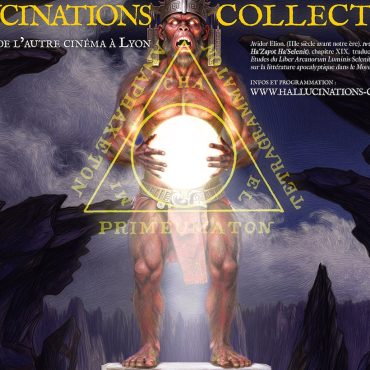
Discover the Hallucination Collective Film Festival in this interview with programmer Éric Peretti: unveiling underground vampire flicks and Mexican exploitation gems in Lyon’s most daring cinematic showcase.
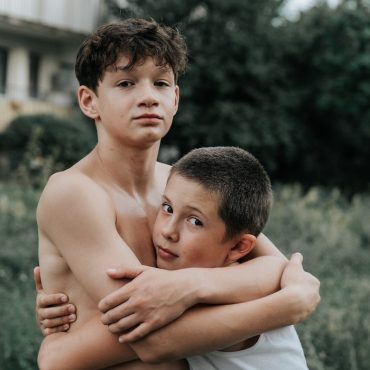
Maciej Sobieszczański on "Brother": from a real-life prison encounter to crafting a quiet, intimate drama about absence, family and fragile hope.
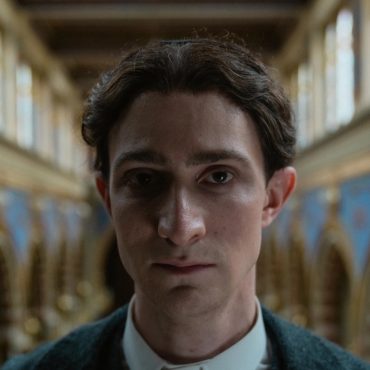
Agnieszka Holland reflects on a bold, kaleidoscopic take on Kafka with "Franz", exploring the man behind the myth and his unexpected modern-day legacy.
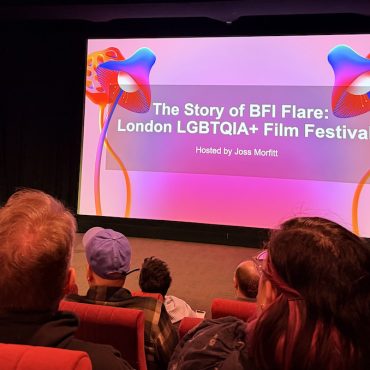
Discover the story of BFI Flare’s history through the eyes of Joss Morfitt, researcher and writer, revealing how queer cinema and London's LGBTQ+ culture have evolved over 40 years.