

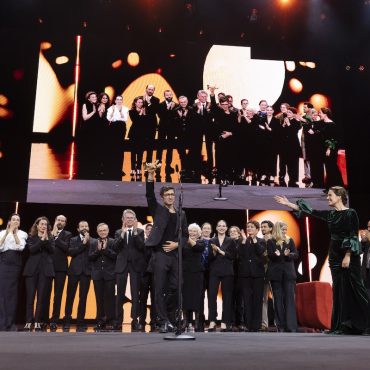
Berlinale 76: Yellow Letters Wins the Golden Bear
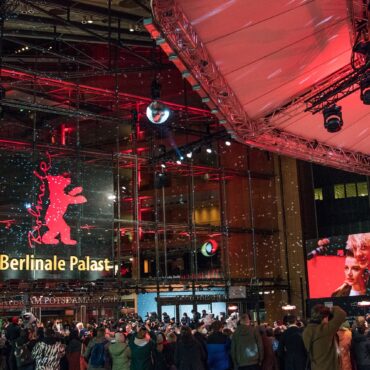
At the 76th Berlinale, İlker Çatak’s Yellow Letters wins the Golden Bear in an edition defined by political debate and a strong slate of socially engaged films.
Listeners:
Top listeners:
 play_arrow
ENGLISH Channel 01 If English is your language, or a language you understand, THIS IS YOUR CHANNEL !
 play_arrow
ITALIAN Channel 02 Se l’italiano è la tua lingua, o una lingua che conosci, QUESTO È IL TUO CANALE!
 play_arrow
EXTRA Channel 03 FRED Film Radio channel used to broadcast press conferences, seminars, workshops, master classes, etc.
 play_arrow
GERMAN Channel 04 Wenn Ihre Sprache Deutsch ist, oder Sie diese Sprache verstehen, dann ist das IHR KANAL !
 play_arrow
POLISH Channel 05
 play_arrow
SPANISH Channel 06 Si tu idioma es el español, o es un idioma que conoces, ¡ESTE ES TU CANAL!
 play_arrow
FRENCH Channel 07 Si votre langue maternelle est le français, ou si vous le comprenez, VOICI VOTRE CHAINE !
 play_arrow
PORTUGUESE Channel 08
 play_arrow
ROMANIAN Channel 09 Dacă vorbiţi sau înţelegeţi limba română, ACESTA ESTE CANALUL DUMNEAVOASTRĂ!
 play_arrow
SLOVENIAN Channel 10
 play_arrow
ENTERTAINMENT Channel 11 FRED Film Radio Channel used to broadcast music and live shows from Film Festivals.
 play_arrow
BULGARIAN Channel 16 Ако българският е вашият роден език, или го разбирате, ТОВА Е ВАШИЯТ КАНАЛ !
 play_arrow
CROATIAN Channel 17 Ako je hrvatski tvoj jezik, ili ga jednostavno razumiješ, OVO JE TVOJ KANAL!
 play_arrow
LATVIAN Channel 18
 play_arrow
DANISH Channel 19
 play_arrow
HUNGARIAN Channel 20
 play_arrow
DUTCH Channel 21
 play_arrow
GREEK Channel 22
 play_arrow
CZECH Channel 23
 play_arrow
LITHUANIAN Channel 24
 play_arrow
SLOVAK Channel 25
 play_arrow
ICELANDIC Channel 26 Ef þú talar, eða skilur íslensku, er ÞETTA RÁSIN ÞÍN !
 play_arrow
INDUSTRY Channel 27 FRED Film Radio channel completely dedicated to industry professionals.
 play_arrow
EDUCATION Channel 28 FRED Film Radio channel completely dedicated to film literacy.
 play_arrow
SARDU Channel 29 Si su sardu est sa limba tua, custu est su canale chi ti deghet!
 play_arrow
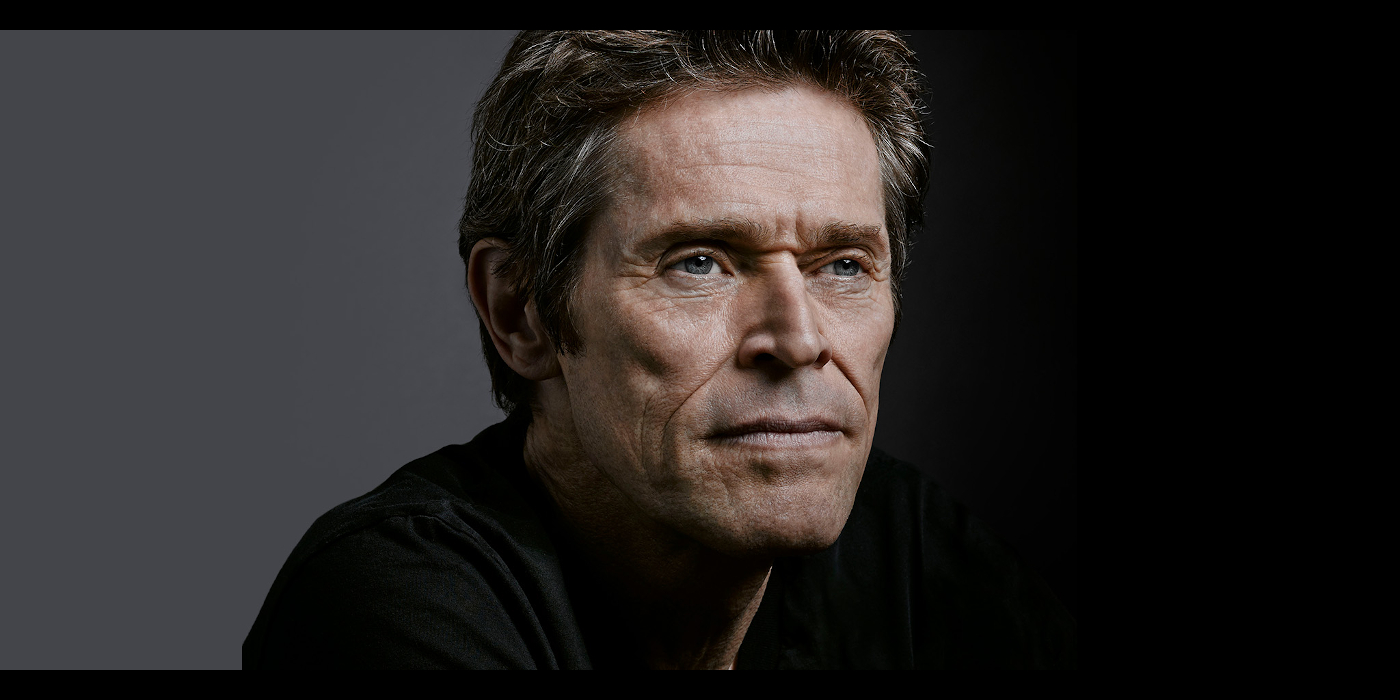
“Conversation with” at the 20th Marrakech IFF, interview with actor Willem Dafoe Bénédicte Prot
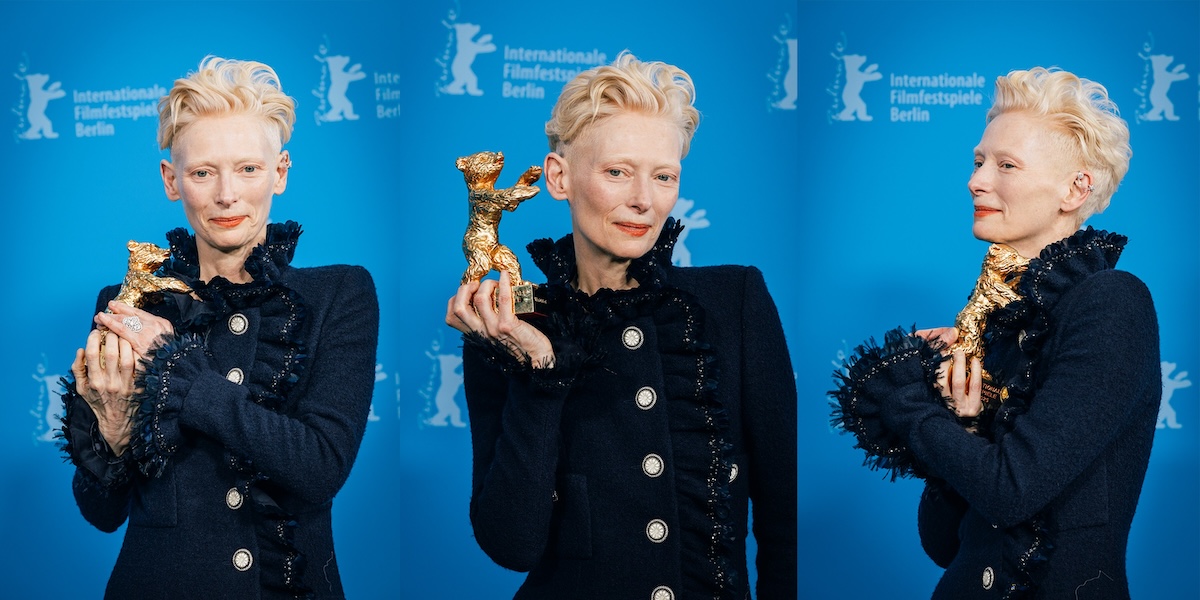
The 75th Berlinale, Tilda Swinton received the Honorary Golden Bear, a distinction that celebrates her exceptional contributions to cinema. Swinton, an actor known for her transformative performances and artistic integrity, took this opportunity to share invaluable insights about her career, philosophy, and the future of filmmaking. Her words resonated as a true masterclass in cinema, inspiring seasoned professionals and emerging talents.
Swinton emphasized the importance of working in a collective, citing her early collaborations with visionary filmmaker Derek Jarman. “I started to work in film in a collective with Derek Jarman 40 years ago. 1985, we made Caravaggio. And I’ve never stopped working in a collective way. That keeps me going.”
For Swinton, the secret to longevity in the industry lies in building a trusted community. “I really recommend that young artists find their community and stick with it. Because it’s within that community that they might find themselves able to be the most relaxed, the most trusting, the most faithful, the most adventurous, and have the most fun.”
This collaborative spirit has fueled her ability to remain authentic in an industry that often challenges individuality. She sees filmmaking as a family endeavor, a chosen tribe that offers security, encouragement, and artistic freedom.
When asked about her significance to the LGBTQ+ community in Russia, Swinton reaffirmed her belief in the strength of unity. “Find your tribe, trust your tribe, and stay within your tribe. But beyond that, we have to believe in the humanity of people, even outside of our tribe. Because if we don’t, if we give up, then really all is lost.”
Her message was one of resilience and faith in change. “We have to believe that it’s possible to reach and affect and transform the minds and hearts of people on the other side of the line.”
Swinton was asked about the possibility of a biopic about her life and which filmmaker she would choose to direct it between Guadagnino, Almodovar or Jarmusch. In true Swinton fashion, she proposed an ambitious and avant-garde idea: “All of them together! A scene each. But it would be long—very long.”
Swinton has always been an artist unafraid to speak out on global issues. Addressing her stance on the BDS movement, she explained her decision to attend the Berlinale despite political concerns: “I was given a platform, which I decided was more useful to our causes than me not turning up. It was a judgment call and a personal judgment call that I take full responsibility for.”
She acknowledged the power of collective action and the frustration of feeling powerless in the face of injustice. “Any powerful action or gesture we can make feels like a good option. And I understand absolutely that boycotting can be the most powerful thing we can do.”
Reflecting on her career, Swinton credited much of her artistic ethos to Jarman. “He taught us how to be filmmakers. I once said flippantly, but I realize it was really true: hold your own light. Be prepared not to sleep.”
For Swinton, filmmaking is about self-determination and contribution. “Actually, even someone in the craft services is making a film. We are dependent on them to keep us nourished.”
Swinton made a striking comparison between the Hollywood industrial system and the collective filmmaking approach. “Industrial performers in industrial films are kept isolated. I always say, if I have a trailer, I’m going back to my hutch. Because it feels that way.”
For her, cinema should foster interaction rather than separation. “I love being on set. I’m always hanging out with my friends when we’re setting up a shot.”
Swinton shared a personal anecdote about the film that shaped her cinematic perspective: Powers of 10 by Charles and Ray Eames. “I was eight years old when I saw it, and for years, I thought it was a dream. It’s mind-blowing. It makes you fall in love with cinema.”
The film’s concept of boundless perspective and the universe’s interconnectedness deeply influenced her approach to storytelling and art.
Is there a Tilda Swinton type of film? She herself struggles to define it. “What might link Béla Tarr, Wes Anderson, Jim Jarmusch, Sally Potter, Joanna Hogg, Luca Guadagnino, Pedro Almodóvar, and all the others? It’s such a mystery to me.”
What unites these films, however, is their commitment to artistic exploration. “Most of the people that I have worked with, I have revered before. I’ve known their work, and I revere it. When I step into their world, it’s like walking into a dream.”
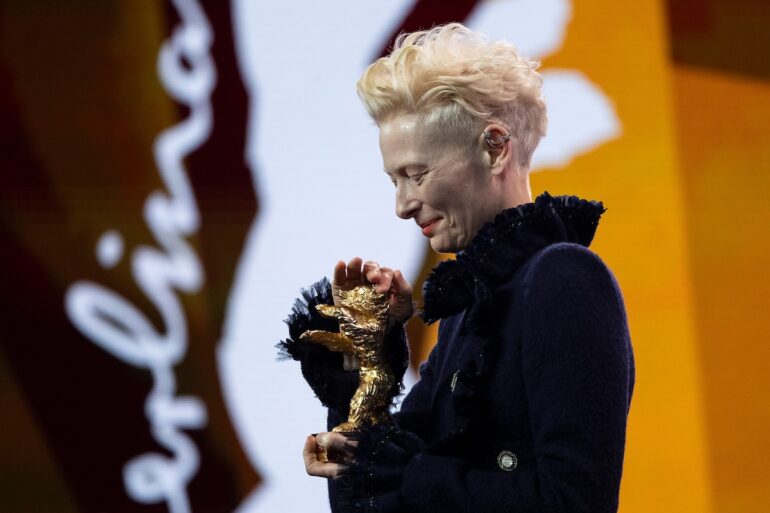
Even after decades in the industry, Swinton remains as passionate and driven as ever. She spoke about her future projects and ongoing dedication to cinema:
“I have no interest in looking back. The best part of being in this industry is knowing that there’s always something new around the corner. I want to keep working with my friends, making films that challenge, inspire, and push boundaries.”
She also expressed her excitement for young filmmakers: “The future of cinema belongs to them, and my biggest joy is seeing them thrive. I hope they embrace the spirit of collaboration and remember that storytelling is a communal act.”
Swinton also reflected on the next phase of her life, revealing her decision to take a break from filmmaking for the rest of the year.
“I can tell you that when I go home on Monday to Scotland, I’m entering something that I’ve been looking forward to for about 15 years—a period of my life when I do something different. I can’t quite say what it is, but I know I need more time. Some projects will be for the cinema, some will not. But I need time to develop them. Filmmaking is a merciless mistress, and I’ve been under the lash for a while.”
She acknowledged the pressures of the post-COVID film industry, where financial insecurities have forced rushed productions. “Since COVID, things have gotten a little crazy. Before, if you were making an independent film, you could ask for more time to develop it. But now, it’s like, ‘The money is here now, we have to do it.’ That grab-and-go mentality has been really strenuous. And I need a break. I need some peace and quiet to think and figure out what the next 40 years are.”
As Swinton accepted the Honorary Golden Bear, it was clear that her impact on cinema extends far beyond her performances. She has redefined what it means to be an artist in the film industry, proving that success and authenticity can coexist. Her unwavering dedication to collective filmmaking, social activism, and artistic exploration cements her as a true cinematic legend.
Her final words at Berlinale encapsulated her philosophy: “Stick together. Keep together. Don’t get cut up. Keep making art.”
At the 76th Berlinale, İlker Çatak’s Yellow Letters wins the Golden Bear in an edition defined by political debate and a strong slate of socially engaged films.
The 76th Berlinale reveals a diverse Competition lineup, mixing established auteurs, international stars and debut filmmakers.
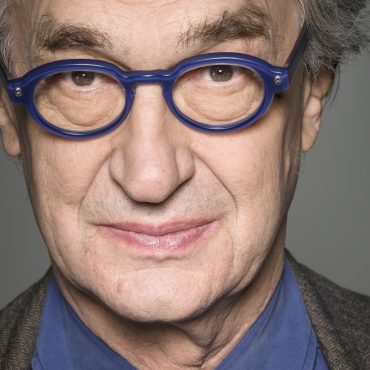
Wim Wenders will preside over the International Jury of the 76th Berlinale, overseeing the selection of the Golden and Silver Bears in February 2026.
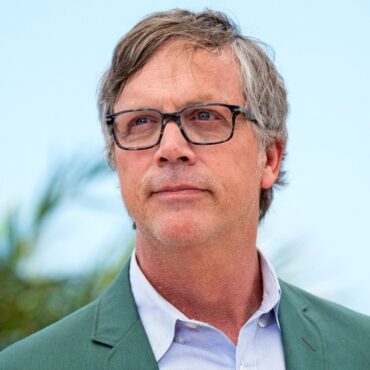
Todd Haynes, acclaimed filmmaker behind hits like Carol and Far from Heaven, will lead the jury at the 75th Berlinale.
Pascal Diot, directeur du Venice Production Bridge, sur 15 ans d'évolution et le nouveau VPB Location Market.
In the Open section at Venice 83, Luke Lorentzen on falling back in love with filmmaking in Boatbuilders
Javier Bardem will be one of the major guests of the Rome Film Fest 2026, receiving the Lifetime Achievement Award and presenting Rodrigo Sorogoyen’s El ser querido.
Liryc Dela Cruz, director of A Brief Encounter, at the International Critics Week, Venice Film Festival 2026.