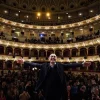
To listen to the interview, click on the ► icon on the right, just above the picture of the film
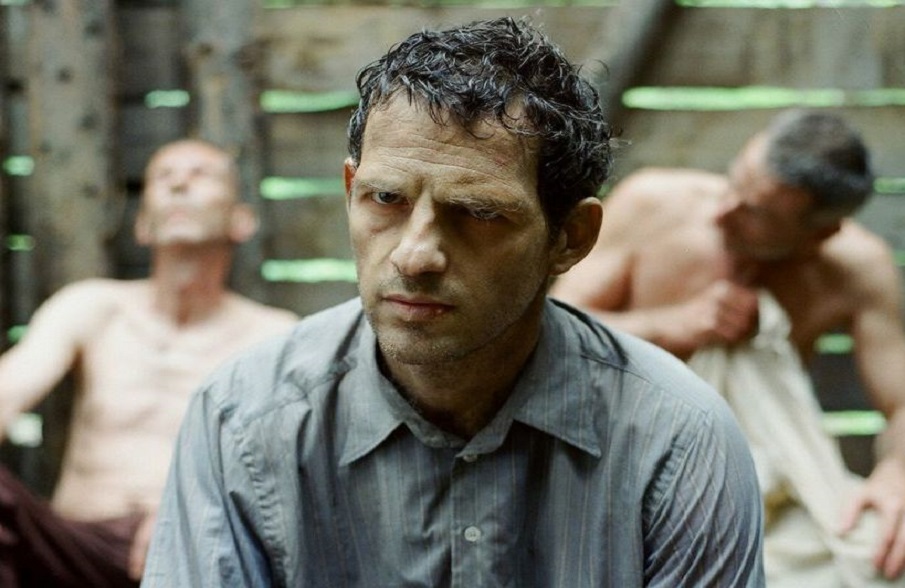
Son of Saul (original title Saul Fia) by Laslo Nemes finally lands in Italy, ready to be distributed by Teodora Film from January 21st.
Géza Röhrig is the absolute protagonist of the film. We first met him at the Festival de Cannes, where the film had its premiere, and won the Grand Prix. Since then, Son of Saul has gone on to win countless awards all over the globe, and most recently received a Golden Globe for Best Foreign Language Film, making it a favourite for an Oscar at the upcoming Academy Awards.
FRED’s Chiara Nicoletti caught up with the actor once again, to reflect upon the film’s worldwide success, and to discuss what it is that makes this film so different from the many Holocaust films that have been made, such as Nemes’ idea of shooting everything literally through Saul’s face, let the audience work with imagination so that the power of suggestion is stronger than any explicit image.
Géza Röhrig too, with his performance, has received praise for his role and his presence that dominates the film’s action and perspective. Hard to believe that this is his feature debut. So, we ask him about his reaction to his taste of red carpets and spotlights, as well as what it for him to carry the weight of the message of Son of Saul on his shoulders.
SON OF SAUL (Saul fia): “Two days in the life of Saul Auslander, Hungarian prisoner working as a member of the Sonderkommando at one of the Auschwitz Crematoriums who, to bury the corpse of a boy he takes for his son, tries to carry out his impossible deed: salvage the body and find a rabbi to bury it. While the Sonderkommando is to be liquidated at any moment, Saul turns away of the living and their plans of rebellion to save the remains of a son he never took care of when he was still alive.” (official synopsis of the film taken from the )
Discover the Hallucination Collective Film Festival in this interview with programmer Éric Peretti: unveiling underground vampire flicks and Mexican exploitation gems in Lyon’s most daring cinematic showcase.
Agnieszka Holland reflects on a bold, kaleidoscopic take on Kafka with "Franz", exploring the man behind the myth and his unexpected modern-day legacy.
Discover the story of BFI Flare’s history through the eyes of Joss Morfitt, researcher and writer, revealing how queer cinema and London's LGBTQ+ culture have evolved over 40 years.