

“In Waves”, interview with the actor Will Sharpe
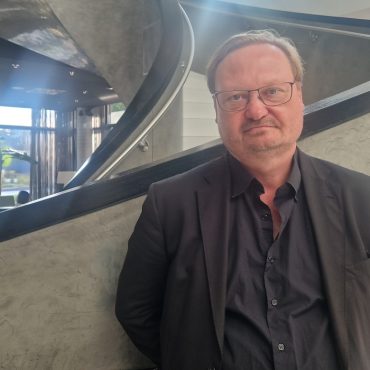
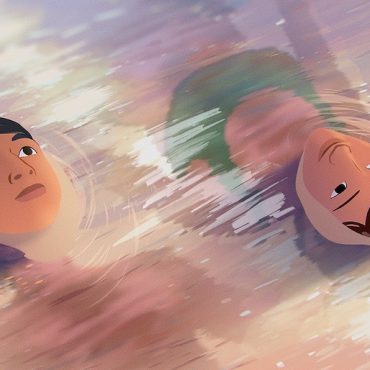
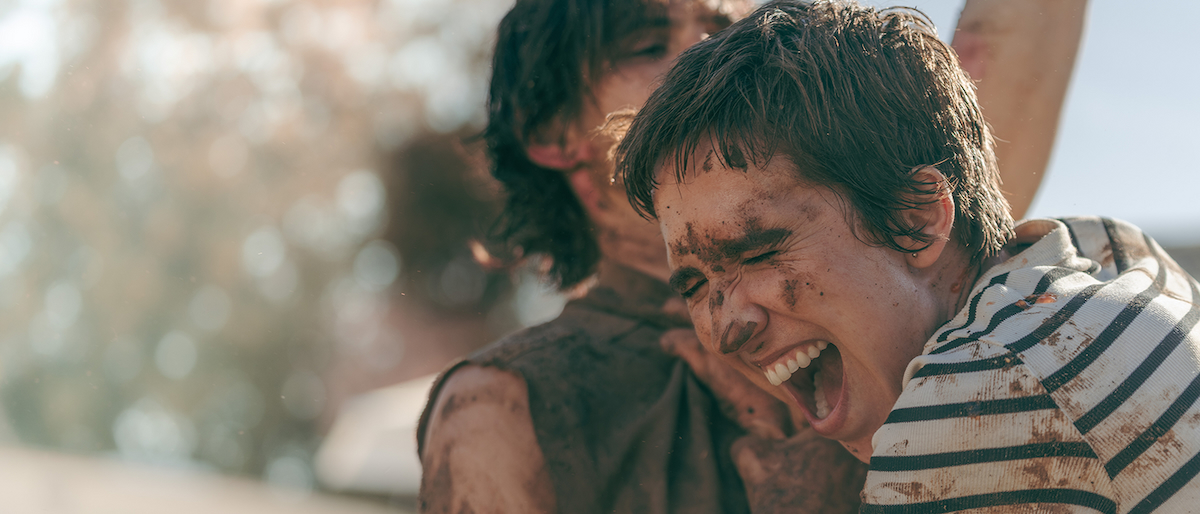
Will Sharpe discusses grief, vulnerability and animation in "In Waves", opening film of Cannes Critics’ Week by Phuong-Mai Nguyen.
Listeners:
Top listeners:
 play_arrow
ENGLISH Channel 01 If English is your language, or a language you understand, THIS IS YOUR CHANNEL !
 play_arrow
ITALIAN Channel 02 Se l’italiano è la tua lingua, o una lingua che conosci, QUESTO È IL TUO CANALE!
 play_arrow
EXTRA Channel 03 FRED Film Radio channel used to broadcast press conferences, seminars, workshops, master classes, etc.
 play_arrow
GERMAN Channel 04 Wenn Ihre Sprache Deutsch ist, oder Sie diese Sprache verstehen, dann ist das IHR KANAL !
 play_arrow
POLISH Channel 05
 play_arrow
SPANISH Channel 06 Si tu idioma es el español, o es un idioma que conoces, ¡ESTE ES TU CANAL!
 play_arrow
FRENCH Channel 07 Si votre langue maternelle est le français, ou si vous le comprenez, VOICI VOTRE CHAINE !
 play_arrow
PORTUGUESE Channel 08
 play_arrow
ROMANIAN Channel 09 Dacă vorbiţi sau înţelegeţi limba română, ACESTA ESTE CANALUL DUMNEAVOASTRĂ!
 play_arrow
SLOVENIAN Channel 10
 play_arrow
ENTERTAINMENT Channel 11 FRED Film Radio Channel used to broadcast music and live shows from Film Festivals.
 play_arrow
BULGARIAN Channel 16 Ако българският е вашият роден език, или го разбирате, ТОВА Е ВАШИЯТ КАНАЛ !
 play_arrow
CROATIAN Channel 17 Ako je hrvatski tvoj jezik, ili ga jednostavno razumiješ, OVO JE TVOJ KANAL!
 play_arrow
LATVIAN Channel 18
 play_arrow
DANISH Channel 19
 play_arrow
HUNGARIAN Channel 20
 play_arrow
DUTCH Channel 21
 play_arrow
GREEK Channel 22
 play_arrow
CZECH Channel 23
 play_arrow
LITHUANIAN Channel 24
 play_arrow
SLOVAK Channel 25
 play_arrow
ICELANDIC Channel 26 Ef þú talar, eða skilur íslensku, er ÞETTA RÁSIN ÞÍN !
 play_arrow
INDUSTRY Channel 27 FRED Film Radio channel completely dedicated to industry professionals.
 play_arrow
EDUCATION Channel 28 FRED Film Radio channel completely dedicated to film literacy.
 play_arrow
SARDU Channel 29 Si su sardu est sa limba tua, custu est su canale chi ti deghet!
 play_arrow
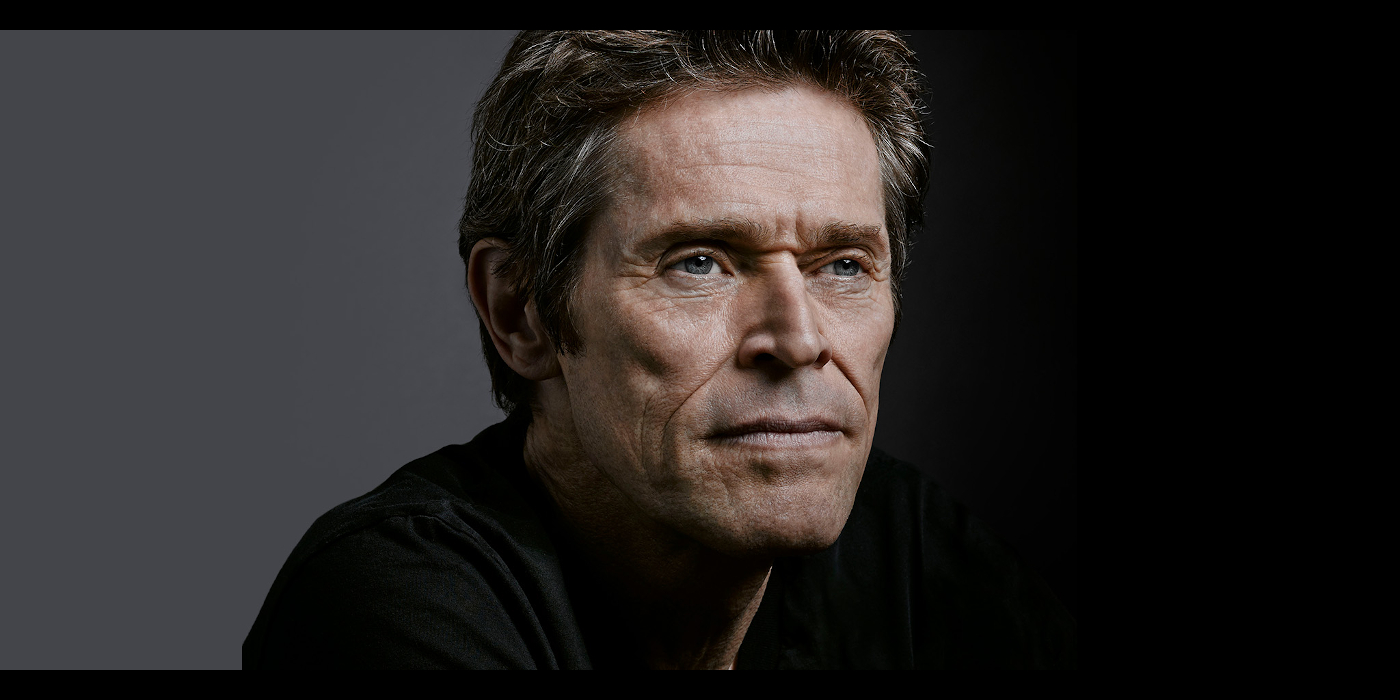
“Conversation with” at the 20th Marrakech IFF, interview with actor Willem Dafoe Bénédicte Prot
 play_arrow
"Viva", interview with the director and protagonist Aina Clotet Federica Scarpa
Presented in competition at the Cannes Film Festival within the International Critics’ Week, “Viva” marks the feature directorial debut of Aina Clotet, who also co-wrote and stars in the film.
The story follows Nora, a forty-year-old woman attempting to reconstruct her emotional life after surviving cancer. Rather than focusing on the illness itself, “Viva” examines what remains afterwards: the emotional scars, the altered perception of the body and the urgent need to feel alive again.
“We didn’t want to talk about the illness,” Aina Clotet explained. “We wanted to talk about the scar.”
For the director, the scar functions on multiple levels. It is physical, emotional and existential at once, shaping Nora’s relationship with desire, intimacy and mortality. The protagonist enters a passionate relationship with a younger man while still deeply attached to her husband, becoming trapped between emotional dependence and the desire for liberation.
Aina Clotet describes the film as the journey of a woman trying to recover her own centre, independently of the men around her.
At the emotional core of “Viva” lies a tension between two forms of fear: the fear of dying and the fear of being abandoned.
According to Aina Clotet, Nora’s emotional instability initially appears connected to loneliness and emotional emptiness, but those anxieties ultimately reveal something deeper.
“Deep down inside, she has fear of dying,” the filmmaker said. “She has to face that in order to free herself and understand that life is impermanent.”
The film approaches mortality not through tragedy, but through intensity. Nora constantly searches for emotional, romantic, and physical experiences that can make her feel fully present. That hunger for sensation becomes both a celebration of life and a symptom of vulnerability.
Aina Clotet was particularly interested in the connection between emotional dependence and the fear of death, exploring how romantic relationships can sometimes become attempts to escape existential anxiety.
At the same time, “Viva” avoids moral judgment. Nora is portrayed as contradictory, impulsive and occasionally self-destructive, yet always deeply human.
espite dealing with illness, anxiety and emotional fragility, “Viva” maintains an unexpectedly bright tone. Aina Clotet repeatedly described her intention to make “a luminous movie” centred on the joy and necessity of desire.
The director explained that the film’s sensuality was never conceived as provocation, but rather as part of Nora’s gradual reappropriation of her own body after illness.
The body in “Viva” is neither idealised nor hidden. Instead, it is presented truthfully, carrying scars while remaining capable of pleasure, intimacy and transformation.
“It was important to show a body that had gone through this disease in a very natural and accepted way,” Aina Clotet noted.
That perspective extends beyond the protagonist’s physical experience and becomes a broader reflection on emotional acceptance. Nora’s journey is not about perfection or healing in a conventional sense, but about learning to inhabit uncertainty without shame.
One of the film’s strongest sensory dimensions is the constant presence of heat. Throughout “Viva”, the characters appear surrounded by oppressive warmth and dryness, creating an atmosphere of emotional exhaustion and urgency.
For Aina Clotet, this environmental choice mirrors Nora’s inner condition.
She described the protagonist as “thirsty for life and thirsty for desire,” while the recurring imagery of water becomes associated with emotional balance, sensuality and relief.
The film also subtly connects personal crisis to collective instability. Aina Clotet pointed to ecological anxiety, emotional burnout and social alienation as symptoms of a contemporary world increasingly detached from authentic human connection.
“We live in a very individualistic system,” she observed. “What moves me most in life are the bonds we create with people.”
That critique of contemporary life remains understated throughout the film, emerging through atmosphere and emotional behaviour rather than explicit political discourse.
One of the most striking aspects of “Viva” is its tonal fluidity. The film moves naturally between vulnerability, sensuality and humour, often allowing comedy to emerge in emotionally exposed moments.
For Aina Clotet, humour was essential.
“Humour helps to talk about the deepest things,” she explained. “With humour, you can go to places that otherwise would not be easy.”
Rather than reducing emotional intensity, humour becomes a way of making fragility more accessible and truthful. The director emphasised her interest in lightness, not as avoidance, but as a means of confronting painful experiences without turning them into pure suffering.
That balance gives “Viva” a distinctive emotional rhythm, where moments of insecurity and confusion coexist with tenderness and irony.
After coming face to face with death, 40-year-old Nora is consumed by an urgent need to feel alive. She dives into passionate relationships with two very different men, Tom and Max, whose opposing natures reflect her own inner conflict. But when neither can fill the void, Nora is forced to face the truth: she will have to confront a deeper fear driving her hunger for life.
Will Sharpe discusses grief, vulnerability and animation in "In Waves", opening film of Cannes Critics’ Week by Phuong-Mai Nguyen.
Alice Douard’s directorial debut, "Love Letters", at the Semaine de la critique, sees Monia Chokri pairing up with Ella Rumpf.
Laura Wandel’s Adam’s sake, at the Semaine de la critique, relies on the perfect duo: Léa Drucker and Anamaria Vartolomei
Edinburgh Spanish Film Festival
Marian Arechega, director of the vibrant Edinburgh Spanish Film Festival, discusses the 2026 edition programme, showcasing recent and diverse cinema from Spain.
Nicolas Winding Refn on Her Private Hell, his first feature in ten years, in Italian cinemas from October 1.
Discover how EWIP - European Work in Progress connects European and African films with top buyers, boosting distribution and festival success.
Rome is once again expanding the scope of its Film Fest: thirteen days of cinema, international premieres, renowned auteurs, emerging talent, series, documentaries, and cinematic heritage—with Javier Bardem, Paolo Genovese, and Monica Vitti at the heart of an edition that …