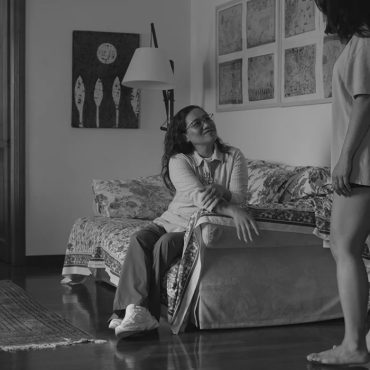


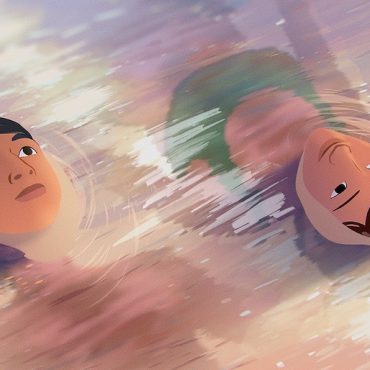
“In Waves”, interview with the actor Will Sharpe
Will Sharpe discusses grief, vulnerability and animation in "In Waves", opening film of Cannes Critics’ Week by Phuong-Mai Nguyen.
Listeners:
Top listeners:
 play_arrow
ENGLISH Channel 01 If English is your language, or a language you understand, THIS IS YOUR CHANNEL !
 play_arrow
ITALIAN Channel 02 Se l’italiano è la tua lingua, o una lingua che conosci, QUESTO È IL TUO CANALE!
 play_arrow
EXTRA Channel 03 FRED Film Radio channel used to broadcast press conferences, seminars, workshops, master classes, etc.
 play_arrow
GERMAN Channel 04 Wenn Ihre Sprache Deutsch ist, oder Sie diese Sprache verstehen, dann ist das IHR KANAL !
 play_arrow
POLISH Channel 05
 play_arrow
SPANISH Channel 06 Si tu idioma es el español, o es un idioma que conoces, ¡ESTE ES TU CANAL!
 play_arrow
FRENCH Channel 07 Si votre langue maternelle est le français, ou si vous le comprenez, VOICI VOTRE CHAINE !
 play_arrow
PORTUGUESE Channel 08
 play_arrow
ROMANIAN Channel 09 Dacă vorbiţi sau înţelegeţi limba română, ACESTA ESTE CANALUL DUMNEAVOASTRĂ!
 play_arrow
SLOVENIAN Channel 10
 play_arrow
ENTERTAINMENT Channel 11 FRED Film Radio Channel used to broadcast music and live shows from Film Festivals.
 play_arrow
BULGARIAN Channel 16 Ако българският е вашият роден език, или го разбирате, ТОВА Е ВАШИЯТ КАНАЛ !
 play_arrow
CROATIAN Channel 17 Ako je hrvatski tvoj jezik, ili ga jednostavno razumiješ, OVO JE TVOJ KANAL!
 play_arrow
LATVIAN Channel 18
 play_arrow
DANISH Channel 19
 play_arrow
HUNGARIAN Channel 20
 play_arrow
DUTCH Channel 21
 play_arrow
GREEK Channel 22
 play_arrow
CZECH Channel 23
 play_arrow
LITHUANIAN Channel 24
 play_arrow
SLOVAK Channel 25
 play_arrow
ICELANDIC Channel 26 Ef þú talar, eða skilur íslensku, er ÞETTA RÁSIN ÞÍN !
 play_arrow
INDUSTRY Channel 27 FRED Film Radio channel completely dedicated to industry professionals.
 play_arrow
EDUCATION Channel 28 FRED Film Radio channel completely dedicated to film literacy.
 play_arrow
SARDU Channel 29 Si su sardu est sa limba tua, custu est su canale chi ti deghet!
 play_arrow
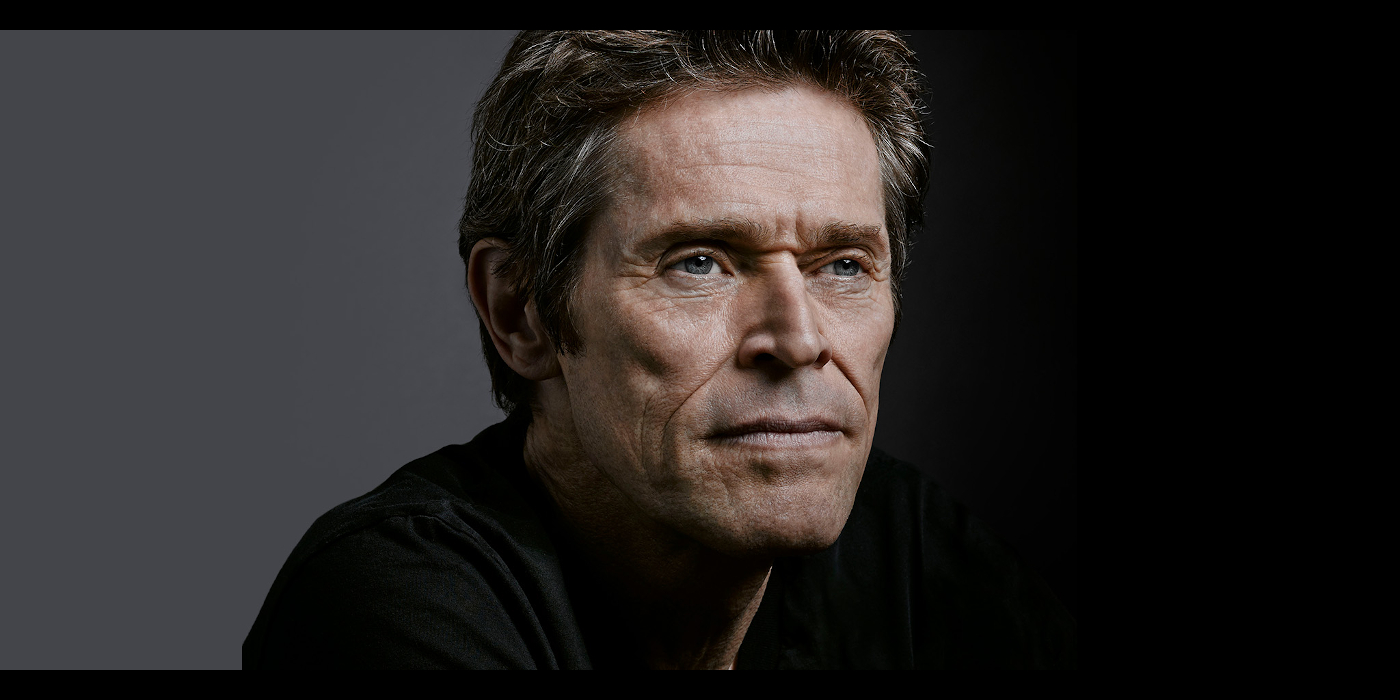
“Conversation with” at the 20th Marrakech IFF, interview with actor Willem Dafoe Bénédicte Prot
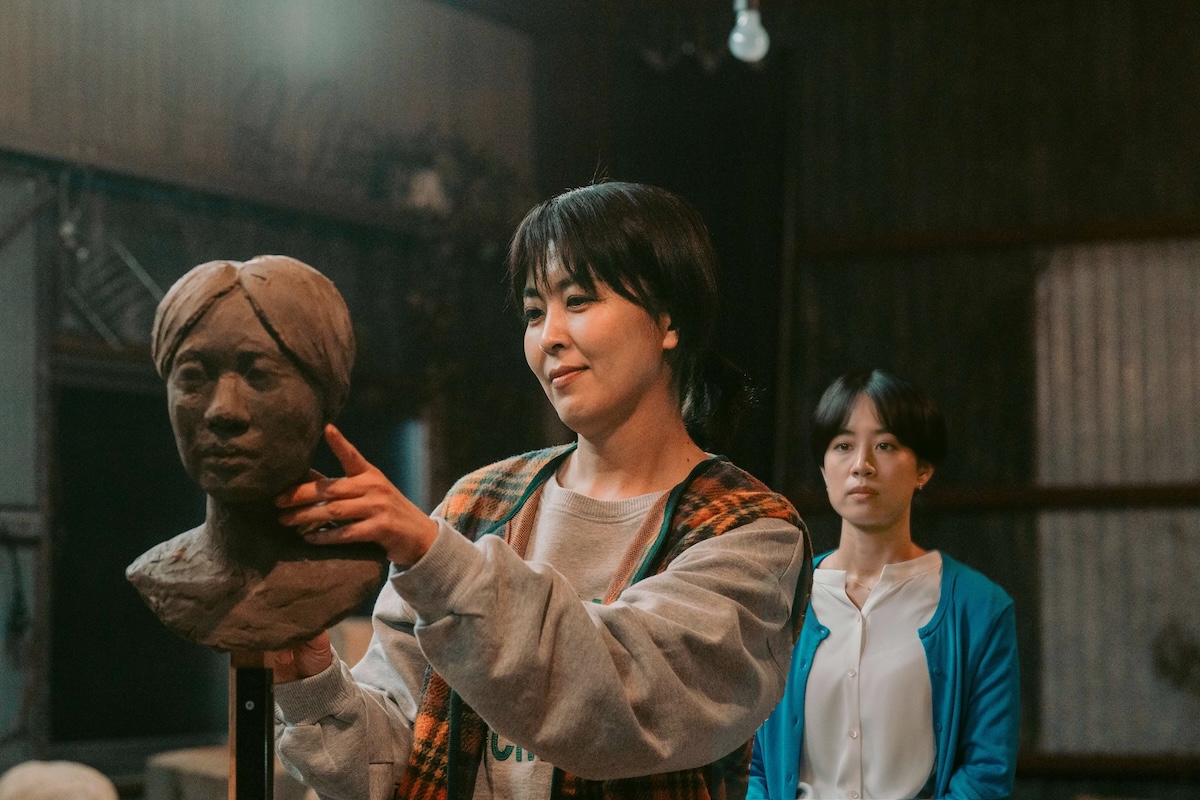
At the 79th edition of the Cannes Film Festival, Koji Fukada presented “Nagi Notes”, a film in Competition that moves away from the theatrical origins of Oriza Hirata’s celebrated play “Tokyo Notes” while preserving some of its emotional and thematic echoes.
Fukada explained that the project initially emerged through Hirata himself, who suggested adapting “Tokyo Notes” into a film set inside the contemporary art museum in Nagi. In this rural Japanese town, the playwright had been involved in cultural initiatives.
Yet, after visiting the location, Fukada felt that simply transplanting the original play into another setting would not be enough.
“I thought it would be a waste to go all that way and make a story based in Tokyo,” the director explained. “So I decided to move away from the story of Tokyo Notes and come up with a completely new story.”
The resulting film keeps the contrast between city and countryside that defined Hirata’s work, but reverses the perspective. Instead of observing rural Japan through an urban lens, “Nagi Notes” looks at Tokyo from the countryside, examining the emotional and cultural distance between the capital and peripheral communities.
lthough “Nagi Notes” addresses social themes such as patriarchy, gender expectations and the invisibility experienced by sexual minorities in Japanese society, Fukada insists that loneliness remains the true core of the film.
“We are all born alone and die alone,” he said during the interview. “More than any social issue, loneliness is the problem that interests me most.”
For Fukada, this condition extends beyond Japan and reflects a broader existential fragility. He described contemporary society as increasingly detached from the structures that traditionally offered emotional comfort, including religion, family and romantic relationships.
The director openly acknowledged his own distance from religious belief, connecting that absence to a deeper sense of isolation. In his view, modern life continuously weakens the communal bonds that once helped individuals confront solitude.
That recurring concern has shaped much of Fukada’s cinema, in which intimate relationships often reveal emotional gaps that cannot be fully resolved. In “Nagi Notes”, companionship exists, but always alongside the awareness that human connection remains temporary and fragile.
Art and artistic practice occupy a central place within the film, particularly through the relationship between an artist and their model. Rather than focusing on completed works, Fukada chose to emphasise the act of creation itself.
“The process of creating art is a way of observing the world in higher definition,” he explained.
The director considers the act of making art less important than production and more as a form of attention. Drawing, observing and representing another person become ways of understanding both others and oneself.
Fukada also noted that cinema rarely explores the relationship between artist and model without ultimately prioritising the finished artwork. In “Nagi Notes”, the unfinished process becomes the emotional destination. What matters is not the final painting, but the gradual attempt to see another human being clearly.
That approach mirrors the film’s broader structure, in which quiet gestures and everyday interactions slowly accumulate meaning rather than culminating in dramatic revelation.
One of the film’s most striking elements is the intrusion of military sounds and radio announcements into Nagi’s peaceful atmosphere. Fukada revealed that these details were drawn directly from his own experience living in the town for nearly a year.
The radio broadcasts heard throughout the film are based on the real disaster-prevention systems installed in local homes. At the same time, the sounds of military exercises come from nearby Self-Defence Force activities.
For the director, these sounds function both as realistic details and as reminders that even isolated rural communities remain connected to global conflict.
While writing the screenplay, the Russia-Ukraine war had just begun, reinforcing his desire to juxtapose distant violence with the apparent calm of daily life in Nagi.
“When you live in a city, it is easy to forget that wars are happening,” Fukada observed. “But we are all connected.”
Another emotional thread in “Nagi Notes” concerns the bond between two women who continue seeing each other even after divorce has formally ended their family connection.
Fukada traced this idea back to a secondary element in “Tokyo Notes”, in which a character fears losing contact with her sister-in-law after a separation. He became interested in imagining what might happen if such a relationship survived beyond legal and familial structures.
That question eventually became one of the foundations of “Nagi Notes”, transforming a brief dramatic detail written thirty years ago into a meditation on chosen emotional ties.
In Fukada’s cinema, family is rarely defined by blood alone. Instead, relationships persist through memory, care and emotional recognition, even after official bonds disappear.
Yoriko, an artist living in rural Nagi, is haunted by a former love affair she cannot bear to mourn. When Yuri, a recently separated architect, travels from Tokyo to visit her friend and former sister-in-law, both women find themselves at a crossroad, each searching for ways to let go of the past and define their identities. Yuri’s brief escape from the city settles into a quiet confrontation of loss and probing for the two women in bucolic Nagi.
Will Sharpe discusses grief, vulnerability and animation in "In Waves", opening film of Cannes Critics’ Week by Phuong-Mai Nguyen.
Dalla 79esima edizione del Festival di Cannes tutto quello che c'è da sapere, ogni giorno. Ascolta The Soup of The Day! lo Show quotidiano di FRED Film Radio.
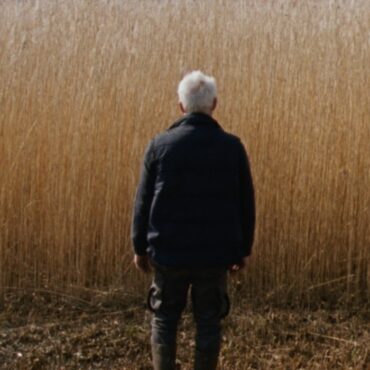
"Reedland" by Sven Bresser tells the change in the life of a reed cutter when he found a body of a dead girl in his own reed lands. Not a murder mystery film though, mora of a path of evolving …
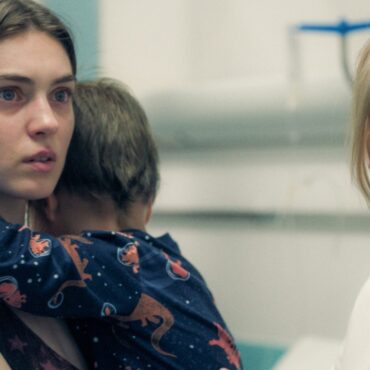
Laura Wandel’s Adam’s sake, at the Semaine de la critique, relies on the perfect duo: Léa Drucker and Anamaria Vartolomei
Pascal Diot, directeur du Venice Production Bridge, sur 15 ans d'évolution et le nouveau VPB Location Market.
In the Open section at Venice 83, Luke Lorentzen on falling back in love with filmmaking in Boatbuilders
Javier Bardem will be one of the major guests of the Rome Film Fest 2026, receiving the Lifetime Achievement Award and presenting Rodrigo Sorogoyen’s El ser querido.
Liryc Dela Cruz, director of A Brief Encounter, at the International Critics Week, Venice Film Festival 2026.