

“Half-moon”, interview with director Hae-Sup Sin
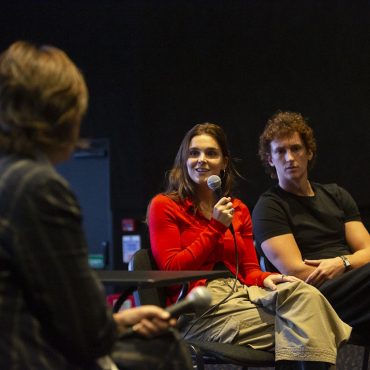
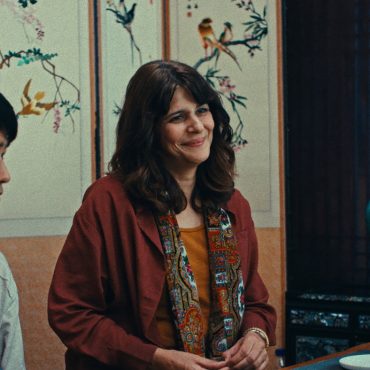
Half-moon director Hae-Sup Sin at Future Frames 2026. A short film about adoption, cultural identity and two mothers discovering that love can be shared rather than divided.
Listeners:
Top listeners:
 play_arrow
ENGLISH Channel 01 If English is your language, or a language you understand, THIS IS YOUR CHANNEL !
 play_arrow
ITALIAN Channel 02 Se l’italiano è la tua lingua, o una lingua che conosci, QUESTO È IL TUO CANALE!
 play_arrow
EXTRA Channel 03 FRED Film Radio channel used to broadcast press conferences, seminars, workshops, master classes, etc.
 play_arrow
GERMAN Channel 04 Wenn Ihre Sprache Deutsch ist, oder Sie diese Sprache verstehen, dann ist das IHR KANAL !
 play_arrow
POLISH Channel 05
 play_arrow
SPANISH Channel 06 Si tu idioma es el español, o es un idioma que conoces, ¡ESTE ES TU CANAL!
 play_arrow
FRENCH Channel 07 Si votre langue maternelle est le français, ou si vous le comprenez, VOICI VOTRE CHAINE !
 play_arrow
PORTUGUESE Channel 08
 play_arrow
ROMANIAN Channel 09 Dacă vorbiţi sau înţelegeţi limba română, ACESTA ESTE CANALUL DUMNEAVOASTRĂ!
 play_arrow
SLOVENIAN Channel 10
 play_arrow
ENTERTAINMENT Channel 11 FRED Film Radio Channel used to broadcast music and live shows from Film Festivals.
 play_arrow
BULGARIAN Channel 16 Ако българският е вашият роден език, или го разбирате, ТОВА Е ВАШИЯТ КАНАЛ !
 play_arrow
CROATIAN Channel 17 Ako je hrvatski tvoj jezik, ili ga jednostavno razumiješ, OVO JE TVOJ KANAL!
 play_arrow
LATVIAN Channel 18
 play_arrow
DANISH Channel 19
 play_arrow
HUNGARIAN Channel 20
 play_arrow
DUTCH Channel 21
 play_arrow
GREEK Channel 22
 play_arrow
CZECH Channel 23
 play_arrow
LITHUANIAN Channel 24
 play_arrow
SLOVAK Channel 25
 play_arrow
ICELANDIC Channel 26 Ef þú talar, eða skilur íslensku, er ÞETTA RÁSIN ÞÍN !
 play_arrow
INDUSTRY Channel 27 FRED Film Radio channel completely dedicated to industry professionals.
 play_arrow
EDUCATION Channel 28 FRED Film Radio channel completely dedicated to film literacy.
 play_arrow
SARDU Channel 29 Si su sardu est sa limba tua, custu est su canale chi ti deghet!
 play_arrow
“Conversation with” at the 20th Marrakech IFF, interview with actor Willem Dafoe Bénédicte Prot
 play_arrow
"Shallow Ground", interview with director Jozo Schmuch Chiara Nicoletti
At the Future Frames – Generation NEXT of European Cinema 2026, organized by European Film Promotion and the 60th edition of the Karlovy Vary International Film Festival, Croatian director Jozo Schmuch presents Shallow Ground. Shot on 16mm, the film imagines a son who vanished during Croatia’s war of independence returning to his elderly mother three decades later, unaged and unmarked, a reunion whose warmth is shadowed by disbelief. Schmuch’s graduation film, it draws directly on the disappearance of his own uncle.
Schmuch describes Shallow Ground as “a magical realism drama where there is not a lot of magic, but it’s very present,” built around a grief that was never allowed to resolve. “It’s exploring the theme of when somebody is missing, either in the war or their body was never found, can you ever actually grieve for them?” Asked about reviews describing the film as an honest portrait of grief, Schmuch agreed readily: “It’s a film about grief mostly, but then also it’s a film about love, and about how mothers and sons, in the end, love each other.”
The film began, technically, as a graduation project, but its real origin lies closer to home. “My uncle, my mother’s cousin, he went missing during the war. They lived together, he was like a brother to her. He went missing during the fall of Vukovar and his body was never found.” Growing up, Schmuch inherited the loss secondhand. “I spent my childhood hearing about him and missing ever meeting him, having this sort of nostalgic feeling for somebody I never met.” He made the film, he says, for every family living the same unresolved story, in Croatia and elsewhere: “I wanted to make a film for people who haven’t found their loved ones and who are grieving without any concrete proof of their death.
It mattered to Schmuch that the film resist being pulled into the nationalistic register that often surrounds war stories. “It was extremely important for me not to let this movie take a nationalistic dimension, because often when movies deal with the war, they can be used for nationalistic and right-wing purposes, and this is something that I’m very against.” The idea took shape while he was editing an earlier documentary short, one that takes a critical look at how the war is taught in schools. “When you hear about the war in these big and large numbers, they are just statistics, the weapons of propaganda and of indoctrination. But when you take it to the personal level, to two people that it happened to, it becomes something that’s much larger than that.” His hope for the film has nothing to do with assigning blame: “The most important part to take out of this film is not hatred for the warring sides of this Croatian independence war, Serbians and Croatians, but rather to see that a thing like that should have never happened and it should never happen again, in any part of the world.”
Before studying film directing, Schmuch trained in medicine. “Being a doctor is so much more concrete. But I think the arts, they teach us why life is worth living, and they show us the complexity of human emotions, the messy thing about being human.” Asked about the role of European cinema today, he points to a shared culture under pressure from shrinking public funding. “We are constantly bombarded with funding cuts, investing more into defensive budgets, the European Union turning toward defense but defunding creative media. What makes us both Europeans and, say, Germans or Croatians, it’s our culture. It’s the most basic thing about us, and we must fight by every possible means to stop defunding arts.”
Three decades after the end of Croatia’s war of independence, long-lost Luka returns to his elderly mother without any sign of aging or war injuries. But the warmth of the long-awaited reunion is offset by the fact that the suddenness of the son’s return is just too unbelievable. The nostalgically-laden Shallow Ground listens to the echoes of deep scars in society and lets them resonate in a gentle space framed by the heartwarming patina of 16mm film. An intimate tale inspired by the disappearance of the director’s uncle, the film reflects the experience of thousands of families for whom the war has never really ended.
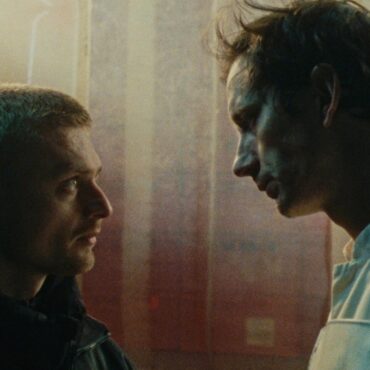
Half-moon director Hae-Sup Sin at Future Frames 2026. A short film about adoption, cultural identity and two mothers discovering that love can be shared rather than divided.
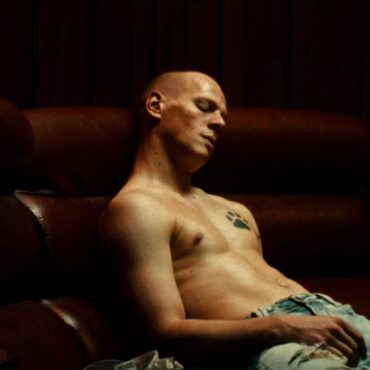
"Skin on Skin", the passionate and unexpected love story by Simon Schneckenburger is taking part to the 8th edition of Future Frames at KVIFF
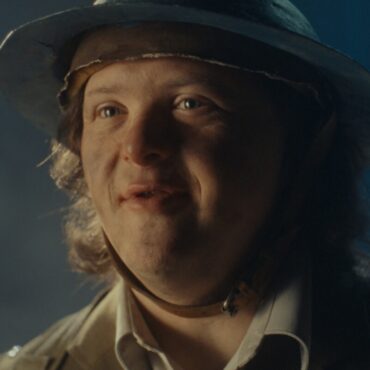
In Son of Happiness, Dominik Mirecki tells the moving story of Beniamin, a boy with Down syndrome who dreams of acting. Through heartfelt realism and emotional depth, Mirecki explores family bonds, love, and the courage to dream—even when the world …
Terézia Halamová discusses Dog and Wolf at Karlovy Vary, a bold short film exploring identity, loss, and emotional chaos.
Edinburgh Spanish Film Festival
Marian Arechega, director of the vibrant Edinburgh Spanish Film Festival, discusses the 2026 edition programme, showcasing recent and diverse cinema from Spain.
Nicolas Winding Refn on Her Private Hell, his first feature in ten years, in Italian cinemas from October 1.
Discover how EWIP - European Work in Progress connects European and African films with top buyers, boosting distribution and festival success.
Rome is once again expanding the scope of its Film Fest: thirteen days of cinema, international premieres, renowned auteurs, emerging talent, series, documentaries, and cinematic heritage—with Javier Bardem, Paolo Genovese, and Monica Vitti at the heart of an edition that …