

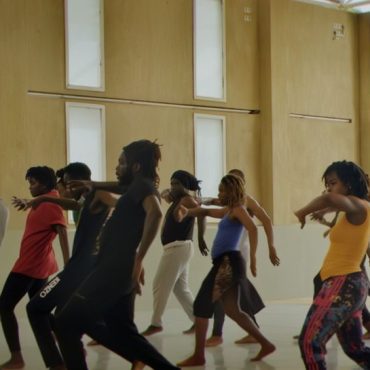
“Atcha Atcha”, interview with director Mamadou Dia
Atcha Atcha highlights the vibrant African dance scene and its fragile cultural roots, showcasing movement, identity, and the power of local expression.
Listeners:
Top listeners:
 play_arrow
ENGLISH Channel 01 If English is your language, or a language you understand, THIS IS YOUR CHANNEL !
 play_arrow
ITALIAN Channel 02 Se l’italiano è la tua lingua, o una lingua che conosci, QUESTO È IL TUO CANALE!
 play_arrow
EXTRA Channel 03 FRED Film Radio channel used to broadcast press conferences, seminars, workshops, master classes, etc.
 play_arrow
GERMAN Channel 04 Wenn Ihre Sprache Deutsch ist, oder Sie diese Sprache verstehen, dann ist das IHR KANAL !
 play_arrow
POLISH Channel 05
 play_arrow
SPANISH Channel 06 Si tu idioma es el español, o es un idioma que conoces, ¡ESTE ES TU CANAL!
 play_arrow
FRENCH Channel 07 Si votre langue maternelle est le français, ou si vous le comprenez, VOICI VOTRE CHAINE !
 play_arrow
PORTUGUESE Channel 08
 play_arrow
ROMANIAN Channel 09 Dacă vorbiţi sau înţelegeţi limba română, ACESTA ESTE CANALUL DUMNEAVOASTRĂ!
 play_arrow
SLOVENIAN Channel 10
 play_arrow
ENTERTAINMENT Channel 11 FRED Film Radio Channel used to broadcast music and live shows from Film Festivals.
 play_arrow
BULGARIAN Channel 16 Ако българският е вашият роден език, или го разбирате, ТОВА Е ВАШИЯТ КАНАЛ !
 play_arrow
CROATIAN Channel 17 Ako je hrvatski tvoj jezik, ili ga jednostavno razumiješ, OVO JE TVOJ KANAL!
 play_arrow
LATVIAN Channel 18
 play_arrow
DANISH Channel 19
 play_arrow
HUNGARIAN Channel 20
 play_arrow
DUTCH Channel 21
 play_arrow
GREEK Channel 22
 play_arrow
CZECH Channel 23
 play_arrow
LITHUANIAN Channel 24
 play_arrow
SLOVAK Channel 25
 play_arrow
ICELANDIC Channel 26 Ef þú talar, eða skilur íslensku, er ÞETTA RÁSIN ÞÍN !
 play_arrow
INDUSTRY Channel 27 FRED Film Radio channel completely dedicated to industry professionals.
 play_arrow
EDUCATION Channel 28 FRED Film Radio channel completely dedicated to film literacy.
 play_arrow
SARDU Channel 29 Si su sardu est sa limba tua, custu est su canale chi ti deghet!
 play_arrow
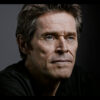
“Conversation with” at the 20th Marrakech IFF, interview with actor Willem Dafoe Bénédicte Prot
 play_arrow
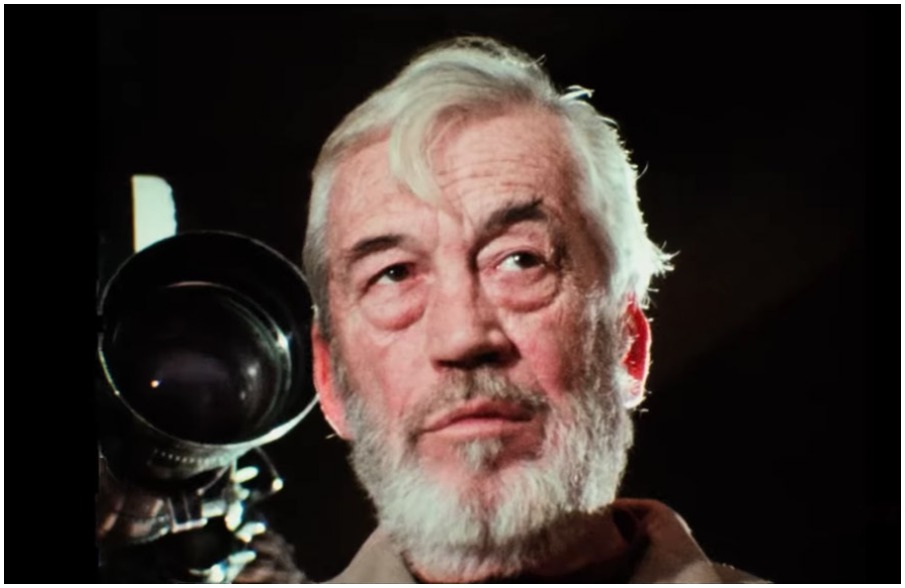
Bob Murawski, Jan Filip Rymsza - The Other Side of the Wind #Venezia75 fredfilmradio
PODCAST| Matt Micucci interviews Bob Murawski and Jan Filip Rymsza, editor and producer of the film The Other Side of the Wind.
Interview with editor Bob Murawski and producer Filip Jan Rymsza about the special premiere screening of Orson Welles lost epic, The Other Side of the Wind, at the 2018 Venice Film Festival. Rymsza tells us the story of the film and where the wealth of footage was found, while Murawski tells us about his reaction to this original material and the various challenges involved in the process of putting the cinematic mosaic together – especially considering that its filmmaker, Welles, died back in 1985. Murawski also received the newly established Campari Passion for Film Award in Venice.
The Other Side of the Wind: In 1970, legendary director Orson Welles began filming what would ultimately be his final cinematic opus with a cast of luminaries that included John Huston, Peter Bogdanovich, Susan Strasberg and Welles’s partner during his later years, Oja Kodar. Beset by financial issues, the production ultimately stretched to 1976 and soon gained industry-wide notoriety, never to be completed or released. More than a thousand reels of film languished in a Paris vault until March 2017, when producers Frank Marshall (who served as a production manager on Wind during in its initial shooting) and Filip Jan Rymsza spearheaded efforts to have Welles’s vision completed more than 30 years after his death. Featuring a new score by Oscar-winning composer Michel Legrand and assembled by a technical team including Oscar- winning editor Bob Murawski, The Other Side of the Wind tells the story of famed filmmaker J.J. “Jake” Hannaford, who returns to Hollywood after years in self-exile in Europe with plans to complete work on his own innovative comeback movie. A satire of the classic studio system as well as the new establishment who were shaking things up at the time, Welles’s final film is both a fascinating time capsule of a now-distant era in moviemaking as well as the long-awaited “new” work from an indisputable master of his craft.
Atcha Atcha highlights the vibrant African dance scene and its fragile cultural roots, showcasing movement, identity, and the power of local expression.
Giornate degli Autori - Venezia
Twenty-five world premieres, an international competition and a programme dedicated to Giorgio Gosetti define Giornate degli Autori 2026.
Seven debut features, four continents and cinema conceived as resistance: Venice Critics’ Week 2026 announces its complete programme.
The Venice Film Festival announces Danny Boyle's Ink as opening the festival, while Giovanni Veronesi's Dio ride will close the 83rd edition.