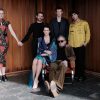


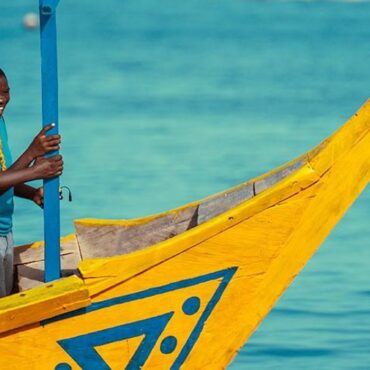
“The Fisherman”, interview with director Zoey Martinson and producers Kofi Owusu Afriyie and Korey Jackson
“My hope was that I could use a comedy to address kind of the result of global warming on a country that's trying to keep up”.
Listeners:
Top listeners:
 play_arrow
ENGLISH Channel 01 If English is your language, or a language you understand, THIS IS YOUR CHANNEL !
 play_arrow
ITALIAN Channel 02 Se l’italiano è la tua lingua, o una lingua che conosci, QUESTO È IL TUO CANALE!
 play_arrow
EXTRA Channel 03 FRED Film Radio channel used to broadcast press conferences, seminars, workshops, master classes, etc.
 play_arrow
GERMAN Channel 04 Wenn Ihre Sprache Deutsch ist, oder Sie diese Sprache verstehen, dann ist das IHR KANAL !
 play_arrow
POLISH Channel 05
 play_arrow
SPANISH Channel 06 Si tu idioma es el español, o es un idioma que conoces, ¡ESTE ES TU CANAL!
 play_arrow
FRENCH Channel 07 Si votre langue maternelle est le français, ou si vous le comprenez, VOICI VOTRE CHAINE !
 play_arrow
PORTUGUESE Channel 08
 play_arrow
ROMANIAN Channel 09 Dacă vorbiţi sau înţelegeţi limba română, ACESTA ESTE CANALUL DUMNEAVOASTRĂ!
 play_arrow
SLOVENIAN Channel 10
 play_arrow
ENTERTAINMENT Channel 11 FRED Film Radio Channel used to broadcast music and live shows from Film Festivals.
 play_arrow
BULGARIAN Channel 16 Ако българският е вашият роден език, или го разбирате, ТОВА Е ВАШИЯТ КАНАЛ !
 play_arrow
CROATIAN Channel 17 Ako je hrvatski tvoj jezik, ili ga jednostavno razumiješ, OVO JE TVOJ KANAL!
 play_arrow
LATVIAN Channel 18
 play_arrow
DANISH Channel 19
 play_arrow
HUNGARIAN Channel 20
 play_arrow
DUTCH Channel 21
 play_arrow
GREEK Channel 22
 play_arrow
CZECH Channel 23
 play_arrow
LITHUANIAN Channel 24
 play_arrow
SLOVAK Channel 25
 play_arrow
ICELANDIC Channel 26 Ef þú talar, eða skilur íslensku, er ÞETTA RÁSIN ÞÍN !
 play_arrow
INDUSTRY Channel 27 FRED Film Radio channel completely dedicated to industry professionals.
 play_arrow
EDUCATION Channel 28 FRED Film Radio channel completely dedicated to film literacy.
 play_arrow
SARDU Channel 29 Si su sardu est sa limba tua, custu est su canale chi ti deghet!
 play_arrow
“Conversation with” at the 20th Marrakech IFF, interview with actor Willem Dafoe Bénédicte Prot
 play_arrow
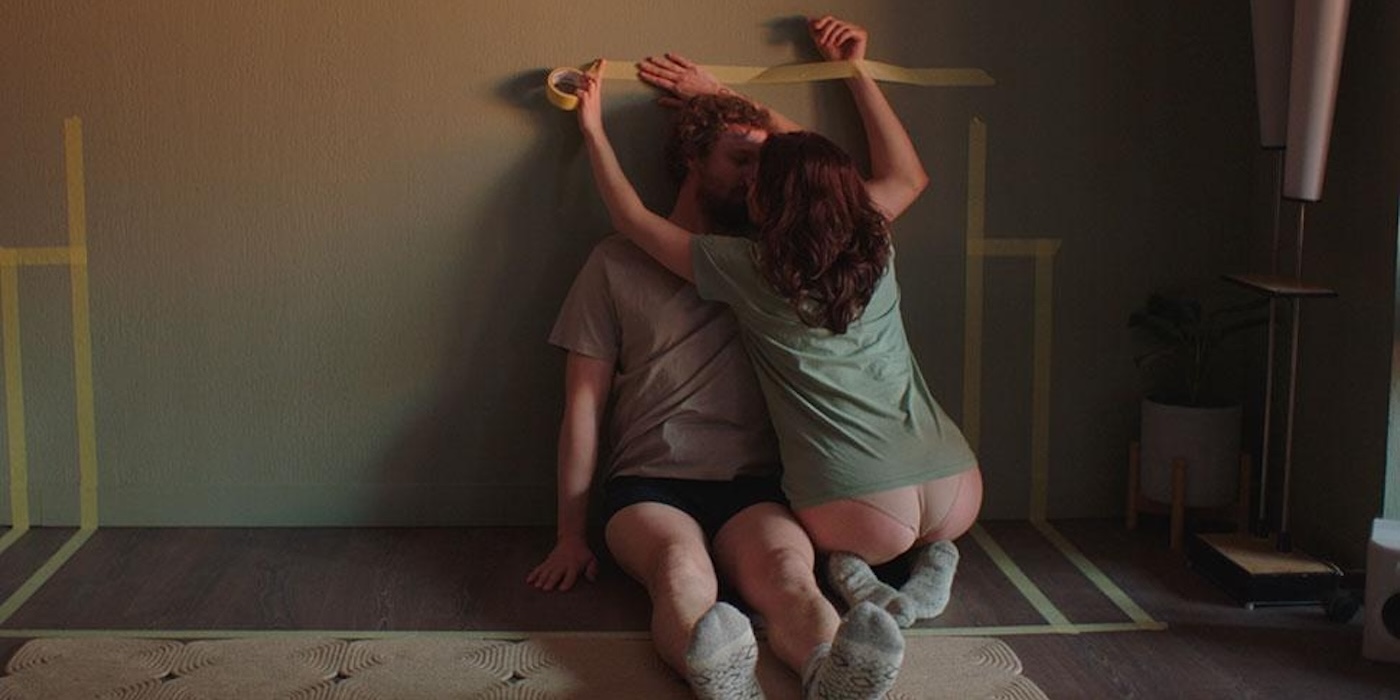
“Honeymoon”, interview with director Zhanna Ozirna and producer Dmytro Sukhanov Manuela Santacatterina
At 81th Venice Film Festival FRED Film Radio interviewed director Zhanna Ozirna and producer Dmytro Sukhanov to talk about “Honeymoon”, one of the four films made during the Biennale College Cinema 2024.
The biggest challenge of “Honeymoon” is to tell the story of the outbreak of the war in Ukraine without ever showing it but relying only on the sound, on the explosion of the bombs. “It was my own creative decision”, says Zhanna Ozirna. “The first reason is not because of low budget, but actually because I want to create this feeling of the evil neighbor next to you. You feel this horror much more and I don’t want to see the faces of the soldier. I just want to create this feeling of something very bad that you cannot avoid”.
“Honeymoon” is one of the films made during the Biennale College Cinema 2024. What does it mean for a producer to have this type of support? “Honestly, we have two things that help us a lot”, admits producer Dmytro Sukhanov. “I wouldn’t say micro budget was a problem. First of all, the film and story itself is quite compact for the production and it doesn’t mean it’s easy to do. I think it’s the opposite, because you don’t have bigger effects. You are quite naked and have to barely do something. And another thing: Ukraine is very cost-effective for us. For this money, we can have normal production, normal career. Of course, we will optimize everything, but we will not make any decisions or compromise because of the budget”.
In “Honeymoon” for almost its entire duration we only see the two main characters on screen, in their home. This aspect of the film resembles a play. “Actually, since this is a real situation – it happened with a friend of my friend – I did an interview with him and his family”, admits director Zhanna Ozirna. “Originally, the story was about the whole family. I just reduced it to the couple. I did a couple of different interviews with the people who survived the occupation, just to try to understand how they behaved, what was their feeling inside of the occupation. And also, some very practical things, kind of how you go to the toilet or how do you get the water or something like that”.
What does it mean to make a film in Ukraine today during the war? “It’s so simple and so big question, because the situation touches industry in all aspects”, says producer Dmytro Sukhanov. “In personal level, there are a lot of people in depression, under psychological pressure. Some of them are mobilized in the army as well. I have on my desktop maybe 15 photographers or people who were already killed from the people who I worked with. It’s a big migration process and even though we have a lot of money, now it’s a question like: ‘Could we make a cruise and all the level how we used to do before the war?’. But money is also a huge problem, because the first couple of years it was totally frozen and redirected to the army, which is totally logical. Now it’s become a lot more frozen, but I think we need to solve internal proper dialogue with institution and state, because it should be some proper strategy of filmmaking readjusted for the current moment and it’s not done yet”.
I heard this story from a friend of mine. And then from another friend. And then I read a similar story in the news. Thus I went to all these people and recorded their fresh memories about the events. I wanted to understand how my neighbors and my friends lived through the experience of occupation but also to adjust the story to my own personal feeling of the war—what challenges my generation faces right now, what choices we are forced to make, and how we rethink the usual value system. It was important to us to film in Ukraine as well, we considered it as a moral and ethical choice, because the war is still going on, the memory of the events is still fresh, and many Ukrainians are still living under occupation. But it was also a very practical choice, because a big number of Ukrainian film professionals lost their jobs due to the war or were mobilized into the army. It was our small contribution to the sustainability of the industry.
“My hope was that I could use a comedy to address kind of the result of global warming on a country that's trying to keep up”.
Giornate degli Autori - Venezia
“Boomerang” explores the complexities of love and marriage within Tehran socio-political landscape. Discover how intricate narratives unfold in this poignant film focused on longing and connection.
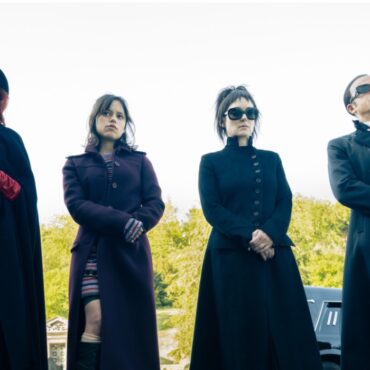
Beetlejuice Beetlejuice, opening film of Venezia 81, reunites the Deetz family: Winona Ryder and Catherine O’Hara
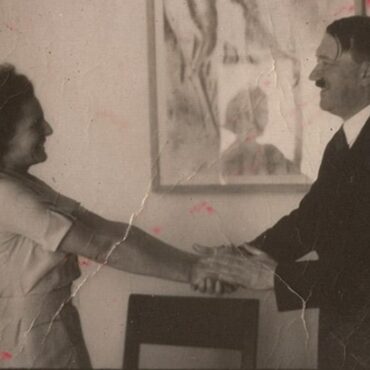
Andres Veiel, director of “Riefenstahl”, discusses the controversial figure of the director who linked her name to the Nazi regime.
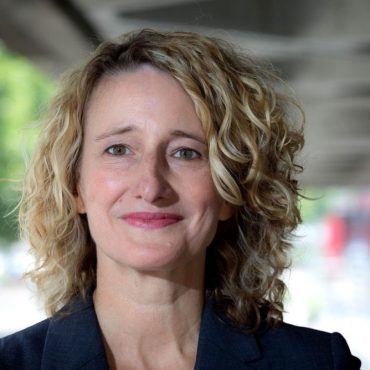
FRED Film Radio joins the many voices across the international film community in expressing its support for Tricia Tuttle and for the Berlinale, one of the world’s most vital spaces for cinematic dialogue and cultural exchange. As a media platform …
With "Isabel", Gabe Klinger finally shoots a film in his city São Paulo and his country Brazil.
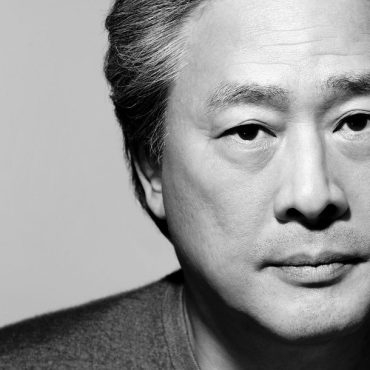
Park Chan-wook will preside over the Jury at the 79th Festival de Cannes, marking a historic first for Korean cinema.
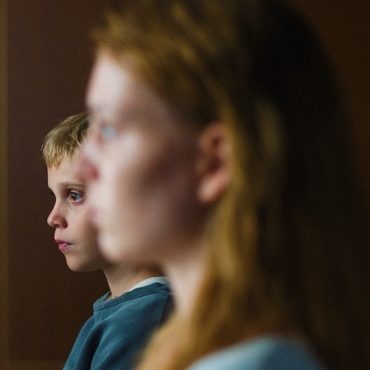
"A Family" by Mees Peijnenburg, presented at the 76th Berlinale, is about two kids caught in the crossfire of their parents' divorce.