

“Iván & Hadoum”, interview with director Ian De La Rosa
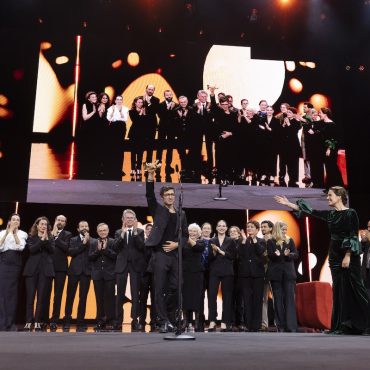
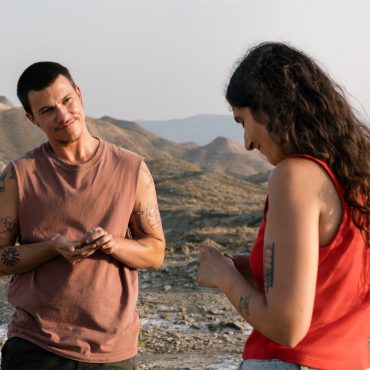
"Iván & Hadoum", Ian De La Rosa’s debut feature, is the winner of the Teddy Award at the 76th Berlinale.
Listeners:
Top listeners:
 play_arrow
ENGLISH Channel 01 If English is your language, or a language you understand, THIS IS YOUR CHANNEL !
 play_arrow
ITALIAN Channel 02 Se l’italiano è la tua lingua, o una lingua che conosci, QUESTO È IL TUO CANALE!
 play_arrow
EXTRA Channel 03 FRED Film Radio channel used to broadcast press conferences, seminars, workshops, master classes, etc.
 play_arrow
GERMAN Channel 04 Wenn Ihre Sprache Deutsch ist, oder Sie diese Sprache verstehen, dann ist das IHR KANAL !
 play_arrow
POLISH Channel 05
 play_arrow
SPANISH Channel 06 Si tu idioma es el español, o es un idioma que conoces, ¡ESTE ES TU CANAL!
 play_arrow
FRENCH Channel 07 Si votre langue maternelle est le français, ou si vous le comprenez, VOICI VOTRE CHAINE !
 play_arrow
PORTUGUESE Channel 08
 play_arrow
ROMANIAN Channel 09 Dacă vorbiţi sau înţelegeţi limba română, ACESTA ESTE CANALUL DUMNEAVOASTRĂ!
 play_arrow
SLOVENIAN Channel 10
 play_arrow
ENTERTAINMENT Channel 11 FRED Film Radio Channel used to broadcast music and live shows from Film Festivals.
 play_arrow
BULGARIAN Channel 16 Ако българският е вашият роден език, или го разбирате, ТОВА Е ВАШИЯТ КАНАЛ !
 play_arrow
CROATIAN Channel 17 Ako je hrvatski tvoj jezik, ili ga jednostavno razumiješ, OVO JE TVOJ KANAL!
 play_arrow
LATVIAN Channel 18
 play_arrow
DANISH Channel 19
 play_arrow
HUNGARIAN Channel 20
 play_arrow
DUTCH Channel 21
 play_arrow
GREEK Channel 22
 play_arrow
CZECH Channel 23
 play_arrow
LITHUANIAN Channel 24
 play_arrow
SLOVAK Channel 25
 play_arrow
ICELANDIC Channel 26 Ef þú talar, eða skilur íslensku, er ÞETTA RÁSIN ÞÍN !
 play_arrow
INDUSTRY Channel 27 FRED Film Radio channel completely dedicated to industry professionals.
 play_arrow
EDUCATION Channel 28 FRED Film Radio channel completely dedicated to film literacy.
 play_arrow
SARDU Channel 29 Si su sardu est sa limba tua, custu est su canale chi ti deghet!
 play_arrow
“Conversation with” at the 20th Marrakech IFF, interview with actor Willem Dafoe Bénédicte Prot
 play_arrow
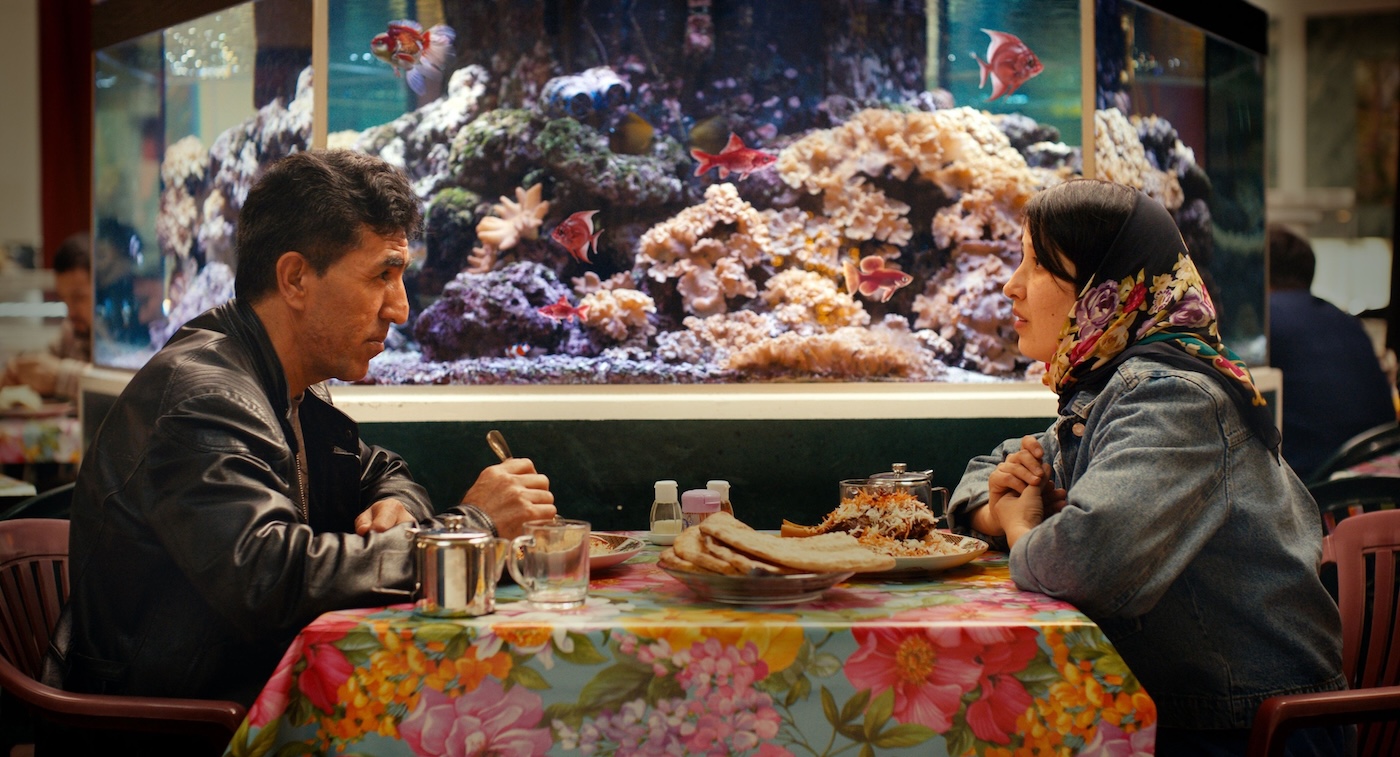
“No Good Men”, interview with director Shahrbanoo Sadat Chiara Nicoletti
“No Good Men”, the third feature film by award-winning Afghan director Shahrbanoo Sadat opened the 76th Berlinale on February 12, 2026 at the Berlinale Palast.
“No Good Men” follows Shahrbanoo Sadat’s acclaimed works “Wolf and Sheep” (2016) and “Parwareshgah” (The Orphanage, 2019). Both films screened at Cannes’ Directors’ Fortnight and “The Orphanage” was supported by the Berlinale World Cinema Fund.
Together with her most recent film, “No Good Men”, they form the first three parts of a planned five-film series inspired by the female actor Anwar Hashimi’s unpublished autobiography as well as the filmmaker’s own life.
The film, to quote the director, is a political romantic comedy about a camerawoman at Kabul’s main TV station and her almost romance with her co-worker and most important TV journalist.
Shahrbanoo Sadat confesses that, until 2019, she had always flirted with the idea of writing something inspired by her everyday life as a young woman living in Kabul but as women and women’s rights were often over used to secure funding, especially from NGOs, she had always pushed away that idea.
Then she had a realization: “women’s stories are my stories, because I am a woman” she said and started to work on her Afghan rom-com, something that had never existed, so that she decided to make one, herself.
“Since the Taliban returned, many have begun romanticizing the previous era, claiming women had all their rights before 2021” comments Sadat in her press notes. “I do not find this truthful. Sexism and patriarchal thinking were deeply rooted in Afghan society long before the Taliban’s return. That is when I realized my film is about the patriarchy” she claims.
“No Good Men”reveals a nuanced portrayal of Afghan society through the lens of a woman navigating patriarchy. The film delicately balances personal experience and societal commentary as with its portrayal of a woman living in downtown Kabul it offers insight into independence, systemic limits, and everyday resilience, making it a compelling reflection on modern Afghan life.
The phrase “No Good Men” in the film’s title encapsulates a complex exploration of gender roles and societal expectations. Sadat emphasizes that her film aims to depict not only the challenges women face but also the surprising existence of good men within a patriarchal system.
Despite that, Sadat faced considerable resistance when seeking support for her film, as some institutions found the story inappropriate. Despite receiving multiple rejections and the perception that her romantic comedy was incompatible with Afghan realities, she persisted. Her experience highlights the importance of artistic freedom and the fight to portray authentic stories of Afghan women and men, emphasizing that filmmaking can serve as a form of subtle protest and societal reflection.
Each scene and character in “No Good Men” underscores the resilience of women living amid restrictions. Sadat’s personal connection to the story—living in the same societal and geographical context—shapes the film’s light tone and organic storytelling.
The film demonstrates that even within a system set with many ceilings, hope and small acts of rebellion, especially through humor and love, can flourish. Ultimately, “No Good Men” emphasizes that understanding both the systemic patriarchy and the presence of good men in Afghan society is essential.
2021, Afghanistan right before the Taliban’s return. Naru, the only camerawoman at Kabul’s main TV station, struggles to keep custody of her three-year-old son after leaving her serial cheater husband. Convinced no good men exist in her country, Naru is caught off guard when Qodrat, Kabul TV’s most important journalist, gives her a career opportunity. As the two crisscross the city reporting on its last days of freedom, sparks fly and Naru starts to doubt herself: could there actually be a good man out there?
"Iván & Hadoum", Ian De La Rosa’s debut feature, is the winner of the Teddy Award at the 76th Berlinale.
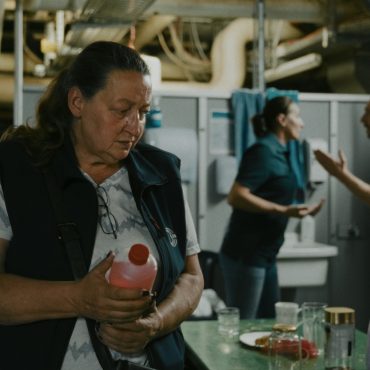
"I Understand Your Displeasure" by Kilian Armando Friedrich sheds light on social inequality, exploitation, and the resilience of marginalized workers in Germany’s cleaning sector.
The Berlin International Film Festival (Berlinale) is a festival showcasing bold, artist-driven films that challenge norms, inspire dialogue, and reflect today’s urgent political and cultural issues.
Discover the secrets of the Co-Production Market at Berlinale—top projects, selection process, and how it fuels international collaborations in film and series, through the words of is Head, Martina Bleis.
Park Chan-wook will preside over the Jury at the 79th Festival de Cannes, marking a historic first for Korean cinema.
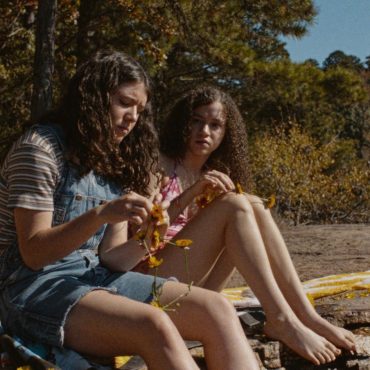
From the directors of "Ghostlight" Kelly O’Sullivan and Alex Thompson, "Mouse" is a delicate coming-of-age premiering at the 76th Berlinale.
At the 76th Berlinale, İlker Çatak’s Yellow Letters wins the Golden Bear in an edition defined by political debate and a strong slate of socially engaged films.
"Iván & Hadoum", Ian De La Rosa’s debut feature, is the winner of the Teddy Award at the 76th Berlinale.