
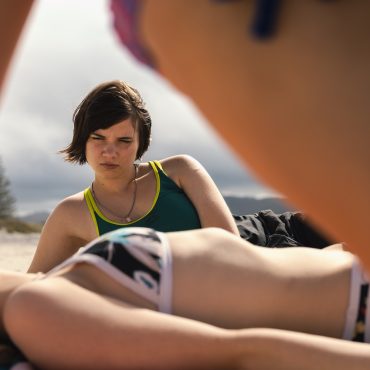
“Big Girls don’t cry”, interview with director Paloma Schneidman
At Alice nella Città 2026 with Big Girls Don't Cry, Paloma Schneidman on adolescence, desire and the blurry space between child and adult
Listeners:
Top listeners:
 play_arrow
ENGLISH Channel 01 If English is your language, or a language you understand, THIS IS YOUR CHANNEL !
 play_arrow
ITALIAN Channel 02 Se l’italiano è la tua lingua, o una lingua che conosci, QUESTO È IL TUO CANALE!
 play_arrow
EXTRA Channel 03 FRED Film Radio channel used to broadcast press conferences, seminars, workshops, master classes, etc.
 play_arrow
GERMAN Channel 04 Wenn Ihre Sprache Deutsch ist, oder Sie diese Sprache verstehen, dann ist das IHR KANAL !
 play_arrow
POLISH Channel 05
 play_arrow
SPANISH Channel 06 Si tu idioma es el español, o es un idioma que conoces, ¡ESTE ES TU CANAL!
 play_arrow
FRENCH Channel 07 Si votre langue maternelle est le français, ou si vous le comprenez, VOICI VOTRE CHAINE !
 play_arrow
PORTUGUESE Channel 08
 play_arrow
ROMANIAN Channel 09 Dacă vorbiţi sau înţelegeţi limba română, ACESTA ESTE CANALUL DUMNEAVOASTRĂ!
 play_arrow
SLOVENIAN Channel 10
 play_arrow
ENTERTAINMENT Channel 11 FRED Film Radio Channel used to broadcast music and live shows from Film Festivals.
 play_arrow
BULGARIAN Channel 16 Ако българският е вашият роден език, или го разбирате, ТОВА Е ВАШИЯТ КАНАЛ !
 play_arrow
CROATIAN Channel 17 Ako je hrvatski tvoj jezik, ili ga jednostavno razumiješ, OVO JE TVOJ KANAL!
 play_arrow
LATVIAN Channel 18
 play_arrow
DANISH Channel 19
 play_arrow
HUNGARIAN Channel 20
 play_arrow
DUTCH Channel 21
 play_arrow
GREEK Channel 22
 play_arrow
CZECH Channel 23
 play_arrow
LITHUANIAN Channel 24
 play_arrow
SLOVAK Channel 25
 play_arrow
ICELANDIC Channel 26 Ef þú talar, eða skilur íslensku, er ÞETTA RÁSIN ÞÍN !
 play_arrow
INDUSTRY Channel 27 FRED Film Radio channel completely dedicated to industry professionals.
 play_arrow
EDUCATION Channel 28 FRED Film Radio channel completely dedicated to film literacy.
 play_arrow
SARDU Channel 29 Si su sardu est sa limba tua, custu est su canale chi ti deghet!
 play_arrow
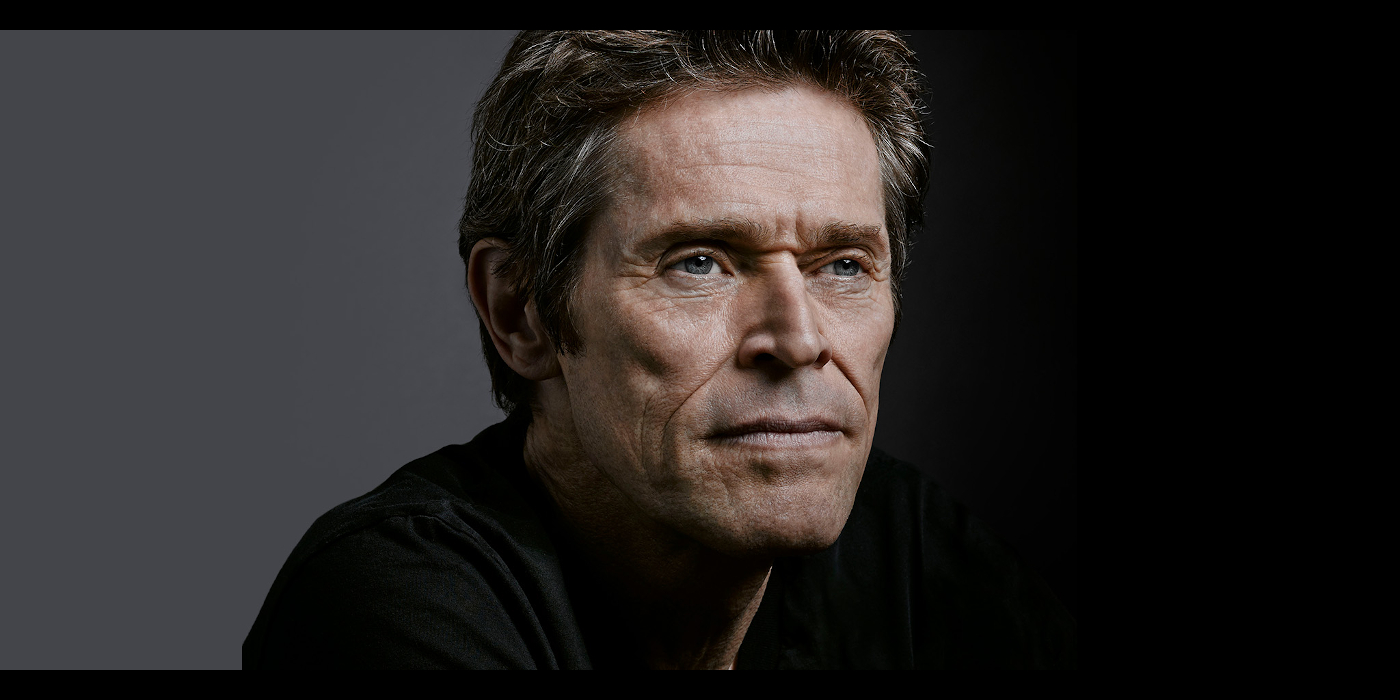
“Conversation with” at the 20th Marrakech IFF, interview with actor Willem Dafoe Bénédicte Prot
PODCAST| Nicolò Comotti interviews Karim Aïnouz, director of the film Central Airport THF.
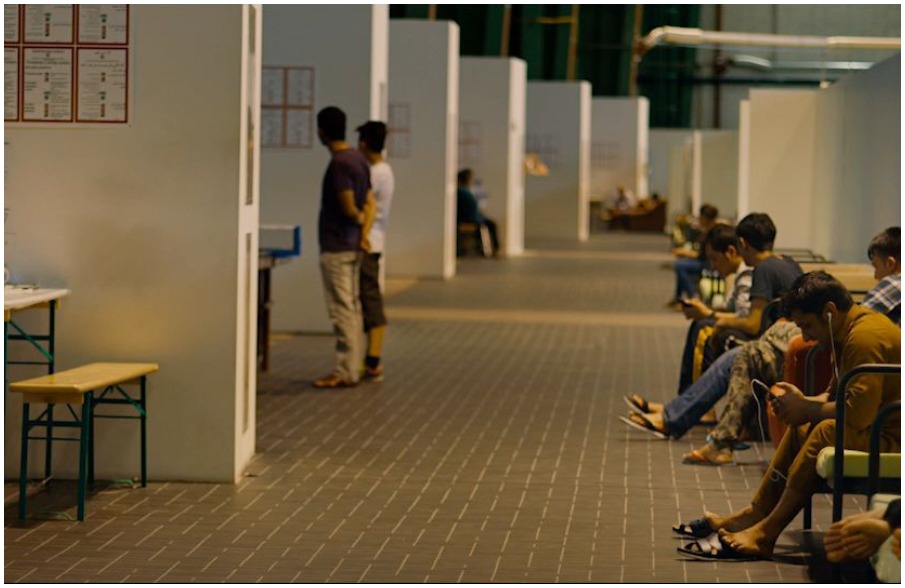
FRED’s Nicolò Comotti talks to the director Karim Aïnouz about his latest endeavour: Central Airport THF. A film born out of the disgust felt by Karim towards the inhumane depiction of the migrants by Europe’s media, Central Airport THF studies the invisible walls and flaws that encompass this very delicate issue through the investigation of a place full of contradictions: Berlin’s Tempelhof.
Central Airport THF: Tempelhof Airport in Berlin is Europe’s largest heritage building. It became a symbol of both National Socialist self-aggrandisement as well as of freedom during the airlift of 1948/49. Since autumn 2015 several hangars have been providing temporary shelter for refugees. Like the other 2,000 people here who have fled their homeland, Ibrahim from Syria and Qutaiba from Iraq dream of being able to make a new start. Full of hope, they work with translators, doctors, language teachers and job agents to prepare for life in their new German home. The lack of private space and communication and administrative barriers are some of the challenges they face while, on the nearby recreation area of Tempelhofer Feld, Berliners and tourists escape their daily routine. Chaos and harmony: two very different worlds in one place. Karim Aïnouz spent a year following these men in search of a place they can call home. The film’s sensitive and well-composed images capture their lives that are shaped by uncertainty, stress and anguish, but also jollity and aspirations. The building’s architecture and the changing seasons add a surreal dimension. A portrait of a city within a city that is also a snapshot of Europe caught between utopia and crisis.
At Alice nella Città 2026 with Big Girls Don't Cry, Paloma Schneidman on adolescence, desire and the blurry space between child and adult
Eva Sangiorgi, director of the Viennale 2026, on a city festival with over 100 features, no competition and a Robert Aldrich retrospective.
Ruth Beckermann on Wax & Gold, her documentary on Ethiopia seen through a hotel in Addis Ababa, at the Rome Film Fest 2026.
A dark fairy tale about growing up, belonging and the fear of being replaced. Bàrbara Farré and Diego Betancor discuss the personal origins of Mala Bèstia, its unsettling vision of adolescence and the decision to make a debut feature without …