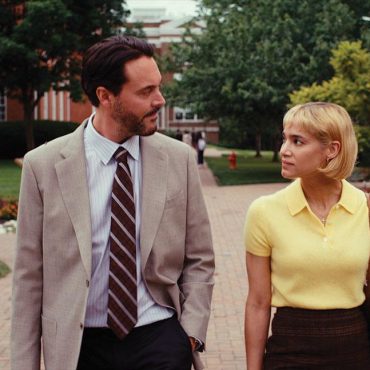


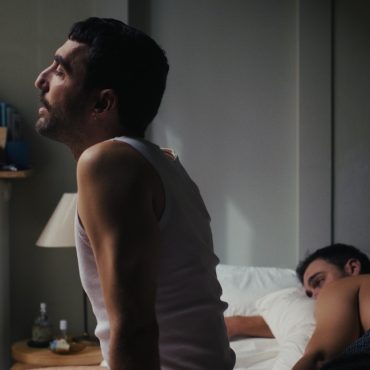
“Another Man”, interview with director David Moragas
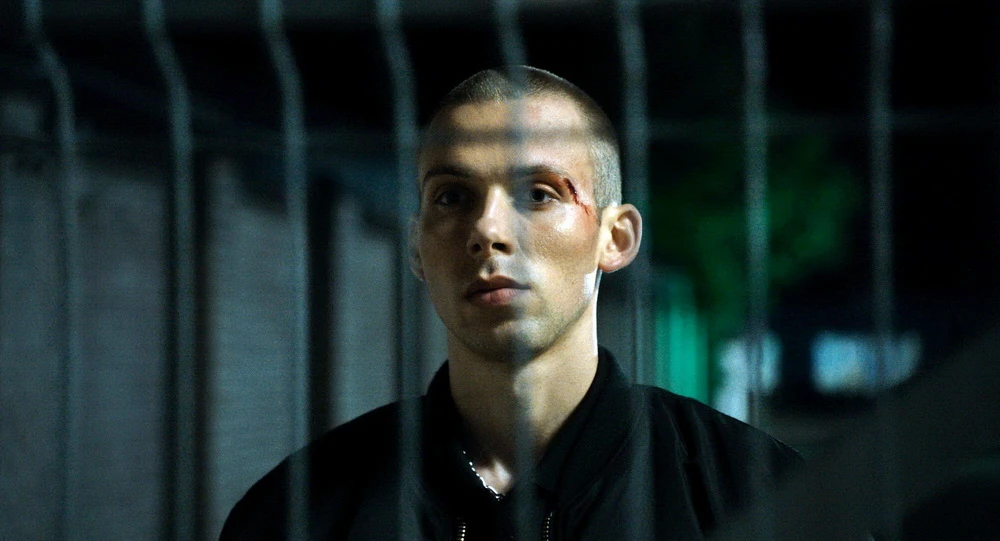
David Moragas discusses "Another Man" at Lovers Film Festival, exploring desire, identity and generational crisis.
Listeners:
Top listeners:
 play_arrow
ENGLISH Channel 01 If English is your language, or a language you understand, THIS IS YOUR CHANNEL !
 play_arrow
ITALIAN Channel 02 Se l’italiano è la tua lingua, o una lingua che conosci, QUESTO È IL TUO CANALE!
 play_arrow
EXTRA Channel 03 FRED Film Radio channel used to broadcast press conferences, seminars, workshops, master classes, etc.
 play_arrow
GERMAN Channel 04 Wenn Ihre Sprache Deutsch ist, oder Sie diese Sprache verstehen, dann ist das IHR KANAL !
 play_arrow
POLISH Channel 05
 play_arrow
SPANISH Channel 06 Si tu idioma es el español, o es un idioma que conoces, ¡ESTE ES TU CANAL!
 play_arrow
FRENCH Channel 07 Si votre langue maternelle est le français, ou si vous le comprenez, VOICI VOTRE CHAINE !
 play_arrow
PORTUGUESE Channel 08
 play_arrow
ROMANIAN Channel 09 Dacă vorbiţi sau înţelegeţi limba română, ACESTA ESTE CANALUL DUMNEAVOASTRĂ!
 play_arrow
SLOVENIAN Channel 10
 play_arrow
ENTERTAINMENT Channel 11 FRED Film Radio Channel used to broadcast music and live shows from Film Festivals.
 play_arrow
BULGARIAN Channel 16 Ако българският е вашият роден език, или го разбирате, ТОВА Е ВАШИЯТ КАНАЛ !
 play_arrow
CROATIAN Channel 17 Ako je hrvatski tvoj jezik, ili ga jednostavno razumiješ, OVO JE TVOJ KANAL!
 play_arrow
LATVIAN Channel 18
 play_arrow
DANISH Channel 19
 play_arrow
HUNGARIAN Channel 20
 play_arrow
DUTCH Channel 21
 play_arrow
GREEK Channel 22
 play_arrow
CZECH Channel 23
 play_arrow
LITHUANIAN Channel 24
 play_arrow
SLOVAK Channel 25
 play_arrow
ICELANDIC Channel 26 Ef þú talar, eða skilur íslensku, er ÞETTA RÁSIN ÞÍN !
 play_arrow
INDUSTRY Channel 27 FRED Film Radio channel completely dedicated to industry professionals.
 play_arrow
EDUCATION Channel 28 FRED Film Radio channel completely dedicated to film literacy.
 play_arrow
SARDU Channel 29 Si su sardu est sa limba tua, custu est su canale chi ti deghet!
 play_arrow
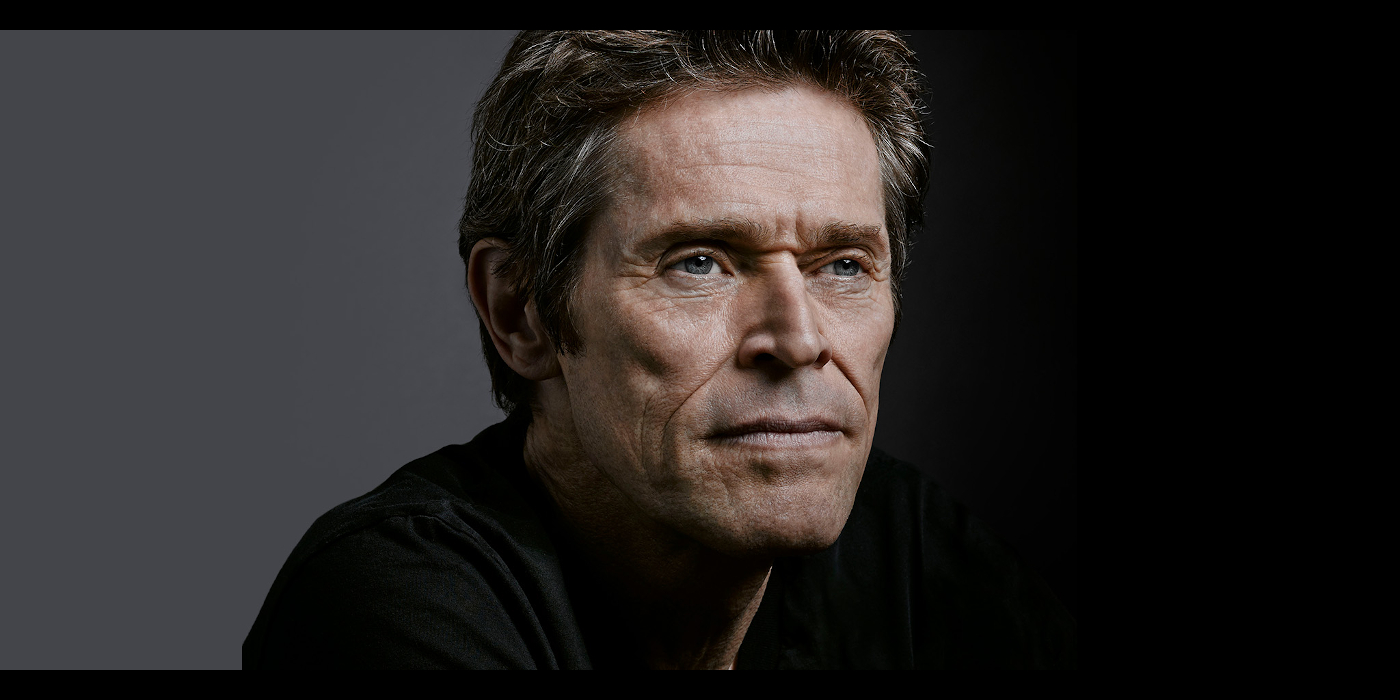
“Conversation with” at the 20th Marrakech IFF, interview with actor Willem Dafoe Bénédicte Prot
 play_arrow
"The Activist", interview with director Romas Zabarauskas Federica Scarpa
Presented at the Lovers Film Festival, “The Activist” marks the fifth feature by Lithuanian filmmaker Romas Zabarauskas. Set in Kaunas, the country’s second-largest city, the film follows Andrius, a young man investigating the murder of his partner Deividas, an LGBTQ+ activist organising the city’s first Pride event.
What begins as a personal quest quickly expands into a broader political inquiry. Andrius infiltrates extremist groups connected to neo-Nazi networks, uncovering a web of hostility and institutional indifference. Romas Zabarauskas situates the narrative within a contemporary European context in which far-right ideologies are gaining visibility and influence.
While the film directly confronts extremist violence, its scope extends further. Zabarauskas deliberately critiques not only the far right but also the shortcomings of liberal institutions. “We have to look at what doesn’t work,” he explains, emphasising the importance of self-reflection within progressive movements.
The director frames the film as ultimately optimistic, reaffirming the value of democratic systems while acknowledging their fragility. Media, political structures, and law enforcement are depicted as necessary yet imperfect mechanisms that require active civic engagement to function effectively. This layered perspective avoids cynicism while maintaining a critical edge.
Andrius serves as an unconventional entry point into the narrative. Initially distant from activism and still grappling with his own identity, he stands in sharp contrast to his partner’s public commitment. This distance allows the character to evolve organically throughout the film.
“He starts in the closet and doesn’t support his boyfriend’s values,” Romas Zabarauskas notes. As the investigation progresses, Andrius confronts societal indifference and personal grief, gradually embracing the ideals he once resisted. This transformation is designed to resonate with audiences beyond activist circles, expanding the film’s emotional accessibility.
Drawing on the tradition of film noir, Romas Zabarauskas reinterprets the genre through a contemporary and queer perspective. He recalls how mid-20th-century crime melodramas, later defined as noir by French critics, reflected societal anxieties of the time, particularly around gender roles.
In “The Activist”, this framework is updated to explore fears surrounding LGBTQ+ visibility. The director introduces characters that occupy morally ambiguous positions, including queer figures who challenge conventional representation. “Queer people can be anything across the spectrum,” he states, rejecting reductive portrayals limited to victimhood or moral virtue.
Romas Zabarauskas positions his work against a tendency in arthouse cinema to adopt overtly educational tones when addressing queer themes. While acknowledging the value of films such as Milk, he advocates for a broader narrative range.
For him, true equality in representation lies in complexity. By allowing queer characters to be both protagonists and antagonists, “The Activist” embraces the diversity of human behaviour. This approach reflects the director’s personal experience, having publicly come out in Lithuania in 2011, when visibility remained limited.
Looking ahead, Romas Zabarauskas signals a shift in focus. While continuing to explore themes of power and relationships, his upcoming work may move beyond explicitly queer narratives. Among his current projects is a miniseries dedicated to Jonas Mekas, the influential Lithuanian filmmaker and co-founder of Anthology Film Archives.
Developed within the framework of a PhD at the Lithuanian Academy of Music and Theatre, the project reflects a long-term commitment to cinematic history and experimentation. It also suggests an expansion of Zabarauskas’s artistic scope, bridging personal, political and historical dimensions.
In Kaunas, Lithuania, activist Deividas is organising the first Pride event in the city’s history, despite intimidation from far-right groups. His partner Andrius has always struggled to accept such commitment (“I’m tired of sleeping with the problems of Lithuanian gay people,” he tells him). One evening, returning home after a heated argument, Andrius finds Deividas dead. After the initial shock, a grim realisation sets in: neither the police nor the institutions that ostensibly support the event show any real interest in identifying those responsible for the brutal murder. With no other option, Andrius begins infiltrating the various organisations—often with neo-Nazi ties—that had opposed the Pride parade. With The Activist, director Romas Zabarauskas returns to the Lovers FF with a stark, brooding political thriller that probes what lies behind the growing spread of far-right intolerance—though not only—in Eastern Europe.
David Moragas discusses "Another Man" at Lovers Film Festival, exploring desire, identity and generational crisis.
"Questa che vedo adesso non è l'America che sognavo. Sono sbalordito da come sia potuto succedere".
"I really believe in the act of self-determination"
The Lovers Film Festival celebrates 40 years with 70 films from 26 countries, international guests and tributes to LGBTQI+ cinema icons. Directed by Vladimir Luxuria, from 10 to 17 April at the Cinema Massimo in Turin.
In the Open section at Venice 83, Luke Lorentzen on falling back in love with filmmaking in Boatbuilders
Javier Bardem will be one of the major guests of the Rome Film Fest 2026, receiving the Lifetime Achievement Award and presenting Rodrigo Sorogoyen’s El ser querido.
Liryc Dela Cruz, director of A Brief Encounter, at the International Critics Week, Venice Film Festival 2026.
Paul Schrader on The Basics of Philosophy, guilt and forgiveness, at the Venice Film Festival 2026.