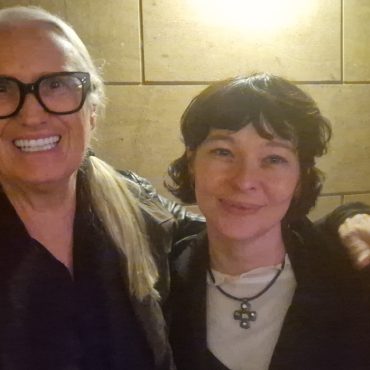
Director Charline Bourgeois-Tacquet and protagonist Léa Drucker Drucker discuss La Vie d’une Femme, presented at the 18th France Odeon Festival in Florence. Their conversation explores a woman balancing a demanding career and personal choices, as well as the unexpected connection that unsettles her sense of independence. It also reveals how observation and close preparation shaped the film’s portrayal of a surgeon.
Independence and fascination in La Vie d’une Femme
Gabrielle, the protagonist of the La Vie d’une Femme, has built a life according to her own decisions, including choosing not to become a mother, yet meeting Frida makes her reconsider what freedom can look like. Charline Bourgeois-Tacquet describes Frida as someone drawn to solitude and unburdened by the responsibilities that define Gabrielle’s world. That contrast makes Frida both a source of fascination and a possible alternative, rather than simply a romantic interest. The relationship gives the story a way to examine how a person’s settled view of herself can shift when confronted with a different kind of independence.
The observer’s place in La Vie d’une Femme
La Vie d’une Femme also considers the value of work through the contrast between Gabrielle’s medical profession and Frida’s writing. Charline Bourgeois-Tacquet said the feeling of being less useful had informed her thinking while researching the script: a surgeon’s absence could have immediate consequences for patients, while a writer might feel that no one is waiting for her work. Frida’s role as an observer gradually becomes more active, as her attention to Gabrielle helps draw the surgeon into a new perspective. Literature, in this sense, offers a reflective space in which people can recognise aspects of themselves.
Building a believable surgeon on screen
Léa Drucker prepared for the role by spending time with a real surgeon, observing her work with patients and in the operating theatre. She focused on practical details, including the woman’s pace, energy and humour, and described the process as a gradual accumulation of choices that made the character credible. The production also brought actors together with real doctors, creating an exchange between professional experience and performance. La Vie d’une Femme planned ending in Japan had to change because the production could not afford to shoot there; Turin became the alternative location. The film was also shot in the Italian Alps and hosts a cammeo of Italian writer, Erri De Luca.
Plot
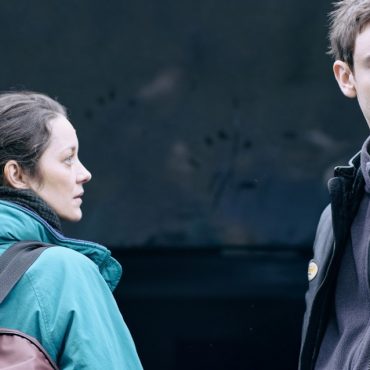
Gabrielle’s life revolves entirely around her responsibilities. As a brilliant surgeon, head of a hospital department under financial pressure, Henri’s partner, stepmother to his children and carer for her mother, who has dementia, she is constantly on the move. She seems to juggle everything effortlessly, exactly as everyone expects of her.
Then the writer and journalist Frida enters her world. Frida comes to observe Gabrielle for a new novel, but her interest is not limited to the professional sphere. An unexpected attraction develops between the two, throwing Gabrielle off her carefully constructed balance. She is forced to reflect on her life: what does she actually want for herself, and how much room is there left for desire, change and a different version of herself?