


“The Bad Boy and Me”, interview with the director Justin Wu and the actors Noah Beck and Siena Agudong
The Bad Boy and Me, at the 23rd Alice Nella Città marks social-media phenomenon and influential Content creator Noah Beck’s debut as actor.
Listeners:
Top listeners:
 play_arrow
ENGLISH Channel 01 If English is your language, or a language you understand, THIS IS YOUR CHANNEL !
 play_arrow
ITALIAN Channel 02 Se l’italiano è la tua lingua, o una lingua che conosci, QUESTO È IL TUO CANALE!
 play_arrow
EXTRA Channel 03 FRED Film Radio channel used to broadcast press conferences, seminars, workshops, master classes, etc.
 play_arrow
GERMAN Channel 04 Wenn Ihre Sprache Deutsch ist, oder Sie diese Sprache verstehen, dann ist das IHR KANAL !
 play_arrow
POLISH Channel 05
 play_arrow
SPANISH Channel 06 Si tu idioma es el español, o es un idioma que conoces, ¡ESTE ES TU CANAL!
 play_arrow
FRENCH Channel 07 Si votre langue maternelle est le français, ou si vous le comprenez, VOICI VOTRE CHAINE !
 play_arrow
PORTUGUESE Channel 08
 play_arrow
ROMANIAN Channel 09 Dacă vorbiţi sau înţelegeţi limba română, ACESTA ESTE CANALUL DUMNEAVOASTRĂ!
 play_arrow
SLOVENIAN Channel 10
 play_arrow
ENTERTAINMENT Channel 11 FRED Film Radio Channel used to broadcast music and live shows from Film Festivals.
 play_arrow
BULGARIAN Channel 16 Ако българският е вашият роден език, или го разбирате, ТОВА Е ВАШИЯТ КАНАЛ !
 play_arrow
CROATIAN Channel 17 Ako je hrvatski tvoj jezik, ili ga jednostavno razumiješ, OVO JE TVOJ KANAL!
 play_arrow
LATVIAN Channel 18
 play_arrow
DANISH Channel 19
 play_arrow
HUNGARIAN Channel 20
 play_arrow
DUTCH Channel 21
 play_arrow
GREEK Channel 22
 play_arrow
CZECH Channel 23
 play_arrow
LITHUANIAN Channel 24
 play_arrow
SLOVAK Channel 25
 play_arrow
ICELANDIC Channel 26 Ef þú talar, eða skilur íslensku, er ÞETTA RÁSIN ÞÍN !
 play_arrow
INDUSTRY Channel 27 FRED Film Radio channel completely dedicated to industry professionals.
 play_arrow
EDUCATION Channel 28 FRED Film Radio channel completely dedicated to film literacy.
 play_arrow
SARDU Channel 29 Si su sardu est sa limba tua, custu est su canale chi ti deghet!
 play_arrow
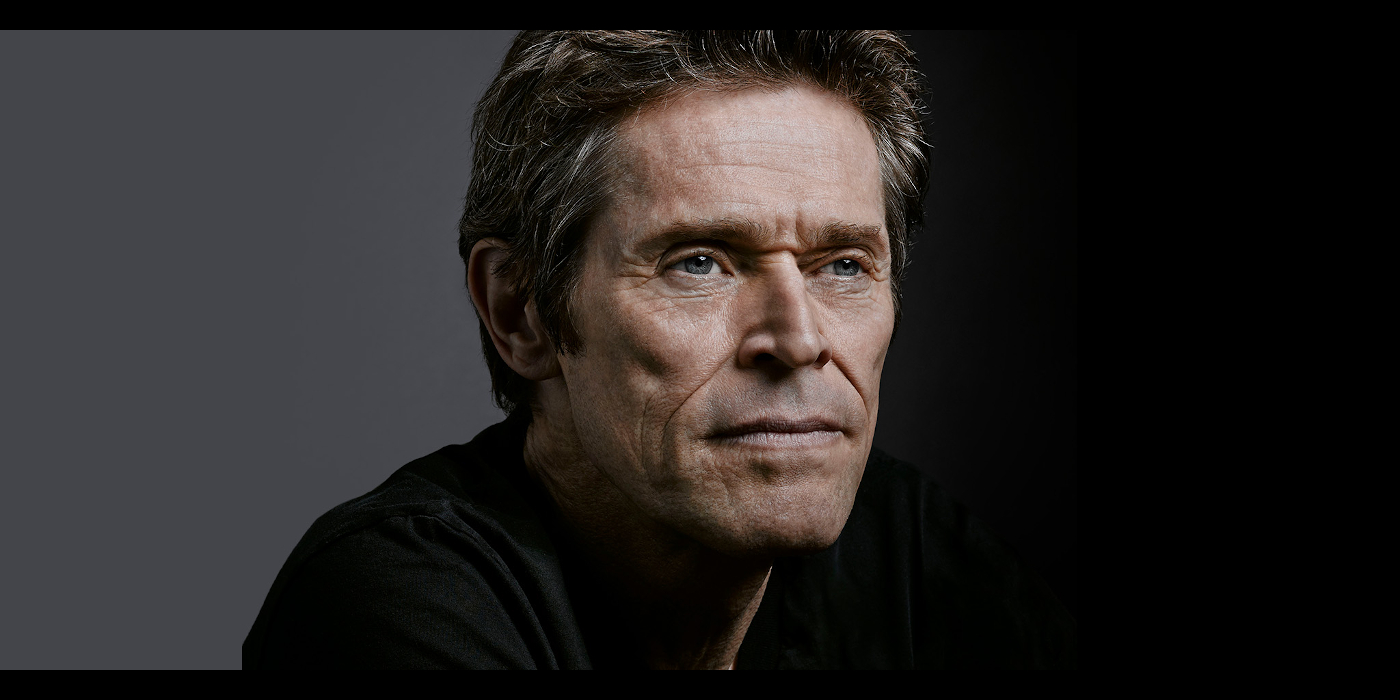
“Conversation with” at the 20th Marrakech IFF, interview with actor Willem Dafoe Bénédicte Prot
 play_arrow
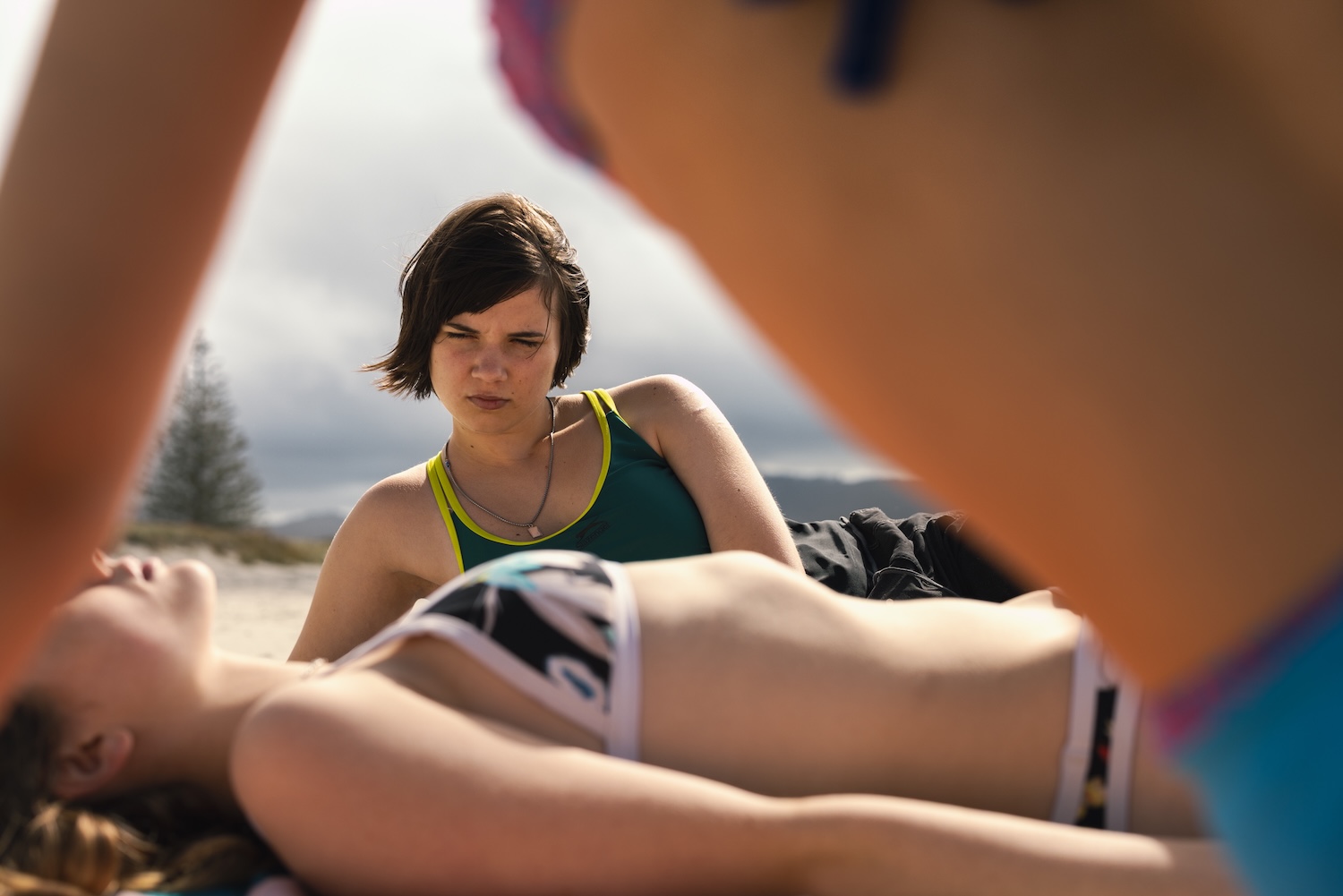
"Big Girls Don't Cry", interview with director Paloma Schneidman Chiara Nicoletti
Presented at the Alice nella Città 2026, Big Girls Don’t Cry is the feature debut of New Zealand director Paloma Schneidman. It’s the summer holidays in rural New Zealand, and fourteen-year-old Sid has nothing to fill them. Her father has checked out, and her only window onto a bigger life is a borrowed MSN account. Online and off, she watches the older teens who seem to move through the world so easily, and tries on their attitudes like stolen clothes. What she feels for them is part envy, part something she doesn’t yet have the words for. Schneidman talks about making peace with her own adolescence, the choice to tell the story entirely from Sid’s perspective, the ambiguity between wanting someone and wanting to be them, and how she found her lead, Ani Palmer.
Asked what sparked her first feature, Schneidman says the story found her rather than the other way around: “I feel like it chose me and, like many ideas, they come to you, and this one arrived quite fully formed. I was probably reckoning with my own adolescence and thinking about that time.” It is a period of life, she explains, that tends to resurface only later: “I feel like you don’t think about it for ages and then, you know, when you get into your 20s or whatever, you start to open yourself up to making peace with that time and thinking about it.”
The more she talked about the idea, the more Schneidman realized how many people recognized themselves in it: “I think it’s a bit of a phenomenon that we all feel a lot of loneliness or shame around it, or at least a lot of my friends did. But the more I started talking about this idea with friends, it was very validating because they would be like, ‘Oh, I had a very similar experience’. And kind of like anything, when you start to talk about it and find language for it, it can do this quite amazing collective healing.” What she first imagined as a very local story has turned out to travel far beyond New Zealand: “At first I thought I hope it would give New Zealanders a space for reflection, and I thought it was very specific for us. But sharing it around the world has affirmed that actually everyone’s kind of lived a version of this. And I mean that’s the beautiful thing: the connection and the shared experience.”
Rather than spelling out Sid’s desires and insecurities, the film lets the camera follow her, a choice Schneidman made from the very beginning: “I always knew the film would be completely from Sid’s perspective, so it meant she’s in every single scene. And we never show the audience anything that she doesn’t know, so you’re really walking through it with her.” The gaps are left for viewers to fill in: “My hope was not to tell people how to feel, but ask people to bring their lived experience and meet somewhere in between those two things.” Given how confusing that age is, the director found the approach freeing: “I felt like I couldn’t decide things for the protagonist if she didn’t know herself. So it made it easy to not have to spell things out. It was actually quite liberating to just be like: now you decide.”
As a review in Variety noted, there are girls Sid both wants and wants to be, like Freya. For Schneidman, that ambiguity is central to the film’s identity: “That felt important to the film being a queer film, and I’m sure it’s a pretty universal thing, but particularly as a queer person, there’s such a blurry ambiguity to that wanting to be like someone and wanting to be with that person.” Sid’s longing, she adds, goes even further: “She actually wants a maternal figure as much as a friend, as much as a love interest. So I loved a character that could come and embody all those things, cuz actually what Sid really needs is just warmth and affection.”
Schneidman recalls something that was once said to her about being fourteen, and that shaped her vision of the film: “From 14 to your late teens, you kind of stop getting the same affection that you get from your parents, or there’s this space between adult and child where the next time you’re going to be touched or held, it’s probably in a sexual capacity or a romantic capacity. And there’s not a lot of language or representation of that space in between those two things.” It is precisely in that space that she wanted to set her story: “I wanted to place the film in all those intersections of girl, child, adult, wanting to be seen, wanting to be desired and the difference between those, consent and non-consent. I just think it’s interesting for a coming-of-age story to just turn up the confusion.”
Schneidman found her protagonist almost by chance, among some fifty audition tapes: “Her tape was the first one I watched, not because someone told me to, but because we got like 50 audition tapes and I picked the one that I thought it wasn’t going to be, because I wanted to start and get closer and closer. And she’s the first tape I clicked on.” What struck her immediately was a quality the role required: “As soon as I watched her, I just knew that she had an innate vulnerability that made me want to keep her safe. I knew whoever played her had to do these kind of complicated, difficult, kind of shitty things, and we would still want to protect her or root for her to be okay.” Despite it being her first film, Palmer proved to be the ideal choice: “She was just an amazing improviser, amazingly consistent, hit all her marks, listened so beautifully. She was just perfect for the role.”
It’s the summer holidays in rural New Zealand, and fourteen-year-old Sid has nothing to fill them. Her father has checked out, and her only window onto a bigger life is a borrowed MSN account. Online and off, she watches the older teens who seem to move through the world so easily, and tries on their attitudes like stolen clothes. What she feels for them is part envy, part something she doesn’t yet have the words for.
The Bad Boy and Me, at the 23rd Alice Nella Città marks social-media phenomenon and influential Content creator Noah Beck’s debut as actor.
In “Romería”, Carla Simón transforms absence into presence, weaving together imagination and memory to reclaim a lost past.
"Good Boy", interview with director Ben Leonberg and producer Kari Fischer at the 23rd edition of Alice nella Città
“The Other Side of Summer”, a conversation with actresses Lucie Fingerhutová and Nikola Kylarová and producer Ondřej Lukeš: "We wanted to tell a story about friendship, sisterhood and finding a good place or a better place".
Sofia Tocar of Square Eyes on short film distribution, festival strategy and independent cinema, at Festival dei Popoli 2026.
Mark Cousins presents The Story of Documentary Film (Part One) at the 67th Festival dei Popoli 2026 in Florence.
Ben Watkins, Jaalen Best and Giovanni Ribisi on The Greatest, the Prime Video series that tells Muhammad Ali's story as a coming of age, before the icon and the legend.
France Odeon - Festival del Cinema Francese
La Vie d'une Femme explores the tension between duty and freedom as a surgeon’s carefully ordered life is transformed by an unexpected connection.