

“Wax & Gold”, interview with director Ruth Beckermann
Ruth Beckermann on Wax & Gold, her documentary on Ethiopia seen through a hotel in Addis Ababa, at the Rome Film Fest 2026.
Listeners:
Top listeners:
 play_arrow
ENGLISH Channel 01 If English is your language, or a language you understand, THIS IS YOUR CHANNEL !
 play_arrow
ITALIAN Channel 02 Se l’italiano è la tua lingua, o una lingua che conosci, QUESTO È IL TUO CANALE!
 play_arrow
EXTRA Channel 03 FRED Film Radio channel used to broadcast press conferences, seminars, workshops, master classes, etc.
 play_arrow
GERMAN Channel 04 Wenn Ihre Sprache Deutsch ist, oder Sie diese Sprache verstehen, dann ist das IHR KANAL !
 play_arrow
POLISH Channel 05
 play_arrow
SPANISH Channel 06 Si tu idioma es el español, o es un idioma que conoces, ¡ESTE ES TU CANAL!
 play_arrow
FRENCH Channel 07 Si votre langue maternelle est le français, ou si vous le comprenez, VOICI VOTRE CHAINE !
 play_arrow
PORTUGUESE Channel 08
 play_arrow
ROMANIAN Channel 09 Dacă vorbiţi sau înţelegeţi limba română, ACESTA ESTE CANALUL DUMNEAVOASTRĂ!
 play_arrow
SLOVENIAN Channel 10
 play_arrow
ENTERTAINMENT Channel 11 FRED Film Radio Channel used to broadcast music and live shows from Film Festivals.
 play_arrow
BULGARIAN Channel 16 Ако българският е вашият роден език, или го разбирате, ТОВА Е ВАШИЯТ КАНАЛ !
 play_arrow
CROATIAN Channel 17 Ako je hrvatski tvoj jezik, ili ga jednostavno razumiješ, OVO JE TVOJ KANAL!
 play_arrow
LATVIAN Channel 18
 play_arrow
DANISH Channel 19
 play_arrow
HUNGARIAN Channel 20
 play_arrow
DUTCH Channel 21
 play_arrow
GREEK Channel 22
 play_arrow
CZECH Channel 23
 play_arrow
LITHUANIAN Channel 24
 play_arrow
SLOVAK Channel 25
 play_arrow
ICELANDIC Channel 26 Ef þú talar, eða skilur íslensku, er ÞETTA RÁSIN ÞÍN !
 play_arrow
INDUSTRY Channel 27 FRED Film Radio channel completely dedicated to industry professionals.
 play_arrow
EDUCATION Channel 28 FRED Film Radio channel completely dedicated to film literacy.
 play_arrow
SARDU Channel 29 Si su sardu est sa limba tua, custu est su canale chi ti deghet!
 play_arrow
“Conversation with” at the 20th Marrakech IFF, interview with actor Willem Dafoe Bénédicte Prot
 play_arrow
"La bola negra", interview with directors Javier Ambrossi and Javier Calvo Chiara Nicoletti
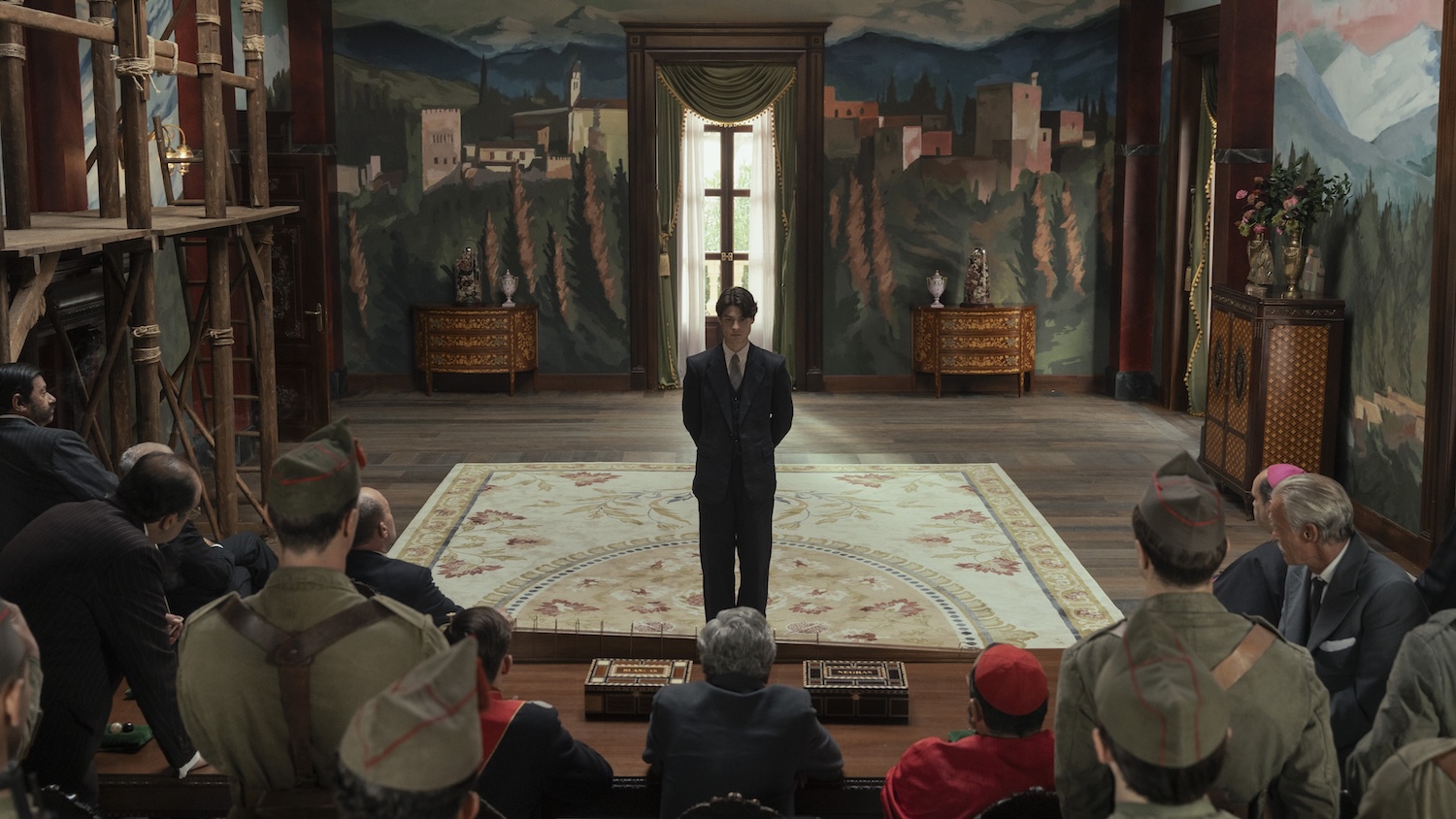
After Cannes 2026, La bola negra by Javier Calvo and Javier Ambrossi arrives at the 21st Rome Film Fest as Spain’s candidate in the Oscar race. The film tells the interconnected stories of three men in three different eras, three lives intimately linked by sexuality and desire, pain and inheritance, and by one of Federico García Lorca’s last, unfinished works. The directors talk about the decision not to deny oneself that lies at the heart of the film, their tribute to what Lorca wanted to write, the stories of the LGBTQ+ elders that inspired one of the timelines, and a film that starts as a queer movie and ends up speaking to everyone. The film will be released in Italian cinemas by Movies Inspired from January 14th, 2027
The film, they say at one point that La Bola Negra, the unfinished work by Federico García Lorca, is a work about a decision. Is the film also about that? Javier Ambrossi nods and say: “We investigated and understood that La bola negra, the unfinished work by Federico García Lorca, was also going to be about a decision. He wanted to write a play about being explicit about yourself, and that’s why the movie is all about that, to pay tribute to what Federico wanted to write, in our opinion and from what we researched.” The whole film, he explains, can be found in a single moment: “When the character of Carlos goes to the casino and he’s asked ‘Are you gay?’, that silence before the answer, to me, is the movie. Sometimes yes or no is very important. I don’t know if everyone understands how important that could be, it could be life changing, and that’s what we wanted to portray.”
For Javier Calvo, the choice between denying oneself or not runs through every era of the story: “The decision of denying yourself or not is key in all the timelines. Denying yourself or, like in Call Me by Your Name, is it better to speak or to die? And when he says no, what happens is a big revolution inside.” The three storylines, he explains, were born from the need to look back: “We wanted to have three storylines in order to talk about how much the past informs the present, and because in the LGBTQ+ community the rights that we have now are based on a lot of suffering, silence, deaths, fight. I don’t think we pay tribute enough to the people that came before us. I think we kind of forgot them.”
As Javier Calvo explains, one of the timelines grew out of the directors’ work with the Fundación 26 de Diciembre, which takes care of elderly LGBTQ+ people who no longer have a home, who have been widowed or who live on the street: “Hearing their stories is what motivated us to create this timeline. There are many, many people in the LGBTQ+ community that have incredible stories. Stories about love, about passion, but also about impossible love: a lover that dies, and you are forever alone because your family turned against you.” Those encounters changed his perspective: “Every single person that we met there made me understand that I don’t look back enough at my elders. My parents, yes, but the elders of my community? Not at all. And it was important for us to see each one of them and understand that their personal story matters.”
For Javier Ambrossi, alongside the value of each individual story, the film wants to show what binds all of them together: “We wanted to do both things, to say everyone’s story matters, but at the same time that we are all connected. That’s the three storylines at the end. You should feel: oh my God, we are connected through time and space. We share the same fear, the same will to live, the same will to be loved. In the end, all human beings are very similar.” That is why, he says, La bola negra “starts like a queer movie, but in the middle you forget about that”: “Hopefully you’ll be like: okay, maybe I don’t understand them, maybe I’m not like them, but this is me, I felt the same need to love.”
‘La bola negra’ tells the interconnected stories of three men in three different eras. Three lives intimately linked by sexuality and desire, pain and inheritance, and one of Federico García Lorca´s last, unfinished works.
Ruth Beckermann on Wax & Gold, her documentary on Ethiopia seen through a hotel in Addis Ababa, at the Rome Film Fest 2026.
Chloé Zhao discusses “Hamnet”, a powerful tale of love, grief, and artistic transformation, at the 20th Rome Film Fest.
At the Rome Film Fest, “I’m Curious Johnny”, director Julien Temple and Johnny Pigozzi talk about fame, friendship, and 50 years of photos turned into one playful, revealing film.
Exploring Revenge and Redemption: Bille August and Sam Claflin Discuss The Count of Monte Cristo
France Odeon - Festival del Cinema Francese
La Vie d'une Femme explores the tension between duty and freedom as a surgeon’s carefully ordered life is transformed by an unexpected connection.
Big girls don't cry captures the wild, unfiltered world of teenage life in 2006—and the filmmaker’s journey from Jane Campion’s mentorship to the big screen.
Clio Barnard's I See Buildings Fall Like Lightning leads the Rome Film Fest 2026 winners, with major awards also going to Congo Boy, Mustang and The Life and Deaths of Wilson Shedd. The complete list of winners and the festival's …
At the Rome Film Fest 2026 with Me, You, protagonist Sonia Ammar on Caia, the young woman at the heart of Bille August’s film and on the invisible scars of war