


Interview with Maxime Lachaud, director of 14th FIFIGROT Film Festival
Fred.Fm showcases the innovative FIFIGROT Film Festival, blending provocative screenings, immersive performances, and urban culture to create a dynamic cinematic experience.
Listeners:
Top listeners:
 play_arrow
ENGLISH Channel 01 If English is your language, or a language you understand, THIS IS YOUR CHANNEL !
 play_arrow
ITALIAN Channel 02 Se l’italiano è la tua lingua, o una lingua che conosci, QUESTO È IL TUO CANALE!
 play_arrow
EXTRA Channel 03 FRED Film Radio channel used to broadcast press conferences, seminars, workshops, master classes, etc.
 play_arrow
GERMAN Channel 04 Wenn Ihre Sprache Deutsch ist, oder Sie diese Sprache verstehen, dann ist das IHR KANAL !
 play_arrow
POLISH Channel 05
 play_arrow
SPANISH Channel 06 Si tu idioma es el español, o es un idioma que conoces, ¡ESTE ES TU CANAL!
 play_arrow
FRENCH Channel 07 Si votre langue maternelle est le français, ou si vous le comprenez, VOICI VOTRE CHAINE !
 play_arrow
PORTUGUESE Channel 08
 play_arrow
ROMANIAN Channel 09 Dacă vorbiţi sau înţelegeţi limba română, ACESTA ESTE CANALUL DUMNEAVOASTRĂ!
 play_arrow
SLOVENIAN Channel 10
 play_arrow
ENTERTAINMENT Channel 11 FRED Film Radio Channel used to broadcast music and live shows from Film Festivals.
 play_arrow
BULGARIAN Channel 16 Ако българският е вашият роден език, или го разбирате, ТОВА Е ВАШИЯТ КАНАЛ !
 play_arrow
CROATIAN Channel 17 Ako je hrvatski tvoj jezik, ili ga jednostavno razumiješ, OVO JE TVOJ KANAL!
 play_arrow
LATVIAN Channel 18
 play_arrow
DANISH Channel 19
 play_arrow
HUNGARIAN Channel 20
 play_arrow
DUTCH Channel 21
 play_arrow
GREEK Channel 22
 play_arrow
CZECH Channel 23
 play_arrow
LITHUANIAN Channel 24
 play_arrow
SLOVAK Channel 25
 play_arrow
ICELANDIC Channel 26 Ef þú talar, eða skilur íslensku, er ÞETTA RÁSIN ÞÍN !
 play_arrow
INDUSTRY Channel 27 FRED Film Radio channel completely dedicated to industry professionals.
 play_arrow
EDUCATION Channel 28 FRED Film Radio channel completely dedicated to film literacy.
 play_arrow
SARDU Channel 29 Si su sardu est sa limba tua, custu est su canale chi ti deghet!
 play_arrow
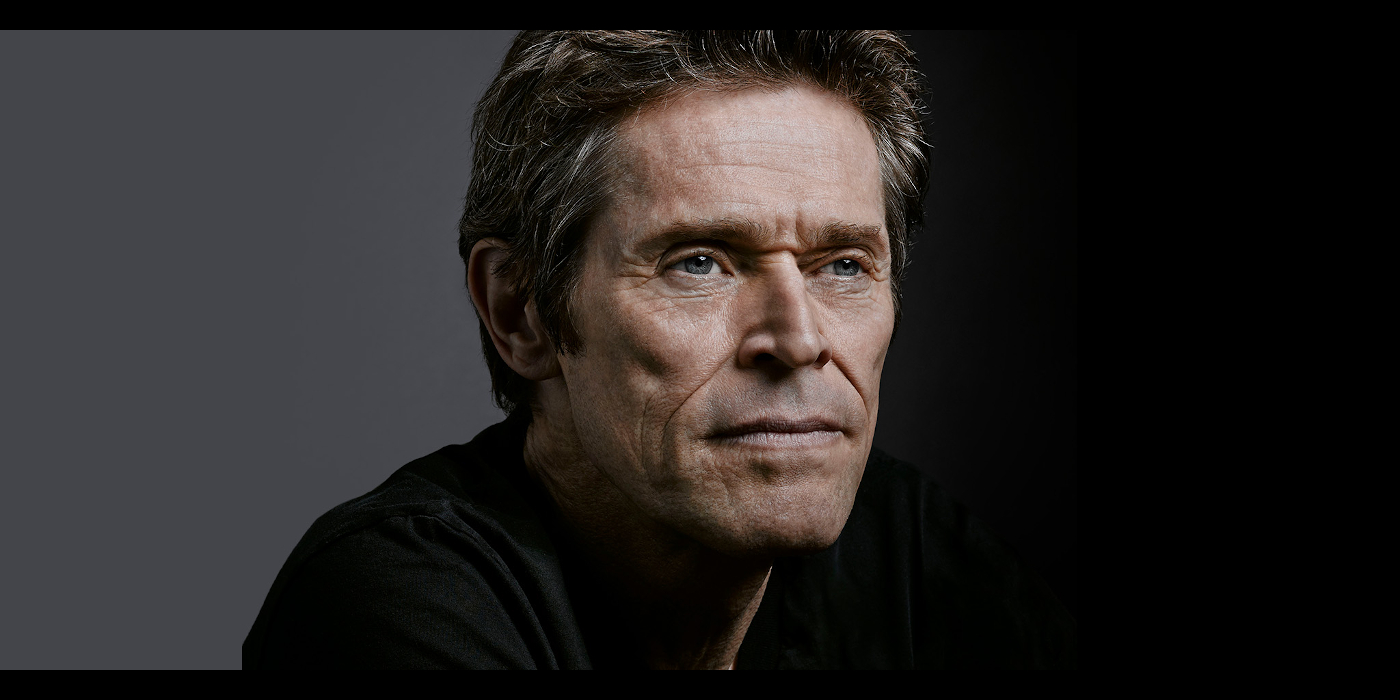
“Conversation with” at the 20th Marrakech IFF, interview with actor Willem Dafoe Bénédicte Prot
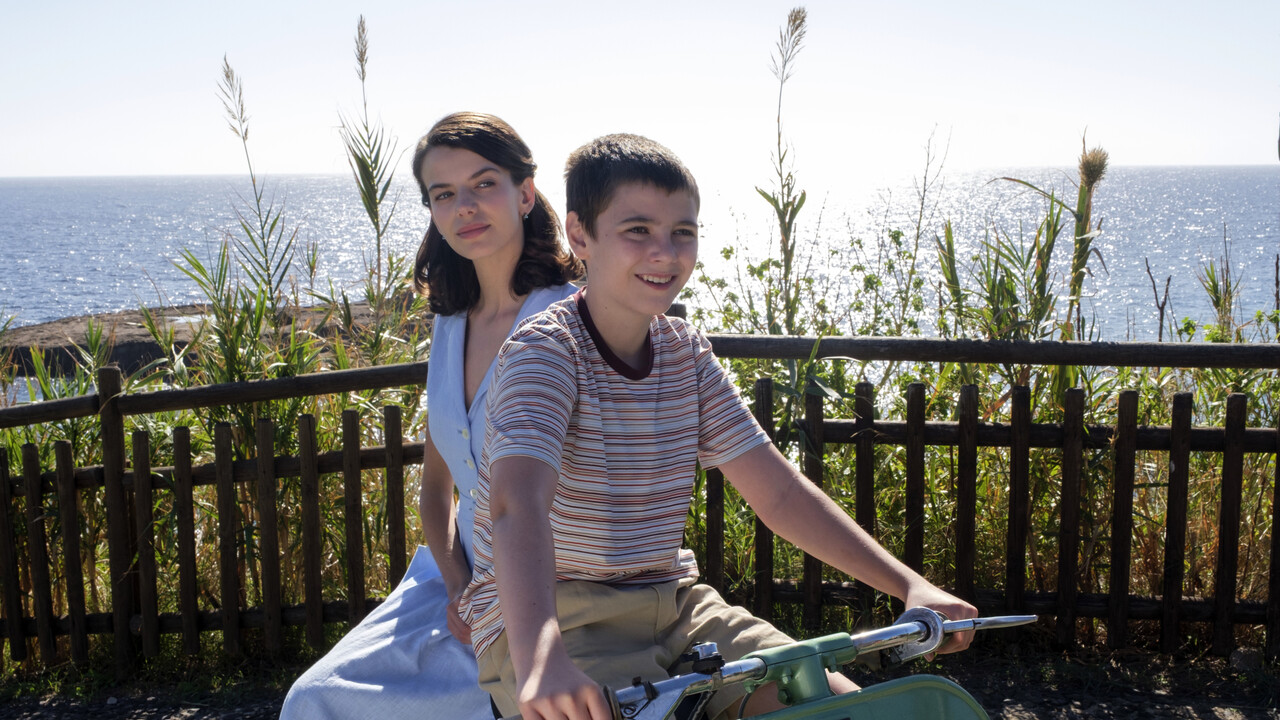
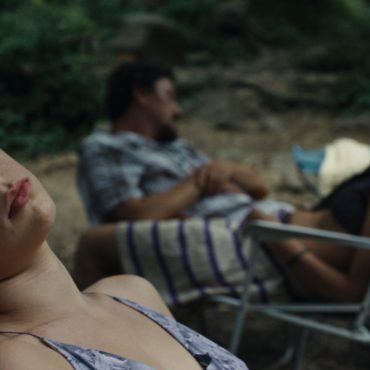
Presented in the Grand Public section of the 21st Rome International Film Festival and coming to Italian cinemas with Eagle Pictures, Me, You by Bille August is set in 1950 on a small Italian island in the Mediterranean Sea. It tells the story of Marco, a fourteen-year-old Londoner on holiday with his family, and of his encounter with Caia, a young Jewish woman orphaned during the Second World War. Over the course of the summer, their bond turns into a journey of discovery and growth, touching on the trauma of war, memory and the passage from childhood to adolescence. Sonia Ammar, who plays Caia, talks about a shoot where the whole island became the set, the emotional backstory she built for a character of few words, the flashbacks she has yet to see, and the lesson of empathy the film carries into the present.
Asked how this more intimate production compared with her previous experiences, Ammar describes it as one of the most special of her career, largely because of where it was filmed: “It didn’t feel like a normal set. The whole island was a set. We were waking up and walking to work, and that never happens. There were no cars. We were really living on the set, on the island, and so the relationships that you build with the people around you become much stronger, and it makes the experience much more real.” The scale of a production, she adds, is not what matters to her: “I don’t really think about the size of sets. When I’m in a character, in a role, I’m very present in the moment and the noise all around doesn’t really affect me so much. It’s all about your scene partner, the actor, the director, and that relationship you have with them.”
Caia, Ammar explains, is a character who says little, which meant doing much of the work beyond the page: “Caia is not a young woman of many words. While she was written very beautifully, there were some gaps that I had to fill. So, for me, creating a visual backstory was the most important thing for Caia, and an emotional backstory.” Her preparation was built on recreating memories for the character: “To visualize and try as hard as possible to understand the tragedy and the weight of this past that she holds, that as much as she would like to move past it, is such a big part of her identity.”
As Caia shares her past with Marco, the audience sees it unfold on screen through flashbacks of her as a child. Ammar has not watched those scenes yet: “That was shot after. They shot it months after. So I have not seen it, but I saw a still, a photo of young Caia, and I have to say that it was moving. So I really look forward to seeing that, because to imagine it and to see it are two different things.” She fully supports the director’s decision: “I thought that was the right choice of Bille, to film those flashback scenes.”
Among the film’s key moments are the scene in which Marco and Caia open up and share secrets they have never told anyone, and the one in which Marco learns how her name is truly pronounced, a moment of recognition for her and for her pain. For Ammar, being acknowledged is the first step: “Human beings, we need to feel seen and understood. To me that is the deepest, the most primitive thing. What it means to be human is to be understood, to connect. And here, through the exchange of each other’s secrets, both Caia and Marco will release something that they didn’t realize they had, and that to me was the core of the film.” Those exchanges, she says, came with a weight of their own: “These beautiful moments between the two, where they feel the safe space to be able to say something that Caia has never told anyone. I feel that was a big responsibility.”
Asked how the film speaks to the present, and to the way war continues to affect people, Ammar sees it as a lesson in empathy: “You never know the invisible scars that people hold. You never know what people have been through, no matter how okay they may seem on the outside. Everyone has their story. Everyone has their trauma somehow. Everyone has lived something that they don’t talk about.” What matters, she says, is finding people who can hold that space: “It’s the importance of finding the people that you trust, who can hold space for you, who can listen without judging, whether it be in friendship, in family, in love. It’s all the same thing.” And she concludes: “Of course the historical context is important, but the story of humanity, of connection and of vulnerability is universal. It doesn’t have a time.”
On a remote Italian island in the early 1960s, a teenage boy haunted by memories of the war falls in love with an older girl who holds a dark secret. Based on the novel “Tu, Mio,” by Erri De Luca.
Fred.Fm showcases the innovative FIFIGROT Film Festival, blending provocative screenings, immersive performances, and urban culture to create a dynamic cinematic experience.
Busan International Film Festival
"The River That Holds Our Hands", a film exploring the Teochew diaspora, blends documentary and fiction to capture cultural identity, memory and a dreamlike reality.
Il programma della 20° edizione della Festa del Cinema di Roma declinato dalla sua direttrice artistica, Paola Malanga
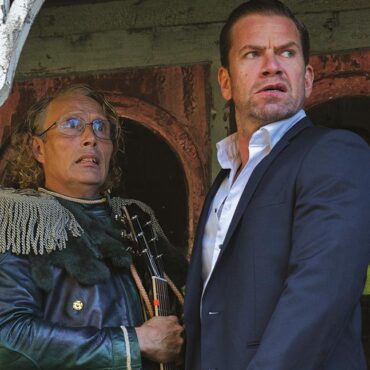
Mads Mikkelsen and Sofie Gråbøl, part of the cast of Anders Thomas Jansen’s "The Last Viking", go deep in narrating a film that is Dark Comedy with deep themes, making it a must-watch for fans of dark comedy and philosophical …
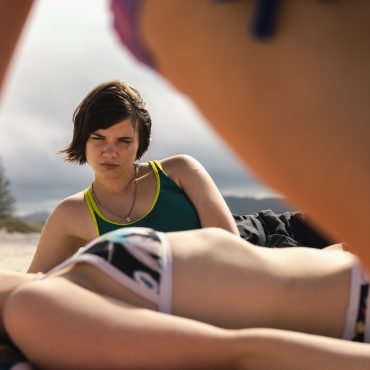
At Alice nella Città 2026 with Big Girls Don't Cry, Paloma Schneidman on adolescence, desire and the blurry space between child and adult
Eva Sangiorgi, director of the Viennale 2026, on a city festival with over 100 features, no competition and a Robert Aldrich retrospective.
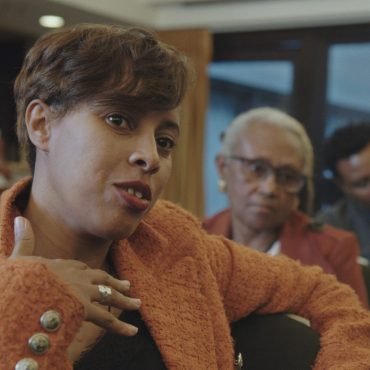
Ruth Beckermann on Wax & Gold, her documentary on Ethiopia seen through a hotel in Addis Ababa, at the Rome Film Fest 2026.
A dark fairy tale about growing up, belonging and the fear of being replaced. Bàrbara Farré and Diego Betancor discuss the personal origins of Mala Bèstia, its unsettling vision of adolescence and the decision to make a debut feature without …