

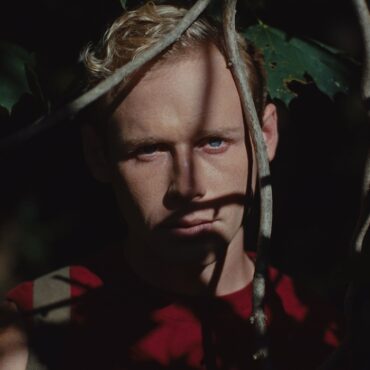
“Haze”, interview with director Matthew Fifer
"The movie is having a conversation with films such as Psycho, Dressed to Kill and Silence of the Lambs"
Listeners:
Top listeners:
 play_arrow
ENGLISH Channel 01 If English is your language, or a language you understand, THIS IS YOUR CHANNEL !
 play_arrow
ITALIAN Channel 02 Se l’italiano è la tua lingua, o una lingua che conosci, QUESTO È IL TUO CANALE!
 play_arrow
EXTRA Channel 03 FRED Film Radio channel used to broadcast press conferences, seminars, workshops, master classes, etc.
 play_arrow
GERMAN Channel 04 Wenn Ihre Sprache Deutsch ist, oder Sie diese Sprache verstehen, dann ist das IHR KANAL !
 play_arrow
POLISH Channel 05
 play_arrow
SPANISH Channel 06 Si tu idioma es el español, o es un idioma que conoces, ¡ESTE ES TU CANAL!
 play_arrow
FRENCH Channel 07 Si votre langue maternelle est le français, ou si vous le comprenez, VOICI VOTRE CHAINE !
 play_arrow
PORTUGUESE Channel 08
 play_arrow
ROMANIAN Channel 09 Dacă vorbiţi sau înţelegeţi limba română, ACESTA ESTE CANALUL DUMNEAVOASTRĂ!
 play_arrow
SLOVENIAN Channel 10
 play_arrow
ENTERTAINMENT Channel 11 FRED Film Radio Channel used to broadcast music and live shows from Film Festivals.
 play_arrow
BULGARIAN Channel 16 Ако българският е вашият роден език, или го разбирате, ТОВА Е ВАШИЯТ КАНАЛ !
 play_arrow
CROATIAN Channel 17 Ako je hrvatski tvoj jezik, ili ga jednostavno razumiješ, OVO JE TVOJ KANAL!
 play_arrow
LATVIAN Channel 18
 play_arrow
DANISH Channel 19
 play_arrow
HUNGARIAN Channel 20
 play_arrow
DUTCH Channel 21
 play_arrow
GREEK Channel 22
 play_arrow
CZECH Channel 23
 play_arrow
LITHUANIAN Channel 24
 play_arrow
SLOVAK Channel 25
 play_arrow
ICELANDIC Channel 26 Ef þú talar, eða skilur íslensku, er ÞETTA RÁSIN ÞÍN !
 play_arrow
INDUSTRY Channel 27 FRED Film Radio channel completely dedicated to industry professionals.
 play_arrow
EDUCATION Channel 28 FRED Film Radio channel completely dedicated to film literacy.
 play_arrow
SARDU Channel 29 Si su sardu est sa limba tua, custu est su canale chi ti deghet!
 play_arrow
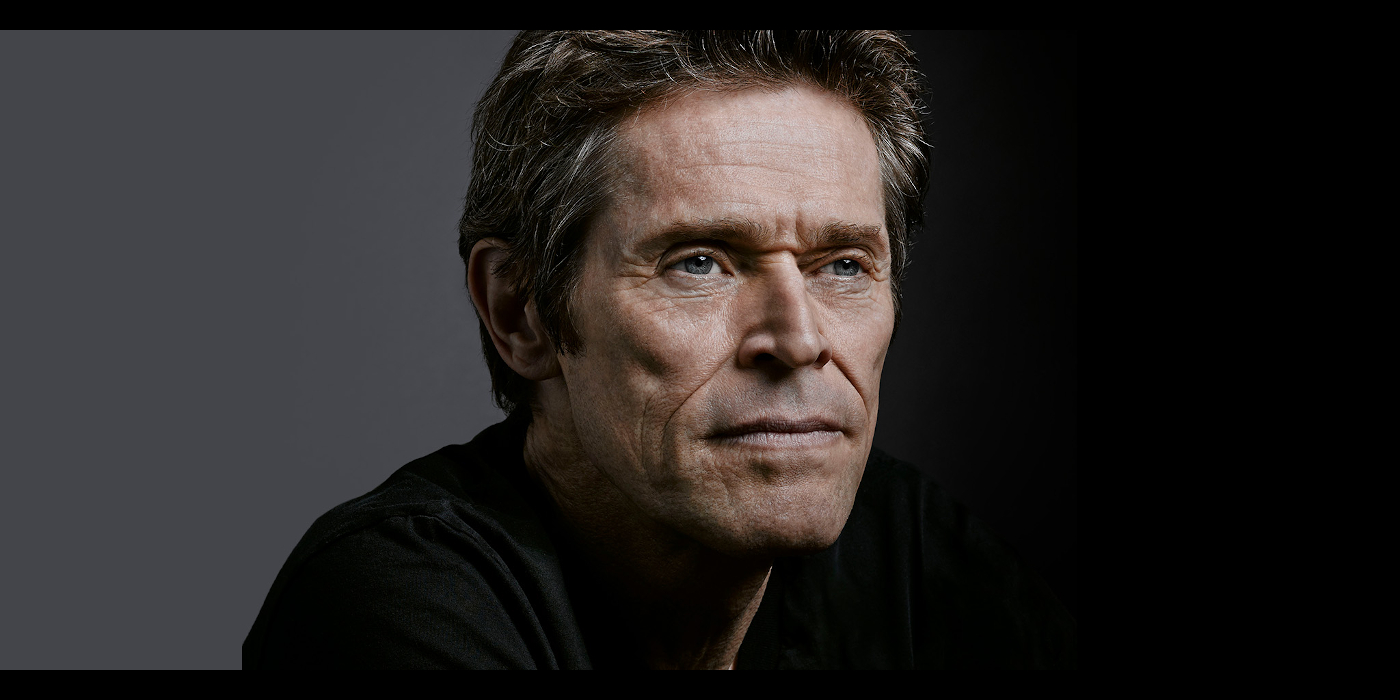
“Conversation with” at the 20th Marrakech IFF, interview with actor Willem Dafoe Bénédicte Prot
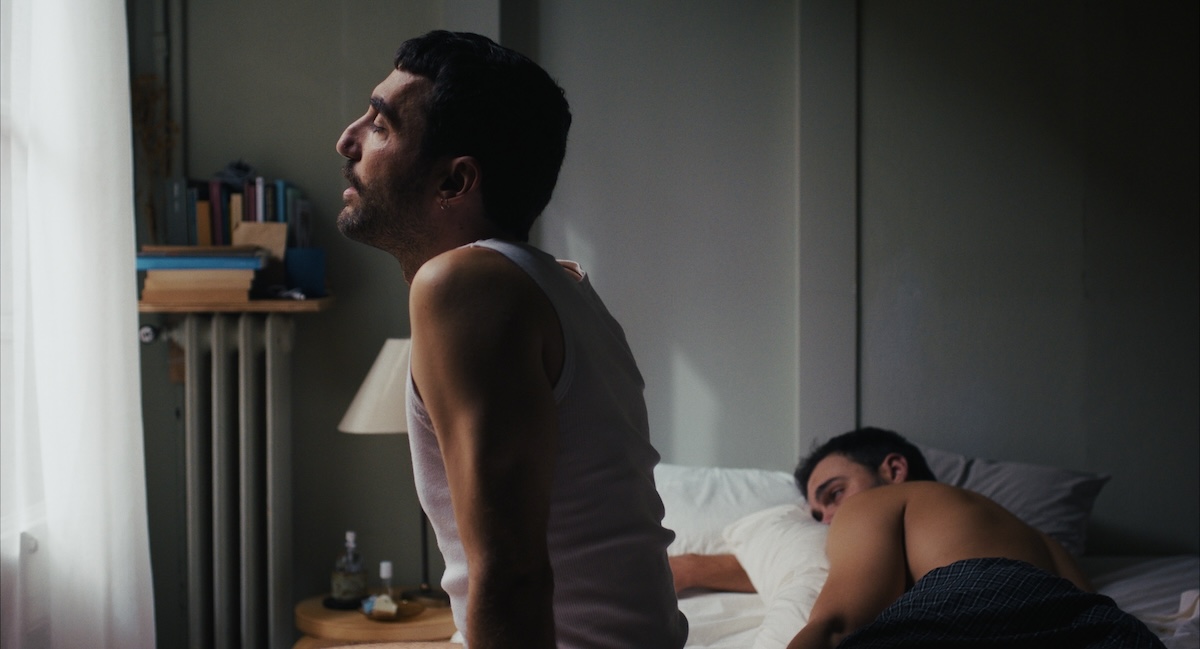
Presented in the All the Lovers section of the Lovers Film Festival, “Another Man” marks a significant step in the artistic trajectory of David Moragas. The film centres on Marc and Eudald, a couple in their thirties whose long-term relationship appears stable yet increasingly hollow. Their life in Barcelona unfolds within a carefully constructed routine, one that begins to fracture with the arrival of a new neighbour, Carlos.
Moragas introduces the film as a story born out of fascination with observation. “I love spying on others,” he admits, framing voyeurism not as a mere act of curiosity but as a mechanism for self-interrogation. This impulse becomes the narrative engine of “Another Man”, in which looking outward serves to avoid confronting inner conflicts.
At the centre of the film lies Marc, an elusive and emotionally layered protagonist. David Moragas constructs him as a man shaped by repression, someone who appears composed and polite while harbouring internal tension. “From the outside, he looks kind… but inside there is a stream of violence,” the director explains.
This duality is embodied by the lead actor Lluís Marqués, a close collaborator of Moragas, whose ability to subtly convey discomfort and anger informed the character’s development. Marc’s journey is not defined by a single crisis but by a slow realisation of the consequences of emotional suppression, both for himself and those around him.
Rather than framing the narrative strictly as a love story, David Moragas situates the film within a broader existential and generational context. “We have a lot of freedom to choose, but that doesn’t mean we are free,” he reflects, pointing to the paradox of contemporary life.
The director highlights how personal choices are shaped by both internal judgment and external pressures, including political shifts such as the rise of conservative ideologies. This tension transforms “Another Man” into a portrait of a generation navigating the illusion of autonomy even as it confronts deep uncertainty about identity and purpose.
Carlos, the enigmatic neighbour, functions less as a traditional character and more as a symbolic projection. David Moragas deliberately avoids fully materialising him, maintaining a sense of distance that preserves the fluid nature of desire. “When you reach the object of desire, desire destroys itself,” he notes.
By keeping Carlos partially obscured, often seen through windows or across spaces, the film emphasises desire as a dynamic force rather than a consumable object. This approach prevents the narrative from reducing attraction to physical impulse, instead suggesting that desire may represent the possibility of an alternative life, another version of oneself.
Grief plays a crucial role in Marc’s psychological state. While the recent death of his mother is an explicit element, David Moragas introduces a more subtle layer: the mourning of a former self. The protagonist is forced to abandon an identity shaped by familial expectations, confronting the uncertainty of who he might become.
This transition aligns with the film’s exploration of adulthood. Moragas describes it as a shift between being a child and assuming a more responsible role, independent of parenthood. The pressures of building a future, making long-term decisions, and redefining relationships contribute to the film’s underlying tension.
Six years together, yet Marc is still not sure if his relationship with Eudald can truly be considered stable and long-lasting. Their life side by side flows quietly—perhaps a little too quietly. What truly defines them as a couple is fundamentally the routine they have built over time. Both in their thirties, from a middle-class background with creative jobs and a beautiful home in Barcelona’s Barri Gòtic, they seem to have it all. Something feels missing for Marc, who feels a growing sense of claustrophobia. The arrival of Carlos, who moves in across from them, turns these doubts into an open crisis: what begins as mere curiosity for the newcomer soon becomes an obsessive game of glances—reciprocated—and from which Eudald is excluded. It becomes an escape from daily life—emotional and otherwise—fuelled by his uncontrollable attraction to Carlos. But a question arises: what happens when the escape route turns into a trap? Tears, but also laughter, in this melodrama that portrays a specific generation in the here and now.
"The movie is having a conversation with films such as Psycho, Dressed to Kill and Silence of the Lambs"
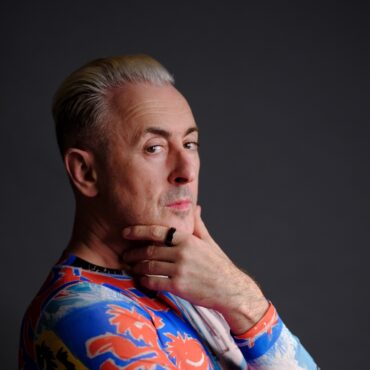
Alan Cumming is set to receive the Stella della Mole at the Lovers Film Festival 2025. The actor and activist will be honored in Turin on April 12, where he will also present his film, Drive Back Home.
At the 83th Venice Film Festival 2026, Skyler Gisondo, Merritt Wever and Bokeem Woodbine on stepping into the circus of Primetime
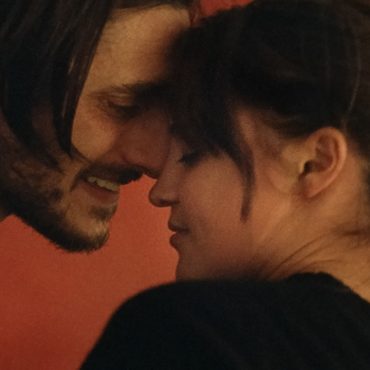
In competition at the 83° Venice Film Festival, Luca Marinelli and Alicia Vikander on The Echo Chamber, inheriting Bernardo Bertolucci's screenplay and the traces we leave in each other's life
Listen Global Critics Venice Voice! Exclusive and thoughtful conversations with leading international film critics, and in-depth analysis of the most anticipated films of the Venice International Film Festival 2026.
Across The Bridge: your daily podcast on Venice Production Bridge 2026 — key events, discussions and insider access to the film market.