

“Les Roches Rouges”, entretien avec le réalisateur Bruno Dumont
Bruno Dumont imagine dans "Les Roches rouges" "le monde de demain" : "on ne veut pas de règles, d'injonctions, de surprotection, d’empêchement permanent : on veut de la liberté".
Listeners:
Top listeners:
 play_arrow
ENGLISH Channel 01 If English is your language, or a language you understand, THIS IS YOUR CHANNEL !
 play_arrow
ITALIAN Channel 02 Se l’italiano è la tua lingua, o una lingua che conosci, QUESTO È IL TUO CANALE!
 play_arrow
EXTRA Channel 03 FRED Film Radio channel used to broadcast press conferences, seminars, workshops, master classes, etc.
 play_arrow
GERMAN Channel 04 Wenn Ihre Sprache Deutsch ist, oder Sie diese Sprache verstehen, dann ist das IHR KANAL !
 play_arrow
POLISH Channel 05
 play_arrow
SPANISH Channel 06 Si tu idioma es el español, o es un idioma que conoces, ¡ESTE ES TU CANAL!
 play_arrow
FRENCH Channel 07 Si votre langue maternelle est le français, ou si vous le comprenez, VOICI VOTRE CHAINE !
 play_arrow
PORTUGUESE Channel 08
 play_arrow
ROMANIAN Channel 09 Dacă vorbiţi sau înţelegeţi limba română, ACESTA ESTE CANALUL DUMNEAVOASTRĂ!
 play_arrow
SLOVENIAN Channel 10
 play_arrow
ENTERTAINMENT Channel 11 FRED Film Radio Channel used to broadcast music and live shows from Film Festivals.
 play_arrow
BULGARIAN Channel 16 Ако българският е вашият роден език, или го разбирате, ТОВА Е ВАШИЯТ КАНАЛ !
 play_arrow
CROATIAN Channel 17 Ako je hrvatski tvoj jezik, ili ga jednostavno razumiješ, OVO JE TVOJ KANAL!
 play_arrow
LATVIAN Channel 18
 play_arrow
DANISH Channel 19
 play_arrow
HUNGARIAN Channel 20
 play_arrow
DUTCH Channel 21
 play_arrow
GREEK Channel 22
 play_arrow
CZECH Channel 23
 play_arrow
LITHUANIAN Channel 24
 play_arrow
SLOVAK Channel 25
 play_arrow
ICELANDIC Channel 26 Ef þú talar, eða skilur íslensku, er ÞETTA RÁSIN ÞÍN !
 play_arrow
INDUSTRY Channel 27 FRED Film Radio channel completely dedicated to industry professionals.
 play_arrow
EDUCATION Channel 28 FRED Film Radio channel completely dedicated to film literacy.
 play_arrow
SARDU Channel 29 Si su sardu est sa limba tua, custu est su canale chi ti deghet!
 play_arrow
“Conversation with” at the 20th Marrakech IFF, interview with actor Willem Dafoe Bénédicte Prot
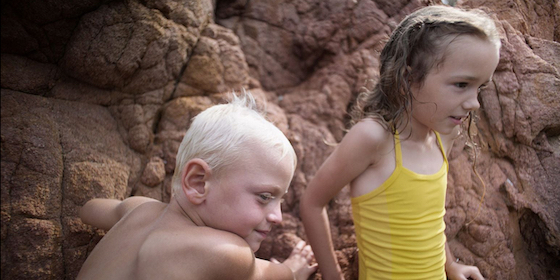
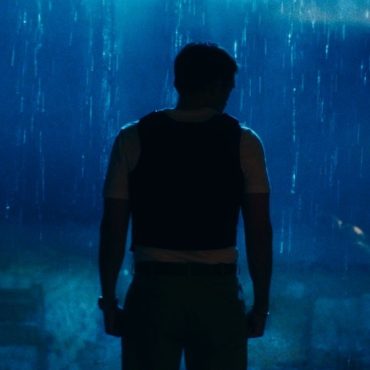
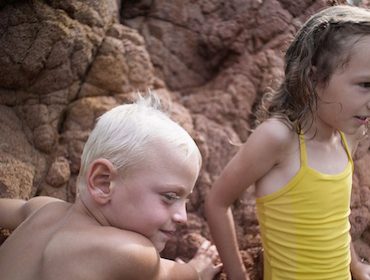
During the 79th Cannes Film Festival, we sat down with the French filmmaker Bruno Dumont to talk about his latest film, “Red Rocks”, which was presented at the Directors’ Fortnight as a special event, followed by a masterclass. This time, the director, always highly recognisable despite the fact that his films may seem wildly different from one another – we owe him, amongst other works, “The Life of Jesus”, “Camille Claudel, 1915”, “Slack Bay”, “Jeannette: The Childhood of Joan of Arc” as well as “France” and “The Empire”, not to mention the series “Li’l Quinquin” – embarks on a new experiment and heads to the French Riviera to film very young children, aiming to show ‘not children per se, but childhood itself’, and through that, to evoke once again ‘human nature’, as he always does.
On the love rivalry which ends up tainting the pure and innocent world of these children: ‘It’s the same trio as in “The Life of Jesus”, that is to say two people who love the same person, and that is the primordial conflict of desire. […] Whenever two people desire someone at the same time, it generates violence. It’s the ‘mimetic rivalry’ René Girard was writing about.’
What Bruno Dumont tries to do with every film, he says, is to ‘put the viewer into situations of life which culture need to address. We have to respond to that. Here, I am just showing the human nature, both in its grace and in its violence, without moralising – without saying this is good, this is bad –, in order to give the viewer the possibility of having a cinematic and artistic experience [akin to] catharsis. That’s what catharsis is: confronting our own demons. I can do it through humour, I can do it through drama… but the subjects I tackle are serious.’
On the contrast between the candour of very early childhood and this pure, almost primitive, slightly unreal universe, and the adult behaviours the kids gradually take on: ‘There is something very unsettling for the viewer in seeing such tiny beings on the verge of doing typically grown-up things, and I think that this unsettling feeling is very interesting, because I think it’s actually the adult viewer who is projecting […]. I think they remember their own childhood, but also see the whole germination of what they have become, namely the desire to love and, at the same time, the desire to kill.’
On the very peripheral presence of adults in the world we see on screen: ‘Adults make very brief appearances here, and most of them are quite odd. The idea here was to show both the strangeness of the real adult world and the power of childhood, of carefreeness, of that kind of total freedom in a world I find a bit ferocious, which is in fact our present.’
His approach, Bruno Dumont explains, is ‘not at all nostalgic. It’s about filming that light up above. I rather feel like I’m filming the world of tomorrow, where children will be free, without helmets, without rules, without bans, all that… [What I’m imagining here is] a kind of freedom which seems like a completely wild idea, but that is what we want. We don’t want rules, we don’t want impositions, we don’t want to be overprotected from everything: we want freedom.’
The filmmaker also explains how he went about working with five- and six-year-olds, and stresses that it took ‘a lot of constraints, to create an impression of total freedom: you have to keep them in the frame, their acting has to be precise, their expressions have to be just right… There are cinematographic requirements. This isn’t a wildlife documentary shot with a surveillance camera: it’s real work, and they are real actors.’
Asked about the fact that “Red Rocks” found ‘extraordinary coproducers’ in Spain, Bruno Dumont does not hesitate to say he is weary of the French film ‘industry’, which he finds arrogant, sanctimonious, moronic even, compared to the broad-minded people he worked with on this film.
On the French Riviera, two gangs of kids compete in the perilous game of cliff jumping. Géo, barely five years old, discovers over the course of a summer a world where friendship blends with rivalry, and where the first stirrings of the heart emerge against the dazzling Mediterranean landscape.
Bruno Dumont imagine dans "Les Roches rouges" "le monde de demain" : "on ne veut pas de règles, d'injonctions, de surprotection, d’empêchement permanent : on veut de la liberté".
Sam Manacsa discusses Annisa at Cannes 2026, exploring sound, adolescence and belonging through the perspective of a blind teenage girl.
Géssica Généus, director of "Marie Madeleine": "In Haiti, everything lives together – the beauty, the complexity of our society. It’s all there, all at once."
We discover, through the words of its director Alessandro Voglino, how the Film Commission Abruzzo is revitalizing the region’s cinema industry with €4M funding, fostering local talent, and attracting international productions.
Woman Unknown director May El-Toukhy and actress Mathilde Arcel on the body as battlefield, in competition at Venice 2026.
Dust di Tsai Ming-liang, presentato in Venice Open - Fuori Concorso della Mostra di Venezia 2026: impermanenza e meditazione.
Listen Global Critics Venice Voice! Exclusive and thoughtful conversations with leading international film critics, and in-depth analysis of the most anticipated films of the Venice International Film Festival 2026.
At the 83th Venice Film Festival 2026, Skyler Gisondo, Merritt Wever and Bokeem Woodbine on stepping into the circus of Primetime