
“The Lion at My Back”, an interview with director Tonia Mishiali
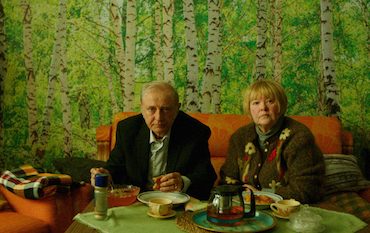
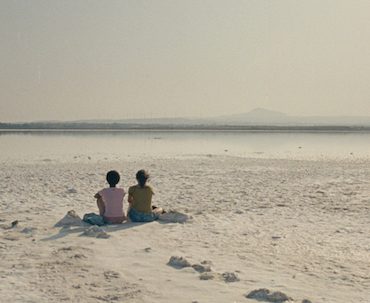
Tonia Mishiali's The Lion at My Back, winner of the Ecumenical Jury Grand Prize at Karlovy Vary 2026, is the second chapter of her trilogy on women living on the sidelines
Listeners:
Top listeners:
 play_arrow
ENGLISH Channel 01 If English is your language, or a language you understand, THIS IS YOUR CHANNEL !
 play_arrow
ITALIAN Channel 02 Se l’italiano è la tua lingua, o una lingua che conosci, QUESTO È IL TUO CANALE!
 play_arrow
EXTRA Channel 03 FRED Film Radio channel used to broadcast press conferences, seminars, workshops, master classes, etc.
 play_arrow
GERMAN Channel 04 Wenn Ihre Sprache Deutsch ist, oder Sie diese Sprache verstehen, dann ist das IHR KANAL !
 play_arrow
POLISH Channel 05
 play_arrow
SPANISH Channel 06 Si tu idioma es el español, o es un idioma que conoces, ¡ESTE ES TU CANAL!
 play_arrow
FRENCH Channel 07 Si votre langue maternelle est le français, ou si vous le comprenez, VOICI VOTRE CHAINE !
 play_arrow
PORTUGUESE Channel 08
 play_arrow
ROMANIAN Channel 09 Dacă vorbiţi sau înţelegeţi limba română, ACESTA ESTE CANALUL DUMNEAVOASTRĂ!
 play_arrow
SLOVENIAN Channel 10
 play_arrow
ENTERTAINMENT Channel 11 FRED Film Radio Channel used to broadcast music and live shows from Film Festivals.
 play_arrow
BULGARIAN Channel 16 Ако българският е вашият роден език, или го разбирате, ТОВА Е ВАШИЯТ КАНАЛ !
 play_arrow
CROATIAN Channel 17 Ako je hrvatski tvoj jezik, ili ga jednostavno razumiješ, OVO JE TVOJ KANAL!
 play_arrow
LATVIAN Channel 18
 play_arrow
DANISH Channel 19
 play_arrow
HUNGARIAN Channel 20
 play_arrow
DUTCH Channel 21
 play_arrow
GREEK Channel 22
 play_arrow
CZECH Channel 23
 play_arrow
LITHUANIAN Channel 24
 play_arrow
SLOVAK Channel 25
 play_arrow
ICELANDIC Channel 26 Ef þú talar, eða skilur íslensku, er ÞETTA RÁSIN ÞÍN !
 play_arrow
INDUSTRY Channel 27 FRED Film Radio channel completely dedicated to industry professionals.
 play_arrow
EDUCATION Channel 28 FRED Film Radio channel completely dedicated to film literacy.
 play_arrow
SARDU Channel 29 Si su sardu est sa limba tua, custu est su canale chi ti deghet!
 play_arrow
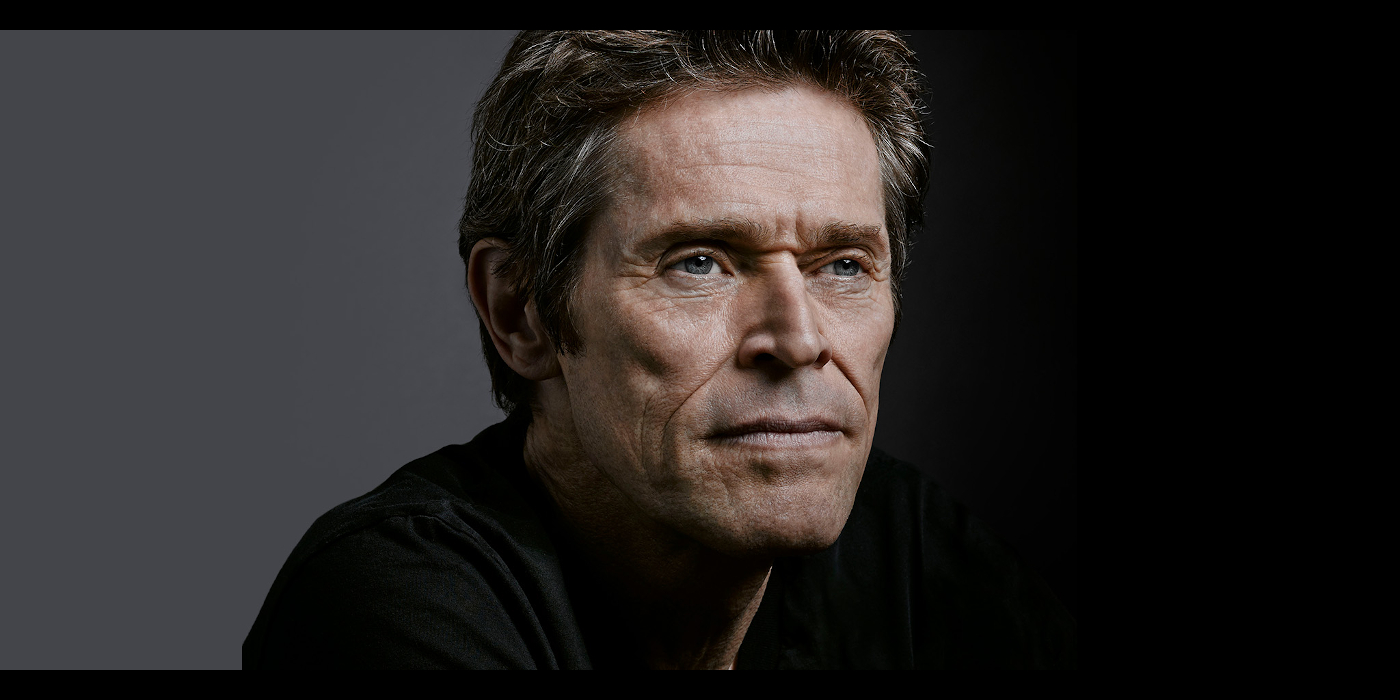
“Conversation with” at the 20th Marrakech IFF, interview with actor Willem Dafoe Bénédicte Prot
 play_arrow
"Paris Paris", an interview with director Isabelle Tollenaere Bénédicte Prot
Belgian filmmaker Isabelle Tollenaere, already known and acclaimed at major festivals for her highly poetic hybrid documentaries exploring “the interplay between the rapid transformation of our physical world and the human experience of time and memory”, such as Battles (2015) and Victoria (2020), has just presented her first scripted feature film, a docufiction suggestively titled Paris Paris, in the Proxima Competition of the 60th Karlovy Vary Film Festival (July 3-11, 2026).
This work – another beautiful and deeply moving expression of her fascination with places and their constant transformation in resonance with the individuals inhabiting them, and with what traces they leave when one or the other disappears – is indeed reminding, well beyond its title, of the mix of melancholy and tenderness found in another film where the “Paris” opening the title was not in France, and also bears echoes of another one which could have been called “Paterson, Paterson” – and generally speaking of the body of work of both the cult filmmakers to whom we owe these masterpieces –, while the framing of its scenes and the bareness of its setup crowded with existentialism often evokes a slightly less defeated Samuel Beckett, as humour and human connection really shine through in Paris Paris (with no comma between the two city names).
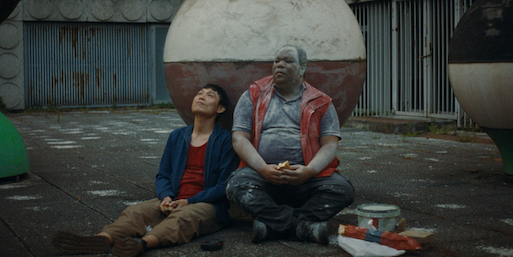
As Tollenaere herself points out, in her first reality-based fiction work, the underlying themes of alienation, bottomless nostalgia for places which do not exist anymore, and suppressed longing, as only the present seems to count, are balanced by the friendship and warmth of the variegated community of displaced people we meet as they try to find their place in Paris, France – at the language class where the film starts, but especially between the naked walls (except for one adorned with wallpaper featuring the Eiffel Tower) of the abandoned flat where three most endearing characters Yi-En from China, Junior from the Democratic Republic of Congo, and Hamzah from Palestine end up “finding a home with each other”.
On what sparked the making of this movie: “When I found out there was a replica of Paris that was built in China, I was immediately fascinated by this and I also quite immediately had the idea to make a film based on the doubling of the same city, without knowing what it could entail yet.”
“So I went to Tianducheng, which is where the replica of Paris was built, and I was really struck by this construction fever that I saw everywhere. Entire neighbourhoods were being demolished and there was construction happening everywhere, so there was a drastically rapid changing of the landscape occurring, and I also heard testimonies of people saying ‘when I leave home for a while and come back, I don’t recognise the place anymore. I can’t find my way home anymore,’ so this is when the themes of loss, disappearance, memory, and the precariousness of home first started erupting.”
“And then I thought that maybe I could combine this with filming a Chinese community or a Chinese person in Paris, France but then I felt like I did not want to focus too much on the concept of China, but more on the feeling of foreignness and alienation and on this idea of having to leave home behind and trying to find a new home in this new place, so I came up with a story of the three men coming from very different parts of the world, each carrying memories of other cities with them.”
On the incredibly precise and rich script, so elegantly carried by the thoughtful mise-en-scène and cinematography that it lets meaning emerge and texture build in the space between the lines: “As I was telling the Czech audience the other day, I actually wrote the first draft in the Czech Republic, where I came on a holiday, back in 2015, so I worked on it for a very long time.”
“[It represents] many years of finding things in reality and bringing them into the script, and then again throughout the process of the casting and the repetitions that we did, during which they [the non-professional actors, here playing slightly different versions of themselves] brought their personal stories and personal objects, and [in the case of Mahmoud], who actually writes poetry, the poem I included in the film, after he recited it for me, and all these things sort of came together.”
“Which was super fascinating, […] and I feel like it makes the script more alive and much more valid and true, and this is also what excites me in filmmaking: this exchange with the people I work with and what they bring to the film and how they help shape the film.”
About disappearing, with or without a trace: This recurring motif “speaks of the reality of their situation”, says Tollenaere, and she witnessed it first hand during her research on the ground.
“People sometimes just completely disappeared, and I don’t know what happened to them and it really touched me a lot, so I wanted to include this in the film. It is a very precarious situation, and although there is a lot of lightness in the film […], I also wanted to bring out this reality of their situation, and the hardship of the situation and the inhumanness of the situation.”
On finding the right balance between hardship and warmth: “I wanted to strike a balance between making a very political film and, on the other hand, [also having] a lightheartedness and a kind of humour in the film, and a playfulness – not to diminish this reality, au contraire, but actually to show these people’s resilience and their humanness.”
In an evicted building in the City of Lights, Yi-En and Junior — who left China and the DRC behind — try to turn their squatted apartment into a home. One day, they’re joined by Hamzah, Yi-En’s Palestinian classmate, who carries his own sense of exile. The trio soon shares everything, from scarce belongings and jokes about the future to memories of the past. But while their odd family grows — a stranded cat here, a rescued fish there— their carefully constructed world grows vulnerable to outside forces, some much bigger than themselves. In this lively milieu, time, space and personal histories overlap, offering a political allegory on displacement and the meaning of home. One formed not through the language of social realism, but a cinema of warmth, visual wit and deadpan humour.
Tonia Mishiali's The Lion at My Back, winner of the Ecumenical Jury Grand Prize at Karlovy Vary 2026, is the second chapter of her trilogy on women living on the sidelines
Directors Kristina Grozeva and Petar Valchanov on Black Money for White Nights: "Corruption is at the bottom of everything, but not just that of the outer life, also the corruption of the inner life"
In Son of Happiness, Dominik Mirecki tells the moving story of Beniamin, a boy with Down syndrome who dreams of acting. Through heartfelt realism and emotional depth, Mirecki explores family bonds, love, and the courage to dream—even when the world …
Terézia Halamová discusses Dog and Wolf at Karlovy Vary, a bold short film exploring identity, loss, and emotional chaos.
Eva Sangiorgi, director of the Viennale 2026, on a city festival with over 100 features, no competition and a Robert Aldrich retrospective.
Ruth Beckermann on Wax & Gold, her documentary on Ethiopia seen through a hotel in Addis Ababa, at the Rome Film Fest 2026.
A dark fairy tale about growing up, belonging and the fear of being replaced. Bàrbara Farré and Diego Betancor discuss the personal origins of Mala Bèstia, its unsettling vision of adolescence and the decision to make a debut feature without …
Character designer Thibault Leclercq talks about Wildwood and its stop-motion puppets, at the 24th edition of Alice nella Città.