
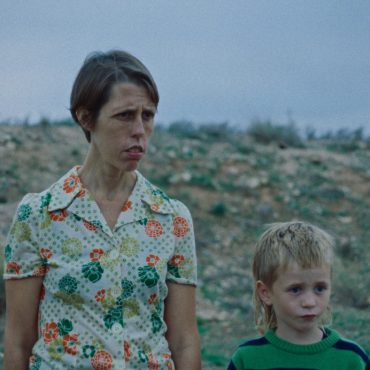
“Nobody Barks”, interview with director Júlia Coldwell Serra
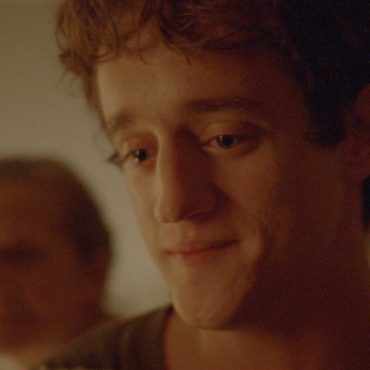
Nobody Barks director Júlia Coldwell Serra at Future Frames 2026. A dark comedy about guilt, family bonds and the comforting stories people invent to avoid painful truths.
Listeners:
Top listeners:
 play_arrow
ENGLISH Channel 01 If English is your language, or a language you understand, THIS IS YOUR CHANNEL !
 play_arrow
ITALIAN Channel 02 Se l’italiano è la tua lingua, o una lingua che conosci, QUESTO È IL TUO CANALE!
 play_arrow
EXTRA Channel 03 FRED Film Radio channel used to broadcast press conferences, seminars, workshops, master classes, etc.
 play_arrow
GERMAN Channel 04 Wenn Ihre Sprache Deutsch ist, oder Sie diese Sprache verstehen, dann ist das IHR KANAL !
 play_arrow
POLISH Channel 05
 play_arrow
SPANISH Channel 06 Si tu idioma es el español, o es un idioma que conoces, ¡ESTE ES TU CANAL!
 play_arrow
FRENCH Channel 07 Si votre langue maternelle est le français, ou si vous le comprenez, VOICI VOTRE CHAINE !
 play_arrow
PORTUGUESE Channel 08
 play_arrow
ROMANIAN Channel 09 Dacă vorbiţi sau înţelegeţi limba română, ACESTA ESTE CANALUL DUMNEAVOASTRĂ!
 play_arrow
SLOVENIAN Channel 10
 play_arrow
ENTERTAINMENT Channel 11 FRED Film Radio Channel used to broadcast music and live shows from Film Festivals.
 play_arrow
BULGARIAN Channel 16 Ако българският е вашият роден език, или го разбирате, ТОВА Е ВАШИЯТ КАНАЛ !
 play_arrow
CROATIAN Channel 17 Ako je hrvatski tvoj jezik, ili ga jednostavno razumiješ, OVO JE TVOJ KANAL!
 play_arrow
LATVIAN Channel 18
 play_arrow
DANISH Channel 19
 play_arrow
HUNGARIAN Channel 20
 play_arrow
DUTCH Channel 21
 play_arrow
GREEK Channel 22
 play_arrow
CZECH Channel 23
 play_arrow
LITHUANIAN Channel 24
 play_arrow
SLOVAK Channel 25
 play_arrow
ICELANDIC Channel 26 Ef þú talar, eða skilur íslensku, er ÞETTA RÁSIN ÞÍN !
 play_arrow
INDUSTRY Channel 27 FRED Film Radio channel completely dedicated to industry professionals.
 play_arrow
EDUCATION Channel 28 FRED Film Radio channel completely dedicated to film literacy.
 play_arrow
SARDU Channel 29 Si su sardu est sa limba tua, custu est su canale chi ti deghet!
 play_arrow
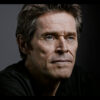
“Conversation with” at the 20th Marrakech IFF, interview with actor Willem Dafoe Bénédicte Prot
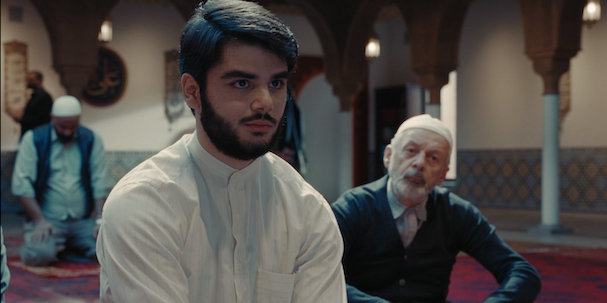
After premiering his first feature (Namo, 2020) at the Berlinale, his second (The End, 2022) in Busan, and collecting the Audience Award in Venice with the third (The Witness, 2024), acclaimed Berlin-based Iranian filmmaker Nader Saeivar celebrated the premiere of Hijamat, his fourth feature as a director, Czech style, at the 60th Karlovy Vary Film Festival (July 3-11, 2026).
The narrative pace and style of this contender for the Crystal Globe, set in Berlin amongst a rather instantly claustrophobic Turkish community presenting a boisterous mosaic of stifling religion-related conundrums, clearly bears the signature which has earned Saeivar international recognition as a screenwriter and regular collaborator of Jafar Panahi, especially for the latter’s 3 Faces (2018), which garnered the Best Screenplay award in Cannes, and of course for his more recent It Was Just an Accident, winner of the 2025 Palme d’Or, which they also wrote together.
This immediately recognisable footprint certainly also has to do with the fact that Jafar Panahi produced Hijamat, and served as the film’s editor as well.
The whole progression of Hijamat hinges on the irreconcilable contradiction between the evident diversity (of generations, of relationships with traditions, of “ways of being a Muslim”, or of sexual identities) existing even within this tight-knit community and the monolithic rigidity of what is considered acceptable by the local imam, whose prescriptions everyone in the community constantly seeks, on each and every subject of daily life, anchoring the hold of this religious authority on the private sphere, which becomes inexistant, and obliterating the individual itself.
In the case of the main character, Murad (Kida Khodr Ramadan), who takes it upon himself to support his brother Kerem, exposed as gay, the notion of sin which the imam systematically dangles over every situation manifests in the form of his stifling sense of duty, which clearly appears as a deeply internalised corollary concept from which Murad cannot escape, having chosen to stay repressed.
On the apparent paradox of having a variegated community and one single inescapable guiding principle: “I was really lucky that my first destination, when I emigrated, was Berlin, a very cosmopolitan, multicultural city where you cannot say which culture is the dominant culture. Many Germans believe that they themselves are foreigners in their own city. When I arrived in Berlin, discovering this multicultural city changed my way of thinking and of seeing things.”
“Then I realised that everybody, of all generations and ethnicities etc., had, all of them, one problem, and that’s the mental walls they build around themselves. You can see it very often in Berlin, everywhere. These walls are made of different materials, but all of them are really tall. For muslim communities for example, these walls are made of religion or superstitions, but for the Westerners, these walls are made of rigid laws and regulations and they think nothing can be changed, nothing can transcend that. So I decided that if I was going to live in Berlin, the first thing I was going to do is attack these walls.”
On the meaning of the “hijamat” in the film: The title refers to a technique frequently practiced in many Muslim countries, which involves placing cups on someone’s back to pull the skin into traction, which results in a laceration of the skin with drawing of blood into the cup.
Saeivar explains that as Murad feels that the community, whilst also offering protection, is controlling his life, dictating all the rules, “in order to overcome these rules, he changes his blood, takes out the dirty blood, which is the symbol of wrong beliefs, or outdated beliefs.”
As the conversation then moves to the many interesting, key characters in the film, which includes the young, sleepwalking son (the first character to appear, in the very first shot), the screenwriter-director adds that “in many religious, if you don’t change these outdated and wrong beliefs, old beliefs, if you don’t remove that blood, these things can happen again to the next generations, repeat themselves, as you can see through the son.”
Amongst the many motifs running through the film are the function of stories, painting, the Kosovar Muslim wife of Murad, Leyla (Nicolette Krebitz), and also the strictly peripheral presence of Berlin and Germany around this community, with the exception of one recurring figure – a disturbed German elderly woman played by Nastassja Kinski.
“The reason why I chose Nastassja Kinski for the role of Margot, says Nader Saeivar, is that she represents the glorious past of Germany and German cinema, as well as modern Germany, the reality of today, which is that what was once working does not work anymore. [She is consumed] by her memories, by the fact that she lives in the past. This is exactly what religion does in the East. What religion does in the East, memories and the past are doing to the Westerners.”
When Kerem's secret relationship with a man is exposed, shockwaves ripple through his deeply religious Muslim's family, igniting a conflict between faith, identity and love. As his brother Murad struggles to protect him, long- buried secrets emerge, threatening to tear the family apart.
Nobody Barks director Júlia Coldwell Serra at Future Frames 2026. A dark comedy about guilt, family bonds and the comforting stories people invent to avoid painful truths.
Shallow Ground director Jozo Schmuch at Future Frames 2026 turns one day into a tender reckoning with the decades a war stole
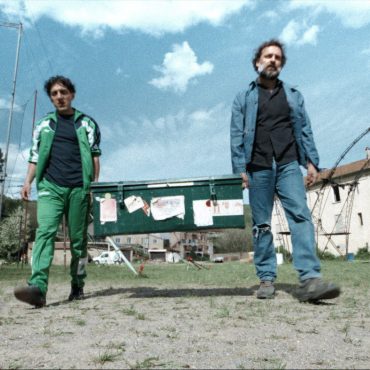
Zampano director Teilo Quillard at Future Frames 2026 revisits his circus childhood and dreams already of a punk circus to come
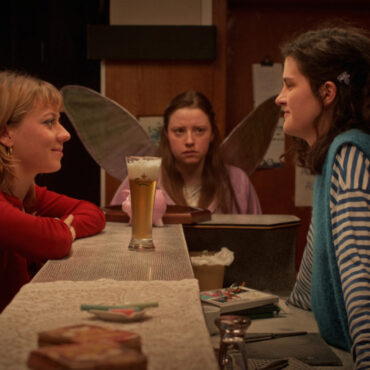
In Karaokiss, Mila Ryngaert blends music, fantasy, and emotion to explore fear, love, and self-expression.
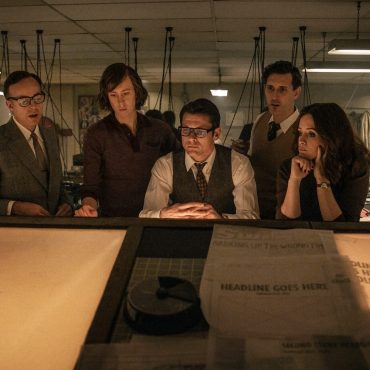
Opening Venice's Mostra 2026 with his festival debut, INK, Danny Boyle on the 1969 birth of The Sun, journalism as a pillar of humanity threatened by AI, and his refusal to turn Rupert Murdoch into a monster
Listen Global Critics Venice Voice! Exclusive and thoughtful conversations with leading international film critics, and in-depth analysis of the most anticipated films of the Venice International Film Festival 2026.
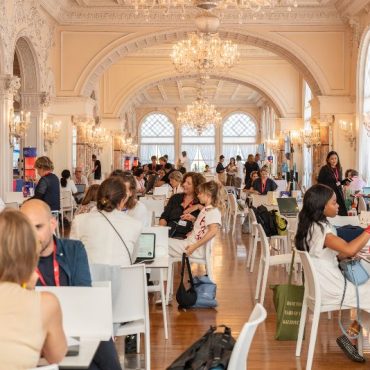
Your daily guide to the film market at Venice Production Bridge 2026 — panels, meetings and international guests you can't miss.
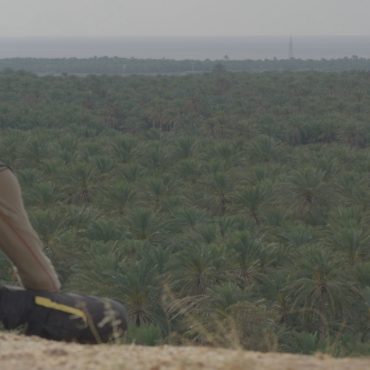
Plague: Youssef Chebbi's second feature about twin brothers and a palm tree parasite in Tunisia, selected for Final Cut in Venice 2026.