

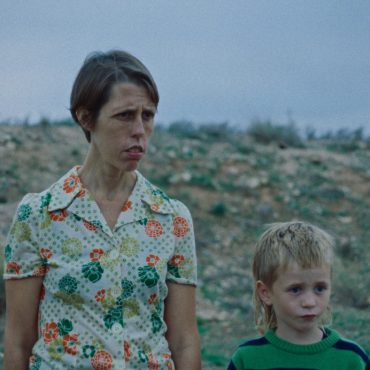
“Nobody Barks”, interview with director Júlia Coldwell Serra
Nobody Barks director Júlia Coldwell Serra at Future Frames 2026. A dark comedy about guilt, family bonds and the comforting stories people invent to avoid painful truths.
Listeners:
Top listeners:
 play_arrow
ENGLISH Channel 01 If English is your language, or a language you understand, THIS IS YOUR CHANNEL !
 play_arrow
ITALIAN Channel 02 Se l’italiano è la tua lingua, o una lingua che conosci, QUESTO È IL TUO CANALE!
 play_arrow
EXTRA Channel 03 FRED Film Radio channel used to broadcast press conferences, seminars, workshops, master classes, etc.
 play_arrow
GERMAN Channel 04 Wenn Ihre Sprache Deutsch ist, oder Sie diese Sprache verstehen, dann ist das IHR KANAL !
 play_arrow
POLISH Channel 05
 play_arrow
SPANISH Channel 06 Si tu idioma es el español, o es un idioma que conoces, ¡ESTE ES TU CANAL!
 play_arrow
FRENCH Channel 07 Si votre langue maternelle est le français, ou si vous le comprenez, VOICI VOTRE CHAINE !
 play_arrow
PORTUGUESE Channel 08
 play_arrow
ROMANIAN Channel 09 Dacă vorbiţi sau înţelegeţi limba română, ACESTA ESTE CANALUL DUMNEAVOASTRĂ!
 play_arrow
SLOVENIAN Channel 10
 play_arrow
ENTERTAINMENT Channel 11 FRED Film Radio Channel used to broadcast music and live shows from Film Festivals.
 play_arrow
BULGARIAN Channel 16 Ако българският е вашият роден език, или го разбирате, ТОВА Е ВАШИЯТ КАНАЛ !
 play_arrow
CROATIAN Channel 17 Ako je hrvatski tvoj jezik, ili ga jednostavno razumiješ, OVO JE TVOJ KANAL!
 play_arrow
LATVIAN Channel 18
 play_arrow
DANISH Channel 19
 play_arrow
HUNGARIAN Channel 20
 play_arrow
DUTCH Channel 21
 play_arrow
GREEK Channel 22
 play_arrow
CZECH Channel 23
 play_arrow
LITHUANIAN Channel 24
 play_arrow
SLOVAK Channel 25
 play_arrow
ICELANDIC Channel 26 Ef þú talar, eða skilur íslensku, er ÞETTA RÁSIN ÞÍN !
 play_arrow
INDUSTRY Channel 27 FRED Film Radio channel completely dedicated to industry professionals.
 play_arrow
EDUCATION Channel 28 FRED Film Radio channel completely dedicated to film literacy.
 play_arrow
SARDU Channel 29 Si su sardu est sa limba tua, custu est su canale chi ti deghet!
 play_arrow
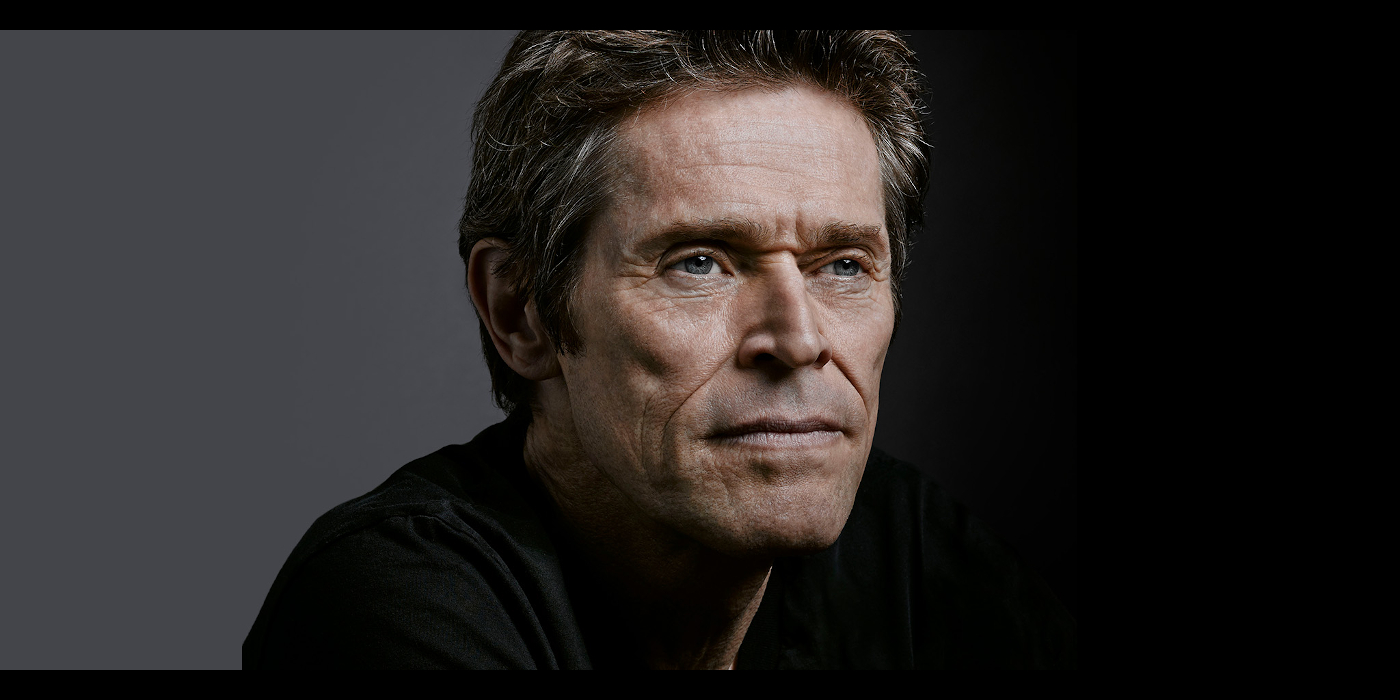
“Conversation with” at the 20th Marrakech IFF, interview with actor Willem Dafoe Bénédicte Prot
 play_arrow
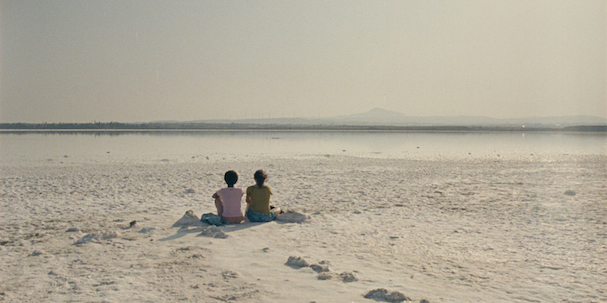
"The Lion at My Back", an interview with director Tonia Mishiali Bénédicte Prot
Eight years after the premiere of Pause, her debut feature (after several internationally acclaimed shorts, followed by a few more after Pause), at the Karlovy Vary Film Festival (East of the West Competition), Tonia Mishiali was back at the Czech event 2026 with her second feature-length movie, The Lion at My Back, this time vying for the Crystal Globe, and was awarded the Grand Prize of the Ecumenical Jury.
We met the Cypriot director to discuss further this work, announced as the second instalment of a trilogy exploring the role of women in modern-day society, where the thoughtful mise en scène and the splendid, impactful cinematography actively accompany, in the many spaces where the action of this Cyprus-set story unfolds, the two female protagonists.
A forty something local with a past who is fighting for the custody of her daughter and a young migrant who finds herself outside the door of the home where she was living on her 18th birthday – compellingly embodied, with all their nuances and contradictions, by Elena Kallinikou and Sokhna Diallo – as they struggle to find their place, and gradually develop a moving bond which ends feeling like home.
On the background of the story, Mishiali explains that the idea to pair an ode to the mother-daughter relationship with the depiction of the situation of a young immigrant came from her personal attachment to both themes (being a mother and “a refugee in [her] my own country”), and was further fuelled by her encounter with women, mostly African, seeking asylum in Cyprus.
We also talk about the way the film combines intimate close ups with an interesting treatment of space, or rather spaces (from safe to hostile, open to claustrophobic, inhumane to warm), including “the space that is contained within them”, which the director approached instinctively, with an awareness of her characters’ need to breathe, too.
On the choice to shoot on 16mm: “I first met Manu Tilinski, my cinematographer, in Athens, because I wanted to work with a new cinematographer and so I met a few, and in my mind, even before I met him, was the sense that I had to do this film on 16 mm, and because there’s always budget restrictions and all that, I thought it was never going to happen, and I had no experience with film – I have only worked with digital –, so I thought if I am going to do that, I have to work with a cinematographer who has this experience.”
“And I didn’t say anything to him and as soon as we met, as he had read the script, he went, ‘You know we have to shoot on 16 mm, right?’ and I said, ‘Thank you!’ Because the idea is that the film is quite raw, and rough, so I think this roughness that comes from film, the grain, that feels more organic.”
Tonia Mishiali explains how she went about choosing her actresses, and how Sokhna Diallo joined the project as a professional actress when the first actor Mishiali had in mind, a Somalian non professional, had to suddenly leave Cyprus for safety reasons.
She also give us more details on how they found the right chemistry to give a sensitive depiction of the bond between Stella and Mariama, and evokes the male characters in the film.
On the third instalment of her trilogy, Maya, already in the works: “So the trilogy is really about women living on the sidelines and trying to find themselves and establish themselves in the world, and enjoy their rights and be prominent and be out there and be respectful – to themselves first, and towards each other – and get respect from others. So in general, it’s really about women rebelling […]. So I started with Stella in Pause, a 50-year-old woman who was oppressed and tried to find a way out… […]”
“And then the third one is called Maya and it’s about a 30-year-old woman, so I’m going down in age, and again it’s similar – she feels different, she’s trying to fit in, etc. –, but it’s actually a genre film, it’s a fantasy film. So I am using another genre but again, it’s character-based, so it’s really about her finding herself as she inherits a house in the countryside and leaves the city to go there, and enters a patriarchal world of hunters in the woods, killing lots of animals, and finds herself attracted to this world, and meets goblins in the forest.”
Mariama, a teenage Senegalese asylum seeker, and Stella, a Cypriot recovering drug addict, are striving to rebuild their lives. When their paths first cross they use each other, but their shared struggle for survival, in a world that failed them both, sparks an unexpected mother-daughter bond. Together, they redefine the true meaning of love and family, in a heartwarming tale of sacrifice, female solidarity and empowerment.
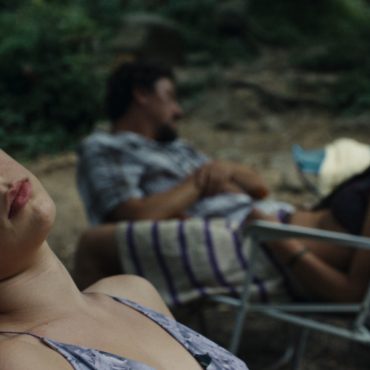
Nobody Barks director Júlia Coldwell Serra at Future Frames 2026. A dark comedy about guilt, family bonds and the comforting stories people invent to avoid painful truths.
Shallow Ground director Jozo Schmuch at Future Frames 2026 turns one day into a tender reckoning with the decades a war stole
Zampano director Teilo Quillard at Future Frames 2026 revisits his circus childhood and dreams already of a punk circus to come
In Karaokiss, Mila Ryngaert blends music, fantasy, and emotion to explore fear, love, and self-expression.
Eva Sangiorgi, director of the Viennale 2026, on a city festival with over 100 features, no competition and a Robert Aldrich retrospective.
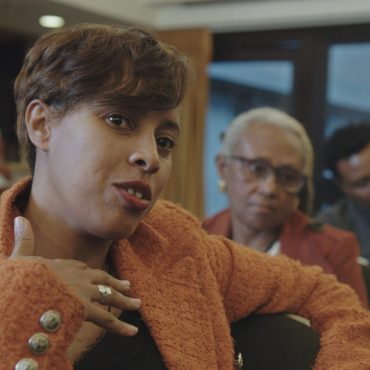
Ruth Beckermann on Wax & Gold, her documentary on Ethiopia seen through a hotel in Addis Ababa, at the Rome Film Fest 2026.
A dark fairy tale about growing up, belonging and the fear of being replaced. Bàrbara Farré and Diego Betancor discuss the personal origins of Mala Bèstia, its unsettling vision of adolescence and the decision to make a debut feature without …
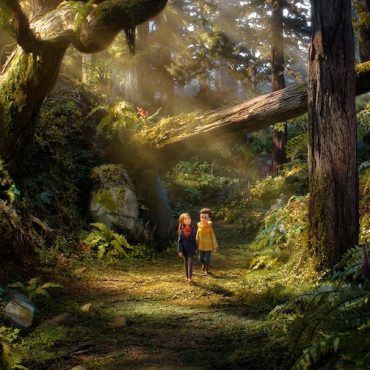
Character designer Thibault Leclercq talks about Wildwood and its stop-motion puppets, at the 24th edition of Alice nella Città.