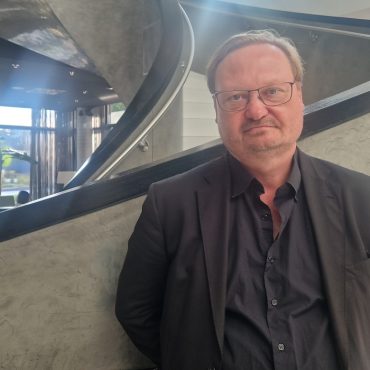


“Caravan”, an interview with director Zuzana Kirchnerova
"Caravan", for the film's director Zuzana Kirchnerova, was also a way to "give a voice" to all family members who are caretakers and get marginalised in our society.
Listeners:
Top listeners:
 play_arrow
ENGLISH Channel 01 If English is your language, or a language you understand, THIS IS YOUR CHANNEL !
 play_arrow
ITALIAN Channel 02 Se l’italiano è la tua lingua, o una lingua che conosci, QUESTO È IL TUO CANALE!
 play_arrow
EXTRA Channel 03 FRED Film Radio channel used to broadcast press conferences, seminars, workshops, master classes, etc.
 play_arrow
GERMAN Channel 04 Wenn Ihre Sprache Deutsch ist, oder Sie diese Sprache verstehen, dann ist das IHR KANAL !
 play_arrow
POLISH Channel 05
 play_arrow
SPANISH Channel 06 Si tu idioma es el español, o es un idioma que conoces, ¡ESTE ES TU CANAL!
 play_arrow
FRENCH Channel 07 Si votre langue maternelle est le français, ou si vous le comprenez, VOICI VOTRE CHAINE !
 play_arrow
PORTUGUESE Channel 08
 play_arrow
ROMANIAN Channel 09 Dacă vorbiţi sau înţelegeţi limba română, ACESTA ESTE CANALUL DUMNEAVOASTRĂ!
 play_arrow
SLOVENIAN Channel 10
 play_arrow
ENTERTAINMENT Channel 11 FRED Film Radio Channel used to broadcast music and live shows from Film Festivals.
 play_arrow
BULGARIAN Channel 16 Ако българският е вашият роден език, или го разбирате, ТОВА Е ВАШИЯТ КАНАЛ !
 play_arrow
CROATIAN Channel 17 Ako je hrvatski tvoj jezik, ili ga jednostavno razumiješ, OVO JE TVOJ KANAL!
 play_arrow
LATVIAN Channel 18
 play_arrow
DANISH Channel 19
 play_arrow
HUNGARIAN Channel 20
 play_arrow
DUTCH Channel 21
 play_arrow
GREEK Channel 22
 play_arrow
CZECH Channel 23
 play_arrow
LITHUANIAN Channel 24
 play_arrow
SLOVAK Channel 25
 play_arrow
ICELANDIC Channel 26 Ef þú talar, eða skilur íslensku, er ÞETTA RÁSIN ÞÍN !
 play_arrow
INDUSTRY Channel 27 FRED Film Radio channel completely dedicated to industry professionals.
 play_arrow
EDUCATION Channel 28 FRED Film Radio channel completely dedicated to film literacy.
 play_arrow
SARDU Channel 29 Si su sardu est sa limba tua, custu est su canale chi ti deghet!
 play_arrow
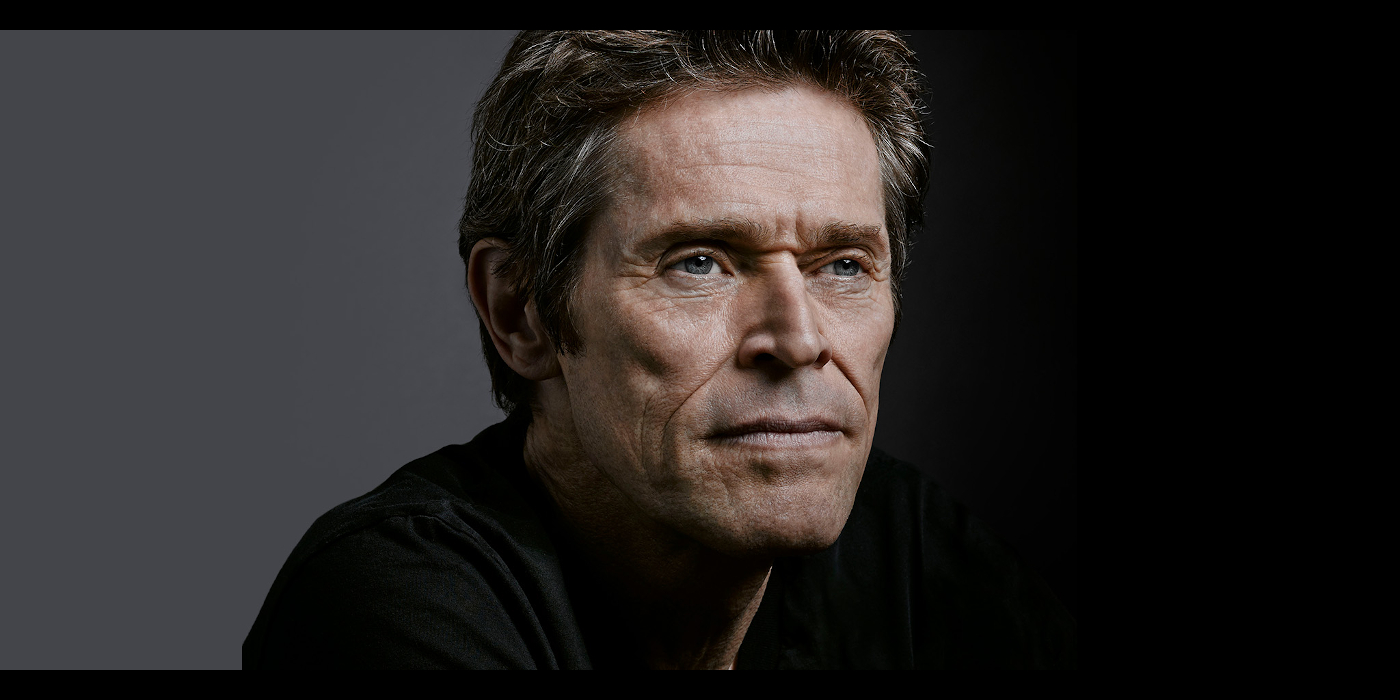
“Conversation with” at the 20th Marrakech IFF, interview with actor Willem Dafoe Bénédicte Prot
 play_arrow
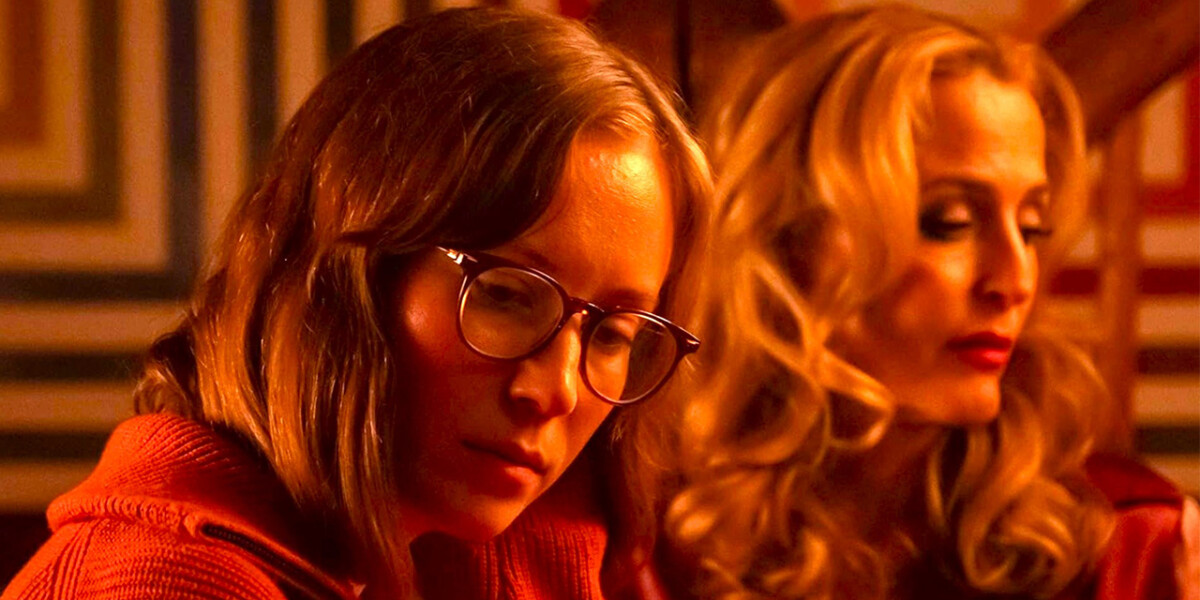
"Teenage Sex and Death at Camp Miasma", interview with director Jane Schoenbrun Chiara Nicoletti
Presented in Un Certain Regard at Cannes 2026 and arriving in Italian theaters via MUBI from August 19, Teenage Sex and Death at Camp Miasma is the new film from Jane Schoenbrun, the American director behind We’re All Going to the World’s Fair and I Saw the TV Glow. Schoenbrun talks about making a film from the other side of transition, the joyful chaos of horror, and how a childhood spent making homemade slasher movies and writing fan fiction became the key to remaking shame into liberation.
Schoenbrun describes the new film as, in a way, the true start of a post-transition body of work. Both of her features were made after she came out to herself, but I Saw the TV Glow, shot about a year into hormone therapy, was written in the overwhelming immediate aftermath of telling everyone in her life that she was about to transition. “That was a movie about how overwhelming and insane getting to that place where you’re ready to become yourself is, but it knows better than to try to then explain what’s going to happen once you do become yourself.” When she wrote that film, she says, she wasn’t yet seeing the benefits of transition “like when you get on a medication and all of the bad side effects come first.” This film comes from a different place. “This movie comes from a place of the good having kicked in. It’s a movie about the strange and beautiful and tender process of, for the first time in your life in your 30s, experiencing what most people do in their teen years: coming into a body, a sexuality, and an identity as an adult that feels right.”
Schoenbrun keeps rewriting a film all the way up to color correction. “I think it’s the only way to make a movie that feels present and joyful,” she says of a process that is at once meticulously planned and radically open. A show-stopping killing spree set to Counting Crows’ “A Long December” was written for her I Saw the TV Glow collaborators and mapped out over roughly a hundred hours of meetings. “Working with folks you’ve already built a language with lets you be like a ‘dungeon master’ going on an even crazier campaign.” Just as much of the film, though, had to be found in the moment, adapting to a location or an actor as they went. “When you make a live-action film, you are collaborating with reality, and that’s a gift.”
Long before film school, Schoenbrun was writing X-Files fanfiction at eight or nine years old. By middle school, armed with a cheap 90s camcorder, she was directing her friends in full slasher plots. “I literally made slasher movies,” she says of the tapes, though a suggestion that one could resurface as a bonus feature is firmly rejected. “I repeat: it will never be released.”
Schoenbrun thought often about Gillian Anderson while writing the film, many of her lesbian friends, she says, describe Anderson as their “awakening” but nothing quite prepared her for actually meeting the actress who shaped her own X-Files-obsessed childhood. “In fourth grade, my most prized possession was an X-Files novelization,” she recalls. Getting on a Zoom call with Anderson decades later felt surreal. “It felt like meeting someone I knew from childhood. But she’s such a serious artist — she is not Dana Scully. She is a full, rich, and tender human being. Collaborating with her was an emotionally rich human experience.”
The film is also a love letter to watching slasher movies without overthinking them, something Schoenbrun traces back to growing up at the video store, where the horror section carried an illicit, almost sexual allure. “In fifth grade, my best friend and I rented every Nightmare on Elm Street movie,” she says. For her, horror has a festivity specific to the genre: “Getting candy, hooting and hollering at the most outrageous death possible. It’s very joyful.” That idea surfaces directly in the film, when young Billy watches people at a strength-testing machine and calls it a “strange mating ritual” Schoenbrun’s own way of describing why audiences keep remaking these movies, year after year.
The film pokes plenty of fun at pretension, including, Schoenbrun admits, her own pseudo-intellectual academic side. Her protagonist Chris even makes a movie called Vibrance, a retelling of Psycho from the shower curtain’s point of view. But underneath the joke, the intertwining of pleasure and death is the film’s real subject. “I read a lot of Bataille in conceiving the gaze on sex. We’re remaking this mating ritual from some originary desire or trauma.” Fear plays into that too: asked whether the fear of being wrong pushes her character Chris to repress herself, Schoenbrun points to a wider cultural sickness. “We’re all messed up sexually because sexual drives are there from the beginning, and we are formed by a world that is sick, misogynist, and filled with violence that we all carry within us. I think the movies are about creating a space to explore all of that that isn’t war. It’s pretend; if it gets too real, you can turn it off.” That drive to queer the genre’s fixed roles – “the killer, the victim, the final girl” — runs through the whole film, turning the slasher into a means of both desire and release.
Schoenbrun has long been aware of horror’s uglier undercurrents, from the genre’s overlap with exploitation films like I Spit on Your Grave to what she calls the lineage of the “trans monster” like Norman Bates, Buffalo Bill, Dressed to Kill, Sleepaway Camp, all directly referenced in the new film. “Growing up in the 90s, my primary association with transness was these monsters,” she says. Making a personal film about feeling good in her own body meant confronting that history head-on. “It felt obvious that if I was going to make a personal movie about feeling good in my body, that shame was the villain. It’s an internalized shame that came from culture. I used the history of gender deviance in slasher films toward my own ends of reaching liberation and letting out shame.” The film, she says, is a remake in more ways than one. “My movie is a remake because I am trying to quite literally remake myself and remake that iconography into something that doesn’t make me feel like s*** as a kid.”
After years of slapdash sequels and waning fandom, the Camp Miasma slasher franchise is handed over to an enthusiastic young director for resurrection. But when she visits the original’s star, a now-reclusive actress shrouded in mystery, the two women fall into a blood-soaked world of desire, fear, and delirium.
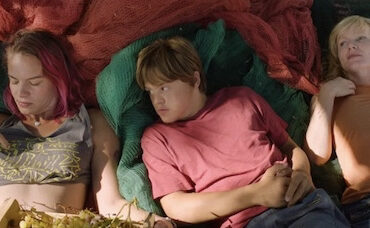
"Caravan", for the film's director Zuzana Kirchnerova, was also a way to "give a voice" to all family members who are caretakers and get marginalised in our society.
The Phoenician Scheme by Wes Anderson, in Cannes’ competition sees the participation of newcomers Mia Threapleton and Riz Ahmed and welcomes back Richard Ayoade
Interview with Kirill Serebrennikov and August Diehl on The Disappearance of Josef Mengele at Cannes 78 – a chilling look at evil, complicity, and justice.
Two Prosecutors, based on Georgy Demidov’s novella, marks Loznitsa’s return to fiction and to Cannes competition
Nicolas Winding Refn on Her Private Hell, his first feature in ten years, in Italian cinemas from October 1.
Discover how EWIP - European Work in Progress connects European and African films with top buyers, boosting distribution and festival success.
Rome is once again expanding the scope of its Film Fest: thirteen days of cinema, international premieres, renowned auteurs, emerging talent, series, documentaries, and cinematic heritage—with Javier Bardem, Paolo Genovese, and Monica Vitti at the heart of an edition that …
Pascal Diot, directeur du Venice Production Bridge, sur 15 ans d'évolution et le nouveau VPB Location Market.