



“At the Sea”, interview with director Kornél Mundruczó
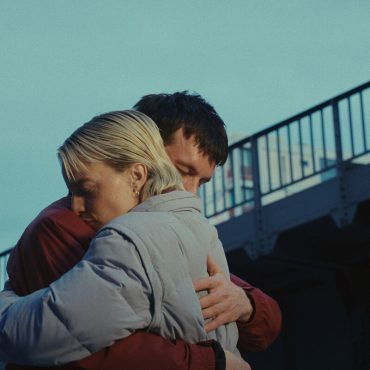
"At the Sea", presented in the 76th Berlinale competition, stars Amy Adams in an unbelievably brave role.
Listeners:
Top listeners:
 play_arrow
ENGLISH Channel 01 If English is your language, or a language you understand, THIS IS YOUR CHANNEL !
 play_arrow
ITALIAN Channel 02 Se l’italiano è la tua lingua, o una lingua che conosci, QUESTO È IL TUO CANALE!
 play_arrow
EXTRA Channel 03 FRED Film Radio channel used to broadcast press conferences, seminars, workshops, master classes, etc.
 play_arrow
GERMAN Channel 04 Wenn Ihre Sprache Deutsch ist, oder Sie diese Sprache verstehen, dann ist das IHR KANAL !
 play_arrow
POLISH Channel 05
 play_arrow
SPANISH Channel 06 Si tu idioma es el español, o es un idioma que conoces, ¡ESTE ES TU CANAL!
 play_arrow
FRENCH Channel 07 Si votre langue maternelle est le français, ou si vous le comprenez, VOICI VOTRE CHAINE !
 play_arrow
PORTUGUESE Channel 08
 play_arrow
ROMANIAN Channel 09 Dacă vorbiţi sau înţelegeţi limba română, ACESTA ESTE CANALUL DUMNEAVOASTRĂ!
 play_arrow
SLOVENIAN Channel 10
 play_arrow
ENTERTAINMENT Channel 11 FRED Film Radio Channel used to broadcast music and live shows from Film Festivals.
 play_arrow
BULGARIAN Channel 16 Ако българският е вашият роден език, или го разбирате, ТОВА Е ВАШИЯТ КАНАЛ !
 play_arrow
CROATIAN Channel 17 Ako je hrvatski tvoj jezik, ili ga jednostavno razumiješ, OVO JE TVOJ KANAL!
 play_arrow
LATVIAN Channel 18
 play_arrow
DANISH Channel 19
 play_arrow
HUNGARIAN Channel 20
 play_arrow
DUTCH Channel 21
 play_arrow
GREEK Channel 22
 play_arrow
CZECH Channel 23
 play_arrow
LITHUANIAN Channel 24
 play_arrow
SLOVAK Channel 25
 play_arrow
ICELANDIC Channel 26 Ef þú talar, eða skilur íslensku, er ÞETTA RÁSIN ÞÍN !
 play_arrow
INDUSTRY Channel 27 FRED Film Radio channel completely dedicated to industry professionals.
 play_arrow
EDUCATION Channel 28 FRED Film Radio channel completely dedicated to film literacy.
 play_arrow
SARDU Channel 29 Si su sardu est sa limba tua, custu est su canale chi ti deghet!
 play_arrow
“Conversation with” at the 20th Marrakech IFF, interview with actor Willem Dafoe Bénédicte Prot
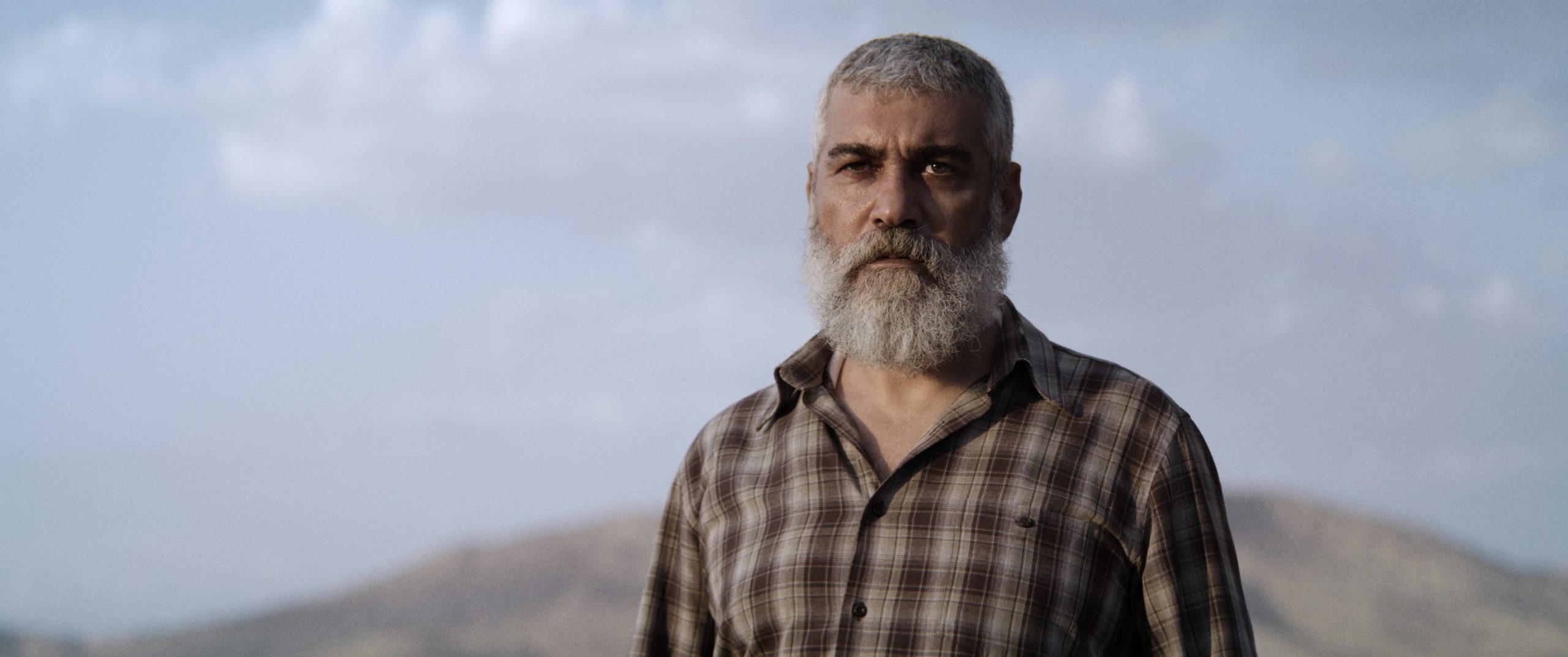
Presented in Competition at the 76th Berlinale, “Salvation” is the new film by Turkish director Emin Alper, winner of the Grand Jury Prize.
The filmmaker whose work consistently explores how communities create enemies, how fear spreads, and how ordinary people legitimize extraordinary violence, sets his story in a remote village high in the Turkish mountains, where the return of an exiled clan reignites a decades-old land feud. At the centre of the story is Mesut, the local leader’s brother, a haunted man seized by unsettling visions he believes to be divine warnings — visions that push him to challenge his brother’s authority and unleash a spiral of religious conviction, power struggle and collective paranoia.
Emin Alper‘s films have always found in small, enclosed communities a mirror for larger dynamics. Salvation is no exception. The remote Turkish village at its centre is, in the director’s own words, “a kind of microcosmos”, a place where all the tensions, fears and power games that define much broader social and political realities play out in concentrated form. The film draws on a real event, and Emin Alper approaches it as an investigation: how do these conditions come together? How do people convince themselves that horrifying actions are justified? “I’m looking for answers throughout the film” he says, “to the question of how people got so crazy and how they legitimize their actions.”
The title itself carries a bitter irony. The men at the centre of the story believe they are saving their community, rescuing their nation, acting in the name of God or of a higher cause. It is precisely this conviction, Emin Alper argues, that makes them so dangerous. “The most horrible crimes are committed by people who believe they have a mission, a religious mission, a national mission but always a noble or sacred one.” The film becomes, in this sense, a study not just of individual fanaticism but of the mechanisms through which entire communities are drawn into collective delusion.
Central to the film is Mesut’s psychology, a man living a kind of neurosis, chosen by the people as an alternative to existing leadership precisely because of his visions and his apparent connection to something beyond the rational. What begins as individual delirium slowly becomes collective, and Emin Alper traces this transformation with precision. Dreams play a crucial role: in mystical Islamic tradition, divine messages arrive through dreams, and it is through dreams that the community convinces itself of its mission. “The dreams become almost collective at the end” says the director, “reflecting the collective paranoia.”
“Salvation” is, on the surface, a masculine story about fighters, feuds and power. But Emin Alper pays close attention to the women at its edges, and what he finds complicates easy distinctions. One female character reproduces militaristic and patriarchal values as fiercely as any man; another is more clearly a victim. “Sexual differences do not always mean what we think they mean” Emin Alper reflects. “Sometimes women can be more masculine than men, and they can reproduce these values more than men.” It is an uncomfortable observation, but an honest one.
Asked about the power of cinema today, Emin Alper offers a characteristically measured response. On one hand, the inflation of streaming content has diluted cinema’s impact, audiences zap from one show to the next without pause. On the other, moving images occupy our lives more than ever. “It is a paradoxical situation” he admits, while making clear that for him, as a filmmaker, the movie theatre remains irreplaceable as a space for cinematic experience.
High in the mountains of Eastern Turkey, two neighboring Kurdish villages face one another: Upper Pingan on a mountain peak and Lower Pingan on the plateau below. Years ago, the Bezari clan was forcibly displaced while their rivals, the Hazerans, became village guards and remained in Upper Pingan. Over the years,nthe Hazerans grew wealthy by cultivating the fields left behind by the Bezaris in Lower Pingan. As the armed conflict in the region subsides, the Bezaris return to reclaim their territory. While Sheikh Ferit, the leader of Hazerans, calls for peaceful coexistence, even at the cost of conceding the land, his older brother Mesut takes a far more confrontational stance. Ferit's position fuels growing resentment among his people, who fear for their land and their future. Haunted by unsettling dreams he interprets as divine warnings, Mesut openly challenges his brother's leadership. Caught between the fear of losing all they possess and long-suppressed rage, Hazerans stand at a crossroads: will they be dragged toward tragedy, or will they finally attain salvation?
"At the Sea", presented in the 76th Berlinale competition, stars Amy Adams in an unbelievably brave role.
"Allegro Pastell" explores nostalgia, love, and connection through unique storytelling and intimate email-era communication, for a generation that longs for freedom but at same time also for connections.
"The Lights, they fall," by director Saša Vajda captures grief, friendship, and societal complexities with a slow, contemplative pace that deeply resonates.
The Berlinale Pro* Director Tanja Meissner introduces the numerous new initiatives the EFM is starting this year such as the EFM Animation Days, EFM Beyond and EFM Frontières Focus
With Heysel 85, Teodora Ana Mihai turns a football tragedy into a mirror for today's world and the choices we make in times of crisis
With Narciso, Marcelo Martinessi returns to the Berlinale with a film noir about desire, repression and the dangers of authoritarianism
With A Russian Winter, Patrick Chiha maps the frozen limbo of Russian exiles, nowhere in time and space
One Battle After Another led the 2026 Oscars with six wins, ahead of Sinners with four, in a ceremony shaped by politics, firsts and industry anxiety.