


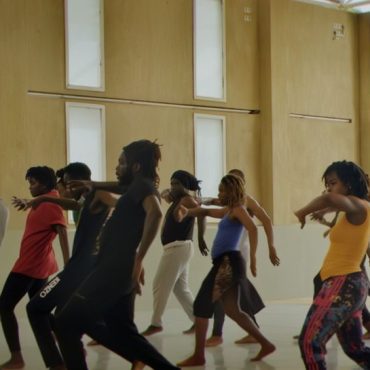
“Atcha Atcha”, interview with director Mamadou Dia
Atcha Atcha highlights the vibrant African dance scene and its fragile cultural roots, showcasing movement, identity, and the power of local expression.
Listeners:
Top listeners:
 play_arrow
ENGLISH Channel 01 If English is your language, or a language you understand, THIS IS YOUR CHANNEL !
 play_arrow
ITALIAN Channel 02 Se l’italiano è la tua lingua, o una lingua che conosci, QUESTO È IL TUO CANALE!
 play_arrow
EXTRA Channel 03 FRED Film Radio channel used to broadcast press conferences, seminars, workshops, master classes, etc.
 play_arrow
GERMAN Channel 04 Wenn Ihre Sprache Deutsch ist, oder Sie diese Sprache verstehen, dann ist das IHR KANAL !
 play_arrow
POLISH Channel 05
 play_arrow
SPANISH Channel 06 Si tu idioma es el español, o es un idioma que conoces, ¡ESTE ES TU CANAL!
 play_arrow
FRENCH Channel 07 Si votre langue maternelle est le français, ou si vous le comprenez, VOICI VOTRE CHAINE !
 play_arrow
PORTUGUESE Channel 08
 play_arrow
ROMANIAN Channel 09 Dacă vorbiţi sau înţelegeţi limba română, ACESTA ESTE CANALUL DUMNEAVOASTRĂ!
 play_arrow
SLOVENIAN Channel 10
 play_arrow
ENTERTAINMENT Channel 11 FRED Film Radio Channel used to broadcast music and live shows from Film Festivals.
 play_arrow
BULGARIAN Channel 16 Ако българският е вашият роден език, или го разбирате, ТОВА Е ВАШИЯТ КАНАЛ !
 play_arrow
CROATIAN Channel 17 Ako je hrvatski tvoj jezik, ili ga jednostavno razumiješ, OVO JE TVOJ KANAL!
 play_arrow
LATVIAN Channel 18
 play_arrow
DANISH Channel 19
 play_arrow
HUNGARIAN Channel 20
 play_arrow
DUTCH Channel 21
 play_arrow
GREEK Channel 22
 play_arrow
CZECH Channel 23
 play_arrow
LITHUANIAN Channel 24
 play_arrow
SLOVAK Channel 25
 play_arrow
ICELANDIC Channel 26 Ef þú talar, eða skilur íslensku, er ÞETTA RÁSIN ÞÍN !
 play_arrow
INDUSTRY Channel 27 FRED Film Radio channel completely dedicated to industry professionals.
 play_arrow
EDUCATION Channel 28 FRED Film Radio channel completely dedicated to film literacy.
 play_arrow
SARDU Channel 29 Si su sardu est sa limba tua, custu est su canale chi ti deghet!
 play_arrow
“Conversation with” at the 20th Marrakech IFF, interview with actor Willem Dafoe Bénédicte Prot
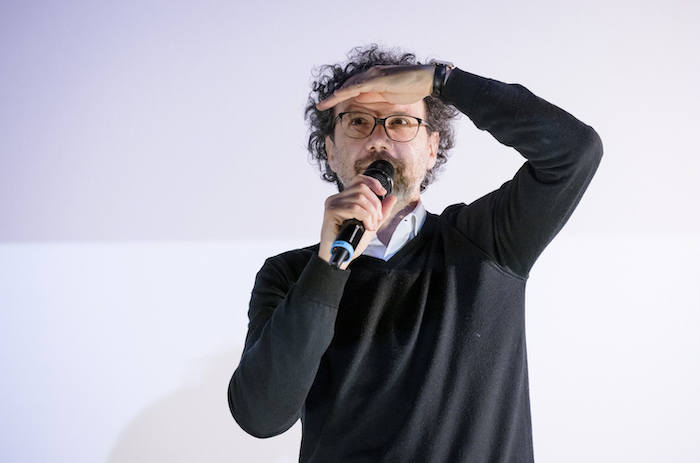
“For the past four years at the Berlinale, I have been fortunate enough to work along with extraordinary people, as in love with movies as I am, who are totally dedicated to revitalising one of the world’s great film festivals. Together we have helped so many talents and great stories reach out to the world. And I am grateful to all the people who have supported and believed in me.
I thought that continuity could be facilitated if I remained part of the festival, but, in the new structure as it has been presented, it is quite clear that the conditions for me to continue as Artistic Director no longer exist. The next edition of the festival will be therefore the end of this rewarding journey.”
With these words, Carlo Chatrian, the esteemed Artistic Director of the Berlin International Film Festival, commonly known as Berlinale, has announced his decision to step down from his role following the 2024 edition of the festival. This news comes as a consequence of significant structural changes within the festival’s management system, signalling a major turning point in the history of one of the world’s most prestigious film festivals.
The catalyst behind Chatrian‘s departure lies in the German Ministry for Culture and Media’s decision to abolish Berlinale‘s dual management structure. This innovative structure, which included Mariette Rissenbeek as the Executive Director and Carlo Chatrian as the Artistic Director, had been in place since June 2019, representing a departure from the festival’s previous single-director model, which Dieter Kosslick headed for nearly two decades.
Chatrian and Rissenbeek took the helm at a pivotal moment in the festival’s history. Their joint management coincided with the early days of the COVID-19 pandemic in 2020, with that edition becoming the last major film festival with a full-blown market and physical attendance to take place that year. Subsequently, they adeptly managed an online edition in 2021 and a hybrid edition in 2022, wherein a scaled-down physical festival took place while the market was conducted online.
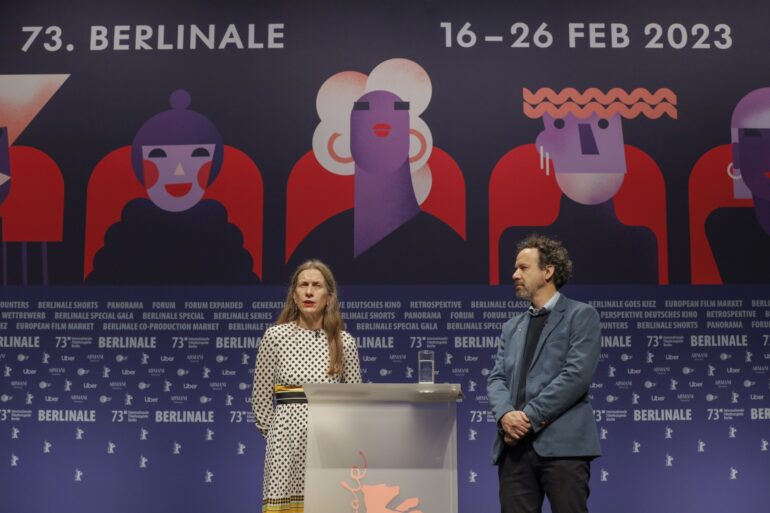
Last month, German Culture Minister Claudia Roth announced her vision to return the Berlinale to the hands of a single director, emphasizing the need for unified leadership to modernize and secure the festival’s future. Roth stated, “The necessary decisions to modernize the Berlinale, to secure its future and sustainability should now be in one hand again in order to further develop the Berlinale as a public festival in the federal capital and to strengthen it in the league of international A film festivals.”
This move has generated both support and scepticism within the global film community. Supporters argue that a single-director model can provide a clearer vision and streamline decision-making. On the other hand, critics express concerns about the potential loss of diversity and creative input that a dual management structure allowed.
An open letter, signed by nearly 300 prominent figures from the international film industry, voiced support for Carlo Chatrian’s continued leadership at Berlinale. Signatories included renowned directors such as Martin Scorsese, Joanna Hogg, Paul Schrader, Tilda Swinton, and M. Night Shyamalan, among many others. The letter praised Chatrian‘s quiet yet effective leadership, highlighting his ability to guide the festival through unprecedented challenges, including the pandemic.
The letter stated, “Carlo Chatrian may not be a showman, but in his quiet ways, he and his team have chosen an open and artistically rewarding curatorial path, showing new directions in world cinema, challenging stereotypes, and connecting different strands of filmmaking.” It also commended the festival’s resilience under his guidance and the critical acclaim received by films awarded during his tenure.
With Chatrian‘s impending departure, the festival faces the task of appointing a successor who can carry forward his legacy. An intriguing development is forming a six-person selection committee chaired by Claudia Roth. This committee includes industry professionals like Oscar-winning director Edward Berger, Anne Leppin of the German Film Academy, actress-producer-screenwriter Sara Fazilat, veteran producer Roman Paul, and Florian Graf, head of Berlin’s Senate Chancellery.
The decision to disband the dual management structure and the subsequent resignation of Chatrian and Rissenbeek have stirred discussions within the film community. Supporters argue that the minister’s decision could disrupt the festival’s momentum and question the lack of a clear vision for Berlinale’s future.
As Berlinale prepares for its 2024 edition, which is scheduled to run from February 15 to 25, all eyes are on the festival’s next steps. The global film community remains engaged, eager to witness the unfolding of this pivotal transition and the appointment of a new artistic director who will continue the festival’s tradition of celebrating exceptional cinema worldwide.
With its rich history and influence on the international film scene, Berlinale stands at a crossroads, and the choices made in the coming months will shape its future. Carlo Chatrian‘s contributions to the festival will undoubtedly be remembered as an integral part of its legacy, and his departure marks the end of a rewarding journey for both him and Berlinale. The festival now faces the challenge of embracing change while preserving its commitment to excellence in cinema.
Atcha Atcha highlights the vibrant African dance scene and its fragile cultural roots, showcasing movement, identity, and the power of local expression.
Giornate degli Autori - Venezia
Twenty-five world premieres, an international competition and a programme dedicated to Giorgio Gosetti define Giornate degli Autori 2026.
Seven debut features, four continents and cinema conceived as resistance: Venice Critics’ Week 2026 announces its complete programme.
The Venice Film Festival announces Danny Boyle's Ink as opening the festival, while Giovanni Veronesi's Dio ride will close the 83rd edition.