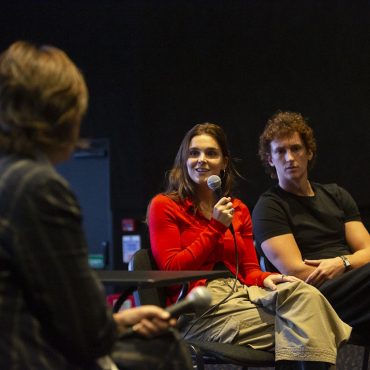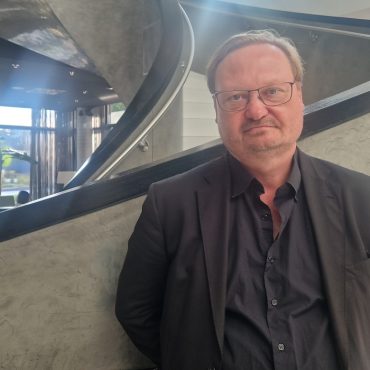


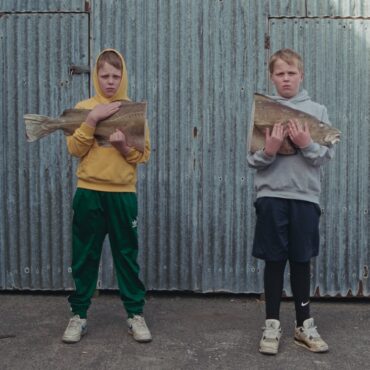
“The love that remains”, interview with director Hlynur Pálmason
"The love that remains", at Cannes 78, is Pálmason’s more personal and intimate film.
Listeners:
Top listeners:
 play_arrow
ENGLISH Channel 01 If English is your language, or a language you understand, THIS IS YOUR CHANNEL !
 play_arrow
ITALIAN Channel 02 Se l’italiano è la tua lingua, o una lingua che conosci, QUESTO È IL TUO CANALE!
 play_arrow
EXTRA Channel 03 FRED Film Radio channel used to broadcast press conferences, seminars, workshops, master classes, etc.
 play_arrow
GERMAN Channel 04 Wenn Ihre Sprache Deutsch ist, oder Sie diese Sprache verstehen, dann ist das IHR KANAL !
 play_arrow
POLISH Channel 05
 play_arrow
SPANISH Channel 06 Si tu idioma es el español, o es un idioma que conoces, ¡ESTE ES TU CANAL!
 play_arrow
FRENCH Channel 07 Si votre langue maternelle est le français, ou si vous le comprenez, VOICI VOTRE CHAINE !
 play_arrow
PORTUGUESE Channel 08
 play_arrow
ROMANIAN Channel 09 Dacă vorbiţi sau înţelegeţi limba română, ACESTA ESTE CANALUL DUMNEAVOASTRĂ!
 play_arrow
SLOVENIAN Channel 10
 play_arrow
ENTERTAINMENT Channel 11 FRED Film Radio Channel used to broadcast music and live shows from Film Festivals.
 play_arrow
BULGARIAN Channel 16 Ако българският е вашият роден език, или го разбирате, ТОВА Е ВАШИЯТ КАНАЛ !
 play_arrow
CROATIAN Channel 17 Ako je hrvatski tvoj jezik, ili ga jednostavno razumiješ, OVO JE TVOJ KANAL!
 play_arrow
LATVIAN Channel 18
 play_arrow
DANISH Channel 19
 play_arrow
HUNGARIAN Channel 20
 play_arrow
DUTCH Channel 21
 play_arrow
GREEK Channel 22
 play_arrow
CZECH Channel 23
 play_arrow
LITHUANIAN Channel 24
 play_arrow
SLOVAK Channel 25
 play_arrow
ICELANDIC Channel 26 Ef þú talar, eða skilur íslensku, er ÞETTA RÁSIN ÞÍN !
 play_arrow
INDUSTRY Channel 27 FRED Film Radio channel completely dedicated to industry professionals.
 play_arrow
EDUCATION Channel 28 FRED Film Radio channel completely dedicated to film literacy.
 play_arrow
SARDU Channel 29 Si su sardu est sa limba tua, custu est su canale chi ti deghet!
 play_arrow
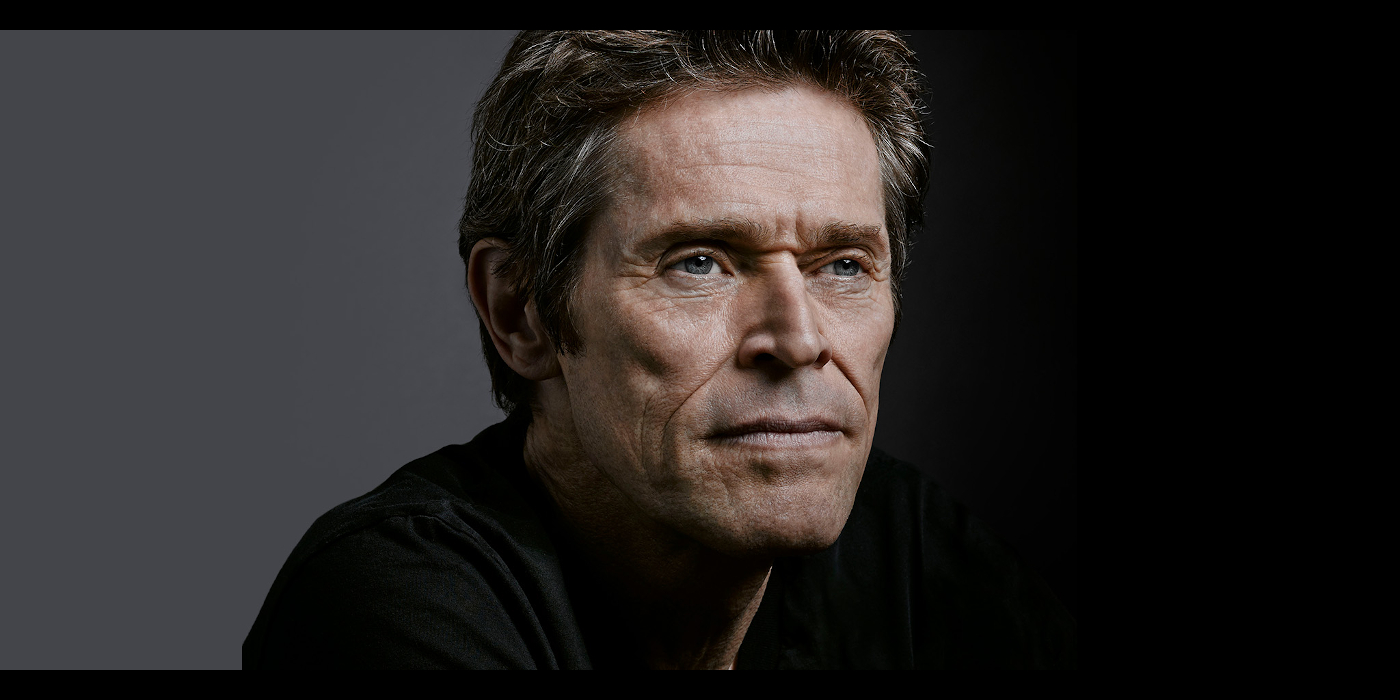
“Conversation with” at the 20th Marrakech IFF, interview with actor Willem Dafoe Bénédicte Prot
 play_arrow
"I'll be gone in June", interview with the director Katharina Rivilis Federica Scarpa
Presented in the Cannes Film Festival’s Un Certain Regard section, “I’ll Be Gone in June” marks the feature debut of German filmmaker Katharina Rivilis, who transforms personal memory into an intimate reflection on adolescence and historical uncertainty.
The film follows Franny, a German exchange student who arrives in Las Cruces, New Mexico, shortly before the events of September 11 reshape both the United States and the global political landscape.
Franny initially carries with her an imagined version of America shaped by cinema, television, and popular culture. What she discovers instead is a quieter and more fragile reality: a desert town filled with young people whose lives exist far from the mythology of New York or Los Angeles.
For Katharina Rivilis, the story emerges directly from her own experience: “I was also an exchange student in that same place during that year,” she explained.
Yet the director insists the film is not strictly autobiographical. Rather than reconstructing exact events, she describes the project as a “collective memory” shaped by her own recollections alongside those of friends and fellow exchange students.
The origins of the film began years later, when Katharina Rivilis returned to New Mexico in 2018 with a friend working on a travel guide.
Revisiting Las Cruces after many years transformed her perception of the place entirely. What had once survived only as fragmented teenage memories suddenly reappeared with cinematic clarity.
“I saw these landscapes again and thought: this needs to become a film,” she recalled.
The vastness of the desert, the endless horizon and the unique quality of light left a profound emotional impact on the filmmaker. Katharina Rivilis repeatedly described New Mexico as a place of longing, both physically expansive and emotionally disorienting.
She compared the region’s atmosphere to the paintings of Georgia O’Keeffe, emphasising the almost unreal intensity of the landscape and sky.
“There is something magical in this light,” she said.
For the director, returning there also meant reconnecting with a younger version of herself. Encounters with former classmates and host families created the strange sensation of entering a time capsule where emotional memory and present reality overlapped.
That tension between nostalgia and rediscovery permeates the entire film.
One of the most compelling aspects of “I’ll Be Gone in June” is its perspective on the United States as both fantasy and lived reality.
Franny arrives carrying the symbolic promise of the “American dream,” an idea exported globally through decades of cultural influence. Yet Katharina Rivilis was interested precisely in the gap between that dream and the everyday experiences of the young people she encountered in New Mexico.
“Reality is much harder,” the director observed.
The film portrays a generation growing up with limited opportunities despite living inside one of the world’s most mythologised nations. Katharina Rivilis noted how difficult it can be for many young people in New Mexico to leave the state or access higher education, particularly compared with European systems where university education is often publicly accessible.
At the same time, the filmmaker avoids reducing America to disillusionment alone. She remains fascinated by the energy and determination associated with the American ideal, even as she acknowledges its inequalities and contradictions.
That ambiguity becomes central to Franny’s perspective throughout the film. America appears simultaneously seductive, fragile and emotionally inaccessible.
Although the September 11 attacks shape the atmosphere of the film, Katharina Rivilis deliberately avoided making “I’ll Be Gone in June” directly about 9/11 itself.
Instead, the historical event gradually enters the emotional texture of daily life, mirroring how adolescents experience political change before fully understanding its ideological dimensions.
“It was a time of extreme insecurity,” Katharina Rivilis reflected.
For the director, the attacks marked not only a geopolitical rupture but also the symbolic beginning of the twenty-first century. She described the period as one dominated by uncertainty, fear and the sensation that an era was ending.
Importantly, Katharina Rivilis also connects those emotions to the present day. During the interview, she drew parallels between the post-9/11 atmosphere and contemporary global anxieties shaped by pandemics, wars and political instability.
“We constantly feel like we are living in moments of crisis,” she observed.
Within the film, that collective insecurity remains largely atmospheric rather than explicit. Franny senses the world’s emotional transformation before fully understanding it politically, allowing the film to preserve the perspective of adolescence rather than historical analysis.
Ultimately, “I’ll Be Gone in June” is less interested in historical reconstruction than in emotional perception.
Katharina Rivilis portrays adolescence as a state of heightened sensitivity in which political transformations are first felt through atmosphere, uncertainty, and emotional dislocation.
Franny’s journey through New Mexico becomes both personal and collective: a confrontation with the collapse of cultural illusions and the beginning of a more fragile awareness of the world.
The result is a film suspended between memory, history and longing, where landscapes become emotional archives and youth itself appears inseparable from the feeling that everything is about to change.
In 2001, Franny, a 16-year-old exchange student from Germany, arrives in the sleepy desert town of Las Cruces, New Mexico. Far from home, Franny struggles through awkward school days, stifling heat, and restless nights until she meets Elliott, a boy whose quiet sadness mirrors her own. As America reels from 9/11, something resonates within Franny and an unexpected tenderness begins to bloom.
"The love that remains", at Cannes 78, is Pálmason’s more personal and intimate film.
"Caravan", for the film's director Zuzana Kirchnerova, was also a way to "give a voice" to all family members who are caretakers and get marginalised in our society.
Diego Céspedes brought to Cannes, in the Un Certain Regard section, his first feature film " The Mysterious Gaze of the Flamingo", a fascinating and heartfelt story of self affirmation and resilience of a queer family in Chile, seen through …
Edinburgh Spanish Film Festival
Marian Arechega, director of the vibrant Edinburgh Spanish Film Festival, discusses the 2026 edition programme, showcasing recent and diverse cinema from Spain.
Nicolas Winding Refn on Her Private Hell, his first feature in ten years, in Italian cinemas from October 1.
Discover how EWIP - European Work in Progress connects European and African films with top buyers, boosting distribution and festival success.
Rome is once again expanding the scope of its Film Fest: thirteen days of cinema, international premieres, renowned auteurs, emerging talent, series, documentaries, and cinematic heritage—with Javier Bardem, Paolo Genovese, and Monica Vitti at the heart of an edition that …