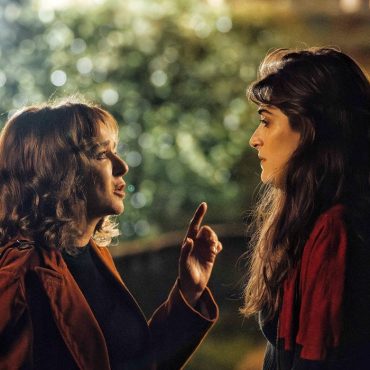



“The Room Next Door”, interview with Tilda Swinton and Julianne Moore
Interview with Tilda Swinton and Julianne Moore, actresses in "The room next door". They talk about their work with Pedro Almodóvar.
Listeners:
Top listeners:
 play_arrow
ENGLISH Channel 01 If English is your language, or a language you understand, THIS IS YOUR CHANNEL !
 play_arrow
ITALIAN Channel 02 Se l’italiano è la tua lingua, o una lingua che conosci, QUESTO È IL TUO CANALE!
 play_arrow
EXTRA Channel 03 FRED Film Radio channel used to broadcast press conferences, seminars, workshops, master classes, etc.
 play_arrow
GERMAN Channel 04 Wenn Ihre Sprache Deutsch ist, oder Sie diese Sprache verstehen, dann ist das IHR KANAL !
 play_arrow
POLISH Channel 05
 play_arrow
SPANISH Channel 06 Si tu idioma es el español, o es un idioma que conoces, ¡ESTE ES TU CANAL!
 play_arrow
FRENCH Channel 07 Si votre langue maternelle est le français, ou si vous le comprenez, VOICI VOTRE CHAINE !
 play_arrow
PORTUGUESE Channel 08
 play_arrow
ROMANIAN Channel 09 Dacă vorbiţi sau înţelegeţi limba română, ACESTA ESTE CANALUL DUMNEAVOASTRĂ!
 play_arrow
SLOVENIAN Channel 10
 play_arrow
ENTERTAINMENT Channel 11 FRED Film Radio Channel used to broadcast music and live shows from Film Festivals.
 play_arrow
BULGARIAN Channel 16 Ако българският е вашият роден език, или го разбирате, ТОВА Е ВАШИЯТ КАНАЛ !
 play_arrow
CROATIAN Channel 17 Ako je hrvatski tvoj jezik, ili ga jednostavno razumiješ, OVO JE TVOJ KANAL!
 play_arrow
LATVIAN Channel 18
 play_arrow
DANISH Channel 19
 play_arrow
HUNGARIAN Channel 20
 play_arrow
DUTCH Channel 21
 play_arrow
GREEK Channel 22
 play_arrow
CZECH Channel 23
 play_arrow
LITHUANIAN Channel 24
 play_arrow
SLOVAK Channel 25
 play_arrow
ICELANDIC Channel 26 Ef þú talar, eða skilur íslensku, er ÞETTA RÁSIN ÞÍN !
 play_arrow
INDUSTRY Channel 27 FRED Film Radio channel completely dedicated to industry professionals.
 play_arrow
EDUCATION Channel 28 FRED Film Radio channel completely dedicated to film literacy.
 play_arrow
SARDU Channel 29 Si su sardu est sa limba tua, custu est su canale chi ti deghet!
 play_arrow
“Conversation with” at the 20th Marrakech IFF, interview with actor Willem Dafoe Bénédicte Prot
 play_arrow
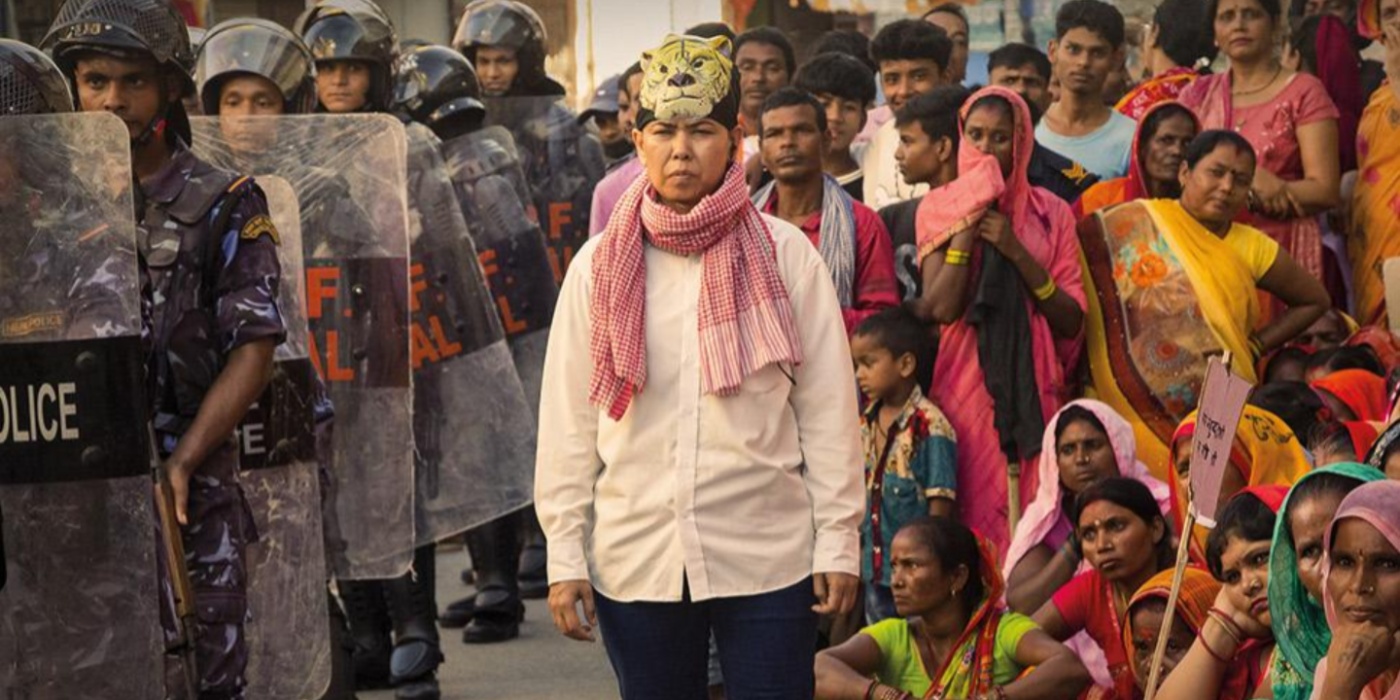
“Pooja, Sir,” Interview with Director Deepak Rauniyar Laura Della Corte
In a revealing interview, Deepak Rauniyar, the director of “Pooja, Sir,” discusses the intricate personal and social inspirations behind his film in the section Orizzonti, which is deeply rooted in his own experiences with discrimination in Nepal. Rauniyar describes “Pooja, Sir” as a “product of love,” referencing his previous work, “White Sun,” which tackled the aftermath of the civil war in Nepal. This new film continues this thematic exploration, delving into the lived experiences of marginalized communities and the urgent need for dignity and recognition.
Rauniyar shares that he intentionally set “Pooja, Sir” in the same locations where significant protests occurred during the political upheaval of history in 2007 and 2015.
During these demonstrations, hundreds of thousands of people took to the streets to demand federalism and equal rights, risking their lives for the basic necessities of dignity and justice. By anchoring his film in these real-life events, Deepak Rauniyar underscores the importance of storytelling in fostering empathy and understanding among different communities.
Collaboration plays a crucial role in Rauniyar‘s process. His partnership with Asha Magratti, who contributed significantly to the film, adds depth to the narrative. They come from different backgrounds, with Magratti identifying as part of a light-skinned community while Rauniyar aligns himself with populations that face discrimination. This difference enriches the storytelling, as they seek to convey a message that transcends their individual experiences. Rauniyar emphasizes that much of the film’s narrative is inspired by both their lives, showcasing how gender inequality and societal norms have impacted them personally and collectively.
One of the central themes of “Pooja, Sir” is the portrayal of women in Nepal. Rauniyar highlights how uneven representation in films and media often neglects the struggles that women face daily. He reflects on Asha’s encounters with gender disparity during her upbringing, noting how she was denied the same educational opportunities as her brother, who received preferential treatment. This dynamic mirrors broader societal views in Nepal, where gender roles are rigidly defined, often preventing women from realizing their potential.
Through the character of Asha, Rauniyar passionately depicts the challenges faced by women trying to navigate their identities and roles in a patriarchal society. Despite her aspirations to be viewed as a “son” following the loss of her brother, Asha was continually met with resistance and discrimination. Rauniyar notes that these struggles are not just individual stories; they reflect systemic issues deeply entrenched within their culture.
The filmmaker intricately weaves these themes into “Pooja, Sir,” showcasing a society where misunderstandings lead to discrimination. Rauniyar articulates the belief that people from more privileged communities often view marginalization through the lens of stereotypes and propaganda, failing to grasp the realities faced by others. He hopes that by engaging audiences with these narratives, they will develop empathy and reconsider their perceptions of marginalized groups.
To ensure authenticity in “Pooja, Sir,” Rauniyar dedicated significant time to research, conducting interviews over several years with various individuals, including police officers. This extensive groundwork informs the film’s representation of social issues, grounding it in the realities of lived experiences. While some elements of the film are fictionalized for narrative effect, Rauniyar insists that the heart of the story remains embedded in true events and personal histories.
In conclusion, Deepak Rauniyar frames “Pooja, Sir” as a cinematic endeavor that goes beyond mere storytelling; it’s an exploration of empathy, identity, and social justice. By giving voice to the disenfranchised and challenging societal norms, the film aims to resonate with audiences not just in Nepal but globally. Rauniyar’s vision is to use cinema as a transformative tool that can spark conversations about discrimination, equality, and the complexities of human experience. For those intrigued by these themes, “Pooja, Sir” promises to be a thought-provoking film that encourages viewers to reflect upon their own perceptions of identity and social justice.
When two boys are kidnapped in a border town in Nepal, Detective Inspector Pooja is sent from Kathmandu to solve the case. However, upon her arrival, the brewing political unrest and violent protests throw her off course, compelling her to seek help from Mamata, a local Madhesi policewoman. By putting aside systemic discrimination and pushing through everyday misogyny, the women manage to solve the case—but at what personal cost? Inspired by real events which took place in Southern Nepal during the 2015 race protests.
Interview with Tilda Swinton and Julianne Moore, actresses in "The room next door". They talk about their work with Pedro Almodóvar.
The order, in the 81st Venice competition, sees Jude Law as a veteran FBI agent fighting a group of white supremacists.
“Her aesthetics is still here”. Sandra Maischberger, producer of “Riefenstahal”, discusses the documentary about the German filmmaker.
Giornate degli Autori - Venezia
“Sanatorium Under the Sign of the Hourglass” reimagines Bruno Schulz’s surreal narratives. Explore how the Quay Brothers approach memory and identity in this haunting cinematic experience.
"It’s never over: Jeff Buckley" by Amy Berg is finally coming out in Italy thanks to Nexo
"A Brief Affair" actress Valeria Golino reflects on challenging roles, artistic freedom and bringing writer Goliarda Sapienza to life in "Fuori".
"A Brief Affair": Ludovica Rampoldi on turning a love triangle into a seductive psychological thriller at Cinema Made in Italy.
“Primavera”: Damiano Michieletto discusses Vivaldi, freedom and the power of music in his Venice-set historical debut.