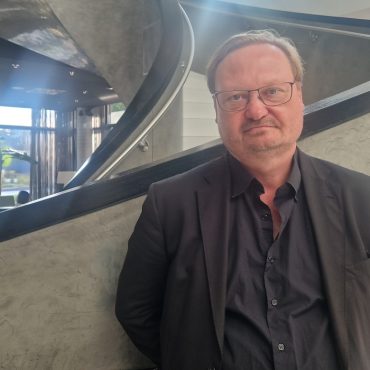


“The Basics of Philosophy”, interview with director Paul Schrader
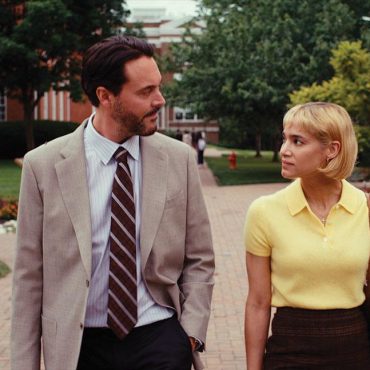
Paul Schrader on The Basics of Philosophy, guilt and forgiveness, at the Venice Film Festival 2026.
Listeners:
Top listeners:
 play_arrow
ENGLISH Channel 01 If English is your language, or a language you understand, THIS IS YOUR CHANNEL !
 play_arrow
ITALIAN Channel 02 Se l’italiano è la tua lingua, o una lingua che conosci, QUESTO È IL TUO CANALE!
 play_arrow
EXTRA Channel 03 FRED Film Radio channel used to broadcast press conferences, seminars, workshops, master classes, etc.
 play_arrow
GERMAN Channel 04 Wenn Ihre Sprache Deutsch ist, oder Sie diese Sprache verstehen, dann ist das IHR KANAL !
 play_arrow
POLISH Channel 05
 play_arrow
SPANISH Channel 06 Si tu idioma es el español, o es un idioma que conoces, ¡ESTE ES TU CANAL!
 play_arrow
FRENCH Channel 07 Si votre langue maternelle est le français, ou si vous le comprenez, VOICI VOTRE CHAINE !
 play_arrow
PORTUGUESE Channel 08
 play_arrow
ROMANIAN Channel 09 Dacă vorbiţi sau înţelegeţi limba română, ACESTA ESTE CANALUL DUMNEAVOASTRĂ!
 play_arrow
SLOVENIAN Channel 10
 play_arrow
ENTERTAINMENT Channel 11 FRED Film Radio Channel used to broadcast music and live shows from Film Festivals.
 play_arrow
BULGARIAN Channel 16 Ако българският е вашият роден език, или го разбирате, ТОВА Е ВАШИЯТ КАНАЛ !
 play_arrow
CROATIAN Channel 17 Ako je hrvatski tvoj jezik, ili ga jednostavno razumiješ, OVO JE TVOJ KANAL!
 play_arrow
LATVIAN Channel 18
 play_arrow
DANISH Channel 19
 play_arrow
HUNGARIAN Channel 20
 play_arrow
DUTCH Channel 21
 play_arrow
GREEK Channel 22
 play_arrow
CZECH Channel 23
 play_arrow
LITHUANIAN Channel 24
 play_arrow
SLOVAK Channel 25
 play_arrow
ICELANDIC Channel 26 Ef þú talar, eða skilur íslensku, er ÞETTA RÁSIN ÞÍN !
 play_arrow
INDUSTRY Channel 27 FRED Film Radio channel completely dedicated to industry professionals.
 play_arrow
EDUCATION Channel 28 FRED Film Radio channel completely dedicated to film literacy.
 play_arrow
SARDU Channel 29 Si su sardu est sa limba tua, custu est su canale chi ti deghet!
 play_arrow
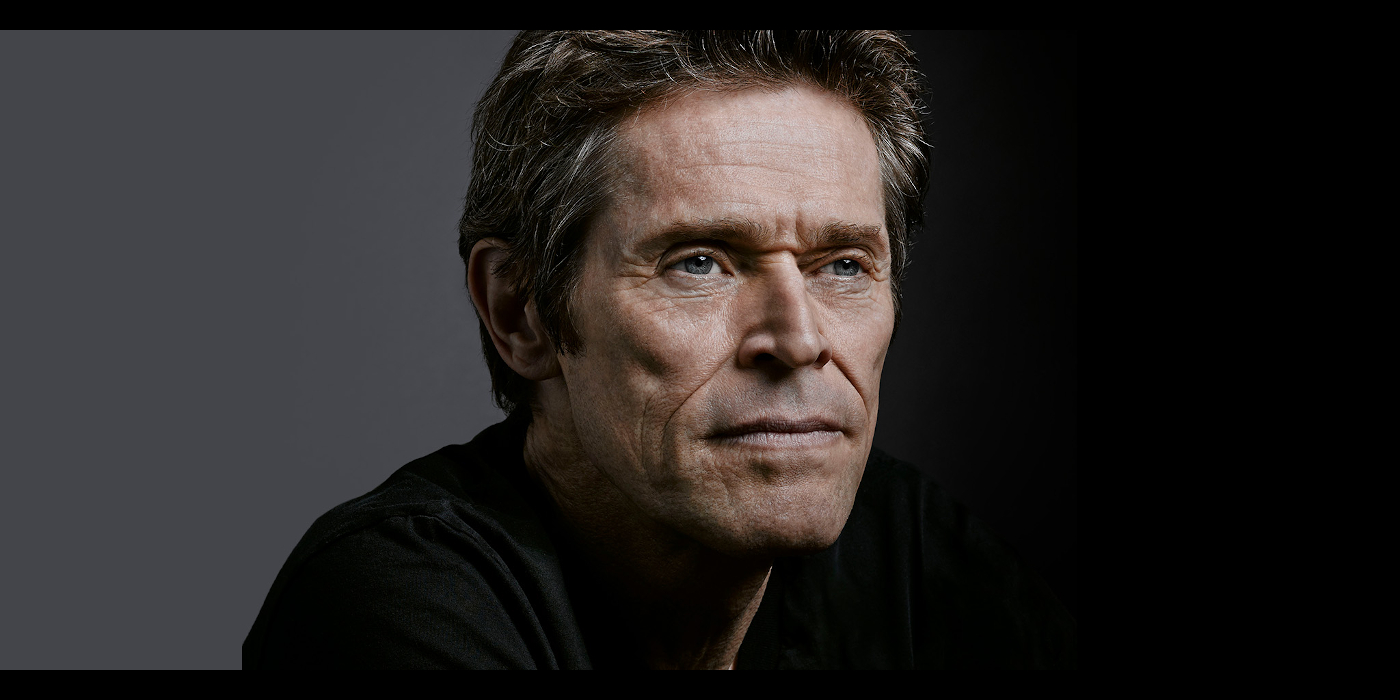
“Conversation with” at the 20th Marrakech IFF, interview with actor Willem Dafoe Bénédicte Prot
 play_arrow
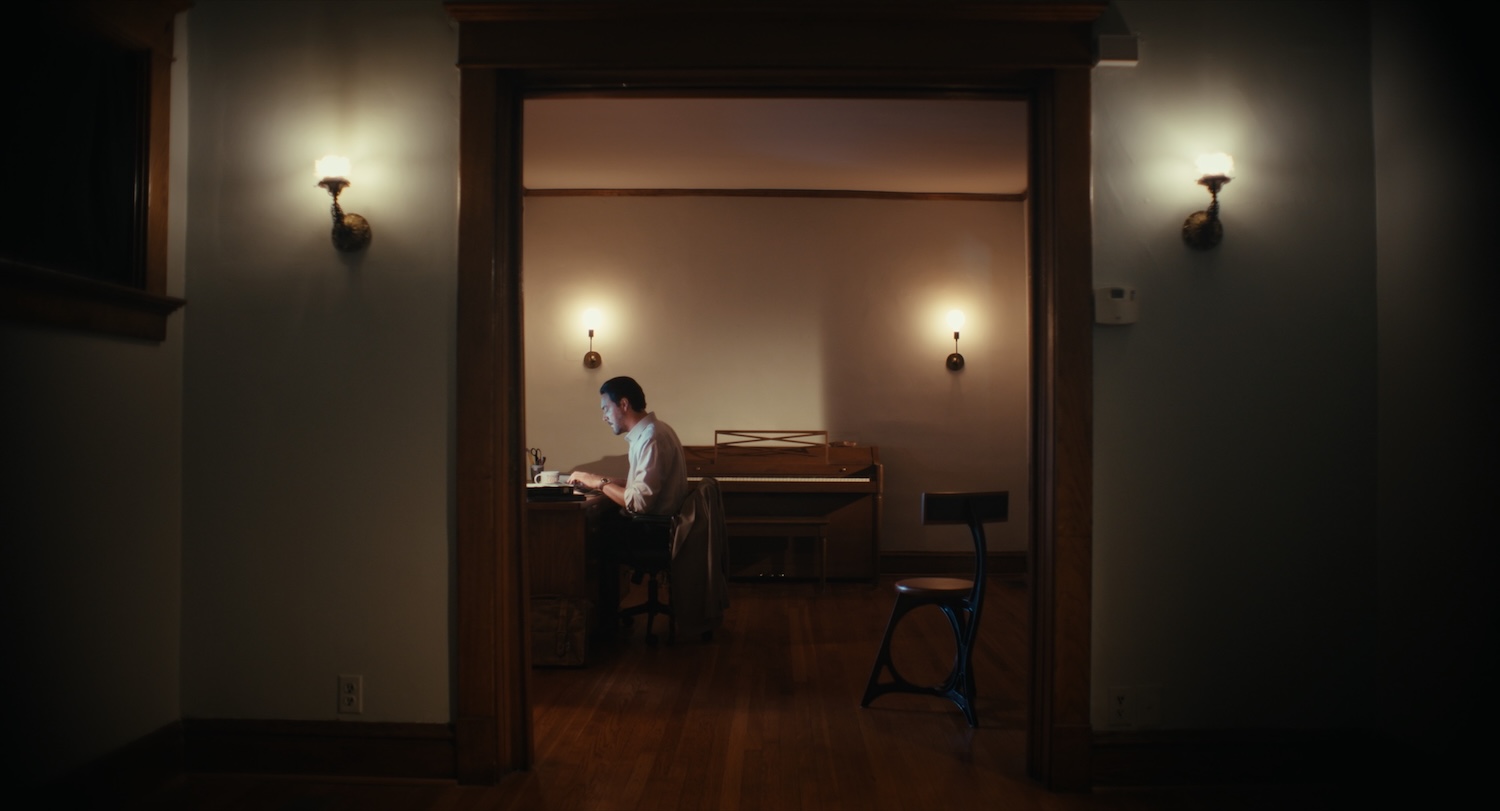
"The Basics of Philosophy", interview with actors Bill Pullman and Dana Delany David Martos
Presented out of competition at the Venice Film Festival 2026, The Basics of Philosophy follows John Jorissen, a philosophy professor in the American Midwest writing a book on Spinoza, whose quiet life is upended when the sudden reappearance of a young man at his estranged father’s funeral forces him to confront a past he has never accounted for. Dana Delany and Bill Pullman, part of the film’s cast, talk about working with director Paul Schrader, on set and off it.
Both actors describe Schrader as economical to the point of near silence. For Delany, now working with him for the third time, that only sharpens with each collaboration. “I just have seen him get cleaner and cleaner and cleaner,” she says. “He just knows what he’s doing. And with this film, no waste of time. He was editing as we went. Hardly any direction. He just knows what he wants.” She compares him to an artist late in his career: “It’s like seeing an artist in his older years, like Picasso or Matisse, and how they got simpler and simpler and simpler.”
For Pullman, working with Schrader for the first time, the pull had started years earlier, with one of his films. “I liked his movies very much, and I think it was First Reformed that really set into me, just settled into me,” he says, describing Schrader as having “a kind of inspirational will, directness about how he goes about the work.” He found the director’s method matched what Delany describes: “It’s very simple, it’s bared down, and he allows the actors to do their work with very simple directions, but a very sublime sense of storytelling.”
Schrader’s casting process, both actors say, left little room for discussion. “He didn’t explain very much, actually,” Delany says. “He just said, ‘I have a role I think you’d be right for, and can you be here next week?’ Basically.” She shot her scenes quickly, in Kansas City, without ever meeting the actor playing her on-screen husband: “I didn’t even know who my husband was at that point because we didn’t have any scenes together… it was kind of like just do your job, it’s all in the script, and if he needs to explain something, then there probably is a problem.”
When she finally met Pullman, she told him who she had pictured instead: “I actually was picturing John Huston. So you’re much younger and much more vital.” Pullman’s own casting came together just as suddenly: he shot his scenes in Los Angeles, opposite Jack Huston, only after the rest of the film had already wrapped. For a while, Delany reveals, the search for a lead very nearly went in a different direction altogether. “At one point Paul was going to play the part,” she says, “because there had been issues finding the big actor.”
Asked how they choose their roles, both actors point to the page over anything else. “It starts with the page, don’t you think?” Delany says. “Not the money,” Pullman adds. “Certainly not this film. No money,” Delany agrees. Pullman puts it more bluntly still: “I can actually proudly say I’ve never taken a job for money, ever. It has to be the writing. Starts with the writing and then the people.” For him, the test is what lingers after the read: “It becomes one of those things where you read it and then you’re washing dishes or something and the dialogue is still in your head, and that’s always a sign that I should do this.”
John Jorissen teaches philosophy in a small liberal arts school in the American Midwest, and is writing a book on Spinoza. His life revolves around teaching, writing and spending time with his partner Becca, a fellow professor, and her adolescent son Willie. Jorissen is smart, serious and distant. Something from the past torments him.
When his estranged father Melvyn passes away, the sudden appearance of a young man, Miguel Basque, shocks Jorissen at the funeral. It is revealed through flashback that there was an incident between Jorissen and Miguel, the young son of the Jorissen family’s gardener. Melvyn paid Miguel’s father for their silence and private schooling. In return, the family pressed no charges. Wrought with guilt, shame and confusion over his past, as well as the growing suspicion that Spinoza’s God would never pardon his actions, Jorissen purchases Nembutal, a lethal euthanasia powder. Conflicted, Jorissen asks Becca to marry him. Soon after, Becca is approached by Miguel, who feels an obligation to discuss what Jorrisen had done years ago. When she confronts him, Jorissen denies everything. The film ends with Jorissen and Becca at the altar, exchanging wedding vows, with Miguel in a church pew dressed exactly as he did during Melvyn’s funeral. Young Willie hands his new father the ring as Jorissen gazes down at him.
Paul Schrader on The Basics of Philosophy, guilt and forgiveness, at the Venice Film Festival 2026.
Rashid Masharawi and Laura Nikolov on Citizen Osama, a portrait of Gaza's everyday life, at the Venice Film Festival 2026.
Mads Mikkelsen and Sofie Gråbøl, part of the cast of Anders Thomas Jansen’s "The Last Viking", go deep in narrating a film that is Dark Comedy with deep themes, making it a must-watch for fans of dark comedy and philosophical …
We met with Renate Ranzi, of the IDM Music & Film Commission of Sudtirol. We talked abut the Leonardo Di Costanzo film that has been shot with their support and about all the funds and help they can provide to …
Discover how EWIP - European Work in Progress connects European and African films with top buyers, boosting distribution and festival success.
Rome is once again expanding the scope of its Film Fest: thirteen days of cinema, international premieres, renowned auteurs, emerging talent, series, documentaries, and cinematic heritage—with Javier Bardem, Paolo Genovese, and Monica Vitti at the heart of an edition that …
Pascal Diot, directeur du Venice Production Bridge, sur 15 ans d'évolution et le nouveau VPB Location Market.
In the Open section at Venice 83, Luke Lorentzen on falling back in love with filmmaking in Boatbuilders