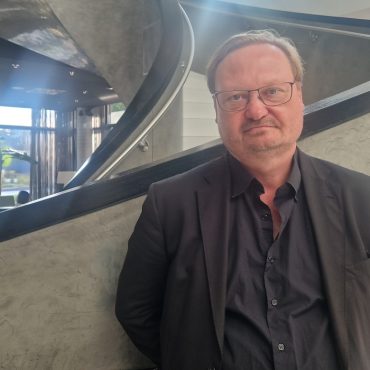
Bérenger Thouin was invited at the 79th Cannes Film Festival to present his debut feature, “The Golden Age”, in the Cannes Classics section. The presence of a Caméra d’or contender in this strand is quite the accomplishment in itself, but as it happens, this way of making Cannes history also fits his cinematic gesture perfectly. Indeed, the French director delivers an impressive film, ten years in the making, where he merges an incredible profusion and variety of archive material with newly shot footage to build a strikingly seamless and consistent continuous fictional story shaped as a saga around a female character – rather than a man, for a change.
“The starting point,” Bérenger Thouin explains, “was the desire to have a female protagonist, an adventurous woman… and to create a sweeping, novelistic story around this woman seen in all her complexity, with her desires, her aspirations, her darkness… In order to do that, my first ‘archival’ move, if I may say, was to go and record my grandmothers – I wanted to collect stories told by women from the past Century, if not exactly from the same era as the one represented in the film… Then came the idea, in order to talk about this character, to give her a historical context, a setting, to make her story resonate with history in the wider sense, and therefore to use archive material (which I had already done in short films, so I was familiar with it)… and produce a new form of narrative, but always with the intention of having this great novelistic character at the heart of a historical saga.”
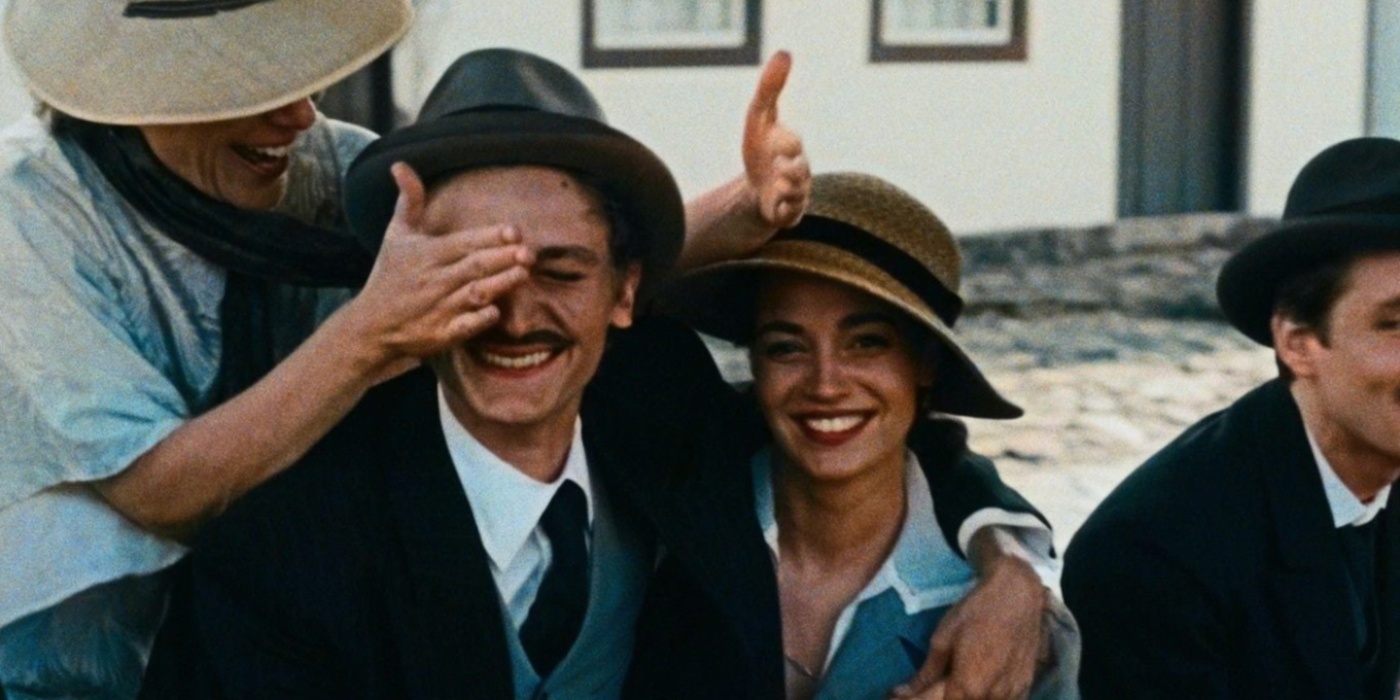
Jeanne Lavaur (played by Souheila Yacoub) is thus a true heroine whom we follow accross all last Century, from the Great War to the Florence floods (and even beyond, since it is she herself who narrates her life story), from a provincial farm she will end up controlling to Paris, and on to Brazil, not forgetting a few detours through Asia and Italy via the character of Celeste, the anarchist lover with whom she will have a taste of a happy life.
On the modernity of his approach to the last century, Bérenger Thouin says that working with archives and newly shot material allows to constantly have two perspectives on things, as the viewer constantly alternates between the time of the movie and the present time, where they know things that the characters don’t, and that the film plays with that “ambivalence”. He also points out that working from archive material protected the film from the outdated representations period pieces often rely on. After all, original archives don’t lie, so in the case of “The Golden Age”, “we didn’t need to exaggerate or caricature that era, and we were able to bring to it all our modernity of today, because the historical part was de facto authentic. Thus, we could have living, modern characters, and show that the people in these archives are living their modernity too. They aren’t stiffened by somewhat dated representations: they are in their moment, they are alive.”
On how he went about crafting such a homogeneous and fluid narrative from such eclectic materials, Bérenger Thouin underlines that it was not only the newly shot scenes and the archive documents which needed to be assembled, but that the archives themselves “came from many different sources, from different eras, so they themselves needed to be stitched together.” He says that the first job was to watch them well (and that there was do “a lot of editing, pre-editing”), after which they needed to be woven into the narrative, integrated through the script (co-written with Tunisian filmmaker Mehdi Ben Attia). “The film was made backwards,” Bérenger Thouin explains. “We did nine months of editing before even the first day of shooting, to make sure we integrated all these images smoothly and that they were there for a reason and served the fiction.” Then, during the shoot, a guiding principle was to mimick the aesthetics of the old documents – the type of framing, the absence of extra lights and of camera equipment, the black and white – and then colourise, make it grainier, the intention being to “have a dialogue with these images, not just deliver a pastiche.”
“Sometimes,” adds Bérenger Thouin, “you don’t see the seams, sometimes the boundary disappears completely and you’re immersed in the story, and then sometimes it’s the contrary, you feel a resistance, and it’s a good thing, because all of a sudden, [you are reminded that these are also archives] and you also look at them as such. And to me, being able to look at them both as fictional and as authentic images from that time, that’s what seems to me to be the most fascinating and enjoyable pleasure of that project as a viewer.”
Plot
Born at the turn of the century in a village’s butcher shop, Jeanne Lavaur dreams of becoming a countess. Inspired by the fearless Céleste and guided by her love for Guillaume de Barante, Jeanne’s journey carries her from the vibrant Paris of the Golden Twenties through the turmoil of two world wars. As her life intertwines with the great upheavals of the 20th century, she rises as a fiercely free woman, determined to never let anyone else define who she is meant to be.