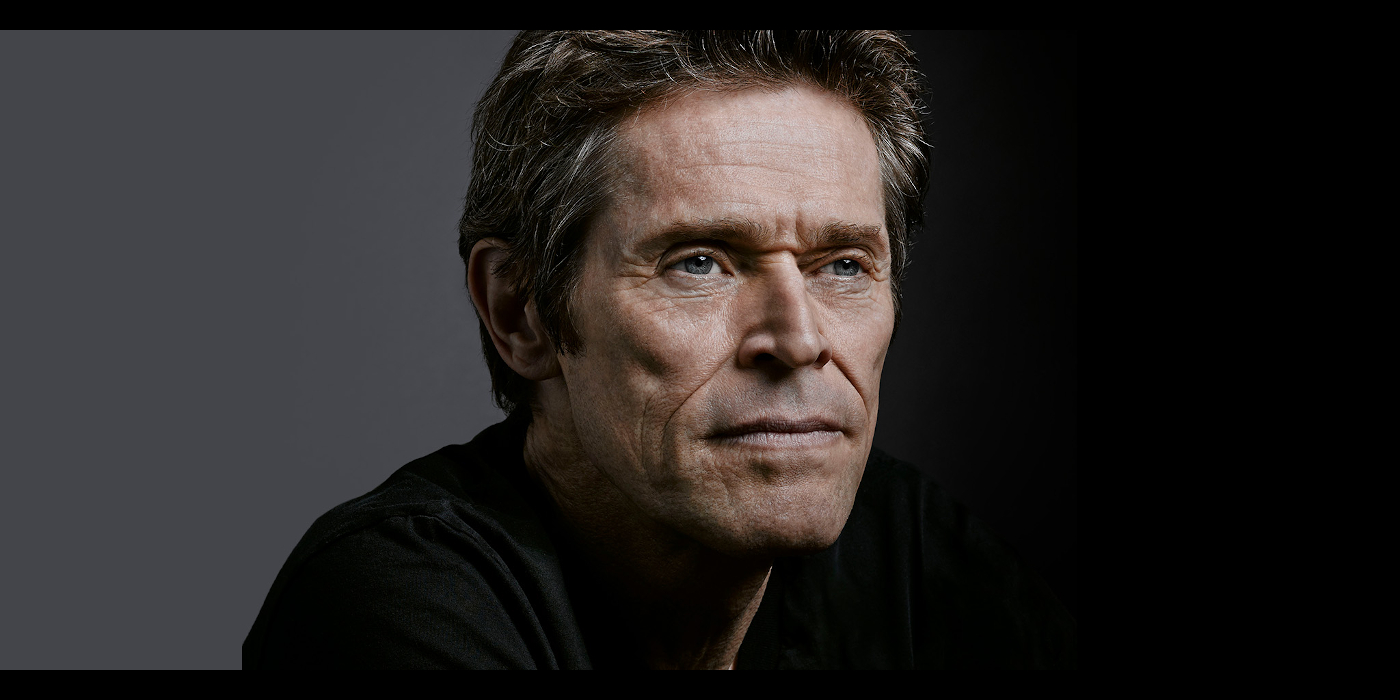
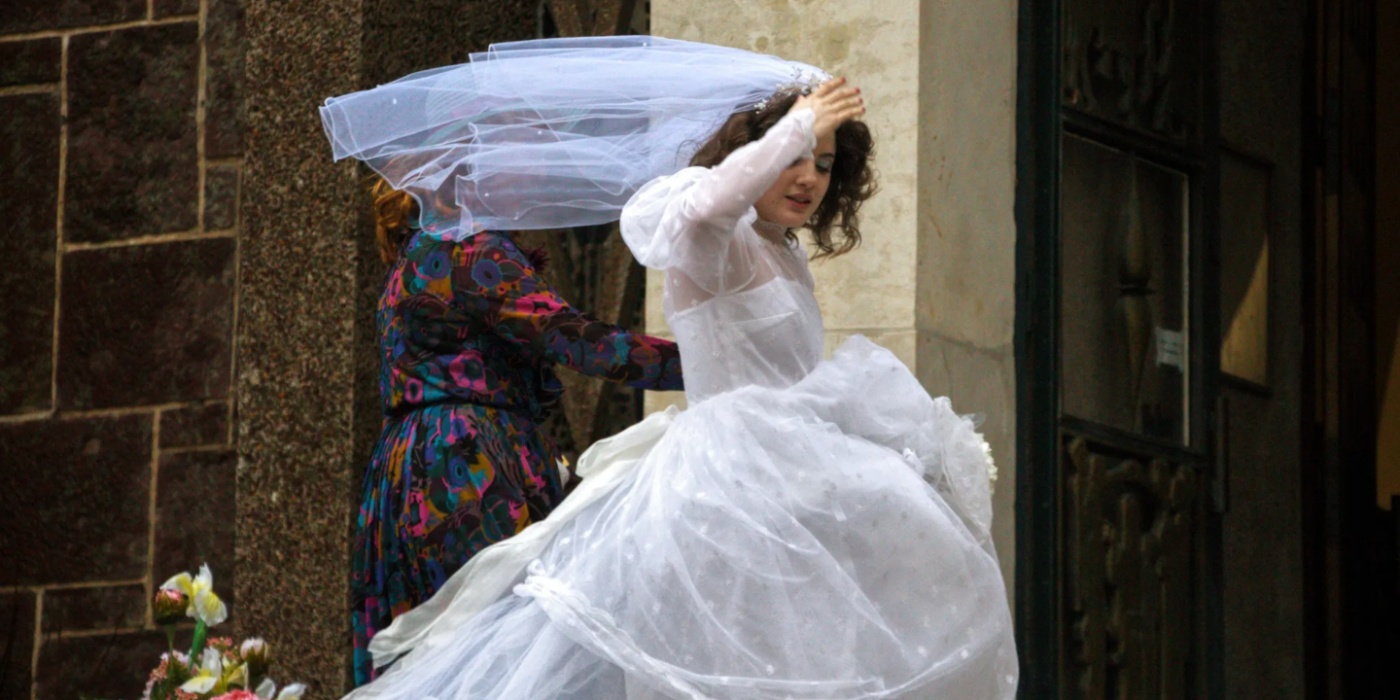
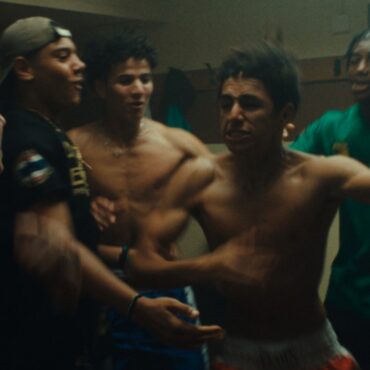
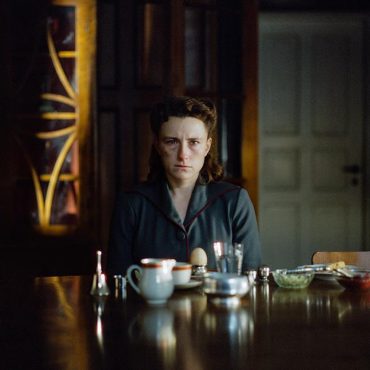
Cannes loves Adèle Exarchopoulos; that’s no secret. Ever since the seminal moment that was the Palme d’Or she received in 2013, alongside Abdellatif Kechiche and her colleague and friend Léa Seydoux, for “Blue Is the Warmest Colour”, the French actress has climbed the famous steps of the Palais des Festivals almost every year. At this 79th Cannes Film Festival 2026, she’s there with two films: the Competition entry “Another Day” by Jeanne Herry, in which she plays the title role, and Christophe Honoré’s new ensemble gem, “Orange-Flavoured Wedding”, screened in the Cannes Première section. In this film, set in Nantes in 1978, the filmmaker directly evokes his maternal family (reprising the characters — now played by other actors, such as Paul Kircher, Vincent Lacoste, Nadia Tereszkiewicz, Alban Lenoir and Malou Khebizi — from an autobiographical play staged in 2021, Le Ciel de Nantes) as he orchestrates the tumultuous, boozy wedding of one of the children of a large clan that includes the hypersensitive, semi-depressive Claudie, one of the groom’s sisters — the part which was entrusted to Exarchopoulos. The actress says she naturally found a fine chemistry with the other performers during prep and on those Paris–Nantes train rides.
On this first collaboration with Christophe Honoré
“I obviously knew Christophe Honoré’s cinema very well, but the screenplay felt a lot like a stage play. There was something almost hard to stomach about it, it was full of very lengthy stage directions, no dialogues. The themes addressed it in were clear, but you could tell there would be lots of room left for improvisation, so I called Vincent Lacoste, who’s a friend […], and he said, “Do it, follow me! He’s a great director!” And that was confirmed straight away — I wasn’t disappointed in the slightest!”
On her character’s depressive status, the way women used to be and still are treated, and violence within the family
“I don’t think her depression comes from somewhere specific. She’s just one of those women whose freedom and desire were too much for the era, and who were immediately deemed dangerous to society […], so it was fairly easy for me to identify with her. […] Ultimately, the film’s subject is trauma: this whole family was abused, and this whole family is in the process of repeating the same pattern and abusing others — be it their wives, their children, their sisters… In the 70s, domestic violence was completely normalised, and so was violence against women, and today we’re barely at the dawn of a real reckoning with mental health, women’s mental load, their place in the home, violence within the family unit. It’s starting to evolve a little, but I think there are still big actions pending that ought to be more political and institutional.”
A soft spot for supporting roles
“I love supporting roles. Of course, I love leads too, but I find there’s a freedom and a need for boldness in supporting parts – I’m thinking of “Mandibles” in particular.. As a viewer, too: I have big, deep-seated memories of supporting characters that truly moved me. […] It’s a bit like in life, supporting roles: they’re people who pass through, but you never forget them.”
Plot
The Puig family has seven children. And today is the wedding of the youngest: Jacques. It is March 1978 in the suburbs of Nantes. The father is not attending the wedding; he has been banished from the family. The brothers and sisters, however, are all there, happy to be reunited. Jacques is marrying Martine. For the two of them, it’s a marriage of love. But can love heal the wounds of childhood?”