

“Alpha”, interview with director Julia Ducornau
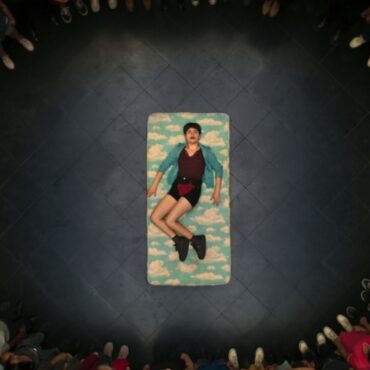
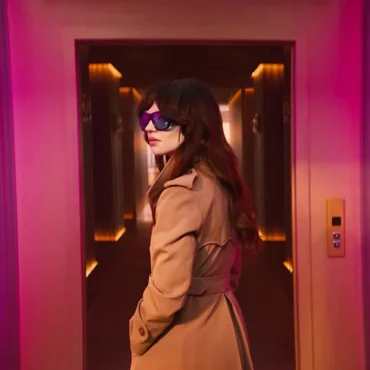
Alpha by Julia Ducornau, marks the director’s comeback in Cannes competition after the Palme d’Or with Titane in 2021
Listeners:
Top listeners:
 play_arrow
ENGLISH Channel 01 If English is your language, or a language you understand, THIS IS YOUR CHANNEL !
 play_arrow
ITALIAN Channel 02 Se l’italiano è la tua lingua, o una lingua che conosci, QUESTO È IL TUO CANALE!
 play_arrow
EXTRA Channel 03 FRED Film Radio channel used to broadcast press conferences, seminars, workshops, master classes, etc.
 play_arrow
GERMAN Channel 04 Wenn Ihre Sprache Deutsch ist, oder Sie diese Sprache verstehen, dann ist das IHR KANAL !
 play_arrow
POLISH Channel 05
 play_arrow
SPANISH Channel 06 Si tu idioma es el español, o es un idioma que conoces, ¡ESTE ES TU CANAL!
 play_arrow
FRENCH Channel 07 Si votre langue maternelle est le français, ou si vous le comprenez, VOICI VOTRE CHAINE !
 play_arrow
PORTUGUESE Channel 08
 play_arrow
ROMANIAN Channel 09 Dacă vorbiţi sau înţelegeţi limba română, ACESTA ESTE CANALUL DUMNEAVOASTRĂ!
 play_arrow
SLOVENIAN Channel 10
 play_arrow
ENTERTAINMENT Channel 11 FRED Film Radio Channel used to broadcast music and live shows from Film Festivals.
 play_arrow
BULGARIAN Channel 16 Ако българският е вашият роден език, или го разбирате, ТОВА Е ВАШИЯТ КАНАЛ !
 play_arrow
CROATIAN Channel 17 Ako je hrvatski tvoj jezik, ili ga jednostavno razumiješ, OVO JE TVOJ KANAL!
 play_arrow
LATVIAN Channel 18
 play_arrow
DANISH Channel 19
 play_arrow
HUNGARIAN Channel 20
 play_arrow
DUTCH Channel 21
 play_arrow
GREEK Channel 22
 play_arrow
CZECH Channel 23
 play_arrow
LITHUANIAN Channel 24
 play_arrow
SLOVAK Channel 25
 play_arrow
ICELANDIC Channel 26 Ef þú talar, eða skilur íslensku, er ÞETTA RÁSIN ÞÍN !
 play_arrow
INDUSTRY Channel 27 FRED Film Radio channel completely dedicated to industry professionals.
 play_arrow
EDUCATION Channel 28 FRED Film Radio channel completely dedicated to film literacy.
 play_arrow
SARDU Channel 29 Si su sardu est sa limba tua, custu est su canale chi ti deghet!
 play_arrow
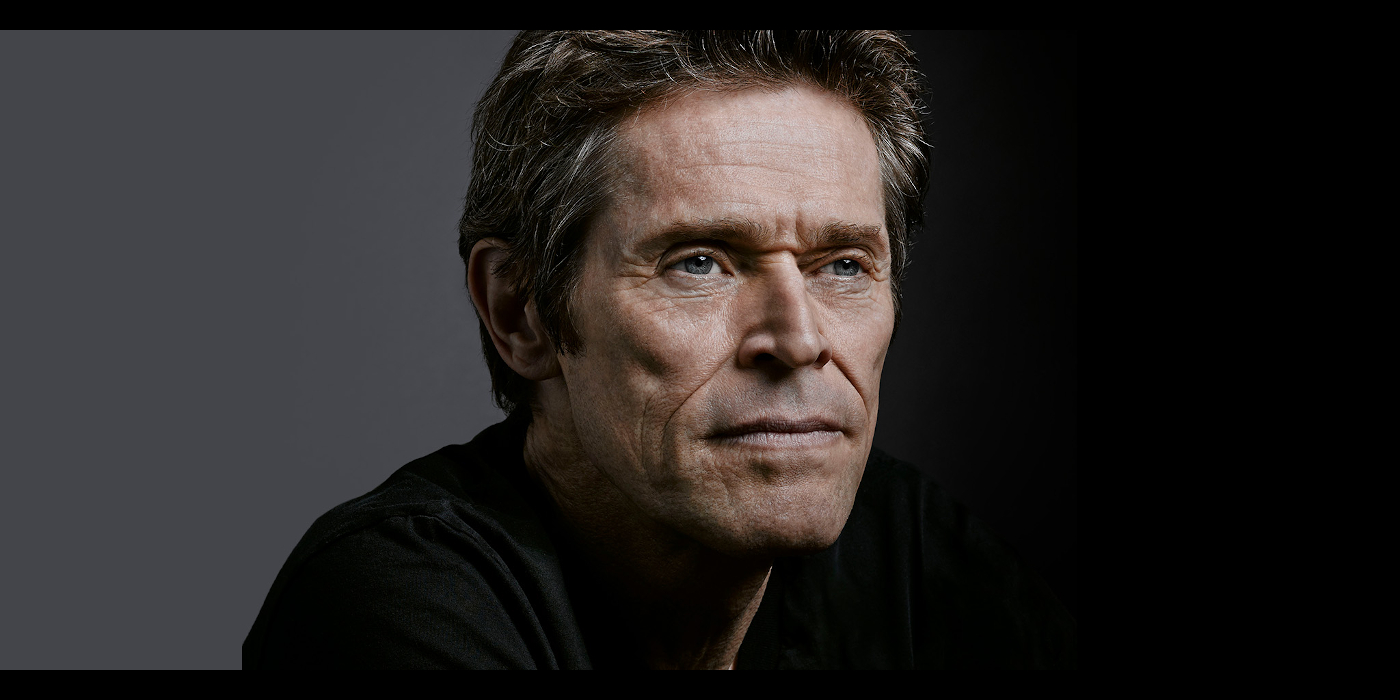
“Conversation with” at the 20th Marrakech IFF, interview with actor Willem Dafoe Bénédicte Prot
 play_arrow
“All of a Sudden”, interview with the director Ryusuke Hamaguchi Federica Scarpa
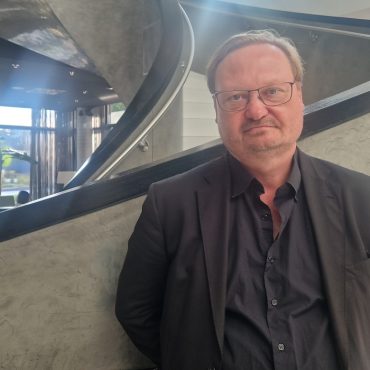
In competition at the 79th edition of the Cannes Film Festival, “All of a Sudden” marks a new chapter in the work of Ryusuke Hamaguchi, continuing the director’s exploration of communication, intimacy and emotional ambiguity after “Drive My Car”.
The film follows Marie-Lou, director of a care facility for the elderly, as she attempts to introduce a philosophy of care grounded in dignity and attentive listening. Her encounter with Mari, a Japanese theatre director living with cancer, gradually transforms both women, creating a profound bond that transcends language, illness and cultural distance.
Hamaguchi reflected extensively on the construction of the film’s dialogue, which constantly shifts between everyday realism and philosophical inquiry.
“I believe that the body can carry a lot of information,” the director explained. “There are things that cannot be verbalised, but the body still knows them.”
The screenplay originates in a correspondence between philosopher Makiko Miyano and medical anthropologist Maho Isono, two figures whose discussions on coincidence, risk, and illness deeply moved the filmmaker.
According to Hamaguchi, the challenge was not simply adapting ideas into scenes, but translating an invisible emotional exchange into cinematic form.
“I couldn’t create the same feeling simply by taking fragments from the original material,” he said. “So I kept reading the texts over and over until they became part of my body.”
The director compared the process to preparing soup: ingredients slowly dissolve, lose their original shape, and eventually become something entirely different. Rather than constructing dialogue through rigid intellectual design, he allowed instinct and physical intuition to guide the writing.
That same physicality also shaped his approach to directing actors.
“The actor’s body and voice carry enormous information,” he noted. “If dialogue is going to affect the actor physically, then I need to write it physically too.”
One of the film’s most striking aspects is its fluid movement between Japanese and French, extending a multilingual experimentation already present in “Drive My Car”.
For Hamaguchi, multilingual performance creates a unique emotional condition for actors. When verbal understanding becomes partial or unstable, performers instinctively rely more intensely on gesture, rhythm and bodily attention.
“When actors cannot fully rely on language, they must become attentive to each other’s bodies,” he explained. “That creates reactions that feel very alive.”
The director also described the central relationship between the two women as “slightly miraculous” because each character can speak in her own mother tongue while still being understood emotionally.
This dynamic demanded extraordinary preparation from the cast. Actress Virginie Efira had only two months to study Japanese before shooting, while her co-star had to learn French dialogue with equal precision.
“It was an enormous task,” Hamaguchi admitted. “Watching them work reminded me once again how extraordinary actors are.”
The theatrical performance featured in the film was created specifically for “All of a Sudden” and does not exist independently of the screenplay. Its conceptual foundation emerged from Hamaguchi’s research into Franco Basaglia, the Italian psychiatrist whose work contributed to the dismantling of psychiatric institutions in Italy.
The director discovered Basaglia through Psychonautica, a book by the Japanese anthropologist Takeshi Matsushima that examines the history of Italian psychiatric care.
“I was shocked,” said Hamaguchi. “In Japan, abolishing psychiatric institutions feels almost impossible.”
The connection between Basaglia’s philosophy and the film’s themes became central. For the filmmaker, both the care philosophy known as Humanitude and Basaglia’s work revolve around restoring individuality to people reduced by institutions to diagnostic labels.
“Makiko Miyano resisted being defined only as a cancer patient,” he explained. “She wanted to reclaim all the other parts of herself.”
Asked whether the film proposes a form of contemporary humanism, Hamaguchi responded cautiously, admitting discomfort with the term itself. Yet his reflections revealed a deep concern about how modern societies reduce people to functions, categories and consumable identities.
Drawing again from Matsushima’s writings, the director spoke about “animism toward humans,” questioning whether contemporary society still treats people as beings with inner lives and spiritual complexity.
“There are things that cannot be seen or verbalised but still exist,” he said. “We are more than our labels.”
For Hamaguchi, today’s “attention economy” systematically fragments human connection by commodifying time and focus. Against that logic, the film quietly advocates sustained attention and recognition.
“Perhaps we can accumulate days where we truly treated someone like a full human being,” he concluded.
Director of a care facility for the elderly, Marie-Lou strives to introduce an innovative care philosophy based on listening and respecting residents’ dignity, despite resistance from part of her staff. Her encounter with Mari, a Japanese theater director battling cancer, will profoundly reshape her path. By forming a deep, supportive friendship, the two women join forces in a shared struggle to “make the impossible possible.”
Alpha by Julia Ducornau, marks the director’s comeback in Cannes competition after the Palme d’Or with Titane in 2021
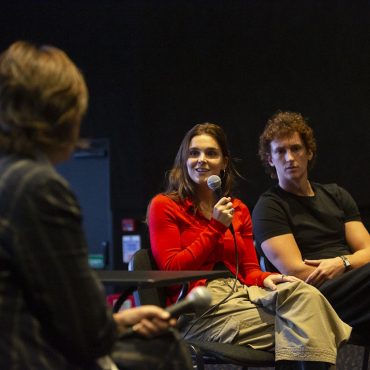
La Ola, the feminist musical from Oscar Winner for A Fantastic Woman, Sebastián Lelio lands Cannes Premiere
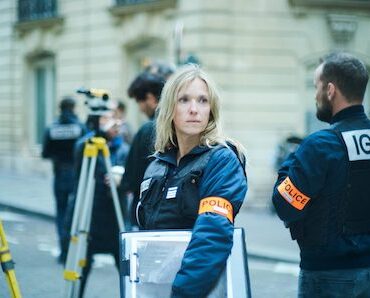
Dominik Moll on his Palme d'Or contender "Case 137": "There’s a whole lot of footage [on demonstrations and police brutality], and we immediately felt that this was very cinematic, and that the investigation should be structured around those videos."
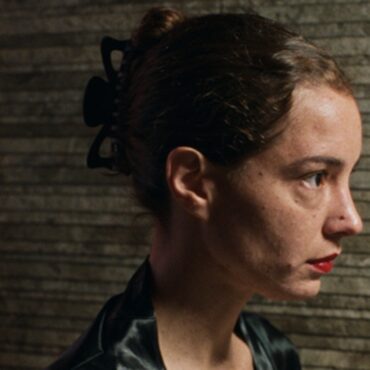
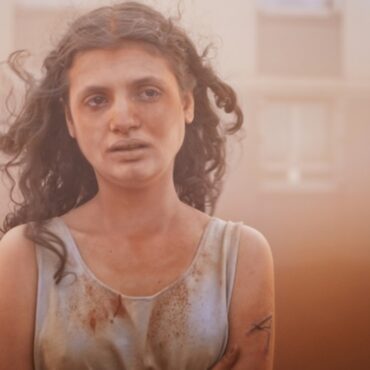
Alexe Poukine, director of "Kika": "We were really lucky with the cast. I think this is the most successful thing in the film. They brought a lot of themselves to their characters and you can see it."
Edinburgh Spanish Film Festival
Marian Arechega, director of the vibrant Edinburgh Spanish Film Festival, discusses the 2026 edition programme, showcasing recent and diverse cinema from Spain.
Nicolas Winding Refn on Her Private Hell, his first feature in ten years, in Italian cinemas from October 1.
Discover how EWIP - European Work in Progress connects European and African films with top buyers, boosting distribution and festival success.
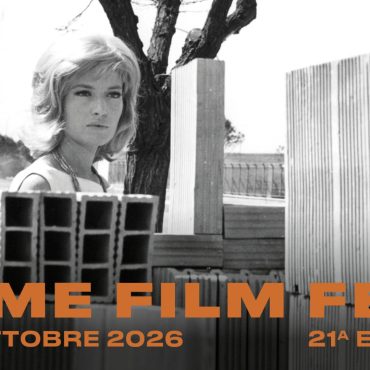
Rome is once again expanding the scope of its Film Fest: thirteen days of cinema, international premieres, renowned auteurs, emerging talent, series, documentaries, and cinematic heritage—with Javier Bardem, Paolo Genovese, and Monica Vitti at the heart of an edition that …