

“Tin Castle”, interview with director Alexander Murphy
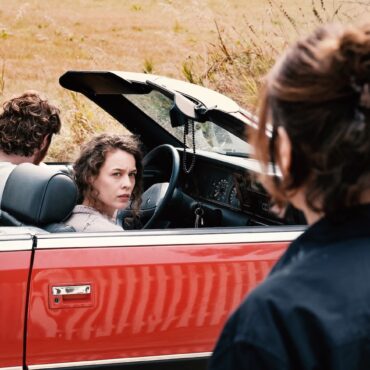
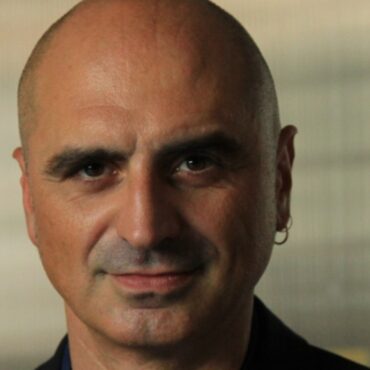
Discover the heartfelt story of "Tin Castle" with director Alexander Murphy, unveiling love, community, and resilience beyond stereotypes in a captivating Irish traveller family
Listeners:
Top listeners:
 play_arrow
ENGLISH Channel 01 If English is your language, or a language you understand, THIS IS YOUR CHANNEL !
 play_arrow
ITALIAN Channel 02 Se l’italiano è la tua lingua, o una lingua che conosci, QUESTO È IL TUO CANALE!
 play_arrow
EXTRA Channel 03 FRED Film Radio channel used to broadcast press conferences, seminars, workshops, master classes, etc.
 play_arrow
GERMAN Channel 04 Wenn Ihre Sprache Deutsch ist, oder Sie diese Sprache verstehen, dann ist das IHR KANAL !
 play_arrow
POLISH Channel 05
 play_arrow
SPANISH Channel 06 Si tu idioma es el español, o es un idioma que conoces, ¡ESTE ES TU CANAL!
 play_arrow
FRENCH Channel 07 Si votre langue maternelle est le français, ou si vous le comprenez, VOICI VOTRE CHAINE !
 play_arrow
PORTUGUESE Channel 08
 play_arrow
ROMANIAN Channel 09 Dacă vorbiţi sau înţelegeţi limba română, ACESTA ESTE CANALUL DUMNEAVOASTRĂ!
 play_arrow
SLOVENIAN Channel 10
 play_arrow
ENTERTAINMENT Channel 11 FRED Film Radio Channel used to broadcast music and live shows from Film Festivals.
 play_arrow
BULGARIAN Channel 16 Ако българският е вашият роден език, или го разбирате, ТОВА Е ВАШИЯТ КАНАЛ !
 play_arrow
CROATIAN Channel 17 Ako je hrvatski tvoj jezik, ili ga jednostavno razumiješ, OVO JE TVOJ KANAL!
 play_arrow
LATVIAN Channel 18
 play_arrow
DANISH Channel 19
 play_arrow
HUNGARIAN Channel 20
 play_arrow
DUTCH Channel 21
 play_arrow
GREEK Channel 22
 play_arrow
CZECH Channel 23
 play_arrow
LITHUANIAN Channel 24
 play_arrow
SLOVAK Channel 25
 play_arrow
ICELANDIC Channel 26 Ef þú talar, eða skilur íslensku, er ÞETTA RÁSIN ÞÍN !
 play_arrow
INDUSTRY Channel 27 FRED Film Radio channel completely dedicated to industry professionals.
 play_arrow
EDUCATION Channel 28 FRED Film Radio channel completely dedicated to film literacy.
 play_arrow
SARDU Channel 29 Si su sardu est sa limba tua, custu est su canale chi ti deghet!
 play_arrow
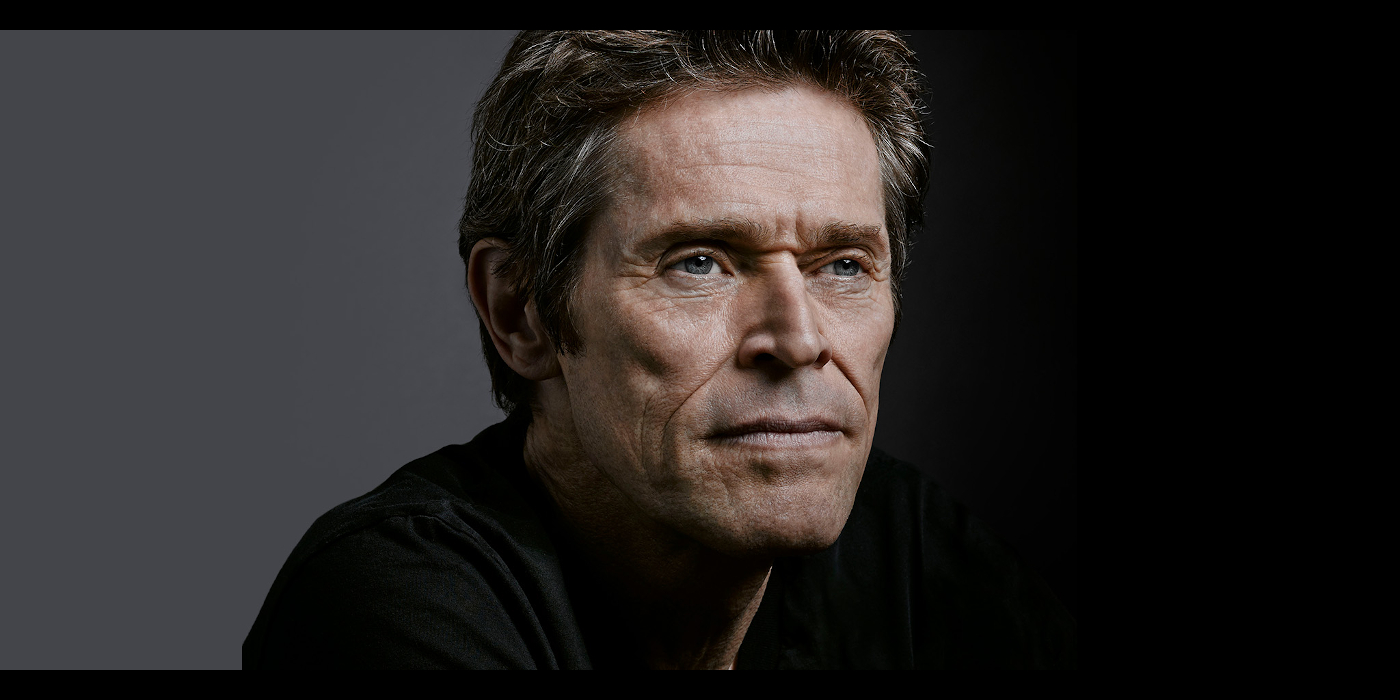
“Conversation with” at the 20th Marrakech IFF, interview with actor Willem Dafoe Bénédicte Prot
 play_arrow
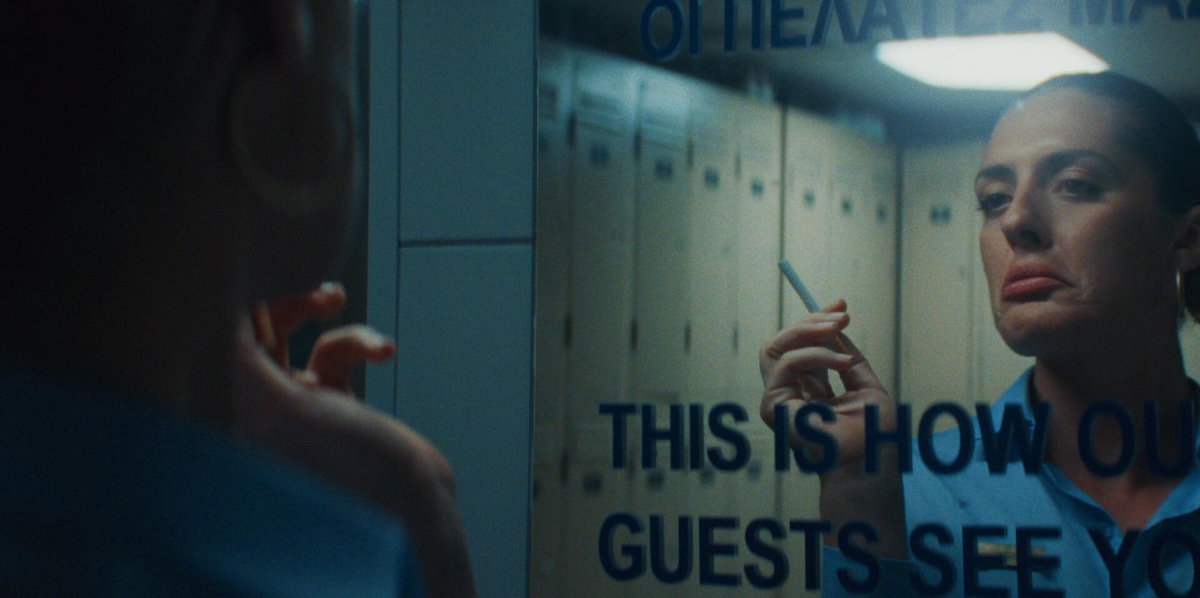
"Free Eliza", interview with the director Alexandra Matheou Federica Scarpa
Presented at the Quinzaine des Cinéastes during the 79th Festival de Cannes, “Free Eliza (Notes On An Anatomical Imperfection)” is the debut feature by Greek filmmaker Alexandra Matheou, a sharp and emotionally layered exploration of identity, performance and emotional repression.
The film follows Eliza, a hotel employee unable to smile physically, despite working in an environment where constant cheerfulness is expected. For Alexandra Matheou, the idea emerged from a real encounter with a hotel worker whose expression stayed with her long after their meeting. “She had the saddest face in the world,” the director recalled. “I remember writing a quick note on my phone after seeing her name tag: Eliza.”
That brief encounter became the foundation for a wider reflection on hospitality spaces as artificial environments where workers are expected to leave their personal struggles behind to perform emotional availability for guests.
According to Alexandra Matheou, hotels operate as microcosms of contemporary society, places where appearance matters more than emotional truth. The director draws a direct connection between this environment and the performative culture encouraged by social media.
“Everything online becomes a polished version of yourself,” she said. “None of the bad things make it there.”
Although “Free Eliza” critiques systems that demand constant positivity, the film deliberately avoids bitterness or cynicism. Alexandra Matheou, who describes herself as naturally optimistic, sees optimism itself as a form of resistance in the current social climate.
“The world makes it very hard to be optimistic,” she explained. “Settling for cynicism is easier.”
For the filmmaker, cynicism disconnects people from tenderness and empathy, while optimism allows space for human connection even during difficult times. The film, therefore, embraces sadness not as weakness, but as an essential part of emotional life.
“Sadness shouldn’t be hidden,” she said. “It should be embraced and processed because that’s part of the human condition.”
This balance between melancholy and warmth gives the film its particular tone, combining emotional vulnerability with moments of humour and quiet absurdity.
One of the most striking aspects of Free Eliza is the way its protagonist refuses victimhood. Despite existing within a system constantly judging her appearance and emotional behaviour, Eliza maintains a strong sense of inner freedom.
Alexandra Matheou explained that many of her female characters share this quality. They are often outsiders within their environments, yet they never surrender their individuality in order to fit social expectations.
“I’m done watching women as victims on screen,” the director stated. “I want a greater range of female characters.”
For her, Eliza’s resistance lies precisely in her refusal to perform emotional agreeability. The film challenges cultural expectations surrounding femininity, particularly the pressure imposed on women to appear pleasant, accommodating and emotionally accessible at all times.
“The label of a ‘difficult woman’ is something I detest,” Alexandra Matheou said. “Women are constantly taught to act agreeably.”
The director also connected these ideas to her own personal experiences, acknowledging how often women are encouraged to suppress discomfort or disagreement in order to avoid judgment.
Despite addressing loneliness, social pressure and emotional alienation, Free Eliza remains unexpectedly funny. Humour, according to Alexandra Matheou, is essential to her way of observing human behaviour.
“Even in dramatic scenes, I like to infuse humour,” she said. “Sometimes life is tragic and ridiculous at the same time.”
The film’s voiceover became a key tool in balancing these emotional tones, allowing the audience access to Eliza’s intelligence, irony and emotional richness. Through humour, the character resists becoming defined by external perceptions.
By the film’s conclusion, Free Eliza gradually dismantles the audience’s assumptions about its protagonist. What initially appears as sadness or deficiency becomes something entirely different: freedom from the obligation to perform.
“There’s nothing to fix here,” Alexandra Matheou said. “Only something to embrace.”
Asked whether authenticity has become a radical act in a world built around performance, the director answered without hesitation.
“Absolutely,” she replied. “The world tells you to be yourself, but only if that self fits what society considers acceptable.”
For Alexandra Matheou, the challenge today is preserving a connection to one’s inner voice amid the noise of social expectations, digital performance, and cultural pressure. In Free Eliza, that resistance becomes both political and deeply human.
Eliza works at a hotel resort, moving through a cycle of roles designed to always keep the guests satisfied. Behind the polished surface of the hotel, she struggles to balance an unseen private life, all while carrying a rare anatomical condition: she is physically unable to smile. In a world obsessed with toxic positivity, Eliza must decide whether to change herself to fit in, or to resist by remaining exactly who she is.
Discover the heartfelt story of "Tin Castle" with director Alexander Murphy, unveiling love, community, and resilience beyond stereotypes in a captivating Irish traveller family
Mirrors No. 3 is Petzold’s new film with muse Paula Beer, premiering at the Quinzaine des Cinéastes.
Paolo Manera is the director of the Film Commission torino Piemonte, in Cannes to celebrate the 25 years of activity, with a big event and the help of public and private partners that believed in the objectives the commission is …
Woman Unknown director May El-Toukhy and actress Mathilde Arcel on the body as battlefield, in competition at Venice 2026.
Dust di Tsai Ming-liang, presentato in Venice Open - Fuori Concorso della Mostra di Venezia 2026: impermanenza e meditazione.
Listen Global Critics Venice Voice! Exclusive and thoughtful conversations with leading international film critics, and in-depth analysis of the most anticipated films of the Venice International Film Festival 2026.
At the 83th Venice Film Festival 2026, Skyler Gisondo, Merritt Wever and Bokeem Woodbine on stepping into the circus of Primetime