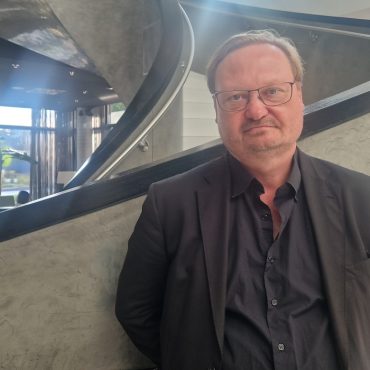


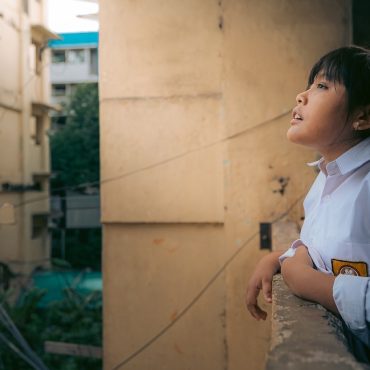
“Annisa”, interview with the co-director Sam Manacsa
Sam Manacsa discusses Annisa at Cannes 2026, exploring sound, adolescence and belonging through the perspective of a blind teenage girl.
Listeners:
Top listeners:
 play_arrow
ENGLISH Channel 01 If English is your language, or a language you understand, THIS IS YOUR CHANNEL !
 play_arrow
ITALIAN Channel 02 Se l’italiano è la tua lingua, o una lingua che conosci, QUESTO È IL TUO CANALE!
 play_arrow
EXTRA Channel 03 FRED Film Radio channel used to broadcast press conferences, seminars, workshops, master classes, etc.
 play_arrow
GERMAN Channel 04 Wenn Ihre Sprache Deutsch ist, oder Sie diese Sprache verstehen, dann ist das IHR KANAL !
 play_arrow
POLISH Channel 05
 play_arrow
SPANISH Channel 06 Si tu idioma es el español, o es un idioma que conoces, ¡ESTE ES TU CANAL!
 play_arrow
FRENCH Channel 07 Si votre langue maternelle est le français, ou si vous le comprenez, VOICI VOTRE CHAINE !
 play_arrow
PORTUGUESE Channel 08
 play_arrow
ROMANIAN Channel 09 Dacă vorbiţi sau înţelegeţi limba română, ACESTA ESTE CANALUL DUMNEAVOASTRĂ!
 play_arrow
SLOVENIAN Channel 10
 play_arrow
ENTERTAINMENT Channel 11 FRED Film Radio Channel used to broadcast music and live shows from Film Festivals.
 play_arrow
BULGARIAN Channel 16 Ако българският е вашият роден език, или го разбирате, ТОВА Е ВАШИЯТ КАНАЛ !
 play_arrow
CROATIAN Channel 17 Ako je hrvatski tvoj jezik, ili ga jednostavno razumiješ, OVO JE TVOJ KANAL!
 play_arrow
LATVIAN Channel 18
 play_arrow
DANISH Channel 19
 play_arrow
HUNGARIAN Channel 20
 play_arrow
DUTCH Channel 21
 play_arrow
GREEK Channel 22
 play_arrow
CZECH Channel 23
 play_arrow
LITHUANIAN Channel 24
 play_arrow
SLOVAK Channel 25
 play_arrow
ICELANDIC Channel 26 Ef þú talar, eða skilur íslensku, er ÞETTA RÁSIN ÞÍN !
 play_arrow
INDUSTRY Channel 27 FRED Film Radio channel completely dedicated to industry professionals.
 play_arrow
EDUCATION Channel 28 FRED Film Radio channel completely dedicated to film literacy.
 play_arrow
SARDU Channel 29 Si su sardu est sa limba tua, custu est su canale chi ti deghet!
 play_arrow
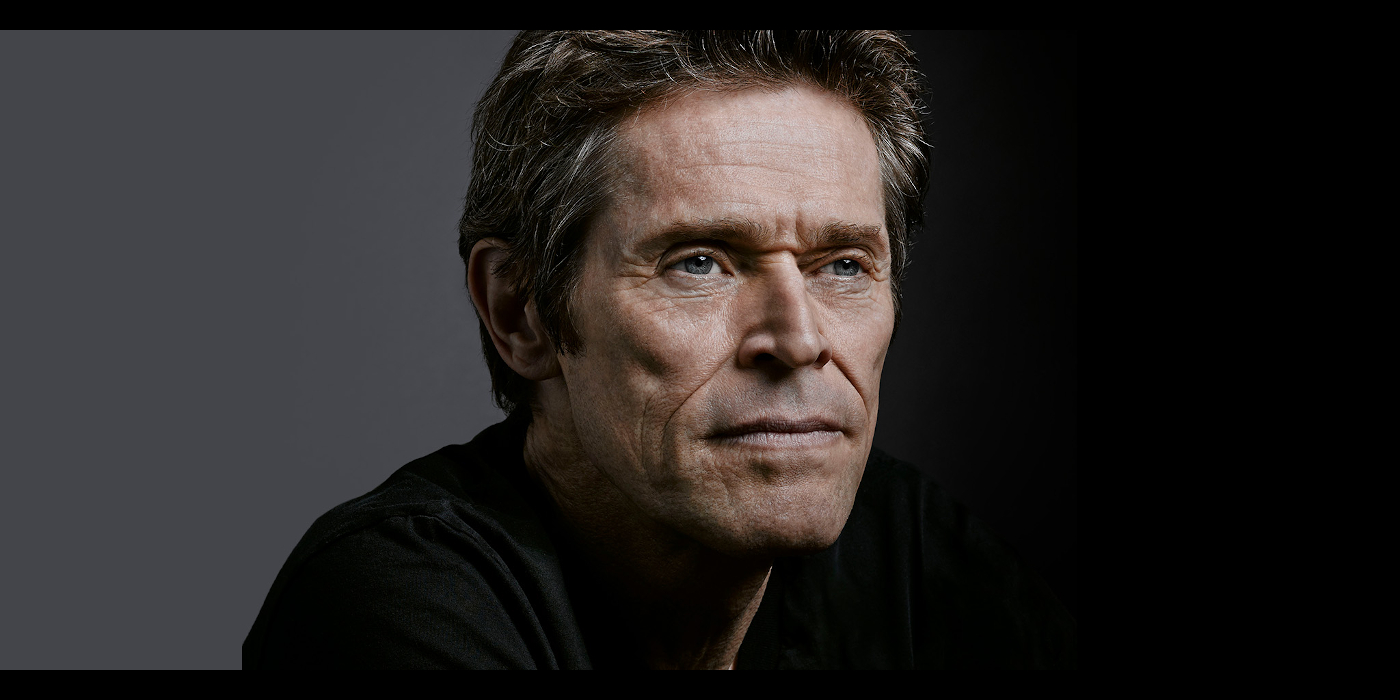
“Conversation with” at the 20th Marrakech IFF, interview with actor Willem Dafoe Bénédicte Prot
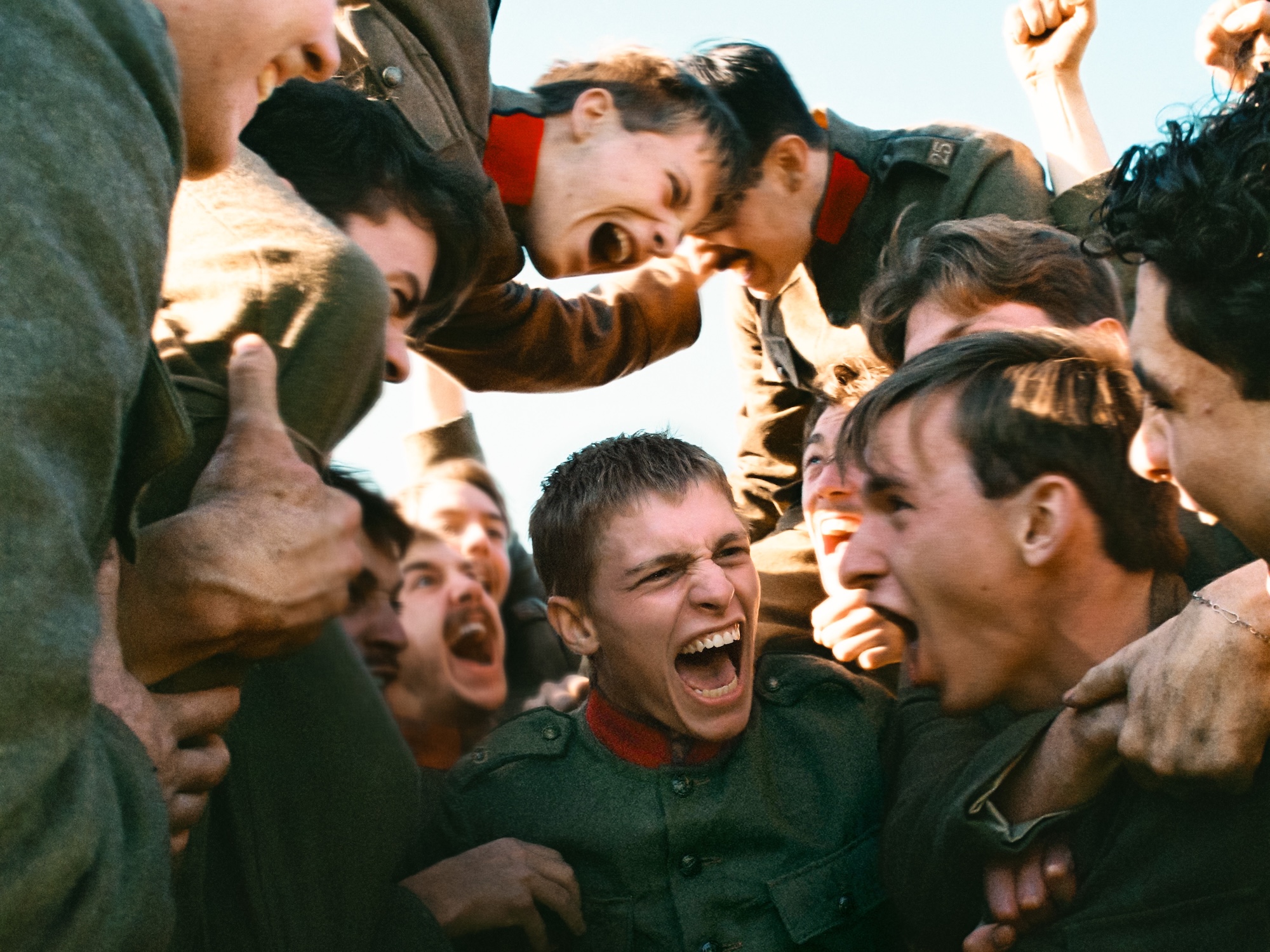
Belgian filmmaker Lukas Dhont returns to the Cannes competition for the second time with “Coward“, a queer romantic drama set during the First World War. After “Girl”, which won the Caméra d’Or in Un Certain Regard in 2018, and “Close“, Grand Prix winner in 2022, Lukas Dhont‘s third feature follows Pierre, a young soldier newly arrived at the Belgian front, and Francis, a flamboyant comrade who organises a theatre show to lift the spirits of the men around him. While violence rages, both find ways to escape the brutality of war, even if only for a moment. The film stars Emmanuel Macchia, in his screen debut, alongside Valentin Campagne. The film will be distributed by MUBI.
The film began with a series of black-and-white photographs Lukas Dhont stumbled upon four years ago. They showed young soldiers stationed in a waiting camp behind the front lines, performing a small theatre piece for each other using the tools of war: munition boxes turned into a podium, sandbags into skirts, bullets into jewellery. As a Belgian, Lukas Dhont grew up driving through the fields where the battle was fought, yet he had never been told about this phenomenon. “I was really confronted with the politics of memory, in the sense that there are certain images of violence and brutality that we have always pushed to the front and buried underneath them are these expressions of freedom“. The discovery sparked something deeper: a film about how, in the darkest of times, people have tried to stay human by creating or by looking for the creations of others.
One of the film’s central challenges was writing a love story in which the two protagonists could never be alone. Lukas Dhont drew inspiration from the poetry of the period, where queer desire lingers between the lines, and from the literature of writers like Jane Austen, where what cannot be said is expressed through micro-gestures. “I thought secrecy can also be incredibly sexy. Sharing a secret with someone, sharing a passion and a desire and having to experience that in public while you are the only two who know, that can be incredibly sensual“.
Behind the theatre and the love story lies a political dimension. Lukas Dhont discovered that Belgian soldiers who tried to desert were executed, imprisoned or forced to disappear into invisible lives, never able to return home. He found in those hidden existences a resonance with the queer experience of the time: people who had to live in camouflage and love hidden in plain sight. “For me the film is really about people who have resisted throughout time the codes of the world that they are brought up in“. The title itself carries that charge: in a genre where heroism is measured by the capacity to harm, Lukas Dhont reclaims the word coward as something closer to courage.
Before becoming a director, Lukas Dhont worked extensively in casting, and he describes it as his favourite part of the filmmaking process. For the role of Pierre, a farmer’s son, he visited agriculture schools across Belgium. Emmanuel Macchia was there, timid, barely using the full register of his voice. “When I got to know him more, I discovered he is an incredible cinephile because he was on “Letterboxd” giving reviews to “Cinema Paradiso”. And then I just discovered this soul that felt very timeless“. Lukas Dhont paired him with Valentin Campagne, his opposite: loud, performative, someone who takes up space. The combination worked because Campagne drew Emmanuel Macchia out, while Macchia grounded Campagne. When working with young people, Dhont says, he likes to cast those who resonate with the role, because he knows they will become co-authors of the part.
Lukas Dhont is open about his complicated relationship with war films, a genre he says has traditionally offered men a very limited space to exist, where value is measured by the ability to act heroic, which in that definition means the ability to harm or kill. “As a young man growing up and trying to look for mirrors, I always felt a sense of shame because I thought I would never really be capable of that. I always felt much more like a coward than I felt like a hero“. Among the few war films he admires, he cites Jean Renoir‘s “Grand Illusion”, for its insight that the idea of an enemy is a construction, and Stanley Kubrick‘s “Fear and Desire”, for its intelligence in depicting an undefined conflict, allowing the film to speak about war in general rather than a specific moment in time.
As the First World War drags on, Pierre, a soldier newly arrived at the front, is eager to prove himself. Behind the lines, he meets Francis, who decides to lift the spirits of his comrades by putting together a theatre show. While the violence continues, both men try to find ways to escape the brutality of war, even if only for a moment.
Sam Manacsa discusses Annisa at Cannes 2026, exploring sound, adolescence and belonging through the perspective of a blind teenage girl.
Mirrors No. 3 is Petzold’s new film with muse Paula Beer, premiering at the Quinzaine des Cinéastes.
Director Neeraj Ghaywan discusses Homebound at Cannes 78—an emotional tale of friendship, dignity, and identity rooted in real-life inspiration.
Edinburgh Spanish Film Festival
Marian Arechega, director of the vibrant Edinburgh Spanish Film Festival, discusses the 2026 edition programme, showcasing recent and diverse cinema from Spain.
Nicolas Winding Refn on Her Private Hell, his first feature in ten years, in Italian cinemas from October 1.
Discover how EWIP - European Work in Progress connects European and African films with top buyers, boosting distribution and festival success.
Rome is once again expanding the scope of its Film Fest: thirteen days of cinema, international premieres, renowned auteurs, emerging talent, series, documentaries, and cinematic heritage—with Javier Bardem, Paolo Genovese, and Monica Vitti at the heart of an edition that …