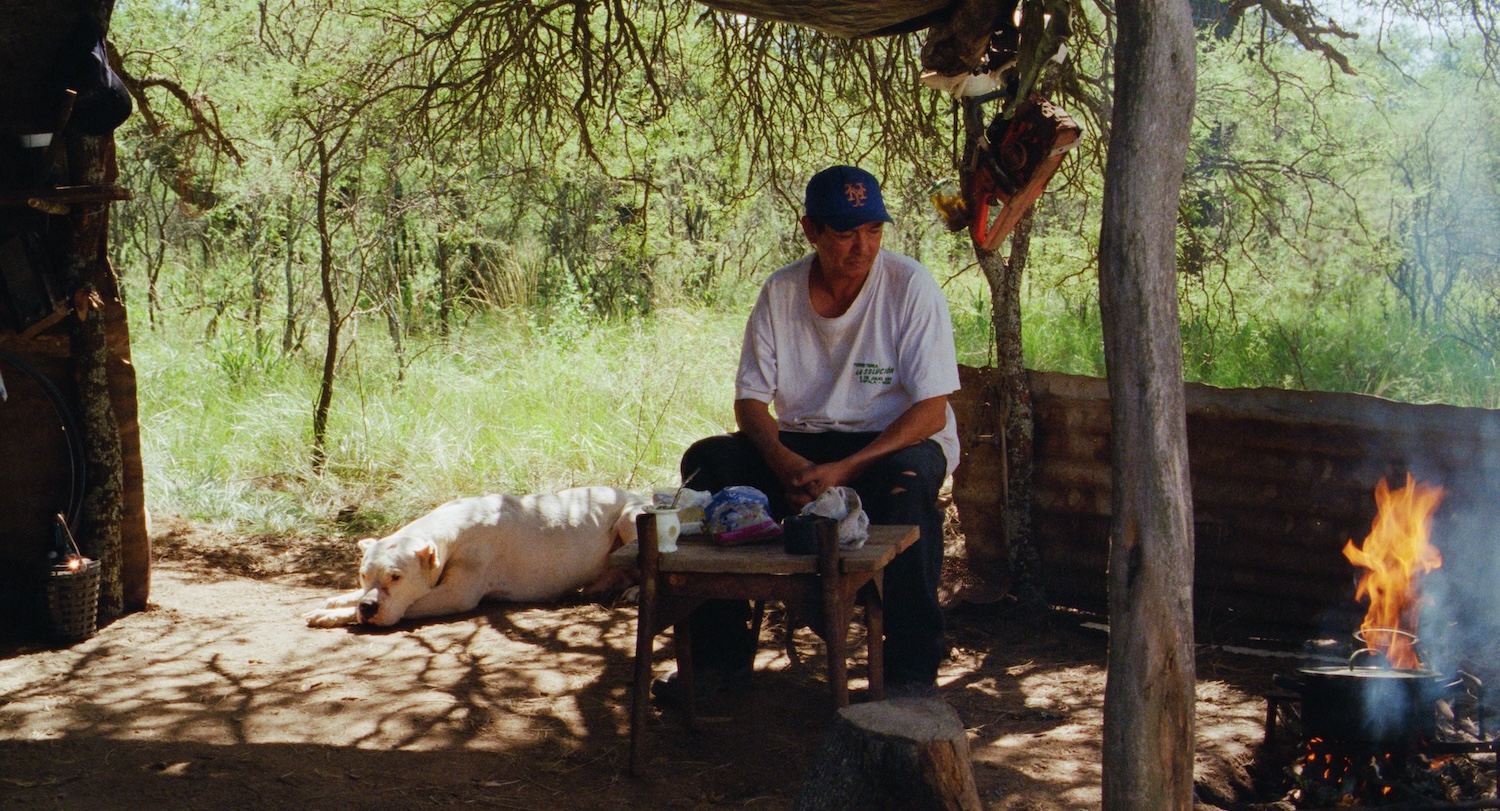
Presented at the Quinzaine des Cinéastes at the 79th Cannes Film Festival, “Double Freedom (La libertad doble)” is Argentine director Lisandro Alonso‘s unexpected sequel to “La Libertad”, the 2001 debut that launched his career, also at Cannes. Twenty-five years later, the film reunites Lisandro Alonso with Misael Saavedra, the real-life woodcutter whose solitary existence in the Argentine pampa became the subject of that first film. This time, Misael’s quiet freedom is disrupted when he must care for his older sister, played by Chilean actress Catalina Saavedra. Produced by Planta, Deptford Film and Alonso’s own 4L, with international sales handled by Luxbox, the film is a co-production between Chile, Argentina, Luxembourg, Germany and the United Kingdom.
Going back where it started
The impulse behind “Double Freedom” was, by Lisandro Alonso‘s own admission, a desire to return to the beginning. After the multi-continent experience of “Eureka“, he wanted something lighter, closer to home. He immediately called Ilse Hughan, his longtime producer, who told him what Misael Saavedra was up to, and the idea of a sequel began to take shape. “I never made a sequel, or I never thought that I was going to make a sequel with the same character, same group of people, 25 years later. So I think it was a kind of risk and a good challenge for me“. The shoot took place on his father’s farm, with largely the same crew, many of whom no longer work in cinema, reassembled for the occasion.
A metaphor under pressure
What might have been a simple return became something more urgent. Lisandro Alonso wove his own family experiences into Misael Saavedra‘s fictional life, using the character as a vessel for a broader reflection on what happens to people without resources in a country where the social safety net is being dismantled. “He already had not a lot of sources when we started shooting the first film, and 25 years later he has still even less. So, you cannot pull the rope anymore. Something is going to break“. It is, Alonso says, probably the most political film he has ever made.
Double Freedom instead of Freedom part 2
The title itself carries a playful ambiguity. Freedom, Lisandro Alonso notes, has become a loaded word in Argentina, heavily used by the current government in ways he finds questionable. “Double Freedom” doesn’t offer a neat definition. “It doesn’t have like a real meaning. But I thought it’s like if you go for whiskey and you ask for a double whiskey: it’s bigger, better, stronger, something like that“.
Every frame is political
Asked about the relationship between cinema and politics, a debate that opened this year’s festival, Lisandro Alonso comments with a straightforward answer: “Every decision that you take, every frame that you decide to create, there’s some politics in it“.
Plot
Misael works alone. Armed with his axe, he fells trees in the forest.
An unexpected responsibility upends his life, and the rhythm of his days gradually dissolves into a wilderness where human reason no longer holds meaning.