

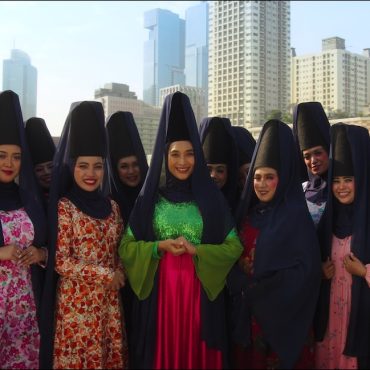
“Mothers are Mothering”, interview with the directors Khozy Rizal and Lam Li Shuen
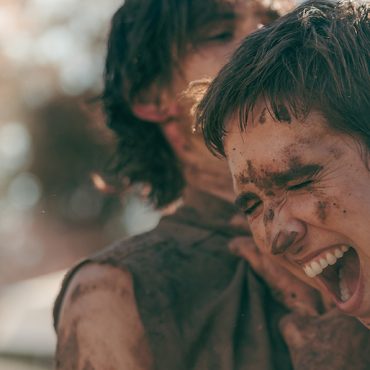
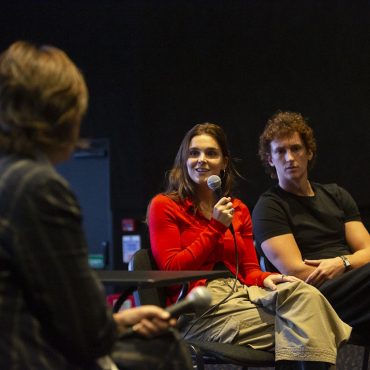
Khozy Rizal and Lam Li Shuen discuss Mothers Are Mothering at Cannes 2026, exploring queer identity, motherhood and emotional alienation.
Listeners:
Top listeners:
 play_arrow
ENGLISH Channel 01 If English is your language, or a language you understand, THIS IS YOUR CHANNEL !
 play_arrow
ITALIAN Channel 02 Se l’italiano è la tua lingua, o una lingua che conosci, QUESTO È IL TUO CANALE!
 play_arrow
EXTRA Channel 03 FRED Film Radio channel used to broadcast press conferences, seminars, workshops, master classes, etc.
 play_arrow
GERMAN Channel 04 Wenn Ihre Sprache Deutsch ist, oder Sie diese Sprache verstehen, dann ist das IHR KANAL !
 play_arrow
POLISH Channel 05
 play_arrow
SPANISH Channel 06 Si tu idioma es el español, o es un idioma que conoces, ¡ESTE ES TU CANAL!
 play_arrow
FRENCH Channel 07 Si votre langue maternelle est le français, ou si vous le comprenez, VOICI VOTRE CHAINE !
 play_arrow
PORTUGUESE Channel 08
 play_arrow
ROMANIAN Channel 09 Dacă vorbiţi sau înţelegeţi limba română, ACESTA ESTE CANALUL DUMNEAVOASTRĂ!
 play_arrow
SLOVENIAN Channel 10
 play_arrow
ENTERTAINMENT Channel 11 FRED Film Radio Channel used to broadcast music and live shows from Film Festivals.
 play_arrow
BULGARIAN Channel 16 Ако българският е вашият роден език, или го разбирате, ТОВА Е ВАШИЯТ КАНАЛ !
 play_arrow
CROATIAN Channel 17 Ako je hrvatski tvoj jezik, ili ga jednostavno razumiješ, OVO JE TVOJ KANAL!
 play_arrow
LATVIAN Channel 18
 play_arrow
DANISH Channel 19
 play_arrow
HUNGARIAN Channel 20
 play_arrow
DUTCH Channel 21
 play_arrow
GREEK Channel 22
 play_arrow
CZECH Channel 23
 play_arrow
LITHUANIAN Channel 24
 play_arrow
SLOVAK Channel 25
 play_arrow
ICELANDIC Channel 26 Ef þú talar, eða skilur íslensku, er ÞETTA RÁSIN ÞÍN !
 play_arrow
INDUSTRY Channel 27 FRED Film Radio channel completely dedicated to industry professionals.
 play_arrow
EDUCATION Channel 28 FRED Film Radio channel completely dedicated to film literacy.
 play_arrow
SARDU Channel 29 Si su sardu est sa limba tua, custu est su canale chi ti deghet!
 play_arrow
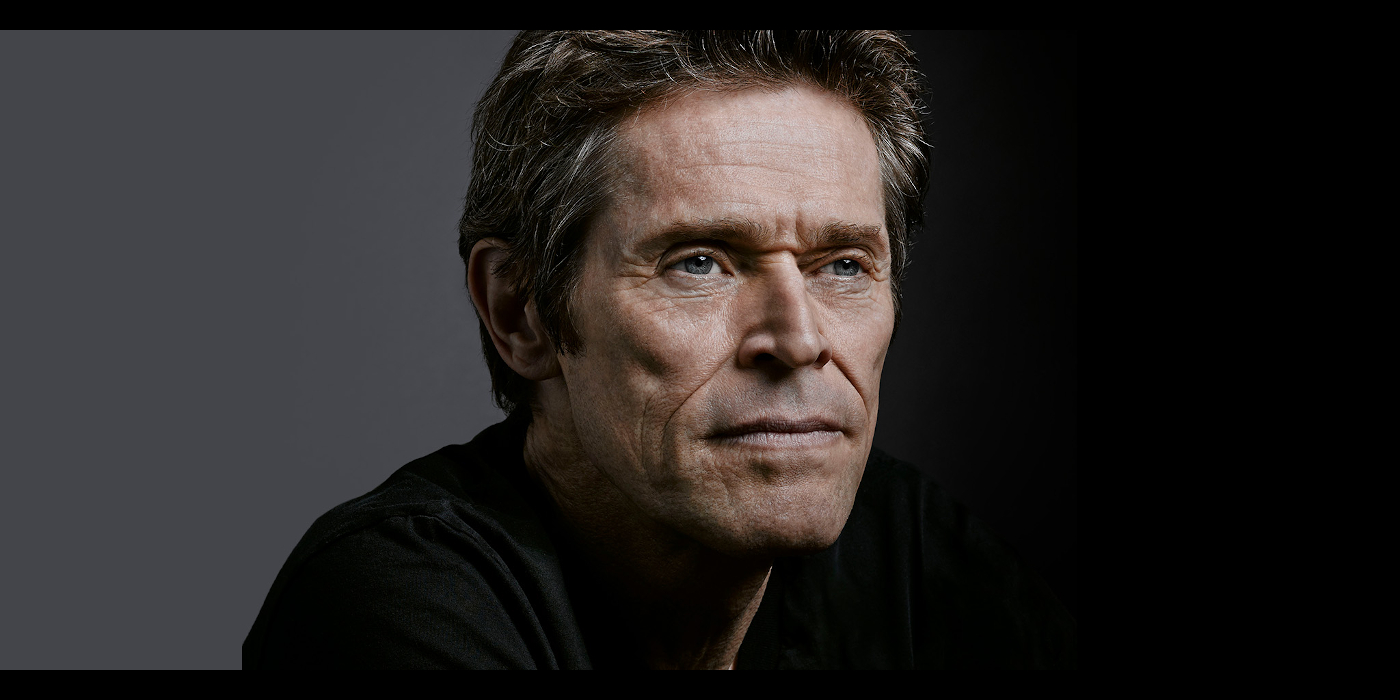
“Conversation with” at the 20th Marrakech IFF, interview with actor Willem Dafoe Bénédicte Prot
 play_arrow
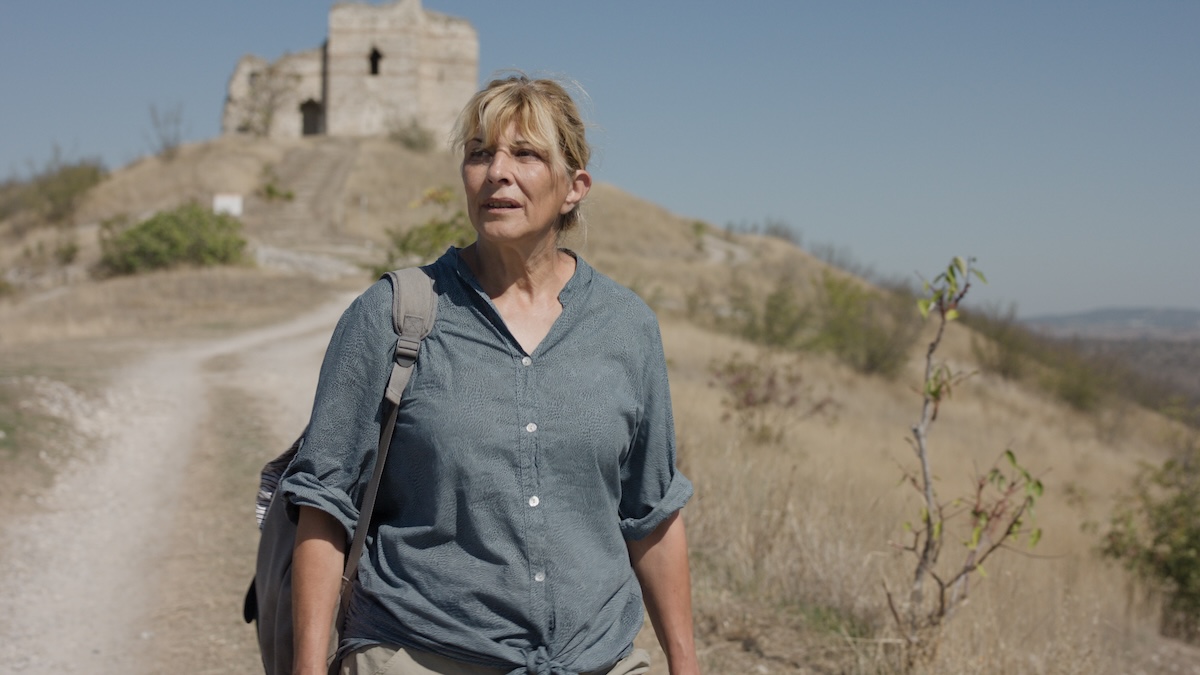
“The Dreamed Adventure”, interview with the director Valeska Grisebach Federica Scarpa
In competition at the 79th Cannes Film Festival, “The Dreamed Adventure” marks Valeska Grisebach’s return to Bulgaria after “Western”. Set in Svilengrad, a town on the Bulgarian border, the film follows Veska, an archaeologist, as her encounter with Said, an old acquaintance whose car has been stolen, pulls her into a hidden network of criminal ties beneath the town’s apparently quiet surface.
Grisebach explained that her earlier experience in Bulgaria left her with the sense that the country still held stories she needed to understand.
“I realised how limited my knowledge about Europe is,” she said. “Europe has so many different faces, and in Bulgaria Europe can feel very different than in Germany.”
For Grisebach, the film also arises from a personal reckoning with European history. Raised in West Berlin, she felt deeply connected to the generational experience of 1989, yet increasingly aware of how differently that turning point was lived across the continent.
“We are connected by that changing moment in Europe,” she said, “but also divided by the different experiences that followed.”
The director described The Dreamed Adventure as a collaborative project rather than an external gaze placed upon Bulgaria.
“I had doubts because I am a German director,” she admitted. “Who is telling whose story? But once I was in contact with people, those doubts began to disappear.”
The title “The Dreamed Adventure” carries, for Grisebach, a deliberate ambiguity. It connects the film to adventure cinema and to the Western genres traditionally coded as male and often built around strength, conquest and survival.
“Adventure was a link to genre,” she explained. “I was interested in having a woman look into that genre, then step into it.”
The “dreamed” aspect also refers to the 1990s, a decade the director sees as filled with promises, desires and unresolved contradictions.
“It was a time full of dreams,” she said, “but also an ambivalent time, because many dreams were not fulfilled.”
At the centre of the film is Veska, a woman who observes before acting. Her profession as an archaeologist becomes essential to the film’s method: she reads surfaces, studies traces and looks for meaning in details others overlook.
For Grisebach, this attentiveness was crucial: “The gaze was very important to me,” she said. “Who owns the gaze?”
The director linked this question to her own relationship with genre cinema. “I have internalised a male gaze, also through genre films,” she reflected. “For me, it was interesting, and sometimes difficult, to bring a woman in motion in a film.”
Rather than claiming to rewrite cinematic language, Grisebach described her approach as an interaction with existing traditions. “I wouldn’t say rewriting,” she concluded. “Filmmaking has so much to do with getting in contact with something.”
In Svilengrad, a small town on the Bulgarian border, Veska, crosses paths with Said, an old acquaintance whose car has been stolen. Offering her help, she brings him along to the excavation site where she is working as an archaeologist. As they reconnect, Veska is pulled more into the shady world that he (Said) has emerged from, soon embarking on her own exploration of the criminal ties that lurk beneath the surface of this seemingly innocent town at the outskirts of Europe. As figures from her own past start to close in, Veska is forced to confront the truth about the town and her experiences.
Khozy Rizal and Lam Li Shuen discuss Mothers Are Mothering at Cannes 2026, exploring queer identity, motherhood and emotional alienation.
Aina Clotet discusses Viva at Cannes 2026, exploring desire, illness, emotional dependence and the fear of loneliness.
Emma Barboni of Emilia Romagna Film Commission presents us all the actions through which the institution boosts regional film production, festivals, and international co-productions, fostering Italy's vibrant audiovisual ecosystem.
Will Sharpe discusses grief, vulnerability and animation in "In Waves", opening film of Cannes Critics’ Week by Phuong-Mai Nguyen.
Edinburgh Spanish Film Festival
Marian Arechega, director of the vibrant Edinburgh Spanish Film Festival, discusses the 2026 edition programme, showcasing recent and diverse cinema from Spain.
Nicolas Winding Refn on Her Private Hell, his first feature in ten years, in Italian cinemas from October 1.
Discover how EWIP - European Work in Progress connects European and African films with top buyers, boosting distribution and festival success.
Rome is once again expanding the scope of its Film Fest: thirteen days of cinema, international premieres, renowned auteurs, emerging talent, series, documentaries, and cinematic heritage—with Javier Bardem, Paolo Genovese, and Monica Vitti at the heart of an edition that …