

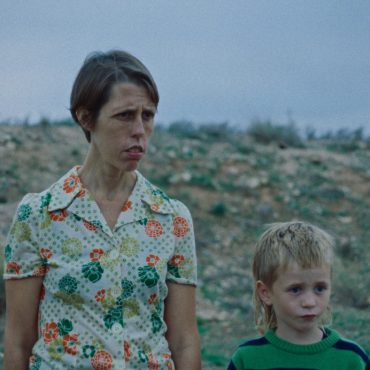
“Nobody Barks”, interview with director Júlia Coldwell Serra
Nobody Barks director Júlia Coldwell Serra at Future Frames 2026. A dark comedy about guilt, family bonds and the comforting stories people invent to avoid painful truths.
Listeners:
Top listeners:
 play_arrow
ENGLISH Channel 01 If English is your language, or a language you understand, THIS IS YOUR CHANNEL !
 play_arrow
ITALIAN Channel 02 Se l’italiano è la tua lingua, o una lingua che conosci, QUESTO È IL TUO CANALE!
 play_arrow
EXTRA Channel 03 FRED Film Radio channel used to broadcast press conferences, seminars, workshops, master classes, etc.
 play_arrow
GERMAN Channel 04 Wenn Ihre Sprache Deutsch ist, oder Sie diese Sprache verstehen, dann ist das IHR KANAL !
 play_arrow
POLISH Channel 05
 play_arrow
SPANISH Channel 06 Si tu idioma es el español, o es un idioma que conoces, ¡ESTE ES TU CANAL!
 play_arrow
FRENCH Channel 07 Si votre langue maternelle est le français, ou si vous le comprenez, VOICI VOTRE CHAINE !
 play_arrow
PORTUGUESE Channel 08
 play_arrow
ROMANIAN Channel 09 Dacă vorbiţi sau înţelegeţi limba română, ACESTA ESTE CANALUL DUMNEAVOASTRĂ!
 play_arrow
SLOVENIAN Channel 10
 play_arrow
ENTERTAINMENT Channel 11 FRED Film Radio Channel used to broadcast music and live shows from Film Festivals.
 play_arrow
BULGARIAN Channel 16 Ако българският е вашият роден език, или го разбирате, ТОВА Е ВАШИЯТ КАНАЛ !
 play_arrow
CROATIAN Channel 17 Ako je hrvatski tvoj jezik, ili ga jednostavno razumiješ, OVO JE TVOJ KANAL!
 play_arrow
LATVIAN Channel 18
 play_arrow
DANISH Channel 19
 play_arrow
HUNGARIAN Channel 20
 play_arrow
DUTCH Channel 21
 play_arrow
GREEK Channel 22
 play_arrow
CZECH Channel 23
 play_arrow
LITHUANIAN Channel 24
 play_arrow
SLOVAK Channel 25
 play_arrow
ICELANDIC Channel 26 Ef þú talar, eða skilur íslensku, er ÞETTA RÁSIN ÞÍN !
 play_arrow
INDUSTRY Channel 27 FRED Film Radio channel completely dedicated to industry professionals.
 play_arrow
EDUCATION Channel 28 FRED Film Radio channel completely dedicated to film literacy.
 play_arrow
SARDU Channel 29 Si su sardu est sa limba tua, custu est su canale chi ti deghet!
 play_arrow
“Conversation with” at the 20th Marrakech IFF, interview with actor Willem Dafoe Bénédicte Prot
 play_arrow
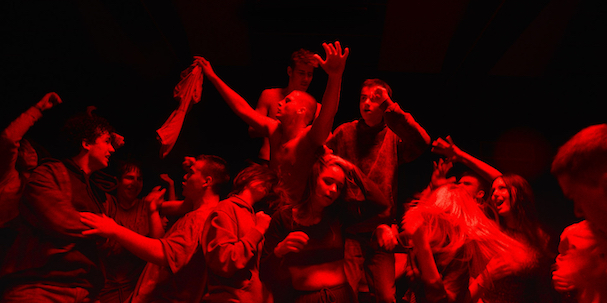
"3 Weeks After", an interview with director Miroslav Terzić Bénédicte Prot
Serbian director Miroslav Terzić has just premiered his third feature, 3 Weeks After, in the Crystal Globe Competition of the Karlovy Vary Film Festival 2026.
This relentlessly cruel story about bullying, at once fascinating and hard to watch, implacable and extremely layered, deeply anchored in reality and allegorical in its very striking and masterful aesthetics, garnered the Europa Cinemas Label.
The jury, unanimously “captivated right from the first shot and until the very end”, was impressed by the “remarkably strong and authentic performance” delivered by the ensemble cast, the choice of portraying the lives of “adolescents today through their own eyes, allowing their voices and perspectives to shape the narrative in a genuine and convincing way,” and found “Miroslav Terzić’s filmmaking stunning in every aspect of its craft.”
“The film,” the jury concluded, “urges us to truly hear young people, be there for them and not look away!”
The project, Terzić explains, started over ten years ago, when Branislav Trifunović, the producer of the film (and actor, in the role of the maths teacher supervising the school trip next to the head teacher played by Tihana Lazović), and Vladimir Arsenijević, the screenwriter, started to work on this script about peer violence and called him.
“We decided not to make some kind of docu story on one specific case,” says the director. Within the research material, he remembers, there was one sentence, from the mother of a boy who committed suicide, who said that the class went on an excursion three weeks after the fact, so “we tried to imagine what that excursion would look like.”
However, continues Miroslav Terzić, “as we tried to find the best way to tell the story, we realised it was not just about peer violence, but about a violent society, about violence, and we live in that society. When you turn around, watch TV or Internet or whatever, there is violence all around us, and we were struck by that normalisation of violence.”
“So we tried to show the audience that they are in the fire too – which is why there is a fire in the beginning, but no one is doing anything to prevent it –, that we are in the fire right now, at this very moment, but we are turning our heads [the other way].”
If the film certainly includes a commentary on the current young generation present in the film, it also suggests that the responsibility lies with the grown-ups, and with society as a whole: “They have grown up with the Internet, their phone is like a new organ for them, and they see the world through that, and what we serve them through that is disturbing, so we cannot expect… Somehow, empathy […] is slowly fading away from this society, [it’s almost] extinct, so I think that that we must teach them to feel again, not to be afraid to have real feelings.”
“They are protected by their phones and live some kind of alternative life, so we must teach them to see violence and to stand up against it, even if it’s hard, and help whoever needs help. Because in every story about bullying, there are three sides, not two: there is the bully, there is the victim, and there is a third side, and it is the biggest one, which is that of the spectators, the people who are watching and do not interfere. It is them who let the bullies have all the power.”
“[…] We gave them that power by not protecting the weak, the people who need help. […] I’m blaming society, because when tragedies happen, everyone talks about it and after three days, everyone forgets and continues on with their life, but this is not enough time to deal with that tragedy, [and it means we are not doing] anything to prevent a new tragedy.”
The striking aesthetics of 3 Weeks After also takes the subject to another, more abstract or allegorical dimension, beyond the Balkans angle or the generational and societal comment.
“We wanted to tackle this topic from many different angles,” Terzić points out, “and leave it to the audience to decide how they choose to approach it. […] There are a lot of underlying layers and a lot of metaphorical and allegorical elements, and we break the fourth wall too, three times, in the movie.”
We also discuss the moral reflection stemmed by the “they made me do it” argument, the animality the group reverts to, the implications of the inherent gregariousness of humans, the purifying symbolism of the cave where the guilt-ridden victim finds a refuge, and the longing for connection and embrace expressed in the magnificent ending.
A group of high school students and their teachers set off for a class trip to Bulgaria. When their bus breaks down, they find themselves stranded in an old hotel near the mountains. The atmosphere grows tense when the quiet and withdrawn Tsotsa decides to talk about his best friend’s recent suicide. Why did Andrij choose to end his life? And wouldn’t it have been better if Tsotsa hadn’t brought it up? Like his previous outings, Serbian director Miroslav Terzić’s third film is characterized by an overwhelming, meticulously crafted sense of tension. 3 Weeks After takes us into the vulnerable world of adolescents, where innocence is mixed with cruelty. It also exposes the mechanisms of bullying in a society that closes its eyes at decisive moments when looking away is the last thing we should do.
Nobody Barks director Júlia Coldwell Serra at Future Frames 2026. A dark comedy about guilt, family bonds and the comforting stories people invent to avoid painful truths.
Shallow Ground director Jozo Schmuch at Future Frames 2026 turns one day into a tender reckoning with the decades a war stole
Zampano director Teilo Quillard at Future Frames 2026 revisits his circus childhood and dreams already of a punk circus to come
In Karaokiss, Mila Ryngaert blends music, fantasy, and emotion to explore fear, love, and self-expression.
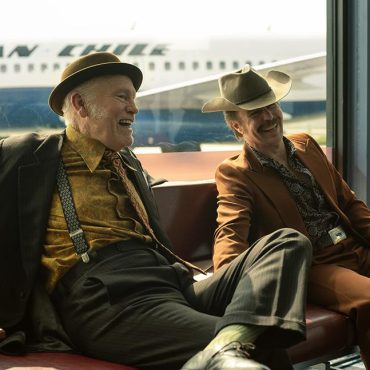
At the Venice Film Festival 2026, John Malkovich and Sam Rockwell on old friendships, fear and the shadow of Chile's history in Wild Horse Nine
At the Venice Film Festival 2026, Martin McDonagh on two CIA agents, a doomed friendship and the shadow of Chile's 1973 coup in Wild Horse Nine
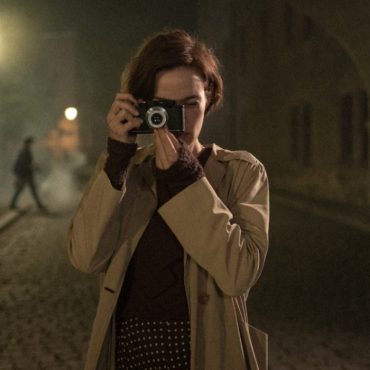
Opening Orizzonti at Venice 83 with La ragazza con la Leica, Alina Marazzi and Emilia Schüle on Gerda Taro's legacy and the courage of today's war reporters
Your daily guide to the film market at Venice Production Bridge 2026 — panels, meetings and international guests you can't miss.