

“Teenage Sex and Death at Camp Miasma”, interview with director Jane Schoenbrun
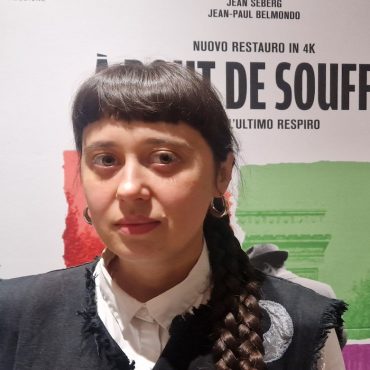
Jane Schoenbrun on her new film "Teenage Sex and Death at Camp Miasma": post-transition joy, 80s horror, and reclaiming the trans monster.
Listeners:
Top listeners:
 play_arrow
ENGLISH Channel 01 If English is your language, or a language you understand, THIS IS YOUR CHANNEL !
 play_arrow
ITALIAN Channel 02 Se l’italiano è la tua lingua, o una lingua che conosci, QUESTO È IL TUO CANALE!
 play_arrow
EXTRA Channel 03 FRED Film Radio channel used to broadcast press conferences, seminars, workshops, master classes, etc.
 play_arrow
GERMAN Channel 04 Wenn Ihre Sprache Deutsch ist, oder Sie diese Sprache verstehen, dann ist das IHR KANAL !
 play_arrow
POLISH Channel 05
 play_arrow
SPANISH Channel 06 Si tu idioma es el español, o es un idioma que conoces, ¡ESTE ES TU CANAL!
 play_arrow
FRENCH Channel 07 Si votre langue maternelle est le français, ou si vous le comprenez, VOICI VOTRE CHAINE !
 play_arrow
PORTUGUESE Channel 08
 play_arrow
ROMANIAN Channel 09 Dacă vorbiţi sau înţelegeţi limba română, ACESTA ESTE CANALUL DUMNEAVOASTRĂ!
 play_arrow
SLOVENIAN Channel 10
 play_arrow
ENTERTAINMENT Channel 11 FRED Film Radio Channel used to broadcast music and live shows from Film Festivals.
 play_arrow
BULGARIAN Channel 16 Ако българският е вашият роден език, или го разбирате, ТОВА Е ВАШИЯТ КАНАЛ !
 play_arrow
CROATIAN Channel 17 Ako je hrvatski tvoj jezik, ili ga jednostavno razumiješ, OVO JE TVOJ KANAL!
 play_arrow
LATVIAN Channel 18
 play_arrow
DANISH Channel 19
 play_arrow
HUNGARIAN Channel 20
 play_arrow
DUTCH Channel 21
 play_arrow
GREEK Channel 22
 play_arrow
CZECH Channel 23
 play_arrow
LITHUANIAN Channel 24
 play_arrow
SLOVAK Channel 25
 play_arrow
ICELANDIC Channel 26 Ef þú talar, eða skilur íslensku, er ÞETTA RÁSIN ÞÍN !
 play_arrow
INDUSTRY Channel 27 FRED Film Radio channel completely dedicated to industry professionals.
 play_arrow
EDUCATION Channel 28 FRED Film Radio channel completely dedicated to film literacy.
 play_arrow
SARDU Channel 29 Si su sardu est sa limba tua, custu est su canale chi ti deghet!
 play_arrow
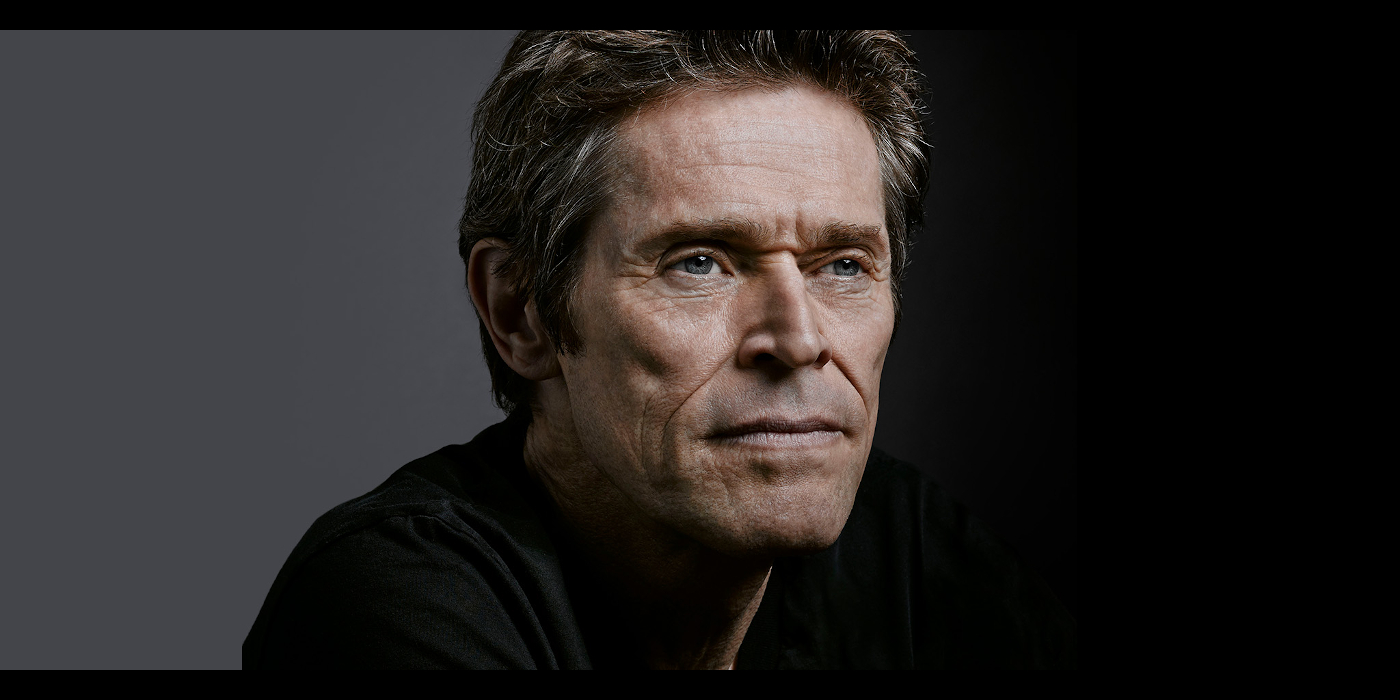
“Conversation with” at the 20th Marrakech IFF, interview with actor Willem Dafoe Bénédicte Prot
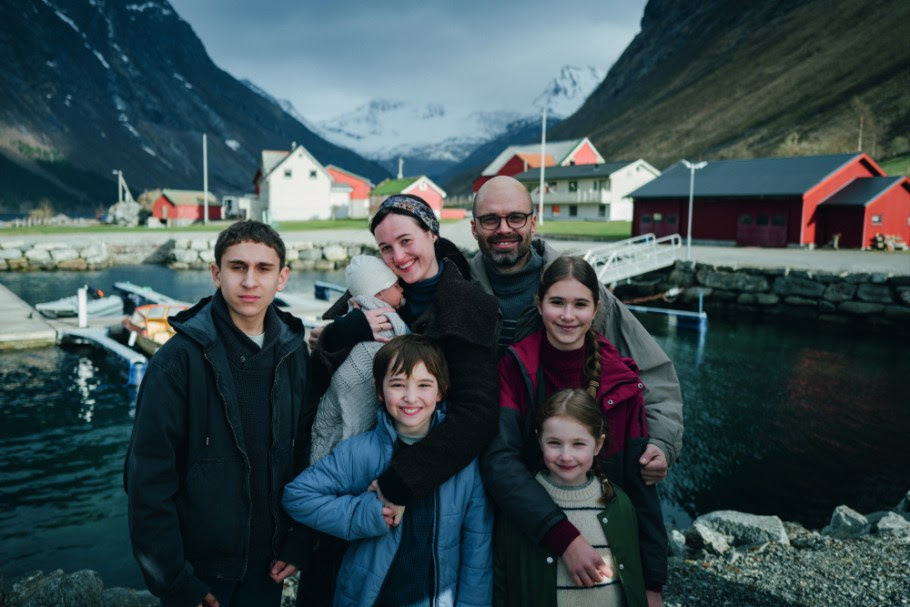
Winner of the Palme d’Or at the Cannes Film Festival 2026 and released in Italian cinemas on November 19 by BIM Distribuzione, Fjord follows the Gheorghius, a devout Romanian-Norwegian couple who move to a village in a remote fjord, where they befriend their neighbours, the Halbergs. Their children grow close despite the very different upbringings they have received, but when teenager Elia Gheorghiu turns up at school with bruises, the community begins to wonder whether the traditional education the Gheorghiu children receive from their parents might have something to do with it. Director Cristian Mungiu talks about the doubt at the heart of the film, the stereotypes that shape the way we judge others, and the responsibility adults have towards the next generation.
Asked if Fjord is a film about the doubt we should all have about our own certainties, a doubt we have almost lost, Cristian Mungiu comments: “It is indeed a film about this idea that sometimes we tend to believe that there’s just one truth and it already belongs to us, and this is not a very good start for a conversation, because everybody believes like this, and this is how we ended up by not communicating at all in society with those who do not share the same opinions as us”. History, he points out, should teach us some caution: “If we look back in history, when they were burning women as witches, they also believed this was good. So it’s good to have some distance, it’s good to doubt every now and then, to double check”. That is why he hopes the film will spark a conversation about what has become unspeakable: “There are so many things that we all know but people don’t dare to speak about them. They became taboo. If you just forbid people to express what they believe, this is not going to change what they think, and you would have great surprises when these people vote, because you haven’t listened to them. Even if their ideas are wrong, the frustration is real”.
Fjord finds a right distance from the events it narrates and Mungiu manages to keep the audience from ever fully taking a side. How did he find the right balance? Mungiu answers that this is simply how things are: “People and things are not fully black or white, situations are complex in general and you need to judge every situation in its own context”. He makes clear that nobody is questioning the overall work of child protection services, and that when violence is confirmed there must be an intervention, but while researching such cases he noticed a recurring pattern: “People have to make choices without knowing precisely what is the truth. You can’t really penetrate into the intimacy of the family, you don’t know what happened, you just know what people tell you, but everybody will tell you something else. You need to make a choice, and in that situation you will be very biased and influenced by your stereotypes, if you haven’t worked with yourself to be a bit more inclusive and to understand that some other people might have different values, and that’s okay”. The key, he says, is to understand that we do not all live in the same 21st century: “Maybe these people that you are judging now for being conservatives have the values that you were having in your country 50 or 100 years ago, and it’s not their fault, because not everybody was as wealthy and educated as people in the north were. So you need to be a bit more patient”.
For Cristian Mungiu, tolerance has to apply above all to those whose opinions we dislike: “Try to apply this idea that all minorities need to be defended. Even if you don’t like their opinions, you need first of all to take care that you don’t force your opinions on them”. While researching Fjord, he came across the story of the Sami people: “They have abused the Sami people in the north, all from this good perspective of trying to, as they say, civilize them. But having a simpler life doesn’t mean that you need to be civilized, it’s their option, and it’s not good to try to make good to people against their own will”. And he adds: “I’ve been living in such a society, I don’t want to see it coming again, and especially I don’t want to see it coming from this so-called progressive part of the world”.
Asked whether the younger generations might be the ones to overcome some of these divisions, Mungiu agrees that young people are more inclined to be curious and to accept differences, but refuses to let adults off the hook: “You can’t give them the situation of today as a broken toy. We are still the decision makers for the world of today, so we need to fix some things before passing this world to our children”. Change, he insists, has to start with ourselves: “Start with yourself, change something yourself, and this is the best example that you can do for your children, because we keep telling children a lot of lovely things, but do we apply them in our everyday life? No. So they understand that we talk about tolerance, but we are not tolerant”.
The Gheorghius, a devout Romanian Norwegian couple, resettle in a village set in a distant fjord where they become close to their neighbours, the Halbergs. Their children bond despite their different education.
When adolescent Elia Gheorghiu shows up at school with some bruises on her body, the community asks itself if the traditional education that the Gheorghiu children get from their parents might have anything to do with it.
Jane Schoenbrun on her new film "Teenage Sex and Death at Camp Miasma": post-transition joy, 80s horror, and reclaiming the trans monster.
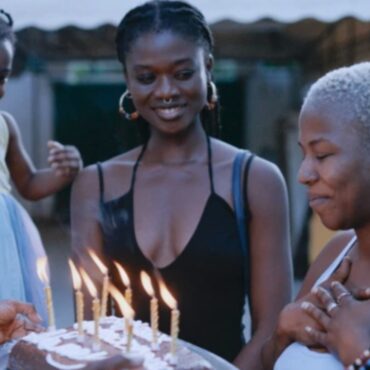
"Promised Sky" director, Erige Sehiri, on this Tunis-set story: "We have stories about migrants arriving in Europe and struggling in Europe, but we don’t have the stories from before, when they are stopped somewhere, stopped or stuck."
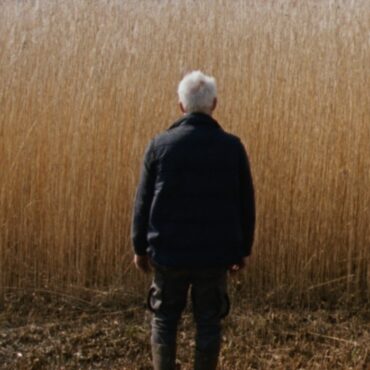
"Reedland" by Sven Bresser tells the change in the life of a reed cutter when he found a body of a dead girl in his own reed lands. Not a murder mystery film though, mora of a path of evolving …
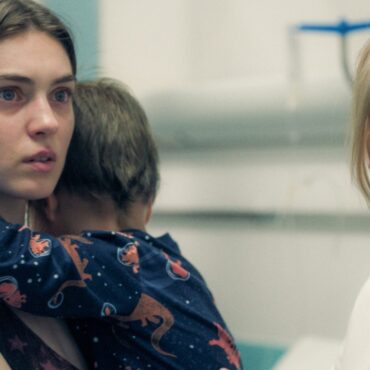
Laura Wandel’s Adam’s sake, at the Semaine de la critique, relies on the perfect duo: Léa Drucker and Anamaria Vartolomei
Sofia Tocar of Square Eyes on short film distribution, festival strategy and independent cinema, at Festival dei Popoli 2026.
Mark Cousins presents The Story of Documentary Film (Part One) at the 67th Festival dei Popoli 2026 in Florence.
Ben Watkins, Jaalen Best and Giovanni Ribisi on The Greatest, the Prime Video series that tells Muhammad Ali's story as a coming of age, before the icon and the legend.
France Odeon - Festival del Cinema Francese
La Vie d'une Femme explores the tension between duty and freedom as a surgeon’s carefully ordered life is transformed by an unexpected connection.