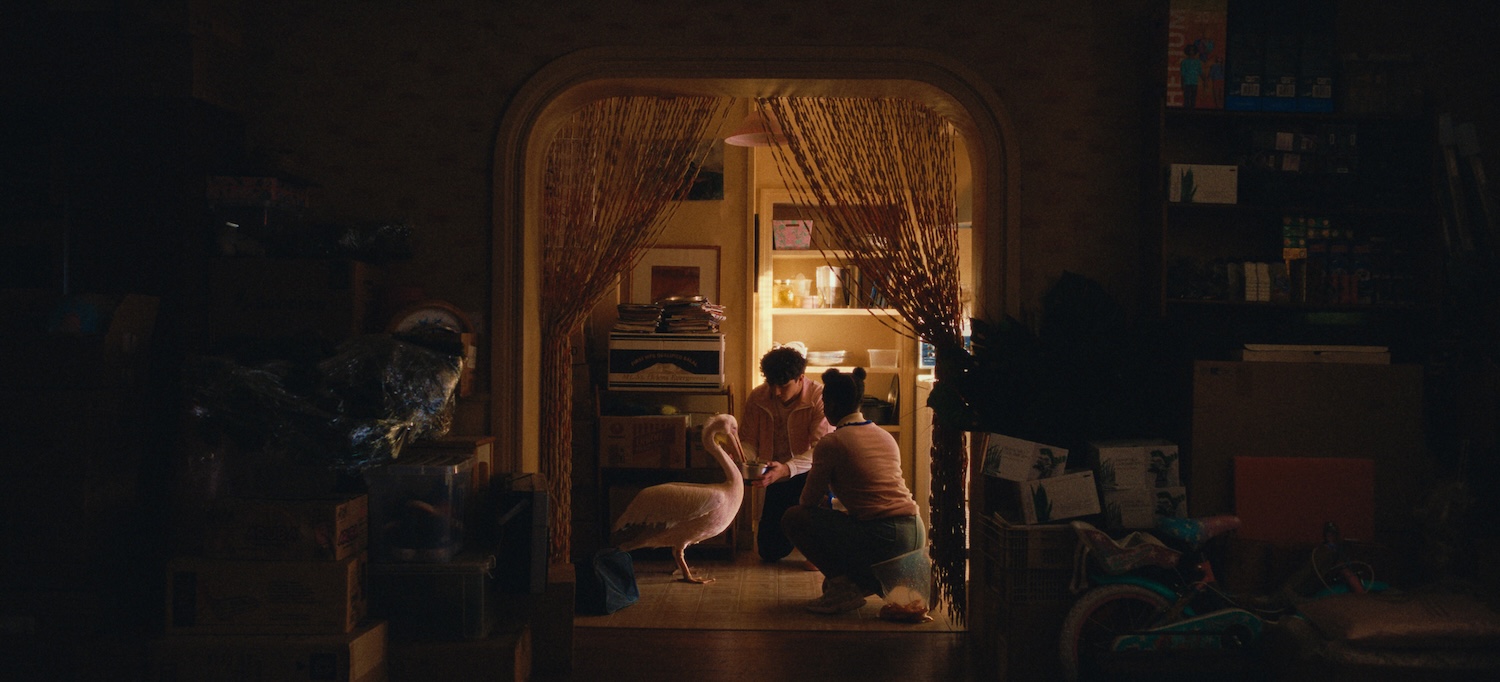
Presented at the Quinzaine des Cinéastes at Cannes 2026, “Butterfly Jam” is the new film by Kantemir Balagov. Set in Newark, it follows Pyteh (Talha Akdogan) , a sixteen-year-old Circassian wrestler whose life is upended by a single impulsive decision made by his father. The film sees the participation of Barry Keoghan, Harry Melling and Riley Keough and it is Balagov’s first work in english, set in the US and it marks the Russian director’s third time in Cannes, the first two in the Un Certain Regard section with Tesnota (2017) and Beanpole (2019)
A masculine story told in pink
Kantemir Balagov himself described Butterfly Jam as a masculine story told in pink as brutality is overcome by its tenderness. It’s a frame that stayed with Harry Melling from the very beginning: “one of the first things Kantemir said when I was talking about this project with him was that he’s thinking about pink”. Rereading the script with that in mind changed everything. Behind the wrestling, the bad decisions, the weight of legacy, Harry Melling found “a tenderness and a love that is laced through the narrative”. Riley Keough confirms the feeling from the other side of the screen: despite the intensity of what unfolds, “you walk out feeling this warm family warmth”, something she describes as quite extraordinary given the events of the film.
Writing women in a male story
Kantemir Balagov built his reputation with female-centred films, most notably “Beanpole“. With “Butterfly Jam” the centre of gravity shifts, but Riley Keough noticed immediately that his gaze on women had not. “Kantemir writes women so beautifully”, she says as this was the first thing that struck her when she read the script. Her character is nuanced, real, and carries a specific weight in the story: “she’s the one in the family who’s trying to keep it together, which is very often the female experience”.
Awkwardness as sincerity
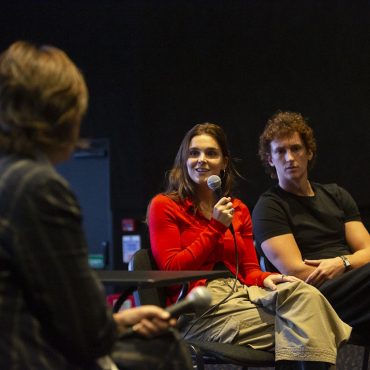
At the Q&A the previous evening, Kantemir Balagov had said that awkwardness is a form of sincerity and the three actors find different ways into that idea. For Harry Melling, it starts with the way Kantemir Balagov works on set: “he allows those quieter moments where maybe you don’t know what you’re going to do, you don’t really know how you’re going to react”. The less an actor has planned, he suggests, the more honest the result. Akdogan agrees and adds: “conversations in real life are filled with awkwardness when he uses awkwardness it’s just realism”.
The fear of being weak
The film’s adult characters are haunted by the fear of weakness, a fear that, as Riley Keough observes, is “such a hard thing to watch” from the outside: “how much men struggle with their vulnerability, it’s quite heartbreaking”. For Talha Akdogan, who plays the teenager at the centre of it all, the roots of that fear are clear: “growing up, your dad tells you to be strong, everybody around you tells you to be strong”. When weakness surfaces anyway, the only response available is denial. It is, he says, simply the way you were brought up.
Plot
16 years old Pyteh splits his time between the wrestling mat and his family’s struggling Circassian diner in Newark. A single impulsive decision by his hustling father changes the course of his life, shaping a tale of pride, legacy, and masculinity.