


“The Fisherman”, interview with director Zoey Martinson and producers Kofi Owusu Afriyie and Korey Jackson
“My hope was that I could use a comedy to address kind of the result of global warming on a country that's trying to keep up”.
Listeners:
Top listeners:
 play_arrow
ENGLISH Channel 01 If English is your language, or a language you understand, THIS IS YOUR CHANNEL !
 play_arrow
ITALIAN Channel 02 Se l’italiano è la tua lingua, o una lingua che conosci, QUESTO È IL TUO CANALE!
 play_arrow
EXTRA Channel 03 FRED Film Radio channel used to broadcast press conferences, seminars, workshops, master classes, etc.
 play_arrow
GERMAN Channel 04 Wenn Ihre Sprache Deutsch ist, oder Sie diese Sprache verstehen, dann ist das IHR KANAL !
 play_arrow
POLISH Channel 05
 play_arrow
SPANISH Channel 06 Si tu idioma es el español, o es un idioma que conoces, ¡ESTE ES TU CANAL!
 play_arrow
FRENCH Channel 07 Si votre langue maternelle est le français, ou si vous le comprenez, VOICI VOTRE CHAINE !
 play_arrow
PORTUGUESE Channel 08
 play_arrow
ROMANIAN Channel 09 Dacă vorbiţi sau înţelegeţi limba română, ACESTA ESTE CANALUL DUMNEAVOASTRĂ!
 play_arrow
SLOVENIAN Channel 10
 play_arrow
ENTERTAINMENT Channel 11 FRED Film Radio Channel used to broadcast music and live shows from Film Festivals.
 play_arrow
BULGARIAN Channel 16 Ако българският е вашият роден език, или го разбирате, ТОВА Е ВАШИЯТ КАНАЛ !
 play_arrow
CROATIAN Channel 17 Ako je hrvatski tvoj jezik, ili ga jednostavno razumiješ, OVO JE TVOJ KANAL!
 play_arrow
LATVIAN Channel 18
 play_arrow
DANISH Channel 19
 play_arrow
HUNGARIAN Channel 20
 play_arrow
DUTCH Channel 21
 play_arrow
GREEK Channel 22
 play_arrow
CZECH Channel 23
 play_arrow
LITHUANIAN Channel 24
 play_arrow
SLOVAK Channel 25
 play_arrow
ICELANDIC Channel 26 Ef þú talar, eða skilur íslensku, er ÞETTA RÁSIN ÞÍN !
 play_arrow
INDUSTRY Channel 27 FRED Film Radio channel completely dedicated to industry professionals.
 play_arrow
EDUCATION Channel 28 FRED Film Radio channel completely dedicated to film literacy.
 play_arrow
SARDU Channel 29 Si su sardu est sa limba tua, custu est su canale chi ti deghet!
 play_arrow
“Conversation with” at the 20th Marrakech IFF, interview with actor Willem Dafoe Bénédicte Prot
 play_arrow
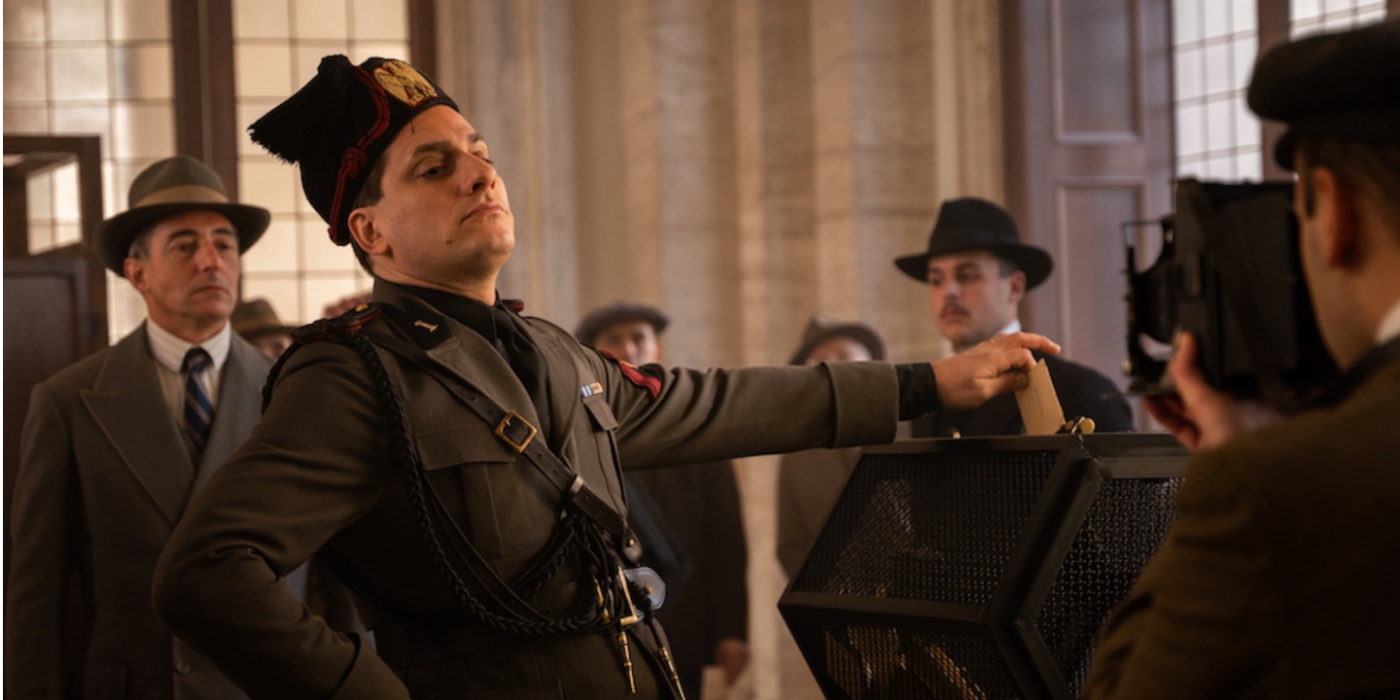
"M - Son of the century", interview with director Joe Wright and actor Luca Marinelli Chiara Nicoletti
“M- Son of the century“, the eight-part series on Mussolni and his political rise, premiered at the 81st Venice Film Festival.
Directed by Joe Wright, it’s a contemporary portrait of Mussolini and his creation: Fascism. An international project based on the bestselling Premio Strega-winning novel by Antonio Scurati with Italian actor Luca Marinelli in the role of the Duce.
Luca Marinelli and Joe Wright explain how they found the right balance in creating an entertaining show while making sure not to create a distance, a separation between the man Mussolini and the political.
“I think it was important not to portray him as the devil or someone from another planet. He belongs to us, he came from us” Marinelli comments.
Marinelli’s Mussolini breaks the fourth wall and speaks his mind. The audience will then understand more about what nobody knows about that moment in history.
Joe Wright reminds us the connection M- Son of the century has with the present time we’re living in. History repeats itself.
“Everyone thinks they know what a fascist is and that was Mussolini’s invention. As the far right has risen around the world it’s been an opportunity for me to take responsibility and understand what’s happening now through the prism of what happened then” Joe Wright remarks.
M – Son of the Century recounts the political rise of Mussolini and his creation: fascism. First a movement, then a party that Mussolini leads to the helm of Italian institutions, and finally, an authoritarian regime.
Based on the renowned book by Antonio Scurati, the series is much more than a classic biopic. Through contemporary language – Mussolini breaks the fourth wall and addresses us directly to comment on the turning points in history – it offers an unexpected portrait, original and often rife with black humor, of the man who made all of Italy fall in love with him, becoming Il Duce.
The story begins in March 1919, with the founding of the Fasces of Combat, an irregular armed militia. At the beginning, these consist of a few crippled and mutilated war veterans, who feel betrayed by the homeland they fought for... Mussolini begins his revolution by rounding up the outcasts. Starting that far down, despite his extraordinary political talent his rise to power is far from certain. Countless enemies and obstacles lie in wait on his path, like the socialists, his former comrades, who sweep to victory in the 1919 elections without him; and the charismatic poet and war hero D’Annunzio, the real inventor of nationalism and an inspirational figure so important that he becomes a formidable opponent for the future Duce. Even his own Blackshirts prove to be an obstacle: their ferocious violence puts an indelible stain on Mussolini’s reputation and threatens to prevent him from entering government institutions.
He has only two allies at his side: Margherita Sarfatti, his very sophisticated mentor and lover; and Cesare Rossi, his right-hand man, equal parts advisor and assistant.
We know that Mussolini came to have absolute power, but how? What were his strategies? Which people and which ideals did he betray, and to what extent? We know what he said in public, but what were his real thoughts and desires? Mussolini tells no one... except us. We will be his closest confidants, witnesses to his genius as well as to his violence, his cowardice, his unquenchable thirst for power and his morbid need for adoration.
“My hope was that I could use a comedy to address kind of the result of global warming on a country that's trying to keep up”.
Interview with Sophie Wilde, actress in "Babygirl". She talks about working with Nicole Kidman and the momentum that her career has gained
“We were attracted by a woman having an idea that wasn't really logical”.
“Her aesthetics is still here”. Sandra Maischberger, producer of “Riefenstahal”, discusses the documentary about the German filmmaker.
"It’s never over: Jeff Buckley" by Amy Berg is finally coming out in Italy thanks to Nexo
"A Brief Affair" actress Valeria Golino reflects on challenging roles, artistic freedom and bringing writer Goliarda Sapienza to life in "Fuori".
"A Brief Affair": Ludovica Rampoldi on turning a love triangle into a seductive psychological thriller at Cinema Made in Italy.
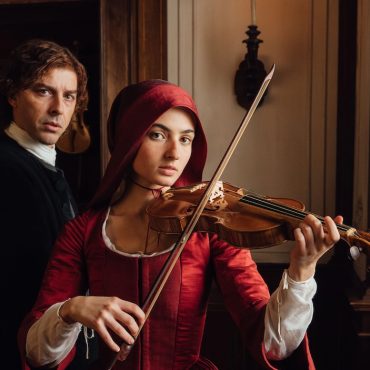
“Primavera”: Damiano Michieletto discusses Vivaldi, freedom and the power of music in his Venice-set historical debut.